
Walmart Black Friday Deals 2026: The 14-Day Inbox Playbook for Deal Alerts, Early Access and the Phishing Wave
People started searching for Walmart Black Friday deals 2026 about an hour before I sat down to write this. On Google Trends in the United States, the query was sitting at 2,000-plus searches, up 75 percent, and it was the only deals search in the entire trending list — 689 queries, almost all of them Sunday football. That is the tell. Nobody is searching for Black Friday deals in early November because they are bored. They are searching because Walmart published its calendar on October 26 and the first event opens in four days, and they want to know what to do first.
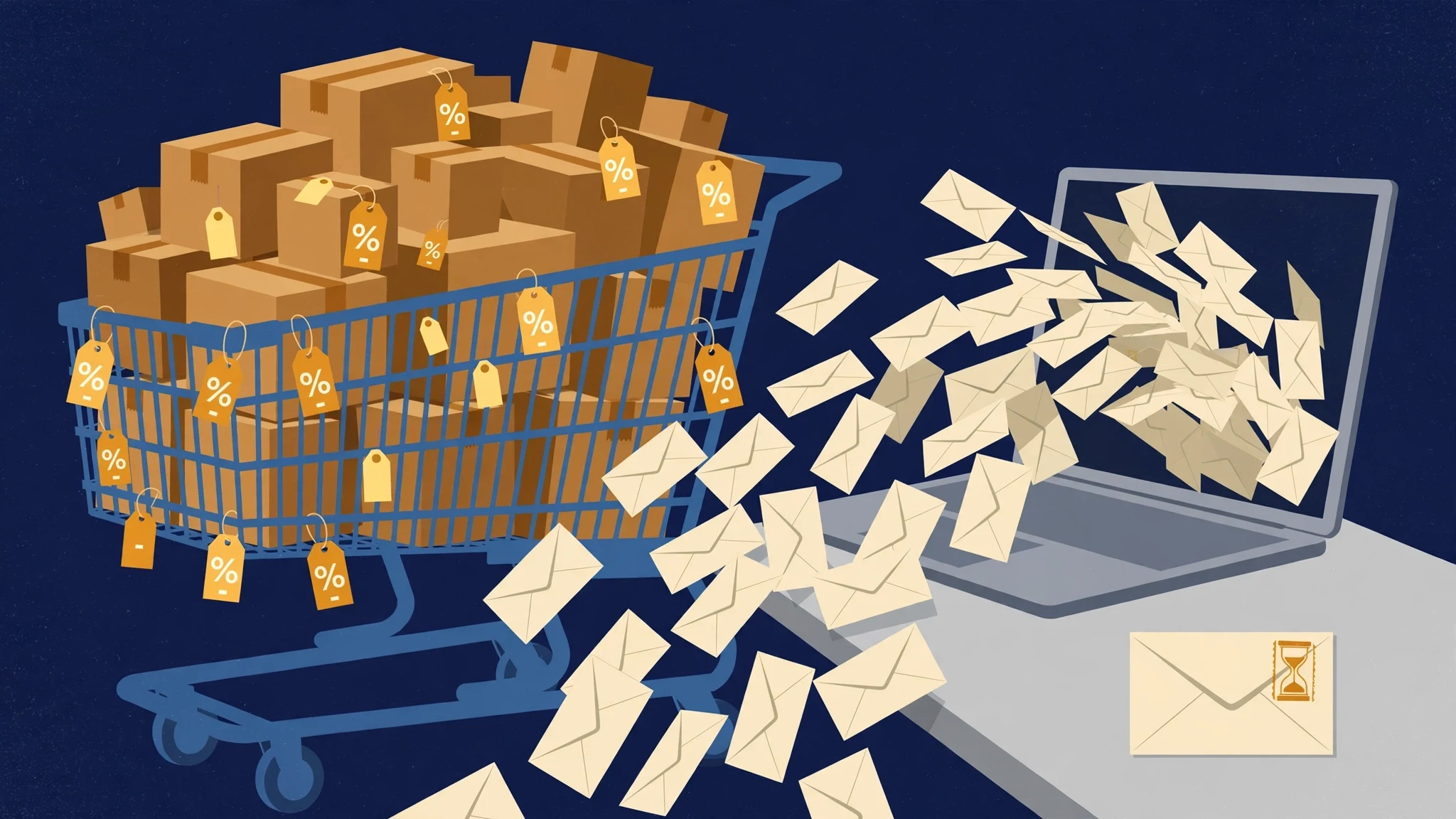
Here is the part nobody puts in the deal roundups: the deals are free to browse, but the signup is the price. Every early-access list, every deal alert, every "notify me when the price drops" button wants the same thing — your email address, and usually your phone number with it. Walmart is running Black Friday as a 14-day event this year, not a single morning. Fourteen days of signups is fourteen days of your address being harvested, shared, and impersonated. You can still get every deal. You just need a plan for your inbox before the deals start, not after your inbox is already drowning.
This is that plan. It is built around Walmart's actual 2026 calendar, the way Walmart+ early access actually works, and what last year's phishing numbers say is coming for your inbox this time. If you want the general version of this playbook — the coupon-popup economics that apply to every store, not just Walmart — I wrote that one in October.
The 2026 Calendar, in One Table
Walmart is not doing one Black Friday this year. It announced three separate events, and the dates matter because each one has its own signup wave.
| Event | Dates | Online start | In-store start | Walmart+ early access |
|---|---|---|---|---|
| Early Black Friday Deals | Nov 12–15 | 12:01 a.m. ET, Nov 12 | 6 a.m. local, Nov 12 | Hot Deal drops, first 24 hours |
| Black Friday Deals | Nov 23–29 | 12:01 a.m. ET, Nov 23 | 6 a.m. local, Nov 27 | Hot Deal drops, first 24 hours |
| Cyber Monday | Nov 30–Dec 2 | 12:01 a.m. ET, Nov 30 | Online only | None announced |
Black Friday itself falls on Friday, November 27. Walmart's stores are closed on Thanksgiving, November 26, which means the main event lives online for four full days before the stores even open. That is the first thing to understand about this year's inbox problem: the shopping moved online, and online shopping runs on email. The doorbuster queue used to be a line outside a store. Now it is a verification code in your inbox.
The second thing: the whole run is 14 days, up from 10 days in Walmart's 2025 schedule. Four extra days of deal alerts, restock notifications, "price dropped again" emails, and every third-party deal site that wants your address to send you its own version of the same list.
What Signing Up for Deal Alerts Actually Costs You
Let us be precise about the transaction, because "sign up for alerts" sounds free and it is not. A Walmart account takes your email address and a phone number. The deal-alert signup takes your email again, usually on a different form, and drops it into a marketing list that is legally a different list from your account. Then the order confirmation, the shipping updates, the delivery photo, the return label, and the sign-in verification codes all go to the account address. The same verification-code logic decides whether a disposable address works for any account at all — I tested it on Apple ID signups, where the inbox is the master key and losing it locks you out of everything. By the end of the first event, one retailer holds your address in at least three places, and each one has its own unsubscribe link, its own retention policy, and its own breach surface.
I am not telling you to skip the alerts. The alerts are the whole point — the hot Deal drops sell out while supplies last, and the 24-hour Walmart+ window means the difference between getting the television and reading about it. I am telling you to decide which address each of those three places gets, before November 12. Because once the address is in the list, getting it out is a project. Unsubscribe links work eventually, but the list has already been shared with the retailer's email partners by then, and the partners have their own lists.
The honest split is this. Your account — the one you actually buy with — gets a real address you control long-term, because order confirmations, returns, and warranty claims live there for months. The marketing lists — the deal alerts, the "notify me" buttons, the third-party deal roundups — get a disposable address, because their job is finished the moment the deal is over. And the phone number you hand over for delivery updates is the one place a disposable email cannot help you; that is a separate problem, and the answer there is to give the number and then turn off the marketing texts the same day.
The Three-Inbox System for 14 Days
This is the system I actually use, and it is boring on purpose. Boring is the point — a system you have to think about during a flash sale is a system that fails during a flash sale.
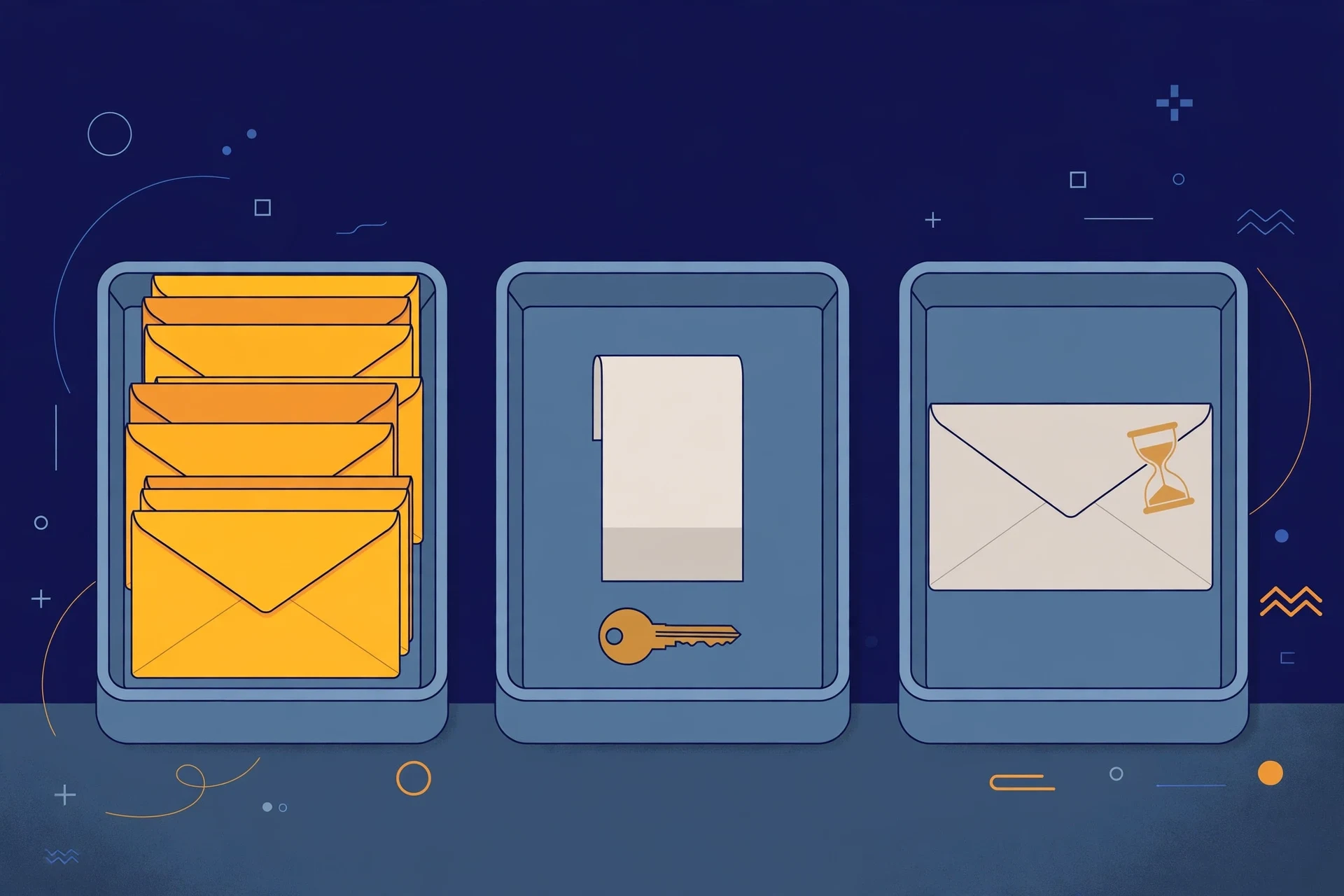
Inbox one is the deal-alert inbox, and it is disposable. Every "sign up for Black Friday alerts" form, every deal-site newsletter, every "get 10 percent off your first order" popup gets this address. It exists for 14 days. It receives the flood, you check it when you are hunting, and when Cyber Monday ends you let it expire. Nothing you need later lives here — no order confirmations, no receipts, nothing you would miss in January.
Inbox two is the order inbox, and it is real. This is the address on your Walmart account. Order confirmations, shipping notifications, delivery photos, return labels, and the verification codes Walmart sends when you sign in from a new device all land here. Keep it clean by keeping everything else out of it. The single biggest mistake people make with deal season is using one address for everything, so the order confirmation for the television they actually bought is buried under forty "PRICE DROP" emails from stores they will never visit again.
Inbox three is the burnable signup inbox, and it is the one for the forms you do not trust. The deal aggregator you have never heard of. The "enter to win a gift card" sweepstakes attached to a deal post. The coupon site that wants an email before it shows you the code. These get an address you can abandon the same afternoon. If the code arrives, you use it. If the address starts getting mail from brands you never signed up for, you already know why, and the damage is contained to an inbox that does not exist anymore.
Three inboxes sounds like more work than one. It is less. One inbox means sorting forty promotional emails to find one order confirmation. Three inboxes means the order confirmation is already alone in its tray.
Is Walmart+ Early Access Worth $98?
Here is the honest maths, because the deal coverage mostly skips it. Walmart+ costs $98 a year or $12.95 a month, and the signup page is currently offering a 30-day trial for $1. What the membership buys you for Black Friday is narrow: 24-hour first access to select online-only "hot Deal drops" at the start of the first two events — 12:01 a.m. ET on November 12 and again on November 23. Whatever is left opens to everyone 24 hours later. Everything else in both events is open to all shoppers from the start.
So the membership is worth it only if there is a specific hot-drop item you were going to buy anyway and you would lose sleep over missing it. It is not worth it as a general "deal access" purchase, because the general deals do not require it. The $1 trial is the sensible move if you want the head start: sign up, use the two early-access windows, and then decide with your card statement in front of you whether the rest of the membership — free delivery, fuel discounts, the streaming bundle — earns its $98 for the other 51 weeks of the year. Set a calendar reminder for day 29 of the trial. The trial is designed to be forgotten; the reminder is designed to beat it.
One more honest detail: Walmart.com does not match competitors' prices and does not adjust prices after purchase, according to its own price-match policy as tracked by deal sites this week. That means the price you pay at 12:01 a.m. is the price. There is no "buy now, get the difference back later" safety net, which is one more reason the early-access decision deserves thirty seconds of thought before the window opens, not during it.
The Phishing Wave Rides the Same Calendar
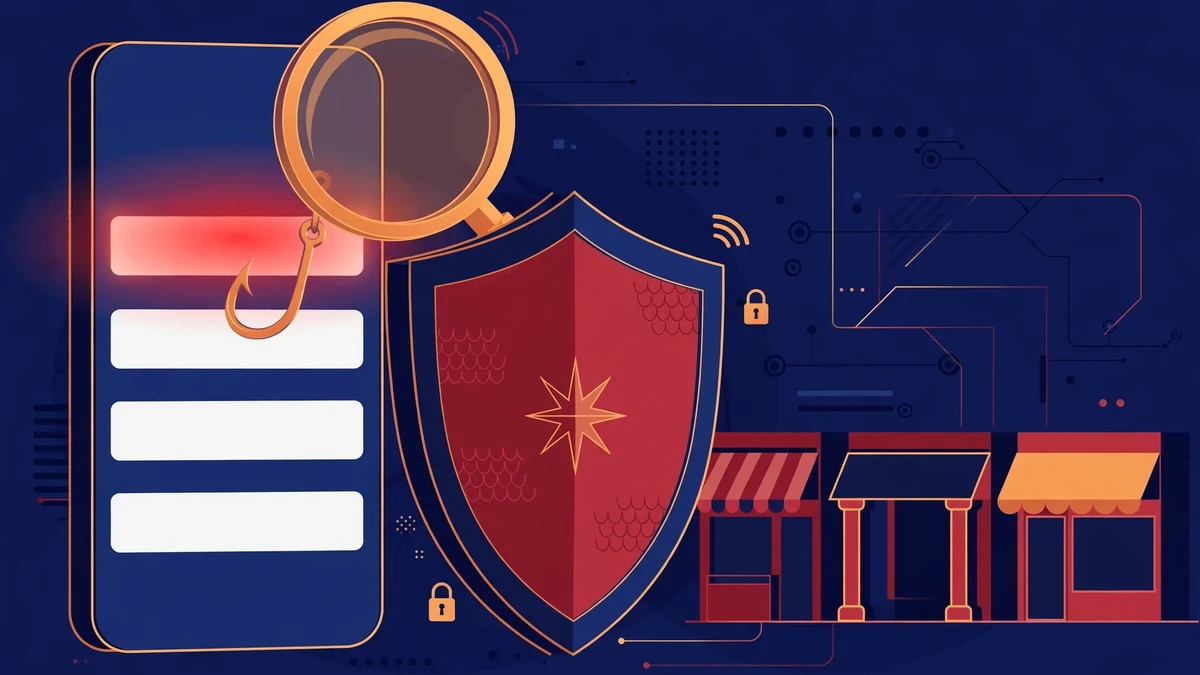
Now the part that matters more than the deals. Every year, the same calendar that tells you when the sales start tells the scammers when to start sending. Last year's numbers, from the people who actually count this, are ugly enough to plan around.
Darktrace reported in November 2025 that phishing attacks themed around Black Friday sales had surged 620 percent since the start of that month, and that attacks impersonating well-known retailers — Walmart, Macy's and Best Buy by name — had jumped 54 percent in a single week. Amazon was the most impersonated brand overall, accounting for 80 percent of brand-impersonation phishing in their analysis, but Walmart was in the named group, and Darktrace forecast a further 20 to 30 percent rise during Black Friday week itself. Kaspersky's 2025 report counted nearly 6.4 million phishing attacks targeting online stores, payment systems and banks in the first ten months of 2025, blocked more than 146,000 Black Friday-themed spam messages in the first two weeks of November alone, and detected Walmart-related phishing pages 8,156 times. The Federal Trade Commission's data put consumer losses from online shopping fraud at $529 million in 2024, across more than 380,000 reported cases.
Read those numbers as a calendar, not as a warning label. The surge starts in early November, peaks during Black Friday week, and the lures are the exact emails you are expecting: "your order is delayed," "verify your payment," "your Walmart+ trial is expiring," "claim your Black Friday gift card." The scam works because it arrives dressed as the mail you signed up for. That is why the three-inbox system is a security measure, not just an organisation trick. A fake "Walmart order delayed" email landing in your deal-alert inbox is obviously wrong, because real order mail never goes there. The same email landing in a single inbox mixed with forty real promotional messages is a coin flip.
The rules for the week are short. Real Walmart mail comes from walmart.com addresses; check the sender domain, not the display name. Never click a "verify your payment" or "update your card" link in an email — open walmart.com yourself and check the order there. A deal that only exists in an email, with a countdown timer and a link you have never seen, is not a deal. And if an email about a Walmart order arrives at an address you never gave Walmart, you already have your answer before you open it.
If you want the wider scale of what the phishing economy looks like right now, Microsoft counted 7.3 billion phishing emails in a single quarter this year — I wrote about that count in detail, and it is the backdrop to everything in this section. The Black Friday wave is a seasonal spike on top of a flood that never stops.
After December 2: The Tail Nobody Mentions
Cyber Monday ends on December 2, and the deal mail does not. The lists you joined in November keep mailing into January — the "we miss you" series, the clearance events, the New Year sale that is really the same sale with a different subject line. This is the tail, and it is where the disposable inbox earns its keep a second time. The deal-alert address stops existing, so the tail has nowhere to go. The order inbox stays quiet, because it was never on a marketing list. The burnable address is already gone.
There is one piece of housekeeping worth doing on December 3, while you still remember what you signed up for. Open the Walmart account, check the marketing preferences, and turn off anything you do not want for the next eleven months. Then check the one thing most people forget: the "notify me" alerts on individual products. Those survive the sale, and they are the emails that show up in March about a television you bought in November. Delete the ones you no longer need.
And if you used a temp mail service for the deal alerts, check the service's own limits before the sale, not during it. I scored this one against seven tests earlier this year — inbox lifetime, whether verification codes actually arrive, what happens to attachments, and the rest — and the two it failed are exactly the two that matter in a flash sale: codes that arrive after the window closes, and inboxes that expire mid-checkout. Pick the address with the longest lifetime you can get, and keep the order inbox on a real address no matter what. A deal you cannot complete is not a deal.
Frequently Asked Questions
When do Walmart Black Friday 2026 deals start? Early Black Friday Deals start online at 12:01 a.m. ET on Thursday, November 12, and run through November 15. The main Black Friday Deals event starts online at 12:01 a.m. ET on Monday, November 23, runs through November 29, and reaches stores at 6 a.m. local time on Friday, November 27. Cyber Monday runs November 30 to December 2. Walmart announced the calendar on October 26, 2026.
Do I need Walmart+ to shop Walmart's Black Friday deals? No. The regular deals in all three events are open to every shopper from the start. Walmart+ members get a 24-hour head start only on select online-only "hot Deal drops" at the start of the first two events. If there is no specific hot-drop item you need, the membership buys you nothing for Black Friday.
Can I use a temp email for Walmart deal alerts? Yes for the alerts, and that is the right use of one. Deal alerts, "notify me" buttons, and third-party deal newsletters are marketing mail — they have no job after the sale ends, so they belong on an address that expires with it. Do not use a disposable address for the Walmart account you actually buy with. Order confirmations, returns, and warranty claims need an address you can still open in three months.
Are the Walmart Black Friday emails in my inbox real? Check the sender domain — real Walmart mail comes from walmart.com — and never click a payment or verification link inside an email. Go to walmart.com yourself and check the order. Last year, phishing attacks impersonating Walmart, Macy's and Best Buy jumped 54 percent in a single week in November, and the lures were exactly the order and payment emails shoppers were expecting.
When does the deal mail stop? It doesn't, unless you make it stop. Marketing lists you join in November keep mailing into January. The clean way out is the disposable address: when it expires, the tail has nowhere to go. For your real address, turn off marketing preferences in your Walmart account on December 3 and delete the product alerts you no longer need.
The deals start on November 12 at 12:01 a.m. ET. The searches started an hour ago. Your inbox plan takes ten minutes, and it is the only part of Black Friday you can finish before the sale starts — so finish it now, and spend the 14 days shopping instead of sorting.
Need a disposable temporary email?
Protect your real inbox from spam and promotional clutter instantly and free.
Received a suspicious email, text, or charge alert?
Verify whether the sender domain is disposable, spoofed, or unverified before clicking links.