

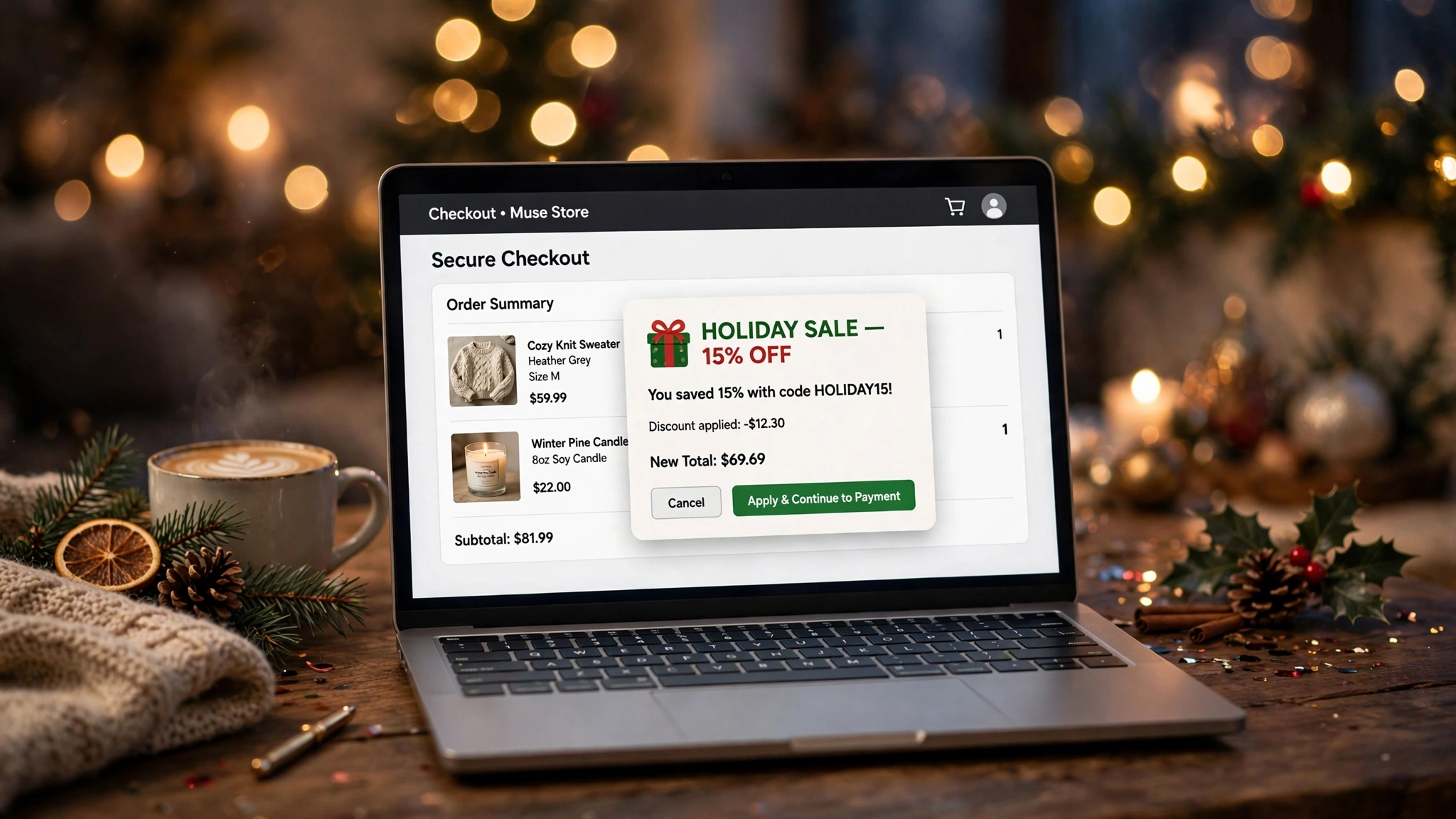

Every November, the same ritual plays out. You land on a store's site hunting for a gift, and before you've scrolled past the hero banner, a popup slides in: "Get 15% off your first order — just enter your email!" You want the discount. You do not want what comes with it: three emails a week until approximately the heat death of the universe.
Most shoppers pick one of two bad options. They type their real email and accept the spam as the price of the coupon, or they skip the discount out of inbox self-defense. There's a third option that takes about twenty seconds, and this is the guide to using it well — plus an honest accounting of where it goes wrong, because it does go wrong in exactly three places.
November's real currency isn't dollars — it's your inbox
Here's what the popup industrial complex doesn't want you thinking about: your email address is worth more to the retailer than the 15% costs them. Discount codes convert browsers into buyers at a dramatically higher rate, and the captured email becomes a permanent marketing channel with near-zero marginal cost. Industry data has consistently shown email driving an outsized share of e-commerce revenue per dollar spent — it's the highest-ROI channel most retailers have. That popup isn't generosity. It's an acquisition funnel.
The math gets worse once you zoom out. The average holiday shopper hits dozens of stores between Black Friday and Christmas. Hand your real address to even a third of them and you're looking at a permanent drip of "LAST CHANCE" and "We noticed you looking..." campaigns stretching into February, March, and beyond. Unsubscribe links work, technically — but each one is a small chore, some "unsubscribes" are dark patterns that just confirm you're a live address, and your data has already been synced into their CDP, their ad platform audiences, and their "lookalike" models.
Your inbox is an asset. November is when everyone tries to buy it cheap.
The coupon math: when a temp address pays for itself
Let's be concrete. A typical first-order incentive is 10–15% off, sometimes a flat $10–$20 on orders over a threshold. On a $200 holiday haul, that's $20–$30 saved per store. Use the trick at five stores and you've kept $100+ — for about two minutes of total effort.
The cost side is equally concrete: zero, if you do it right. A temporary address from TempoMailUSA takes seconds to generate, receives the code like any inbox, and then quietly expires. No signup, no password, nothing to unsubscribe from because there was never an account.
Where people mess this up is treating temp mail as a single hammer. It's brilliant for one specific job — receiving a code you need exactly once — and actively harmful for another: anything where the merchant needs to reach you later. The rest of this guide is about telling those two apart, because the line between them is where all the holiday disasters live.
If you're new to the whole disposable-address concept, our honest four-way comparison of temp mail vs email aliasing maps out which tool fits which situation — the short version is that one-off coupon grabs are temp mail's home turf.
The spam math: what you're actually dodging
Let's quantify the alternative, because "spam avalanche" sounds dramatic until you count it. A mid-size retailer in holiday mode typically sends 3–5 emails per week through December — promotional calendar, flash sales, "extended Cyber Monday," gift guides, New Year clearance. That's roughly 15–25 emails per retailer across the season. Register at ten stores with your real address and you're absorbing 150–250 marketing emails before January, and that's before the list gets sold, shared with "partners," or folded into an ad platform's custom audience.
And unsubscribing is not the clean exit it appears to be. CAN-SPAM gives senders up to 10 business days to honor an opt-out, and every unsubscribe click confirms to the sender's system that your address is live and monitored — which is valuable signal in itself. Some retailers' preference centers are designed as mazes: "unsubscribe from promotional" but not "transactional," which then quietly expands to include "personalized offers." You can win each of these battles and still lose the war, because the war is fought across forty inboxes' worth of senders and you're one person with a phone.
The temp-mail approach sidesteps the entire apparatus. There's nothing to unsubscribe from because there's no subscription — the address simply stops existing. When people ask me whether this is "worth the hassle," I point at the math: five seconds per store versus an estimated several hours of lifetime unsubscribe labor across a decade of holiday seasons. It's not even close.
One more number worth knowing: retailers know exactly what they're doing with captured emails. Welcome-series emails — the automated sequence that fires when you join a list — are among the highest-converting messages in e-commerce, which is why the popup offers keep getting more aggressive. You're not paranoid for noticing that the 15% appeared the moment you moved your cursor toward the close tab. That was an exit-intent trigger, and your email was the conversion event.
Where temp mail wins: five holiday scenarios
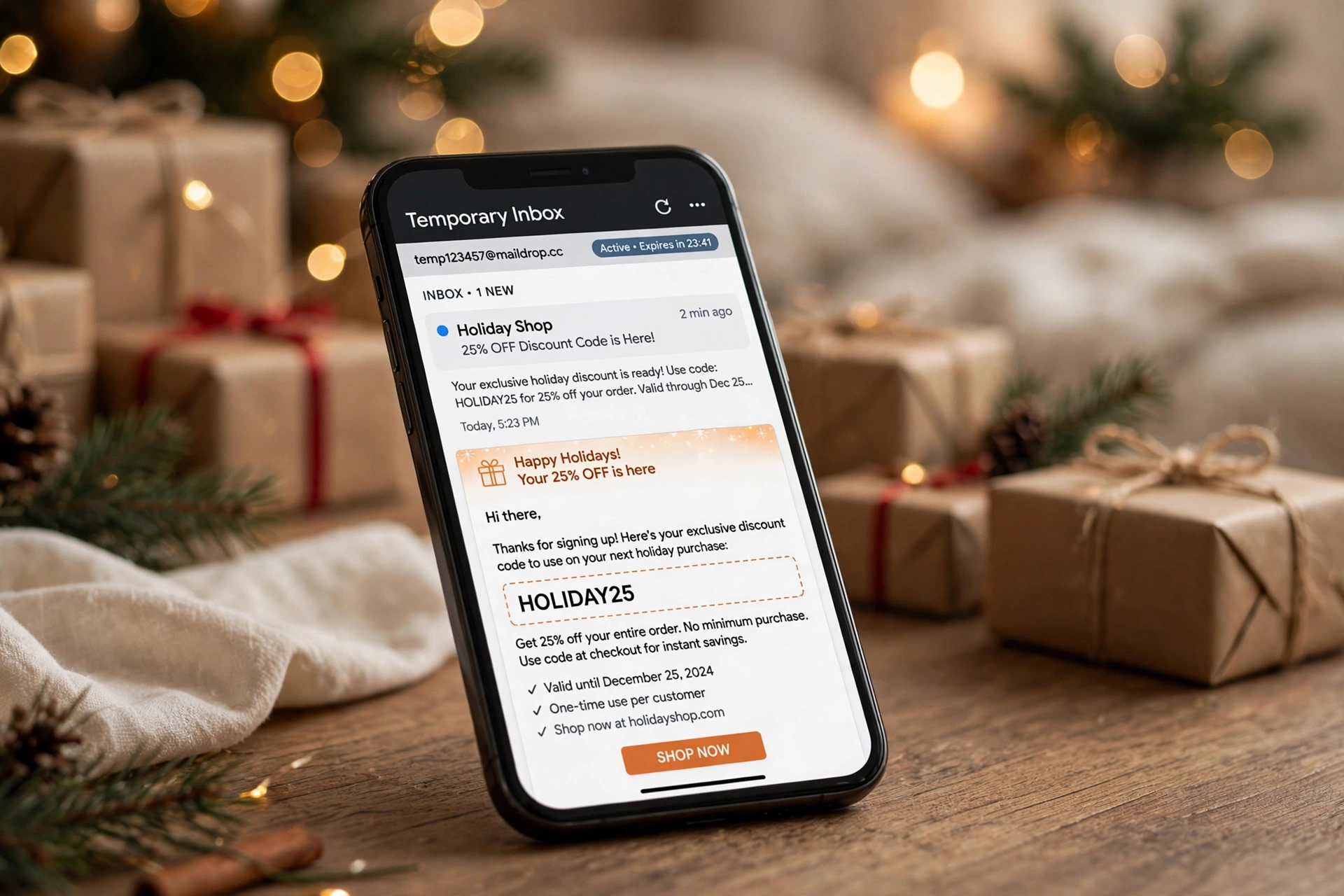
1. The first-order popup code. The classic. Generate the address, paste it into the popup, grab the code from the temp inbox, check out. The code works identically whether the email behind it is your primary or an address that dies tonight.
2. Guest checkout at stores you'll never visit again. That random site with the perfect stocking stuffer? You don't need a relationship with them. Temp address for the order confirmation, screenshot the confirmation page, move on.
3. Price-drop and back-in-stock alerts. Watching a specific gift? Many stores let anyone — no account needed — register an email for restock notifications. A temp inbox with a longer lifespan catches the alert without adding you to the newsletter.
4. Contest and giveaway entries. Holiday giveaways are lead-gen in a Santa hat. Enter with a disposable address; if you win, they'll reach the inbox while it's alive, and you can follow up from your real address.
5. Comparing "new subscriber" pricing. Some stores show different offers to new vs returning visitors. A fresh temp address each visit lets you see the genuine new-customer price without polluting your real identity across their tracking.
The pattern across all five: the email's job ends the moment you have what you came for. When that's true, disposable is strictly better.
Where it backfires: the three emails you actually need
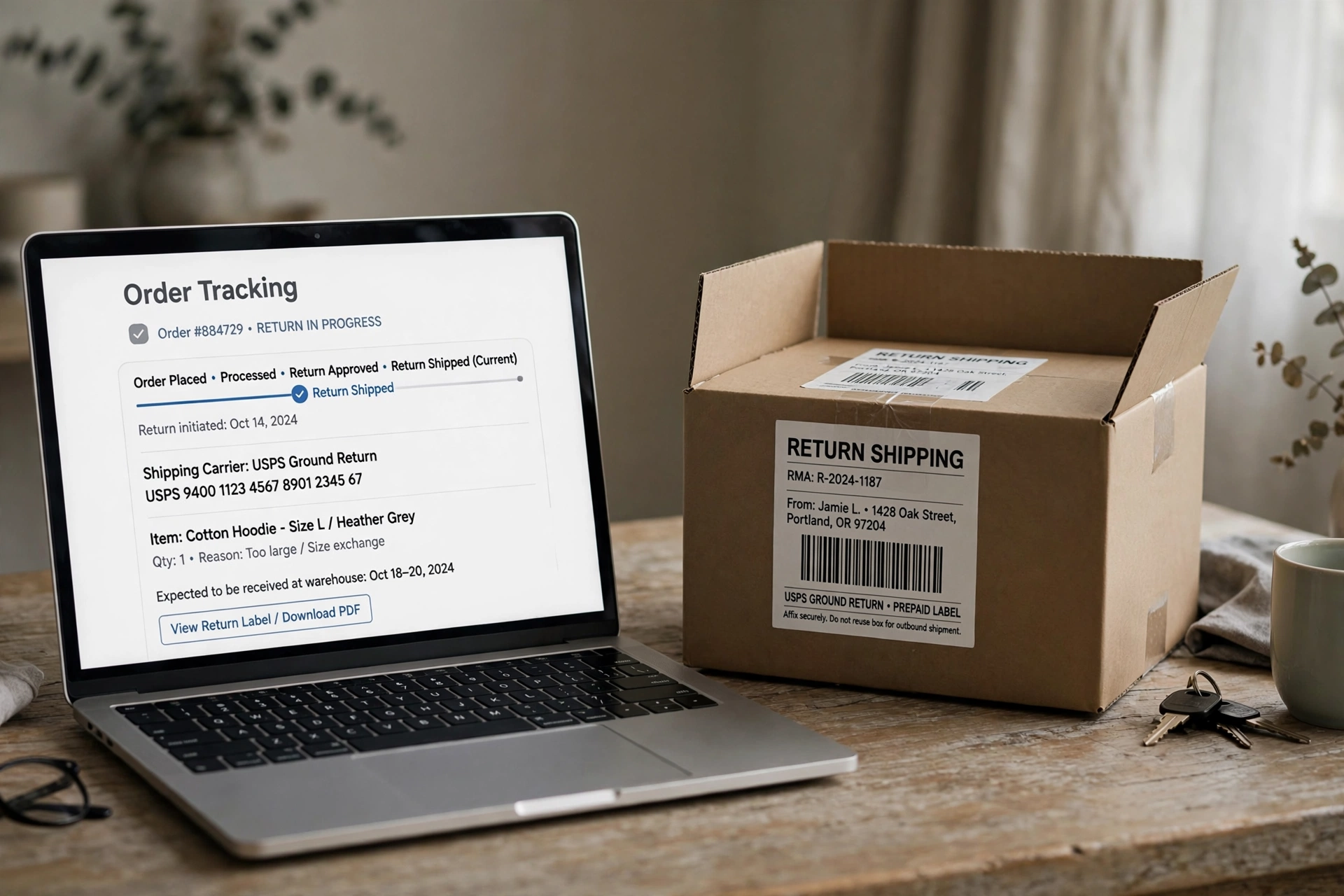
Now the honest part. There are exactly three categories of holiday email where a dead temp address will ruin your week, and you need to plan for all three before you check out:
1. Order tracking and shipping updates. Carriers email tracking numbers; stores email "your order has shipped." If the address is dead, you lose the tracking link. Mitigation: screenshot or save the order-confirmation page (it usually contains the order number), and track via the carrier's site with that number. For anything over ~$75 or arriving close to Christmas, use your real email. The stress isn't worth the spam.
2. Returns, refunds, and exchanges. This is the big one. Return labels, RMA numbers, and refund confirmations all travel by email. A January return on a November purchase is completely normal — and completely impossible if the merchant's emails went to an address that expired in November. Rule of thumb: if there's any chance you'll return it (sizing, gifts for picky people, electronics), use a real address or at least an alias you control rather than a disposable one.
3. Warranty and proof of purchase. That email receipt is your proof of purchase for manufacturer warranties. Appliances, electronics, anything with a serial number — keep the receipt email somewhere permanent. A temp address here is penny-wise and warranty-foolish.
Notice the pattern: temp mail is for inbound marketing you want to dodge, never for transactional mail you might need. This is the same principle behind the password-reset trap — a dead address must never be the only path to something you care about. Holiday shopping just gives that principle a seasonal costume.
The holiday playbook, Black Friday to Cyber Monday
Here's the actual workflow, tuned for the four biggest shopping days:
Before the sales (the weekend before Thanksgiving): Make a gift list with a column for "return risk." Low-risk items (books, stocking stuffers, consumables) get the temp-mail treatment. High-risk items (clothes, shoes, gadgets) get your real email from the start. This one decision prevents 90% of temp-mail regret.
Black Friday: This is peak popup season — retailers deploy their most aggressive first-order offers. Work fast: temp address in, code out, checkout as guest. Keep each temp inbox tab open until the order confirmation arrives, then screenshot the confirmation page. Expect inboxes to be slow; everyone's hammering the same infrastructure.
Small Business Saturday: Smaller shops often send codes manually or via simpler systems that flag disposable domains more aggressively. If a temp address gets rejected at a small store, don't fight it — use an alias instead. The relationship matters more here anyway.
Cyber Monday: Digital goods day — software, subscriptions, gift cards. Codes and license keys arrive by email within minutes, and digital purchases are rarely returnable, which makes this temp mail's best day of the year. One caution: gift cards sent to someone else's email should use a real address. A gift card delivered to a dead inbox is just a donation.
After Christmas (returns season): If you followed the playbook, your returns are all tied to real addresses and your temp inboxes are long gone — along with the 40+ marketing lists you never joined. Check your real inbox in January: it'll be boring. That's the win.
FAQ
Will the discount code still work with a temp email?
Yes — the code doesn't know or care what kind of address received it. The only failure mode is a store that blocks disposable domains at the popup, which is uncommon but does happen (more at small boutiques than big chains).
What if the store requires email verification before applying the code?
Use a temp inbox with a 30–60 minute lifespan, click the verification link, grab the code. This covers nearly every verification flow retailers use.
Can I reuse one temp address across multiple stores?
You can while it's alive, but don't — cross-store tracking via a shared address defeats half the purpose. Fresh address per store takes five seconds.
What about loyalty programs and cashback sites?
Keep those on your real email, always. Points, cashback balances, and tier status are assets — they belong in the "transactional mail you might need" category, not the disposable one. Our reality check on temp mail tradeoffs makes the same distinction in a different context.
Is this against the stores' terms?
You're providing a working email address and completing a legitimate purchase. The coupon terms virtually never require the address to be permanent. The gray area is no grayer than using a separate "shopping" Gmail — which millions of people already do.
Should I just use a second real email instead?
Honestly? For high-return-risk purchases, yes — a dedicated shopping address is the better tool. Temp mail wins on speed and zero-maintenance for one-off grabs. Use both: temp for the coupon hunt, a real secondary address for anything you'll need in January. The blog has more on building this kind of layered email hygiene.
The holiday inbox you want in January is built in November, one disposable address at a time. Grab the discounts, dodge the drip campaigns, and keep your receipts where you can find them — that's the whole game.