

It is a plan that sounds airtight at 1 AM. You want to try a dating app, but the thought of tying your real email — the one your bank, your employer, and your landlord all know — to a profile carrying your photos, your age, and your location makes your skin crawl. So you open a temp mail tab, grab a disposable address, and figure you will move through the whole thing as a ghost. Anonymous dating. Nothing traceable back to you.
I understand the instinct completely, and I am not going to mock it. Dating apps ask for the most personal version of you that exists on the internet. Wanting a layer between that version and your real identity is not paranoia. It is basic digital hygiene, and more people should think this way before they sign up for anything.
But here is the part nobody tells you upfront: the plan fails before it starts, and not for the reason you expect. The problem is not your email. Dating apps barely care about your email. They want your phone number — and that single fact rearranges everything about where temp mail fits into the picture.
The Gate You Actually Hit: It's the Phone, Not the Email
Walk through a Tinder signup today and count the moments where your email address matters. You will be counting for a while, because there are almost none. Tinder, Bumble, and Hinge all run phone-number-first signup: you enter a mobile number, an SMS code arrives, you type it in, and you are verified. Email is an afterthought — an optional field you might fill in later for account recovery or as an alternate login.
This is the category-standard user experience across the big three dating apps. Tinder will not create an account without a working number that can receive its text message. Bumble and Hinge follow the same model. A disposable email address, no matter how fresh or clever, does not get you past a screen that is asking for a phone number. You are bringing the right tool to the wrong gate.
So here is the honest answer to the headline question, stated plainly: temp mail alone does not get you onto a dating app. It was never the key to that particular door. Anyone selling you a guide that says otherwise is describing a version of these apps that stopped existing years ago.
That does not make temp mail useless here. It makes it a supporting actor instead of the lead, and supporting actors matter — once you stop asking them to carry scenes they were never written for.
Why Dating Apps Are Built Phone-First (And Why I'm Not Mad About It)
It is worth understanding why the phone requirement exists, because the reason is more sympathetic than most people assume.
Dating apps are where fake accounts do the most damage of any consumer category I can think of. A fake profile on a forum is annoying. A fake profile on a dating app is a scammer's storefront — a purpose-built machine for earning trust and then converting it into money. The Federal Trade Commission's numbers put a scale on this: in 2023, Americans filed 64,003 romance-scam reports with total reported losses of $1.14 billion, a median loss of $2,000 per victim — the highest reported losses of any imposter-scam category the FTC tracks. Those are only the reported cases. The real figure is certainly larger, because shame keeps a large share of victims silent.
Phone numbers are expensive to fake at scale. Spinning up thousands of real, SMS-capable phone numbers costs real money and leaves a paper trail; generating thousands of email addresses costs nothing and leaves no trail at all. That is the entire logic of the phone gate. It does not stop a determined scammer, but it prices out the industrial bot farms that would otherwise flood every dating app with ten thousand fake profiles before lunch.
My take, for whatever it is worth: this is one of the rare cases where I side with the platform asking for more of your data rather than less. The phone requirement is genuinely load-bearing for safety. Disliking it is completely understandable — I dislike handing my number to apps too — but reading it as surveillance misses the point. It exists because romance scammers extracted over a billion dollars from real people in a single year, and a phone number is the cheapest effective filter the industry has found.
None of this means you should hand your primary number to a dating app without thinking. It means the privacy battle on dating apps is fought on the phone-number front, not the email front — and temp mail was never going to win a battle it isn't fighting.
The Second Wall: Disposable Domains Get Quietly Blocked
Suppose you clear the phone step and the app asks for an email — as a backup login, or for receipts when you buy a premium subscription. This is where temp mail users hit the second wall, and it is quieter and more confusing than the first.
Many dating platforms run disposable-domain blocklists. The behavior varies and that is what makes it maddening: sometimes the form rejects your address outright with a vague "please use a valid email address." Sometimes it accepts the address with a smile and the verification email simply never arrives — no error, no bounce, just silence. You sit there refreshing a temp inbox that will never receive anything, because the platform's mail server discarded your domain three hops ago.
We have written before about why websites block temp mail in the first place, and dating apps are a textbook case of the logic: disposable domains correlate strongly with throwaway accounts, and a dating app lives or dies on account quality. A platform whose business is trust cannot afford to be indifferent about which inboxes its users verify with. If you want the full breakdown of how these blocklists work and why legitimate users get caught in them, read our guide on why websites block temp mail — the dating-app version is the same machinery with higher stakes.
The practical upshot: even in the rare corner of a dating app where email matters, a fully disposable domain is the weakest address you can bring.
Where Temp Mail Genuinely Earns Its Place: The Marketing Machine
Here is where the story turns in temp mail's favor, because dating apps do something most people underestimate until they have lived through it: they email you. Relentlessly.
"Someone likes you!" "Your matches are waiting — don't miss out." "We miss you." "50% off Premium, this weekend only." You download the app, use it for two weeks, delete it in a fit of clarity on a Sunday night — and the emails keep arriving for months. The re-engagement machine does not care that you left. It has your address and a drip campaign with your name on it, and it will run that campaign until the heat death of the universe.
This is the part of dating-app life that temp mail handles beautifully. A reusable disposable inbox works as a firewall between you and the marketing apparatus: promo codes land, subscription receipts land, the "come back, we miss you" sequences land — and none of it touches your real inbox. If you return to the app in six months, the inbox is still there holding your history. If you never return, you close the inbox and the entire marketing relationship evaporates with it. No unsubscribe links to hunt down. No "it may take 10 business days to process your request." Just gone.
There is a second, subtler win: compartmentalization. Dating-app companies get breached like everyone else, and their marketing databases get shared with analytics and advertising partners as a matter of routine. An address used only for dating contains the blast radius. If it leaks, the leak tells an attacker that somebody dated — not your name, not your bank, not your work identity. That is a meaningful difference, and it costs you nothing to set up.
The Privacy Playbook That Actually Works on Dating Apps
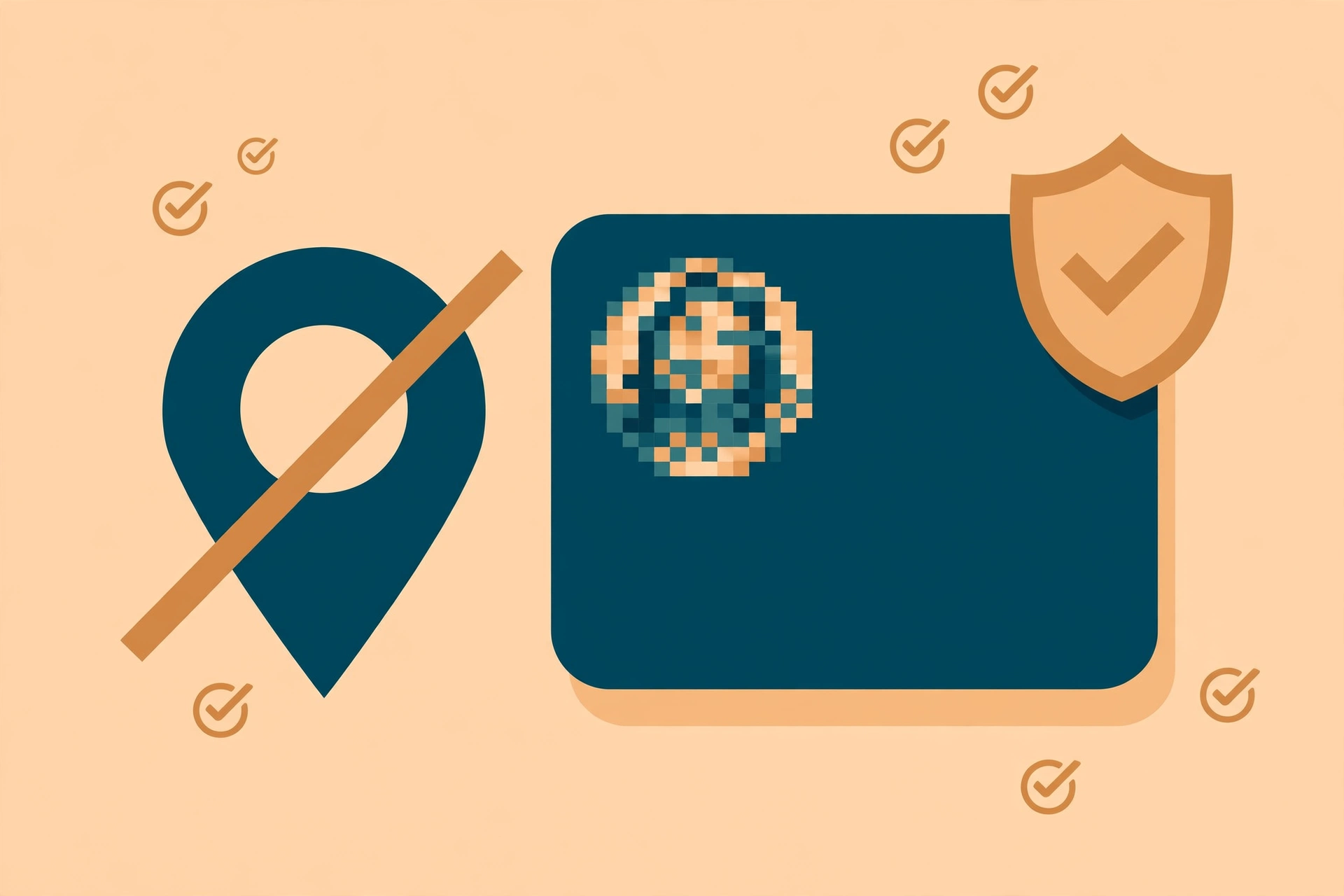
Since temp mail cannot carry the full privacy load on dating apps, here is the setup I would actually recommend to a friend — the layered approach that covers what disposable email cannot.
Give dating its own email lane. Not a ten-minute inbox — a dedicated, reusable address used only for dating apps and nothing else. It keeps breaches compartmentalized, it keeps the marketing machine out of your real inbox, and because it is reusable rather than expiring, you can still recover the account if you get logged out. This is the single highest-value move on this list.
Treat your photos like fingerprints. A reverse image search can connect a dating profile photo to your LinkedIn, your company page, or your Instagram in seconds. Use photos that do not appear anywhere else on the internet, and strip location metadata before uploading. This matters more than any email trick ever will.
Do not link your Instagram or Spotify on day one. Every linked account is a bridge from your dating profile to your real identity, and bridges get crossed in both directions. Link them later, once you have decided the app earned it — not during signup when you are clicking through permissions at speed.
Lock down location aggressively. Dating apps need approximate location to function, but check what you have granted: precise location, background location, location history. Give the minimum the app will accept. Your home and workplace are the two locations you most need to keep fuzzy.
Guard the phone-number handoff. The app already has your number for verification — that battle is over. The one you can still win is not giving it to individual matches until you have a reason to trust them. Keep early conversations inside the app, where blocking is one tap and your number stays private.
Video-chat before meeting anyone. A short video call defeats the most common scam setup — stolen photos, fabricated identity — more reliably than any digital hygiene trick. Anyone who refuses a two-minute video call after a week of chatting has told you everything you need to know.
None of these steps require exotic tools. They require ten minutes of deliberate setup, which is exactly why most people skip them and then wonder how a stranger found their workplace.
Three Ways People Get This Wrong
Mistake one: using a fully temporary inbox for a dating account you want to keep. This is the classic trap, and it is brutal in dating specifically because the account accumulates value: matches, conversations, a paid subscription. The inbox expires, you get logged out on a new phone, the password reset goes to an address that no longer exists — and your account is gone, subscription still billing. We wrote a full postmortem on this pattern in the password reset trap. The rule is simple: if you might want the account in six months, the inbox needs to still exist in six months. Use a reusable address, not a self-destructing one.
Mistake two: trying to dodge a ban with fresh addresses. Got banned from a dating app and thinking a new temp email gets you back in? It will not, and the attempt usually makes things worse. Dating apps ban at the device and network level far more than the email level — a fresh address on a flagged device is just a faster route to a second ban. If you believe a ban was a mistake, the appeal process is the only path that actually works. Everything else is burning time.
Mistake three: treating temp mail as an invisibility cloak. A disposable address hides your email address. It does not hide your IP address, your device, your photos, your phone number, or your behavior patterns. If your threat model is "I don't want marketing emails," temp mail is perfect. If your threat model is "I don't want anyone to know I was here," you need to understand the full picture of what a temp mail provider can actually see — we covered that honestly in can your temp mail provider read your emails. Match the tool to the threat, not the threat to the tool.
Frequently Asked Questions
Can I sign up for Tinder with just a temp email? No. Tinder requires a working phone number that can receive an SMS verification code, and there is no email-only signup path. A temp email can serve as a secondary address on the account later, but it cannot replace the phone step.
Do Bumble and Hinge accept disposable email addresses? As a primary signup method, no — both are phone-number-first like Tinder. As a secondary or recovery email, sometimes, but many disposable domains sit on blocklists and verification mail to them may silently fail. A reusable address on a non-disposable domain is far more reliable.
Is it safe to use my real email on a dating app? Reasonably safe, with one strong recommendation: do not use your primary address. Use a dedicated address reserved for dating. That way a breach or a marketing-database share exposes a compartment, not your identity. This is the one-email-lane-per-life-area habit applied to dating.
What is the most private legitimate way to handle the phone verification? Use a number you control and can keep long-term — a secondary SIM or eSIM line is the cleanest option. Be aware that many dating apps now detect and reject VoIP and virtual numbers, so a burner-number service that worked two years ago may fail today. Whatever you use, keep access to it: losing the number means losing the account's recovery path.
I signed up with temp mail and now I cannot get back into my account. What do I do? First, check whether the inbox still exists — a reusable inbox with a saved recovery key can often be restored. If the address is fully expired, your remaining options are a phone number on file, a linked login like Google or Apple, or the platform's support team. Our guide on what to do when verification codes never arrive covers the delivery-side failures; for the expired-inbox case, the honest answer is that prevention beats cure every time.
Can a dating app see that I am using a temp address? Yes, easily. Disposable domains are public knowledge — blocklist providers maintain constantly updated lists, and most serious platforms check against them at signup. Assume any major dating app knows exactly what kind of address you brought.
The Verdict
Temp mail was never going to make you anonymous on dating apps, because anonymity was never on offer — the phone gate saw to that years ago. But that was always the wrong job to hire it for. Where temp mail genuinely shines here is the unglamorous defensive work: quarantining the marketing machine, compartmentalizing your dating identity, and keeping one more database breach from touching your real life.
Use a dedicated reusable inbox for the dating lane. Keep your photos and your location on a short leash. Guard the phone-number handoff to actual humans, not just to the app. Do those four things and you will be more private on dating apps than 95% of users — no ghost protocols required.
If you want the inbox part handled, TempMailUSA gives you reusable disposable addresses with no signup — one more lane in the privacy setup above, ready in about three seconds.