

Temp Email for Poe Signup: One Login, a Mall Full of Chatbots — and the Points Meter That Rations Them
Poe is not a chatbot. It is a mall full of them
Every other post in this series has been about one chatbot and one door. Poe breaks that pattern, because Poe is not a chatbot at all. It is Quora's platform for chatting with other companies' chatbots — GPT, Claude, Gemini, Llama, and dozens of specialist and community-built bots — all behind a single login. Quora opened it to the public in early 2023, and the pitch has not changed since: stop making an account everywhere and make one account here instead.
That pitch is exactly why the temp-email question matters more for Poe than for a single-model app. Signing up for Poe with your real address does not just hand one company your inbox. It hands Quora a profile that sits at the center of everything you ask, across every model, in one history. A disposable address keeps the experiment contained: you can compare Claude against GPT-4o on the same prompt, try a coding bot and an image bot, and walk away without a new permanent account trailing you.
The trade is real, though, and it is not the one most guides warn you about. The inbox is the easy part. Poe's signup is about as welcoming as a signup gets. The hard part starts after you are in, and it has a name: compute points. This post walks through the door first, then the meter, then the places where a disposable inbox quietly stops working.
The signup door: an email, a code, and no phone number
Poe's signup page offers three ways in: email, Google, or Apple. The Google and Apple doors are the fast ones, and they are also the ones that defeat the purpose if privacy is why you are here — both tie the account to an identity you already use everywhere. The email door is the one this post tests, and it is a plain, short flow.
You type in an email address. Poe sends a six-digit verification code to that inbox. You type the code back, finish a short profile setup, and you are in. There is no phone-number step in the standard flow, no credit card, and no waiting list. The whole thing takes about a minute when the code arrives promptly, and codes usually arrive in seconds.
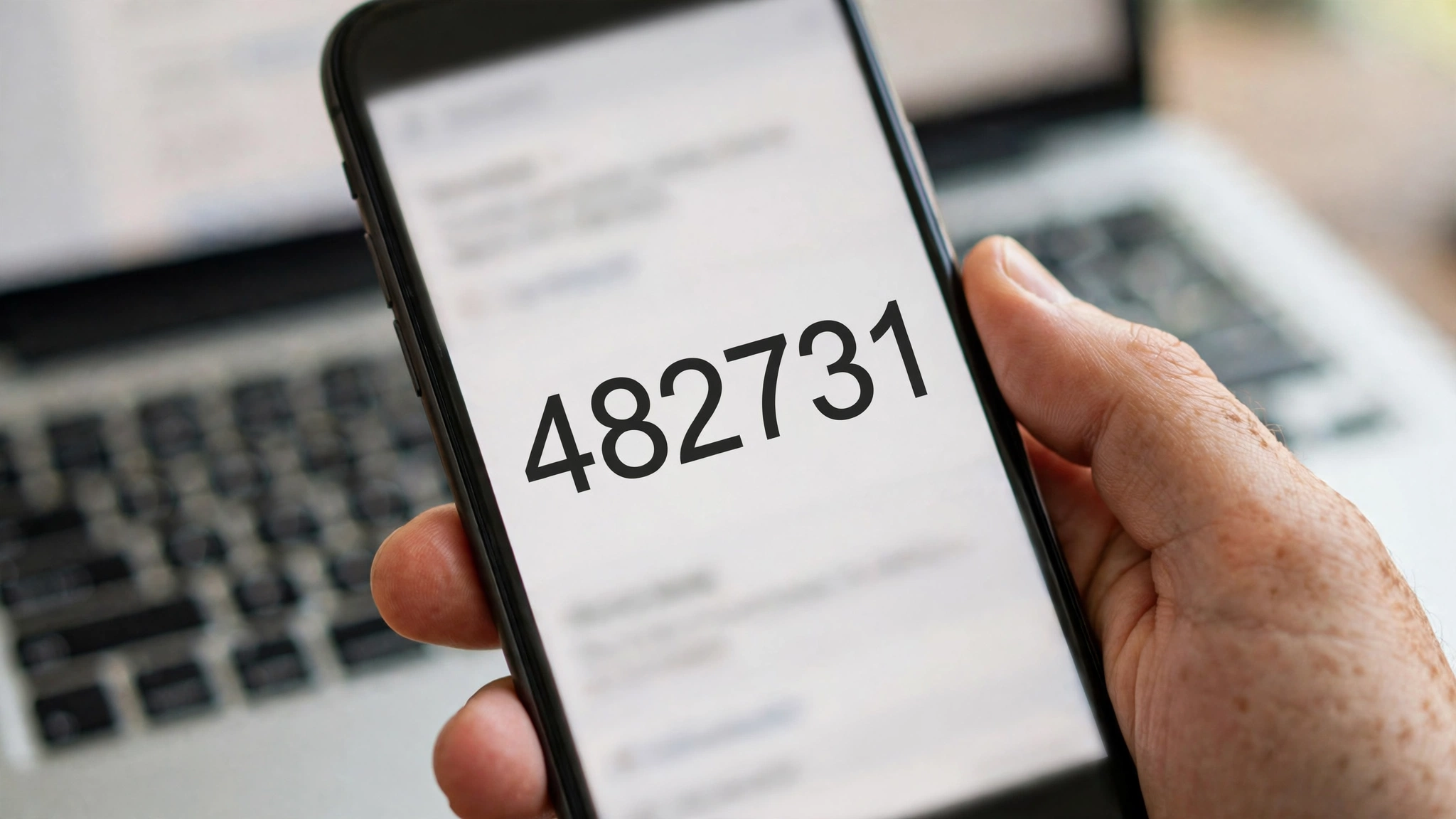
The code is the entire gate, which is why the disposable-inbox question has a concrete answer instead of a theoretical one. In a screen-recorded tutorial posted in August 2026, the presenter generated an address on temp-mail.org, pasted it into a signup form, and the verification email from Poe arrived carrying the code 196629. That is not a claim from a temp-mail provider's marketing page. It is a Poe email, in a disposable inbox, on camera. Other guides list Poe among the AI tools where temp mail is used for exactly this step, and the pattern is consistent: Poe sends the code to whatever inbox you give it and moves on.
That puts Poe in the friendly half of this series. It is nothing like DeepSeek, whose allowlist refuses disposable domains before any code is sent. It is closer to Qwen's international chat, which also takes an email and a code with no phone check — except Poe's code is the whole story, where Qwen's story had a second, phone-gated door hiding behind the first.
Two honest caveats, because "it worked once" is not "it always works." First, acceptance depends on the domain, not on the idea of temp mail. Poe can block a specific disposable domain the same way any service can, and a domain that works today can land on a blocklist tomorrow. If the code never arrives, the first fix is to try a different temp-mail provider or domain, not to keep hammering resend on the same address. Second, the code expires. Treat it like any email OTP: have the inbox open before you request it, and type it in right away instead of letting it sit.
The points meter is the real price of free
Here is where Poe stops being a normal signup story. Poe does not ration you with a message count. It rations you with compute points, and every bot charges a different price per message. A short reply from a light model might cost a handful of points. A long answer from a flagship model costs far more. The free plan gives you a limited daily allowance, and when it is gone, the expensive bots lock until the allowance tops up again the next day.
This changes what "free" means in practice. On ChatGPT's signup, the free tier is mostly a question of which model you can pick. On Poe, the free tier is a budget you spend. The same question can cost you a little or a lot depending on which bot answers it, and the meter does not care that you just signed up. New users burn through the free allowance fastest, because the natural first move is to ask the biggest, most expensive model the hardest question you have — and then ask the second-biggest model the same question to compare.

Poe's pricing page currently lists the free plan at $0, a Starter tier from $4.99 a month, and a higher tier from $16.67 a month, with larger point allowances and broader model access as you pay more. My opinion, after watching how people actually use this platform: the free plan is genuinely enough if you are exploring — trying a few bots, asking short questions, comparing two models on the same prompt. It is not enough if you want Poe to be your daily driver for heavy models. That is a deliberate design, not an accident: the points system is how Poe gives away a taste of every model without giving away the expensive ones.
One practical consequence for temp-mail users: the points allowance is per account, not per inbox. Nothing in the signup flow stops you from making a second account with a second disposable address when the first one's points run dry. Guides that teach "account rotation" as a way around Poe's limits describe exactly that. I would not build a habit on it. Poe's terms are written for one person, one account, and accounts created to farm free points are the kind that get flagged and closed. A second throwaway for a second experiment is one thing. A rotation schedule is a different thing, and it is the fastest way to lose the chats, bots, and history you actually wanted to keep.
The temp-email test: what actually happened
So, to put the pieces together: does a temp email work for Poe signup? On the evidence available, yes — with the domain caveat above. The August 2026 tutorial is the clearest data point in this series, because it shows the full loop rather than asserting it: temp-mail.org address in, Poe verification email with a six-digit code back, account created. No phone step appeared anywhere in that flow, and no card was asked for.
That matches how Poe's signup is built. Email verification is the only identity check in the standard flow, and Poe publishes no disposable-domain blocklist for it. Compare that with Grok, where the email door opens easily and the phone gauntlet waits on the other side: Poe has no second gate. The email is the gate, the code is the key, and once you are past it, Poe never asks where the address came from.
There is one wrinkle worth knowing before you commit to a disposable address. Poe lets you create your own bots, and some of Poe's best material is community bots built by other users. A throwaway account is fine for chatting with them. But anything you build — a bot, a prompt, a following — lives on that account. If the inbox behind it is gone, the account is an island: you can still log in with the password, but you cannot recover it, cannot change its email, and cannot prove it is yours if Poe ever asks. That is a fair trade for a weekend of model comparison. It is a bad trade for a bot you spent a week tuning.
Where a disposable inbox breaks down
A temp email gets you through Poe's door. It does not get you through everything behind the door. Four places where it breaks:
First, account recovery. Poe, like every service in this series, sends password resets to the registered address. When that inbox has expired, there is no recovery path. Your chats and your points balance are still there, behind a password you may or may not remember, with no way back in if you forget it.
Second, paid plans. The moment you pay for Starter or a higher tier, the disposable address becomes a liability rather than a shield. Receipts, billing problems, refund requests, and subscription changes all go to that inbox. Poe will happily take your card — a temp email does not stop a checkout — but a billing dispute with no access to the account email is a miserable experience. If you are going to pay, move the account to a real address first.
Third, the mobile apps. Poe's iOS and Android apps sign in with the same account, so the temp-email account works on mobile — but push notifications and account emails still go to the dead inbox. That is mostly harmless until it is not: a security alert you never see is the same as no security alert.
Fourth, trust. Poe's community side — publishing bots, earning followers, getting featured — runs on reputation, and reputation accrues to accounts that look stable and reachable. A throwaway account can chat with anything. It cannot build anything that lasts, because everything it builds is one forgotten password away from being orphaned.
None of this is a reason not to use a temp email for Poe. It is a reason to decide, before you sign up, whether this account is a tasting menu or a home. If it is a tasting menu, a disposable address is the right tool. If it is a home, use an address you will still own in a year.
The verdict: when Poe and a temp email are a good pair
Poe is the best fit for a temp email in this whole series, and also the one where the fit expires fastest. The signup is the friendliest I have covered: an email, a six-digit code, no phone, no card, no waiting list, and a real on-camera example of the code landing in a disposable inbox. If your goal is to try Poe — compare a few models, kick the tires on a few bots, see whether the platform earns a place in your routine — a temp email is the right way to do it. You get the full tour without handing Quora your real inbox.
But Poe is also the platform where the free tier has the shortest fuse. The compute-points meter, not the inbox, is what decides how far you get. A disposable address gets you in the door; it does not refill the meter, and the meter is what rations the good models. Use the free allowance to learn which bot you actually like. If one of them earns daily use, that is the moment to stop treating the account as disposable: put it on a real address, pay for the tier that covers your usage, and keep the chats and bots you built. The temp email did its job the minute the code arrived. Everything after that is about whether the account is worth keeping.
Frequently asked questions
Can I sign up for Poe with a temp email?
Yes. Enter the disposable address at signup and Poe sends a six-digit verification code to it — in an August 2026 screen-recorded tutorial, a Poe code arrived in a temp-mail.org inbox without any phone or card step. If the code never arrives, try a different temp-mail provider or domain, since acceptance can vary by domain.
Does Poe ask for a phone number?
No, not in the standard signup flow. Email, Google, or Apple is all it asks for. Poe has no phone-verification step like the ones that gate some other AI tools, and no card is required for the free plan.
Is Poe free?
Yes, with a meter. The free plan costs $0 and gives you a limited daily allowance of compute points for selected bots. Poe's pricing page lists a Starter tier from $4.99 a month and a higher tier from $16.67 a month, with larger point allowances and access to more capable models.
How do Poe compute points work?
Every message costs points, and the price depends on the bot: flagship models cost far more per message than light ones. Your free allowance refills daily, so when the points run out, the expensive bots wait until the next day. Picking a cheaper bot for a simple question is the main way to make the free plan last.
Can I use Poe without an account?
No. Poe requires an account before you can send a message to any bot. The signup itself is short — email, six-digit code, profile setup — but there is no anonymous mode.
What happens to my Poe account when the temp inbox expires?
The account keeps working as long as you remember the password, but you lose every recovery path: password resets and security emails go to an inbox that no longer exists. If the account starts holding chats, bots, or a subscription you care about, move it to a real address you control.
Is creating multiple Poe accounts with temp emails allowed?
Poe's terms are written for one person, one account, and guides that teach rotating throwaway accounts to farm free points describe a workaround, not a feature. Accounts made to harvest free allowances can be flagged and closed, taking their chats and bots with them. One throwaway for a trial is reasonable; a rotation schedule is asking to lose the account.
Need a disposable temporary email?
Protect your real inbox from spam and promotional clutter instantly and free.
Received a suspicious email, text, or charge alert?
Verify whether the sender domain is disposable, spoofed, or unverified before clicking links.