

Temp Email for Qwen Signup: Two Qwens, One Email Door — and the Privacy Question Nobody Answers
There are two Qwens, and the wrong one asks for your phone number
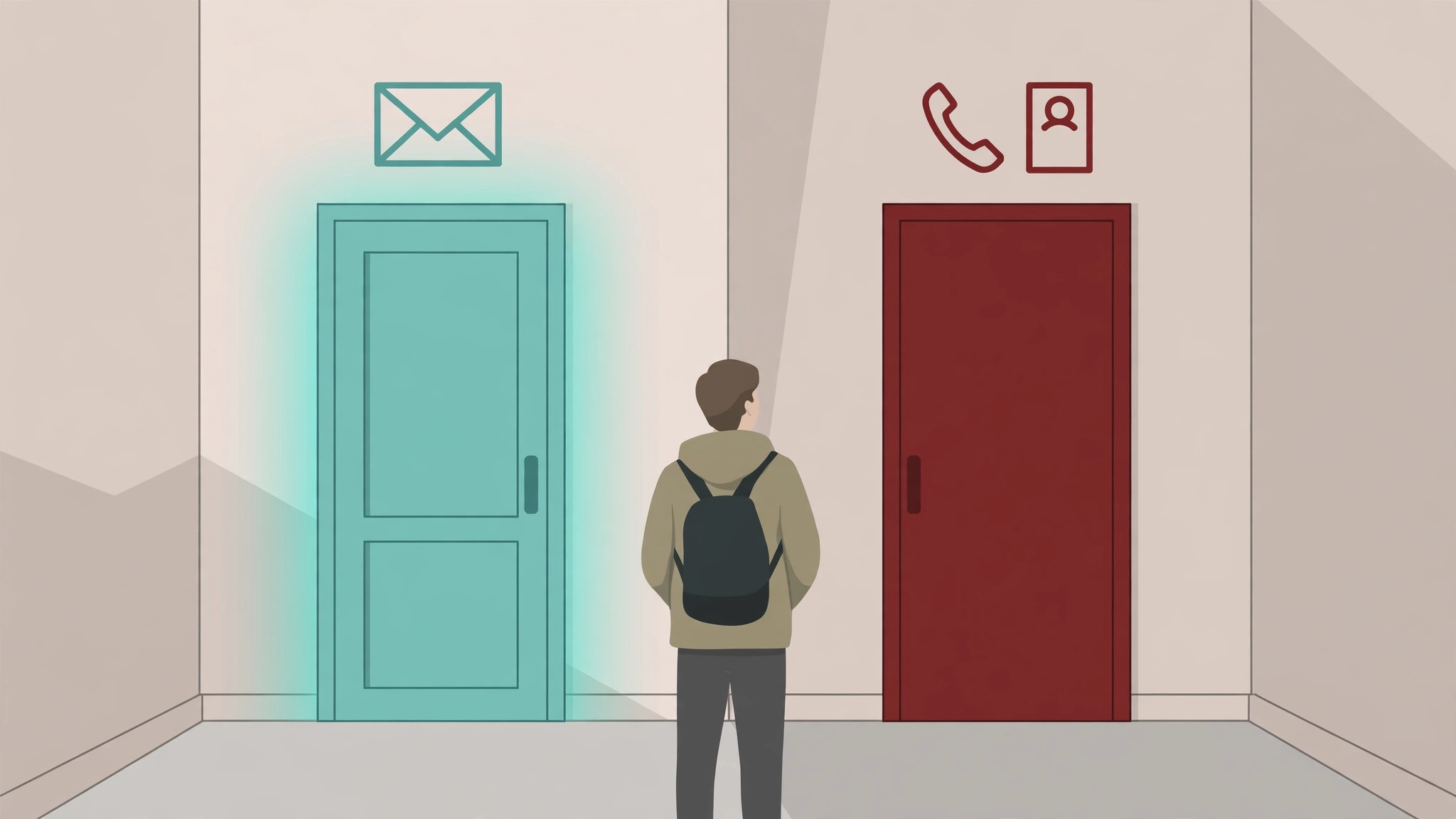
Qwen is the only chatbot in this series where the first decision is not about the email you sign up with. It is about which Qwen you are signing up for, because there are two of them, they look almost identical, and they ask for completely different things.
The first Qwen lives at chat.qwen.ai. It is Alibaba's international chatbot, it opens in the US and most other countries with no VPN, and it signs you up with an email address, a Google account, or a GitHub account. No phone number, no credit card, no waiting list. The second Qwen lives at tongyi.aliyun.com, under its Chinese name Tongyi Qianwen, and it wants a Chinese (+86) phone number and real-name verification before it lets you in. Same model family, same company, two doors — and the door you walk through decides whether a temp email is even relevant.
This is not a small footnote. It is the whole post. Every guide that says "Qwen needs a Chinese phone number" is describing the domestic version. Every guide that says "Qwen signup takes two minutes with just an email" is describing the international one. Both are correct, both are widely quoted, and if you land on the wrong version you will spend an afternoon fighting a phone-number field that was never meant for you. The test I ran for this post, and the only one that matters for a temp-email reader, is the international door at chat.qwen.ai. That door opens. The rest of this post is about what is waiting on the other side — including one thing nobody at Alibaba will give you a straight answer on.
The signup itself: an email, a six-digit code, and nothing else
On the international site the flow is the plainest kind of signup there is. Open chat.qwen.ai, go to the sign-in page, and you get three doors: Google, GitHub, or email. Pick email. You type the address, Qwen sends a six-digit verification code to the inbox, you type the code back, and you are in. If the flow asks you to set a password, set one; repeat logins either re-verify by email or use the password, depending on the version of the flow you land on. No credit card is asked for at any point, and there is no waiting list.
A temp email works here for the most boring reason possible: there is nothing in the flow designed to stop it. Qwen publishes no disposable-domain blocklist for the chat signup, and unlike DeepSeek, which runs an allowlist that refuses disposable domains before any code is sent, Qwen sends the code to whatever inbox you give it and moves on. The code is a standard six-digit number, the same shape as the email OTP codes most services use, and it arrives in seconds on a working disposable inbox. If it does not arrive, the usual causes apply: check spam, wait sixty seconds before resending, and make sure mail from @qwen.ai and @alibabacloud.com is not being filtered. Requesting many codes in a short burst can trigger rate limiting, which is true of every service in this series and is not a temp-email problem.
Two warnings, both earned by other people. First, the Google and GitHub doors are not shortcuts around the email question — they are a different trade, and a worse one if privacy is why you are here. Signing in with Google anchors your Qwen account to a Google account that is anchored to a real identity, a recovery phone, and years of history. That is a fine choice for an account you plan to keep. It is a strange choice for an account you created with a disposable inbox specifically so it would not be tied to you. The email door is the only one that keeps the account standalone, and it is the only door this post recommends.
Second, do not confuse the chat signup with the developer signup. Qwen's API lives on Alibaba Cloud's Model Studio platform (formerly DashScope), and that product is a different world: an Alibaba Cloud account, phone verification, and a card on file before you get a working key. If you are here to chat with Qwen, none of that applies. If you are here to build on the API, a temp email will not help you, because the phone step is the gate and the inbox was never the problem. This is the same split that trips people up on other AI tools — chat signup and API signup are two products wearing one brand.
What the free tier actually gives you, now that Qwen4-Max is the flagship
Qwen's free tier is genuinely free in a way that is becoming rare: as of early October 2026 there was no paid plan for individual chat users at all, and the chat itself — web, iOS, Android, and desktop apps — costs nothing. There is no Pro tier to upsell you into, no credit system to top up, no "free trial" that quietly converts. You sign up, you chat. That simplicity is the product's best feature and, as the next section shows, also the reason to read the privacy situation carefully: when a frontier chatbot charges you nothing, the question of what it takes instead is not optional.
The model behind the chat changed in mid-November 2026, and the change is worth knowing because it is the reason Qwen is suddenly in the conversation again. On November 16, Alibaba made Qwen4-Max its new flagship: 2.4 trillion parameters in total, 71 billion active per token, a one-million-token context window, and native vision. A million-token context is the number that matters for real use — it is why Qwen can swallow a long document, a codebase, or a research paper and answer questions about the whole thing in one session, where most free chatbots would have forgotten the beginning by page ten. The chat also ships image editing, web search, web development, artifacts, deep research, image generation, and video generation as built-in modes, all on the free tier.
One honest gap in the numbers: Qwen does not publish a fixed daily message limit, and the figures floating around the internet disagree with each other. One guide from June 2026 reported 50 messages a day; other trackers record no published quantity at all. The June figure predates the Qwen4 launch by five months, and repeating it as current would be inventing data. What I can say from the sources that checked the product in November: the free tier is usable for real daily work — dozens of conversations, long documents, image work — and the wall, if you hit it, shows up inside the product rather than on a pricing page. If you are planning a workflow around a specific daily volume, verify the limit inside your own account before you depend on it.
Where your chats go — and the answer Alibaba does not publish
Here is where this post departs from the rest of the series, because the finding is an absence rather than a fact.
With most of the tools I have covered, the privacy question has a documented answer. Some train on your chats by default and let you switch it off. Some do not train at all. Qwen sits in a third category: as of a check dated November 18, 2026, the training question is simply not established in any public documentation — no statement that your inputs train the model, no statement that they do not, and no published data-processing addendum for the consumer chat product. The same check could not establish where personal data is stored either. That is not the same as a bad answer. It is a missing answer, and for a privacy-minded user a missing answer should count for more than a bad one, because you cannot opt out of a policy that was never published.
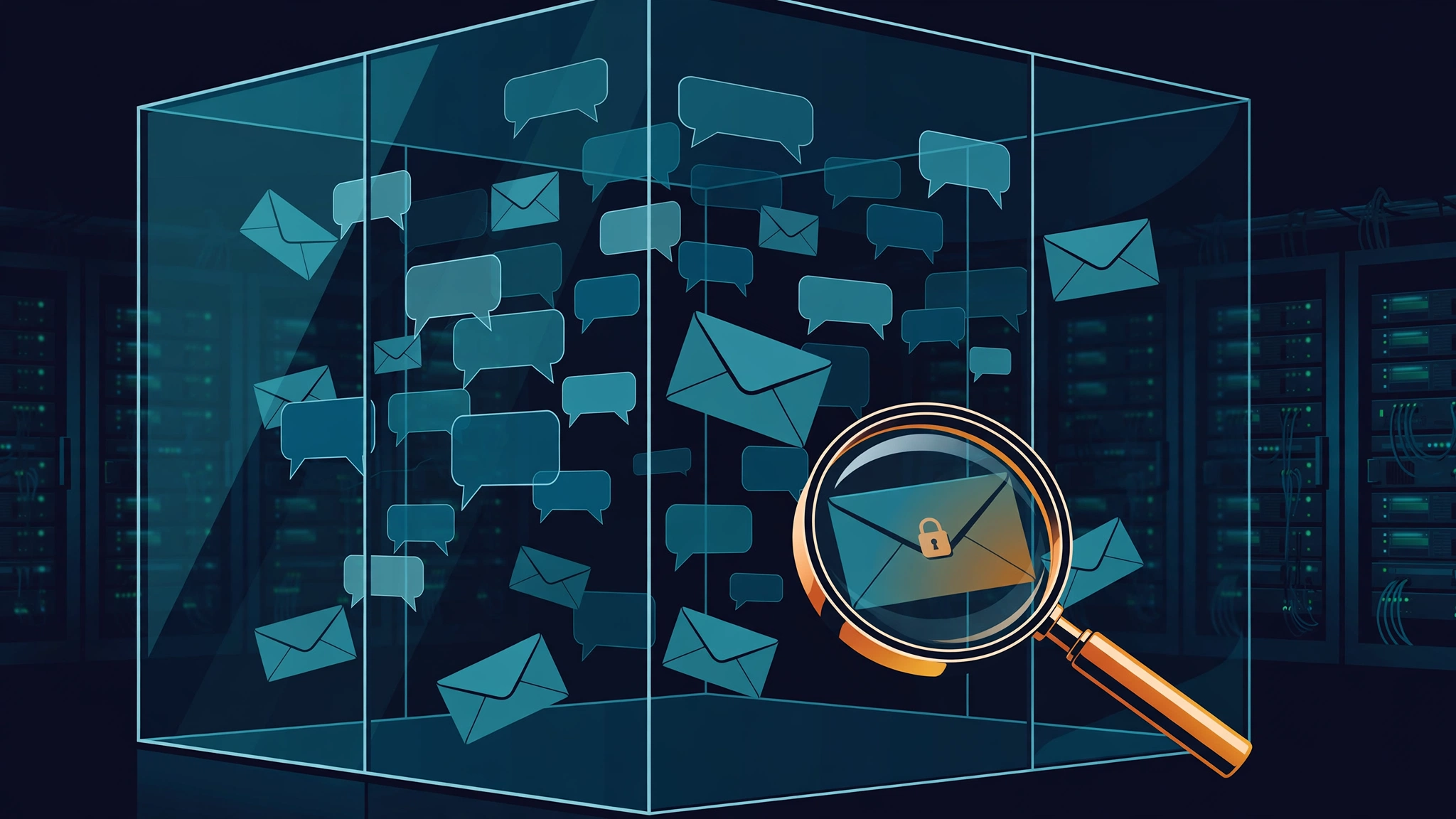
Put that next to what is known. Qwen is Alibaba's model family, built by Alibaba Cloud. The international chat is a consumer product of a Chinese cloud company, and your conversations travel to Alibaba's infrastructure. That is not a scandal — every chatbot sends your prompts to its maker's servers — but the jurisdiction and the company matter, because they decide which data laws apply and which government can compel access. A user in the US chatting with a US company's bot is in one legal world; the same user chatting with Qwen is in another, and Qwen's own documentation does not do much to map it for you. The interface has appeared in German for European visitors, which suggests a European-facing deployment exists, but no published data-processing agreement settles the question the way a European user would want it settled.
My recommendation, stated plainly and without hedging: treat a Qwen account — temp email or not — as a room with the curtains open. Use it for ordinary work: drafting, translating, summarizing public text, coding help, brainstorming. Do not paste work documents, private correspondence, medical or financial details, or anything with other people's names and numbers in it. That is good advice for any free chatbot, but it is doubly good advice for the one whose training policy is unpublished, because the temp email protects your identity and nothing else. It does not encrypt your prompts, it does not keep them on your machine, and it does not stop the company from doing whatever its unpublished policy allows with them.
There is a second, quieter privacy cost that the temp email makes worse rather than better. A disposable inbox dies in minutes. If Qwen ever publishes a training opt-out, a data-deletion request form, or a privacy setting worth changing, you will not be able to use any of it, because the account is unreachable — the reset email goes to an inbox that no longer exists, and the settings page is behind a login you cannot complete. The same is true of every tool in this series, but it stings more here, precisely because the privacy answers are missing today and might appear tomorrow. If the privacy question is the reason you are reading this post, the honest move is to sign up with a real email you control, so you can actually exercise the rights you are worried about. A temp email is for trying the product, not for guarding it.
The verdict: the easiest signup in the series, with the thinnest privacy paper
So, does a temp email work for Qwen signup? Yes — on the international site, with a six-digit code, no phone, no card, and no blocklist in the way. It is the easiest signup in this series alongside Kimi, and easier than Manus, DeepSeek, or Hinge, all of which put a second gate after the email. If your goal is to try Qwen4-Max's million-token context without handing over your real address, a disposable inbox does the job in about two minutes.
But "it works" is the smallest part of the answer. The larger part is that Qwen asks the least of you at signup and tells you the least about what happens next. No phone number, no card, no published message limit, no published training policy, no settled data-residency statement. That combination is genuinely attractive if you want a free frontier chatbot with no friction, and genuinely worth pausing over if you wanted the temp email to buy you privacy rather than just anonymity. Anonymity is what you get: an account with no name on it. Privacy is a different product, and Qwen does not currently sell it in writing.
Use the temp email for the test drive. Kick the tires on Qwen4-Max, try the million-token context on a long document, see whether the image and research modes earn a place in your workflow. Then, if Qwen becomes a tool you actually use, make a decision with your eyes open: a real email you control, a clear understanding that your chats go to Alibaba's servers, and nothing sensitive in the prompt box until Alibaba publishes the answers this post could not find.
Frequently asked questions
Can I sign up for Qwen with a temp email?
Yes, on the international site at chat.qwen.ai. Choose email signup, enter the disposable address, and type in the six-digit verification code Qwen sends. No phone number or credit card is required. Do not use the domestic site at tongyi.aliyun.com — that version requires a Chinese phone number and real-name verification.
Does Qwen require a phone number?
The international chat at chat.qwen.ai does not. The domestic Chinese version does, and so does the developer API on Alibaba Cloud Model Studio. If a signup page asks for a phone number, you are on the wrong Qwen.
Is Qwen Chat free?
Yes. As of November 2026 there is no paid plan for individual chat users — the web and mobile chat is free, including the Qwen4-Max flagship model, image generation, and deep research. The API is a separate paid product.
What is Qwen4-Max?
Qwen4-Max is Alibaba's flagship model since November 16, 2026: 2.4 trillion parameters in total with 71 billion active per token, a one-million-token context window, and native vision. It is the default model behind Qwen Chat's free tier.
Does Qwen train on my chats?
Alibaba does not publish a clear answer for the consumer chat product — as of November 2026, no public documentation confirms or denies training on chat inputs, and no data-processing addendum is published. Treat your prompts as potentially retained, and do not paste sensitive or private material.
Can I use a temp email for the Qwen API?
No. API access runs through Alibaba Cloud Model Studio, which requires phone verification and a card on file. A temp email cannot pass the phone step, and the API signup is a separate product from the free chat.
What happens to my Qwen account when the temp inbox expires?
The account still exists, but you cannot recover it: password resets and verification emails go to an inbox that no longer exists. If you want to keep the account, transfer it to a real email you control — or accept that it is a throwaway.
Need a disposable temporary email?
Protect your real inbox from spam and promotional clutter instantly and free.
Received a suspicious email, text, or charge alert?
Verify whether the sender domain is disposable, spoofed, or unverified before clicking links.