


It is 9:40 PM and you have found the dresser. Solid wood, half the retail price, fifteen minutes away, and the seller's photos actually show the back panel, which means they are either honest or very good at this. You click the reply button and a strange address appears — something like sale-dskx9-7845120391@craigslist.org. You type your message, hit send, and walk away feeling clever about your privacy, because you never gave out your real email.
Here is the uncomfortable part: you did. That relay address belongs to the seller. The message you sent came from your inbox, and the seller can see exactly where it came from. Meanwhile, on the seller's side, their real email never appeared anywhere — Craigslist hid it the moment they posted.
I run a temp mail service, so the honest version of this guide starts with an admission: on Craigslist, the platform already does the job most people buy a burner email for. On Facebook Marketplace, email barely enters the room at all. That does not make temp mail useless for marketplace deals — it makes the useful parts narrow, specific, and worth getting exactly right. This is where temp mail helps on both platforms, where it actively backfires, and the four email-shaped ways these deals go wrong.
Craigslist already gave you a burner — it is called the relay
Every ad on Craigslist carries an anonymized relay address instead of the poster's real email. When someone replies, the message routes through that relay and lands in the seller's actual inbox; the seller replies through the same relay and it lands in yours. Neither side sees the other's real address unless someone types it into the message body. That is the entire privacy system, and it is the part most guides skip: before you reach for a temp email on Craigslist, understand that the platform hands you a disposable-ish identity for free, attached to each individual ad.
The relay has limits that matter. It dies when the ad expires or gets deleted — which, for a typical 7-to-30-day posting, means the thread has a natural half-life. Spam filters on your own email provider sometimes eat relay mail because the sender address looks anonymized; when a Craigslist thread goes quiet, checking the spam folder is the first move, not the last. And the relay is one-directional in a subtle way people misunderstand: it protects published addresses. The moment you paste your own email into a message ("easier to reach me at..."), the relay cannot help you anymore.
So the first honest answer: if you are worried about strangers on the internet harvesting your email from a Craigslist ad, the platform already solved that problem decades ago. Temp mail is not competing with the relay. It is answering a different question.
The buyer's seat: your real email walks in with you
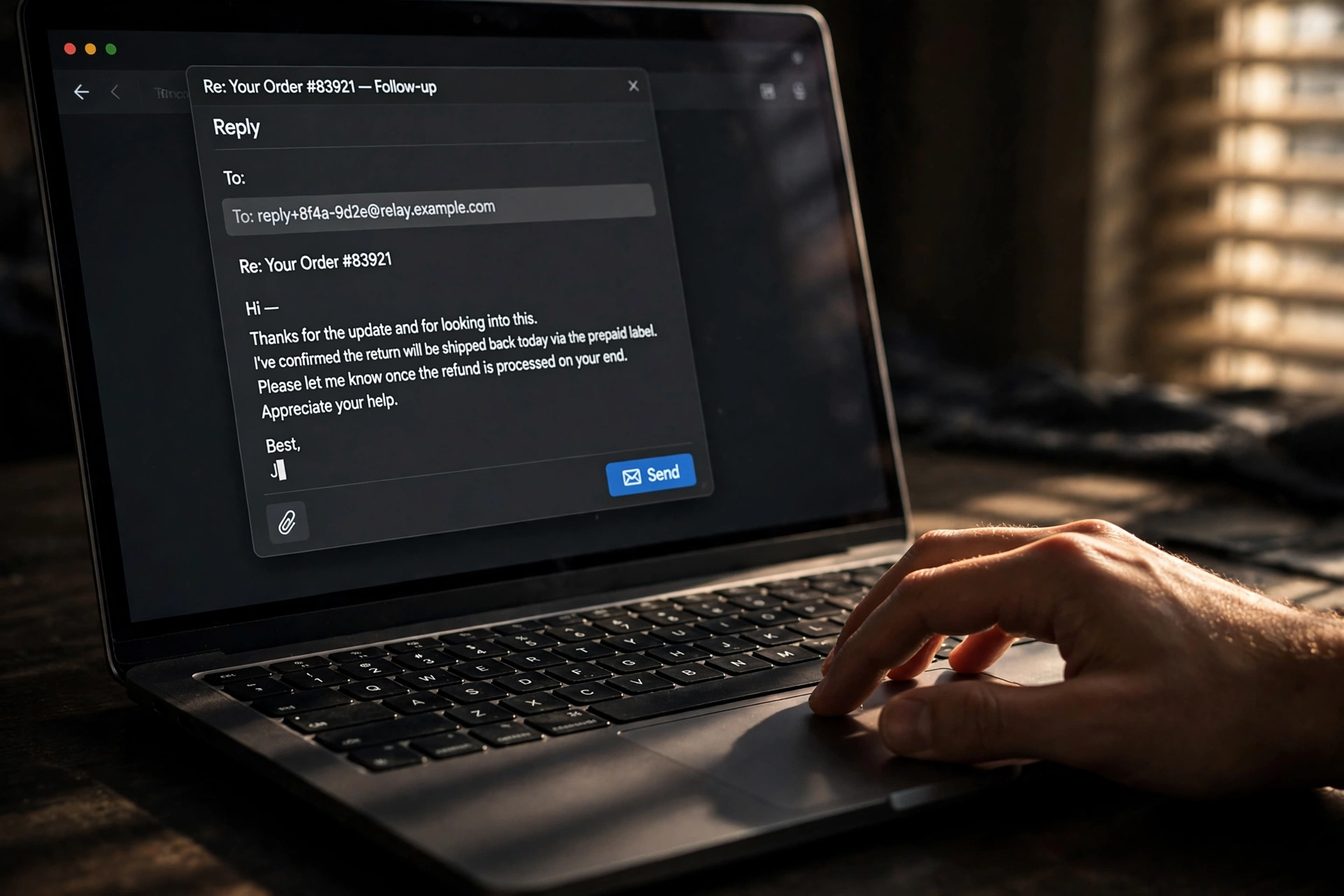
Now sit on the buyer's side, because this is where the confusion lives. You find the dresser, click reply, send your message from your real inbox. The seller receives it and sees your actual address — they have to, or they could not answer you. One widely-read walkthrough of Craigslist's email system puts it plainly: as a buyer you are not publishing your address to the public, but the one seller you contacted absolutely can see it. That is by design, not a leak.
Could you reply from a temp email instead? In theory, yes: open a temp inbox, and email the relay address from... no. Here is where the idea breaks. Temp inboxes are receive-only on virtually every provider — there is no compose window, no sent folder, no way to originate a message. We documented the full mechanics in Can You Reply From a Temp Email? The One-Way Inbox Explained. A buyer needs to send the first message, and a burner that cannot send is a paperweight at that moment.
There is a second, quieter break. Say you reply from your real email and the negotiation stretches over two days. Midway, you get nervous and ask the seller to switch to a burner address you just generated. The seller now has your real address anyway — the switch protects nothing and adds friction to a deal where responsiveness is currency. The right move as a buyer is decided before the first message, not during the thread.
So what is the right move? A dedicated permanent address you control — a free Gmail or Outlook account used only for buying and selling — beats temp mail for buyers on every axis that matters. It sends. It receives for months. It has a spam folder you check. And when a deal goes sideways and you need the thread as evidence, it is still there. A temp inbox that evaporates in an hour cannot be your paper trail.
The seller's seat: where temp mail breaks your ad
Selling flips the mechanics, and this is where people actually try to use temp mail — as the contact email on a posting, or as the account behind the posting. Both break, for different reasons.
As the posting account: Craigslist accounts in most categories require phone verification to post, and paid categories bill against the account. The platform's abuse systems are tuned to detect disposable domains at signup — the same blocklist machinery that rejects burners across the web, which we mapped in Why Websites Reject Your Temp Email: The Blocklist Machine, Explained. Even if a burner squeaks past signup today, account recovery, posting confirmations, and billing receipts all route to an inbox that will not exist next week. A seller account is an asset — listings, reputation, saved searches — and assets do not live in disposable inboxes.
As the reply path: suppose you post with a real account but paste a temp address into the ad body as your contact. Buyers email the burner; you read replies in a temp inbox for a few hours; then it expires mid-negotiation and the buyer who was deciding between your dresser and another one gets silence. You did not protect your privacy — the relay already did that — you just made yourself unreachable at the exact moment reachability was the job.
The negotiation archive problem: marketplace disputes are resolved by whoever has the thread. "They agreed to $80 in email" is worthless when the inbox is gone. Sellers who keep threads keep leverage.
There is exactly one seller-side scenario where a burner earns its place, and it is narrow: cross-posting a "wanted" ad or a feeler in a high-scam category where you expect a flood of junk and phishing in the first 48 hours, you intend to abandon the address regardless, and you will move serious buyers to a real channel immediately. That is a spam shield, not an identity — use it like one, and kill it when the ad comes down.
Facebook Marketplace: email never enters the room
Marketplace runs on a different planet. There is no relay address, no reply button generating anonymized emails, no inbox thread — buyer and seller talk inside Facebook Messenger, directly from the listing. No phone numbers or email addresses change hands unless someone volunteers them. The privacy question most people bring from Craigslist simply does not apply, because the communication channel is the Facebook account itself.
That reframes the temp-mail question entirely. On Marketplace, the email that matters is the one on your Facebook account: it is the recovery address, the security-alert destination, the thing that stands between you and a locked account if a "buyer" runs the verification-code scam on you. A disposable address there is not privacy — it is a self-inflicted account-takeover risk. Lose the inbox, lose the recovery path, lose the account with all its Marketplace history and ratings.
The scam to know here wears email's clothing but is not about your email at all. It goes like this: a "buyer" messages you, says they need to confirm you are a real person, and asks you to read back a six-digit code they just sent. The code is not theirs — it is a Facebook or Google account-recovery code they triggered against your account, and reading it aloud hands them the keys. Security writeups flag this as one of the costliest Marketplace scams because the damage is the whole account, not one transaction. No legitimate buyer ever needs a code from you. The rule is absolute: never read a code aloud to anyone, for any reason, on any platform.
The three narrow places temp mail genuinely helps
After all that demolition, here is what survives — the situations where a burner is honestly the right tool on marketplaces:
1. The first-contact filter on a sketchy listing. You are responding to an ad that smells slightly off — stock photos, price too good, seller joined this month — and you want to ask one question without handing over your real address yet. You cannot send from temp mail, so the practical version of this is: reply from your dedicated buying-and-selling address (not your primary), keep the first exchange inside the relay, and watch for the red flags below. The burner instinct is right; the burner tool is wrong. The dedicated address is the tool.
2. The "is this still available" blast. Messaging ten sellers about ten dressers means ten strangers now have your contact. A dedicated marketplace address compartmentalizes that perfectly — and unlike temp mail, it survives long enough to hear back from seller number seven three days later.
3. Off-platform research that demands an email. Price-checking tools, "get alerts for similar listings" signups, moving-company quote forms you found while furniture hunting — the one-way, one-time grabs from senders you will never talk to again. This is the job disposable email was built for, and marketplaces generate plenty of it around the edges of the actual deal.
Notice the pattern: temp mail serves the periphery of marketplace deals — the alerts, the quote forms, the sketchy first touch — never the deal itself. The deal needs send capability, permanence, and a paper trail. Burners provide none of the three.
Four ways the deal goes wrong through email
These are the failure modes I would warn a friend about, in the order they actually happen:
1. The off-platform lure. The conversation starts fine inside the relay or Messenger, then the other party urgently needs to move to email or text — a "better" address, a form to fill, a link to click. Legitimate local buyers do not need you off-platform; scammers do, because platform protections and message records end at the exit. Every major safety guide says it; I will say it with the reason attached: the move off-platform is the scam's load-bearing wall.
2. The phishing twin. You get an email that looks like it is from Craigslist or Facebook — "verify your listing," "a buyer sent payment, confirm here" — with a link to a lookalike domain. Real platforms almost never email you links demanding action about a listing; they notify you inside the app. Hover before you click, or better, navigate to the site yourself and check. The relay system makes this worse in one specific way: because relay addresses look strange, users are trained to accept odd-looking Craigslist mail as normal — which is exactly the tolerance phishers exploit.
3. The public-inbox negotiation. Someone runs the whole haggling thread through a temp inbox and pastes the address into messages for "privacy." Temp inboxes on many providers are public — anyone who knows the address can read everything inside. We mapped which providers expose inboxes and how in Can Anyone Read Your Temp Inbox? The Public-Inbox Problem, Honestly Explained. Negotiating price, pickup address, and phone number in a publicly readable inbox is not privacy; it is a broadcast.
4. The expired-thread ghost. The relay dies with the ad; the temp inbox dies on its own timer. Either way, the thread vanishes, and with it goes your evidence, your agreed price, and the seller's last message with the gate code. For anything over a trivial amount, screenshot the agreed terms before the ad comes down. This costs ten seconds and has saved more deals than any privacy tool.
The setup I would actually run
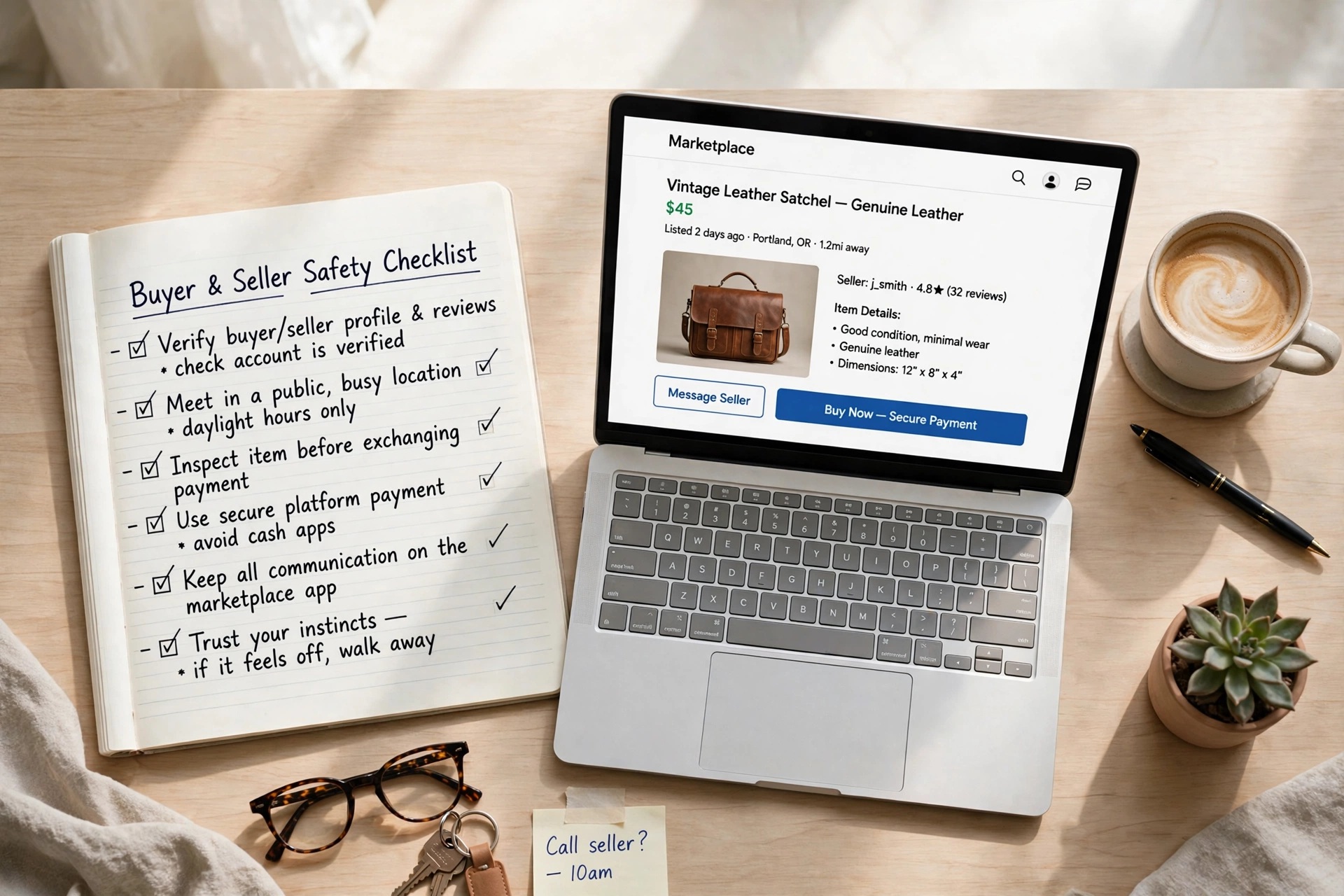
Two playbooks, buyer and seller, because the jobs are different:
Buyer playbook. One dedicated permanent email address used only for buying and selling — free, separate from your primary, checked during a deal. First contact stays inside the relay or Messenger. Never paste your primary email into a message. Never follow anyone off-platform to "complete" a local deal. Screenshot agreed terms for anything over $100.
Seller playbook. Post from a real account with phone verification intact; let the relay do its job and never paste your real address into the ad body. For high-volume selling, generate one email alias per marketplace instead of a burner — aliases forward to your real inbox, survive for years, and each one has a kill switch if a listing attracts junk. We compared the full alias landscape in Temp Email vs Email Aliases: Five Rounds, One Honest Winner; for sellers, the alias round is not close.
Temp mail's seat at the table. Keep it for the periphery: listing alerts, quote forms, sketchy-ad first touches via your dedicated address, anything one-way and one-time. One line I keep coming back to: the relay hides your address from the public, the dedicated address hides your life from the stranger, and the burner handles everything you will never touch again. Three tools, three jobs, no overlap.
That is the honest answer to "should I use temp mail on Craigslist." The platform already anonymizes you better than a burner can, the deal itself needs a real thread, and the burner's real job is everywhere around the deal — never inside it.
Quick answers
Can I use a temp email to reply to a Craigslist ad?
Not practically. Temp inboxes are receive-only on virtually every provider — you cannot send the first message from one. Reply from a dedicated permanent address you control, inside Craigslist's relay, and your real address stays out of public view.
Does the seller see my real email when I reply on Craigslist?
Yes. The relay hides the seller's address from the public, but your reply is sent from your inbox, so the seller sees your real address. That is by design — they need it to answer you. If that bothers you, use a dedicated buying-and-selling address rather than your primary.
Is Facebook Marketplace safer than Craigslist for privacy?
Different, not strictly safer. Marketplace keeps all communication inside Messenger, so email addresses never enter the picture — but your Facebook account becomes the single point of failure, which makes its recovery email the most important address in the setup. Guard that one like a vault.
What is the verification-code scam on Facebook Marketplace?
A "buyer" asks you to read back a six-digit code to "prove you're real." The code is actually an account-recovery code they triggered against your Facebook or Google account. Reading it aloud hands them your account. No legitimate buyer ever needs a code from you — end the conversation immediately.
Should sellers put a temp email in their Craigslist ad?
No. The relay already hides your address, and a temp inbox expires mid-negotiation — buyers get silence exactly when responsiveness closes the deal. Worse, you lose the message thread, which is your only evidence if the deal sours.
Temp mail or email alias for selling online?
An alias, comfortably. It forwards to your real inbox for years, each marketplace gets its own kill-switchable identity, and it sails through signup forms that reject disposable domains. Temp mail is for one-way, one-time grabs — the deal itself is a relationship, however brief.