



The $5 Million Tax Scam Threat You Need to Know About This Season
Tax abatement scam calls are fraudulent phone calls where criminals pretend to be IRS agents or fake government tax agencies, claiming you owe back taxes or qualify for special tax relief programs — then pressuring you for money or personal information.
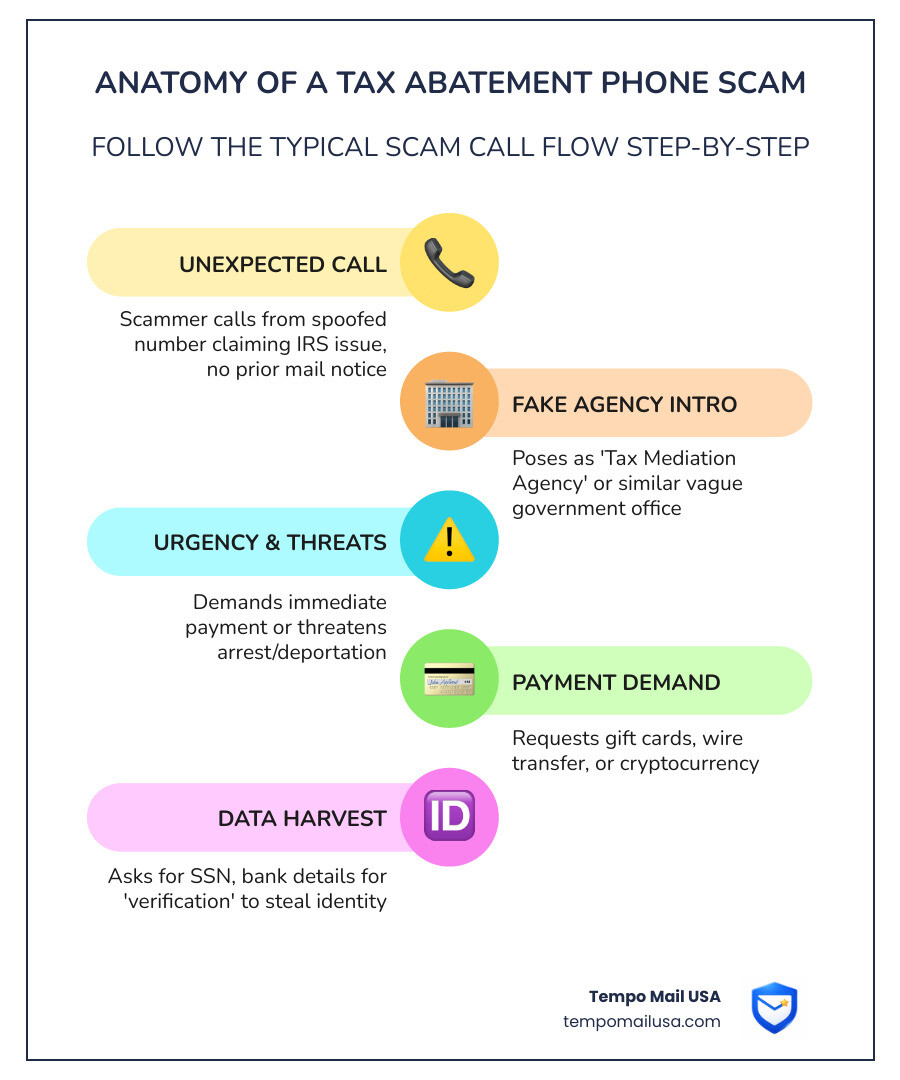
Quick answer — here's how to spot a tax abatement scam call:
- The call is unexpected and no written IRS notice arrived first
- The caller claims to be from a vague agency like "Tax Mediation and Resolution Agency" or "Office of Tax Abatement Mediation"
- They demand immediate payment via gift cards, wire transfer, or cryptocurrency
- They use urgency phrases like "this may be our only attempt to reach you"
- They threaten arrest, deportation, or license suspension
- They ask you to call back on a "proprietary verification line"
If any of these apply, hang up immediately. It is a scam.
Tax season 2026 has brought a sharp rise in these calls. According to FTC data, IRS imposters have stolen nearly $5 million from Americans over the last five years — and that number keeps climbing. A striking 57% of adults globally reported being targeted by scammers last year, and tax-themed calls are among the most effective traps because they exploit a fear almost everyone shares: trouble with the IRS.
The calls sound polished and professional. A caller named "Taylor Carson" or "Mary from the Tax Abatement Adjustment Office" leaves a calm, scripted voicemail about missed filings or unresolved tax issues. It sounds routine. That's exactly the point.
What makes these scams especially dangerous is that they don't just steal money — they harvest your personal information (PII), including your Social Security number and bank details, which can lead to long-term identity theft. Many privacy-conscious users are now turning to advanced security tools and identity protection services to shield their personal data before scammers ever get a chance to target them.
This cheat sheet will walk you through everything you need to identify these calls fast, verify what's real, and protect yourself.
What Are Tax Abatement Scam Calls?
At its core, a tax abatement is a legitimate legal process where a tax liability is reduced or removed, often due to disaster relief, property value adjustments, or specific government incentives. However, scammers have weaponized this term to create tax abatement scam calls. They bank on the fact that most people find tax law confusing and will be relieved to hear about a "resolution program" that might save them money.
These scammers don't just pick numbers out of a hat. They often obtain your information from data brokers who scrape public records, online activity, and even old tax lien data. If you’ve ever searched for tax help online or had a tax issue years ago, your name is likely on a marketing list being sold to these "bottom feeders."
The criminals pose as officials from non-existent entities. You might hear names like the "Tax Mediation and Resolution Agency" or the "Tax Resolution Oversight Department." According to investigative reports on Tax Abatement Scam Calls, these "agencies" sound official enough to bypass your initial skepticism.
This is a classic form of social engineering. By using a mix of "good news" (you qualify for an abatement) and "bad news" (you have missed filings), they manipulate your emotions to bypass your logic. This is why understanding What is a Phishing Scam? Protect Yourself is so vital—the tactics used on the phone are identical to those used in fraudulent emails. Many users now rely on advanced security tools and VPN protection to prevent these attacks and keep their digital footprint small.
Red Flags of a Tax Abatement Scam Call
Identifying a scammer is easier when you know their "tells." Legitimate government agencies have strict protocols. Scammers, on the other hand, have to break those protocols to get your money quickly.

The "How" of the Payment
The biggest red flag is the payment method. The IRS will never ask you to pay your taxes using:
- Gift Cards: No legitimate agency needs a Target or iTunes card to settle a debt.
- Cryptocurrency: Bitcoin and Ethereum are the preferred tools of scammers because they are hard to trace.
- Wire Transfers: Once you send a wire via Western Union or MoneyGram, that money is gone forever.
As the FTC warns, you should Hang up on unexpected calls saying you owe back taxes. Those are ... scams, plain and simple.
Aggression and Threats
A real IRS agent will not scream at you or threaten to have the local police arrest you within the hour. Scammers use these high-pressure tactics to stop you from thinking clearly. They may threaten:
- Immediate arrest or jail time.
- Deportation or revocation of your immigration status.
- Suspension of your driver’s license or professional credentials.
Common Scripts Used in Tax Abatement Scam Calls
Scammers often use "boiler room" operations where they read from a script. You might receive a voicemail from "Taylor Carson" or "Mary from the Tax Abatement Adjustment Office." These scripts are designed to sound routine yet urgent.
Typical phrases include:
- "Your file has now moved into a final stage review."
- "Please call our no-wait proprietary verification line."
- "This may be our only attempt to reach you before your account moves forward automatically."
One specific campaign involving the 771-247-9325 Abatement Adjustment Scam uses a script that mentions "new resolution programs available for a limited time," mimicking the language of a retail sale to create a "fear of missing out."
Verified Numbers Linked to Tax Abatement Scam Calls
While scammers frequently "spoof" their caller ID to look like they are calling from Washington D.C. or your local area code, several specific numbers have been repeatedly flagged in 2026:
- 771-222-3150: Linked to the "Office of Tax Abatement Mediation."
- 866-766-3904: Often leaves vague messages about "tax records" to bait a callback.
- 771-247-9325: Used by the fake "Abatement Adjustment Office."
The 771 area code has become a hotspot for these activities. If you see a call from this area code or are asked if Tax Abatement Calls at 866-766-3904 Scam Or Legit? are real, the answer is almost always "scam." For more details on the 771-222-3150 number, you can see the investigation into 771-222-3150 Tax Abatement Mediation Scam Calls.
How to Verify Legitimate IRS Communications
The IRS is an old-school organization when it comes to first contact. They love paper.
| Feature | Legitimate IRS Contact | Tax Abatement Scammer |
|---|---|---|
| First Contact | U.S. Mail (Official Letter) | Phone call, text, or social media |
| Payment Method | IRS.gov/payments or check to "U.S. Treasury" | Gift cards, Crypto, Wire, or Prepaid cards |
| Tone | Professional and procedural | Threatening, urgent, or overly "helpful" |
| Verification | Provides a specific notice number | Uses "proprietary lines" or vague "case files" |
| Your Rights | Right to appeal and question the debt | No right to appeal; pay now or face arrest |
If the IRS assigns your debt to a private collection agency, the process is still very formal. According to the IRS, Here's how to know that private collection agency calling you is legit: you will receive a letter from the IRS first, followed by a separate letter from the agency. If you get a call without these two letters, it’s a fraud.
Understanding these protocols helps prevent Tax Return Identity Fraud Filing, where scammers use your stolen info to file fake returns. You have a Taxpayer Bill of Rights that protects you from aggressive or unauthorized collection tactics.
Best Tools and Methods to Protect Your Identity
Prevention is always cheaper and less stressful than recovery. In 2026, relying on your "gut feeling" isn't enough; you need a digital defense strategy.

1. The PII Firewall Strategy
Scammers can’t call you if they don’t have your number. We recommend using a "PII Firewall" approach. When signing up for services online, use temporary or proxy information. TempoMailUSA provides temporary email aliases that proxy your identity and shield your personal information from data brokers who fuel scam call lists. By acting as a firewall between services and your real data, you stop the leak at the source.
2. Advanced Security Tools
- VPN Protection: Using a service like NordVPN Security encrypts your connection and helps hide your digital tracks from trackers that build profiles on your tax-related searches.
- Antivirus Software: Modern antivirus suites often include "scam protection" that flags known fraudulent phone numbers and phishing sites.
- Call Blocking Apps: Apps like RoboKiller or Hiya can identify and silence "771" area code scams before your phone even rings.
3. Smartphone Settings
On iPhone, go to Settings > Phone > Silence Unknown Callers. On Android, use the Caller ID & Spam settings. These simple steps can eliminate 90% of the stress caused by tax abatement scam calls.
4. Monitoring and Alerts
Stay informed about the latest schemes by reviewing the IRS Dirty Dozen 2026 - $45B in Tax Fraud. Additionally, set up two-factor authentication (2FA) on your IRS "Online Account" and enable credit monitoring to catch any identity theft attempts early.
Frequently Asked Questions about Tax Abatement Scams
Why does the IRS never initiate contact by phone for tax issues?
The IRS always sends multiple written notices via the U.S. Postal Service before attempting any phone contact. They will never call to demand immediate payment using specific methods like gift cards or wire transfers without giving you the chance to question or appeal the amount they say you owe. Their goal is compliance through due process, not immediate cash grabs.
What should I do if I receive a suspicious tax abatement call?
Hang up immediately without engaging or pressing any numbers (even the "press 2 to be removed" option, which just confirms your number is active). Do not provide any personal information, such as your Social Security number or bank details. Report the call to the Treasury Inspector General for Tax Administration (TIGTA) and the FTC at ReportFraud.ftc.gov.
How can I find legitimate tax debt relief if I actually owe money?
If you have a genuine tax debt, visit IRS.gov to explore official programs such as Installment Agreements or an Offer in Compromise. You can also seek help from credentialed professionals like CPAs or Enrolled Agents, or utilize the Volunteer Income Tax Assistance (VITA) program. Never trust a cold-caller to handle your tax debt; only work with professionals you have vetted and contacted yourself.
Conclusion
The rise of tax abatement scam calls in April 2026 is a reminder that scammers are becoming more sophisticated in their psychological tactics. By using official-sounding names and "limited-time" offers, they aim to catch you off guard.
However, you hold the power. By remembering that the IRS always mails letters first and never demands gift cards, you can effectively "scam-proof" your life. For those who want to take their privacy a step further, adopting a PII Firewall strategy with Tempo Mail USA can prevent your data from ending up in the hands of brokers in the first place.
Stay vigilant, keep your personal information close, and if "Taylor Carson" calls you today—just hang up.
Resources for Reporting:
- TIGTA Hotline: 1-800-366-4484
- FTC Fraud Reporting: ReportFraud.ftc.gov
- IRS Phishing Email: phishing@irs.gov (Subject: IRS Phone Scam)