
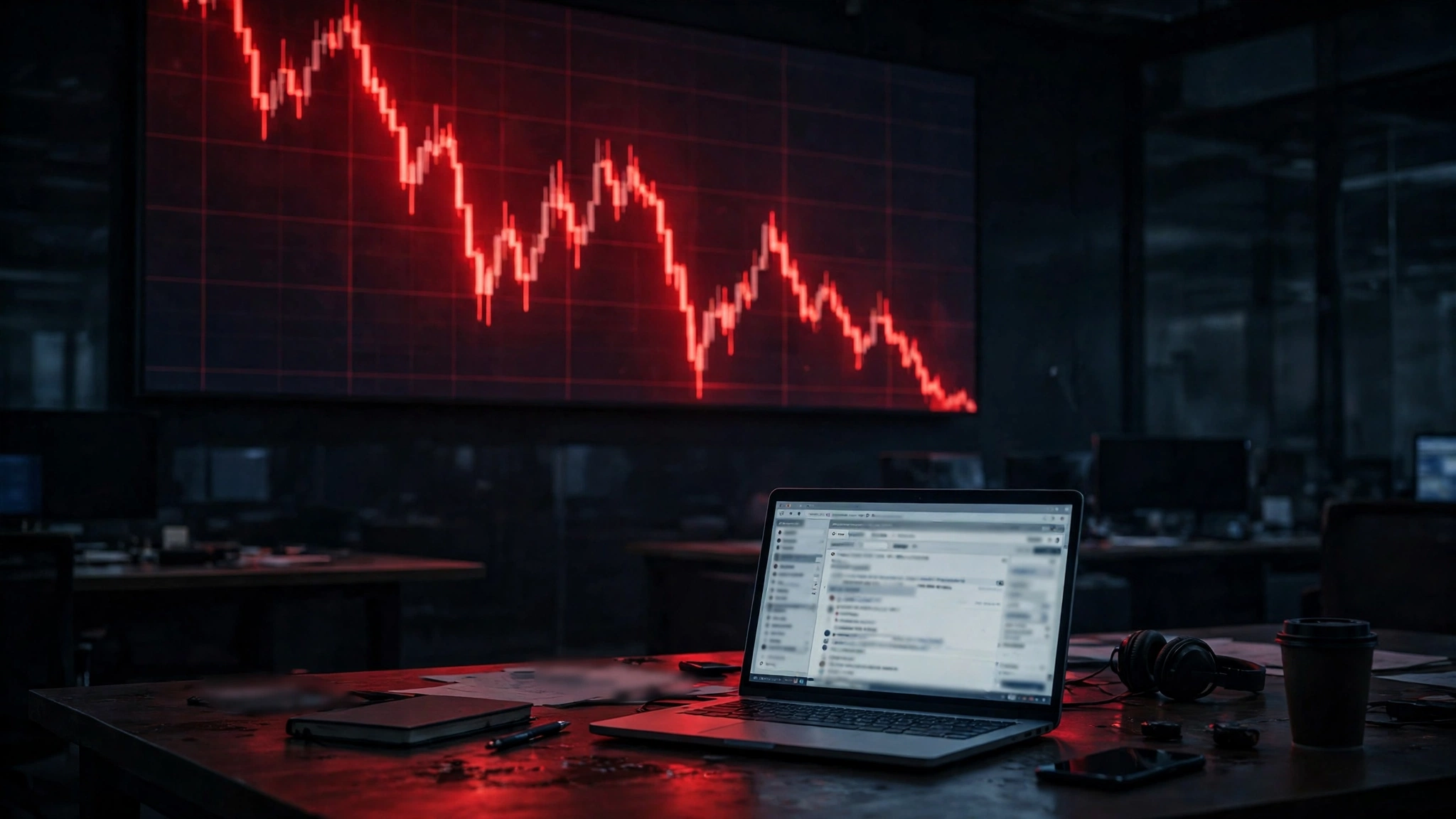
The Stock Market Just Had Its Worst Day Since April 2025 — and Your Inbox Is About to Feel It
Thursday, November 5, 2026 was the kind of day that makes people check their portfolios twice and then check them a third time, just to be sure the numbers are real. The S&P 500 fell 4.36% to 7,353.73. The Nasdaq dropped 5.52% to 24,315. The Dow lost 1,833 points. By the closing bell, "stock market" was one of the most-searched phrases in the United States — over 500,000 searches and climbing 500%, according to Google Trends.
Everyone will tell you what the selloff means for your money. Almost nobody will tell you what it means for your inbox. That is the part I actually worry about, because a red day in the market is followed, with total predictability, by a red day in your email — and the second one is the one that can cost you an account.
Thursday in numbers: what actually fell
No euphemisms, no "market headwinds." Here is the close, as reported by the Associated Press and corroborated across the financial press:
| Index | Close | Change |
|---|---|---|
| S&P 500 | 7,353.73 | -4.36% |
| Nasdaq Composite | 24,315.00 | -5.52% |
| Dow Jones Industrial Average | 51,523.06 | -3.44% |
| Russell 2000 | 2,729.89 | -4.45% |
| PHLX Semiconductor Index | 9,011.14 | -12.25% |
Every one of the S&P 500's 11 sectors fell. Technology fell hardest, down roughly 7 to 8% depending on whose sector math you read. The Nasdaq closed 11.9% below its October 6 record of 27,599.89, which puts it in correction territory — the textbook definition is a 10% drop from a recent high. The VIX, Wall Street's volatility gauge, jumped nearly 70% to 28.18. Nvidia, the single biggest drag on the S&P, fell about 9%. Chip stocks posted their second-biggest one-day fall on record.
Wednesday's post-midterm rally — the Dow had gained 1,569 points the day before — was wiped out in a single session. Bitcoin fell too, down about 5% to roughly $76,000. Gold, doing what gold does on days like this, rose.
Why it fell — in one paragraph, then we move on
The short version, per Reuters and the AP: investors spent Thursday reassessing the artificial-intelligence trade after the Democrats' sweeping midterm wins raised the chance that new data-center construction gets slowed down or paused by regulators. Chipmakers and data-center stocks — the exact companies that carried the market all year — led the fall. SanDisk fell 22%. Micron, AMD, and Marvell each fell around 17%.
I am not going to pretend this is a market-analysis blog. I do not know whether the AI trade is a bubble, and neither does anyone selling you a confident answer tonight. What I do know, from watching inboxes through every market panic of the last few years, is what happens next. It happens in email, and it happens fast.
The second crash happens in your inbox
A selloff does three things to your email at once, and they stack.
First, you start signing up for things. A 5% down day sends millions of people to brokerage apps, market-news sites, alert services, and "buy the dip" newsletters. Every one of those asks for an email address. Every one of them sends a verification code, a confirmation link, and then — because you are now a "lead" — a drip campaign that will still be arriving in February. The average person who opens two or three market accounts or newsletter subscriptions on a night like this hands out their primary email address to companies they have never vetted, while stressed, on their phone, at 9 p.m. That is the worst possible version of yourself making an address-sharing decision.
Second, the scammers clock in. Phishing follows attention the way a crowd follows a street performer. Within hours of a big market day, inboxes fill with "your brokerage account has been locked," "unusual login detected — verify now," and "claim your market-crash compensation" emails. They work because they arrive while you are already anxious about your money and already half-expecting a message from your broker. The Powerball winner scam wave earlier this week ran the exact same playbook — a real headline, a fake email riding it — and the market version is already running tonight.
Third, the real verification emails get buried. When your broker sends a genuine two-factor code or a password-reset confirmation, it lands in the same pile as the newsletters and the phishing. People miss real codes, click the wrong link, or — the one I see most — reset a password from a link in an email they never verified, during a panic, and hand the account to someone else.
This is not hypothetical. It is the pattern of every volatile week: the market moves, the searches spike, the signups surge, and the phishing follows the searches. The 500% spike in "stock market" searches is not just a curiosity. It is a headcount of people about to hand their email address to someone new.
The rule that saves your real inbox
Here is the rule I give everyone who asks me about email and money, and I will keep it blunt: your brokerage account and your real email address are a pair. Everything else gets a throwaway.
A brokerage or bank account is the one place where a disposable email address is genuinely the wrong tool. Brokers do identity checks, tax reporting, and account recovery through email. If the inbox that holds your account dies — the address expires, the provider shuts down, you lose the login — you can lose access to real money with no clean way back. We tested this with crypto exchanges earlier this week and the answer was the same there: exchanges reject or flag disposable addresses, and even when one slips through, the account is built on sand. Brokers are stricter, not looser.
So the rule is not "use temp mail for your brokerage." The rule is the opposite: keep your real, permanent, well-guarded email for the one or two financial accounts that actually hold your money, and put a throwaway address between your real inbox and *everything else* the market throws at you tonight.
That split is the whole trick — knowing when a disposable inbox wins and when it costs you. Your real inbox stays quiet, guarded, and easy to search — so when your broker sends a genuine code, you see it in seconds instead of digging through 40 newsletters. The throwaway absorbs the rest.
What a throwaway is actually good for on a red day
Be specific about this, because vague advice is how people misuse the tool. On a night like tonight, a disposable address is the right call for:
- Market newsletters and "buy the dip" lists. You want the analysis, not a permanent relationship with a marketing team. A throwaway lets you read three issues and walk away without an unsubscribe fight.
- Price-alert and screener services. These are useful for a week and forgotten by next month. They do not need an address you will still own in five years.
- Paper-trading and educational simulators. Anything that teaches you about the market without holding your money can hold a disposable address.
- Webinar and "free market outlook" registrations. These exist to sell you something. Let them sell it to an inbox you can delete.
- Trying a new brokerage's research tools before you commit. Read their research, test their charts, and only hand over your real address when you actually open a funded account.
And the line stays exactly where I drew it: the moment an account holds your money, your identity documents, or your tax forms, it gets your real address, a unique password, and app-based two-factor authentication. No exceptions, no "just for now."
The verification-code problem nobody plans for
There is a specific failure mode I want to name, because it bites people on nights like this. You sign up for a market-alert service with your real email because it felt serious. A week later you want to change the password, and the reset link goes to that inbox. Fine. Now imagine you signed up with a disposable address because it felt casual, and that service quietly becomes the one holding your watchlist, your alert history, and the only copy of a trade confirmation you need for taxes. The disposable address expires. The reset link goes nowhere. The account is gone.
This is the same trap as two-factor authentication tied to a throwaway inbox: the second factor dies with the address. If a service matters enough that losing it would hurt, it was never a throwaway-grade signup. The test is simple — ask yourself, before you type the address, "would I care if this inbox vanished tomorrow?" If the answer is yes, use your real email. If the answer is no, use the throwaway and mean it.
A ten-minute inbox drill for tonight
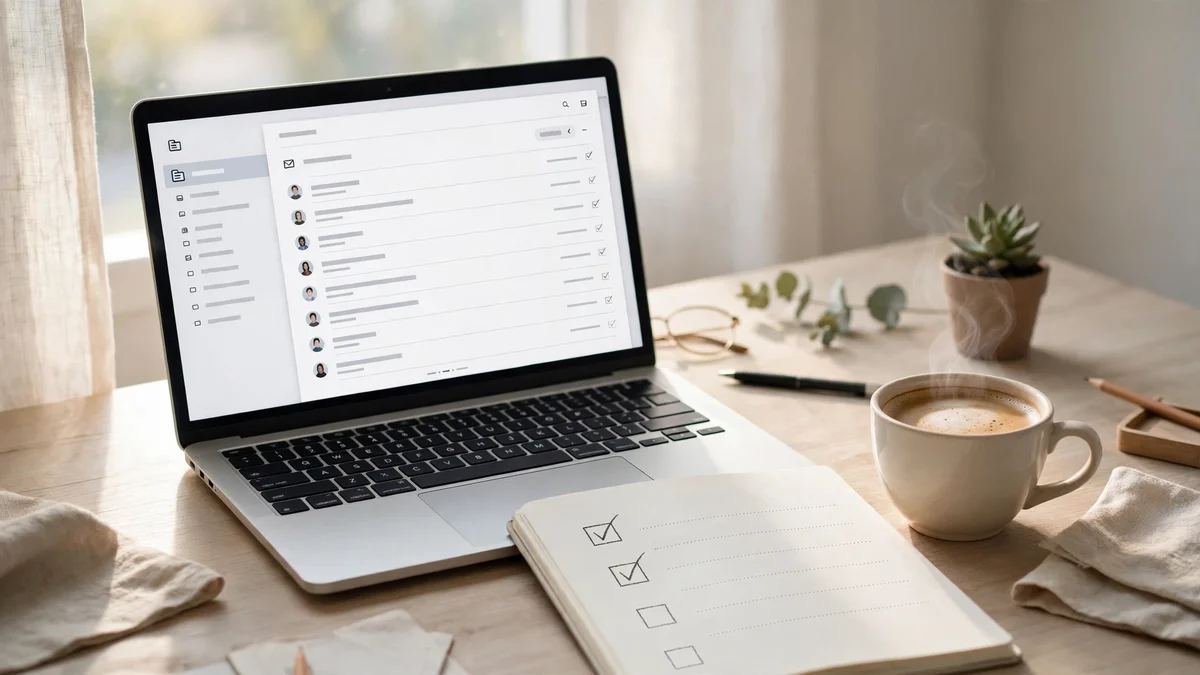
Do this before you sign up for anything else. Ten minutes, no tools required:
- Search your inbox for your broker's real domain. Find one genuine email from your brokerage and note the exact sender address. Everything claiming to be your broker that comes from a different domain is fake until proven otherwise.
- Turn on app-based two-factor authentication on your brokerage and bank accounts if you have not already. SMS codes are better than nothing; an authenticator app is better than SMS. Do it tonight, while the scare is fresh — motivation fades by the weekend.
- Check the "you didn't request this" codes. If verification codes you never asked for are arriving, someone is probing your accounts. Do not click anything in those emails; go to the service directly and change the password from the site itself. We covered exactly this pattern in our guide to codes you didn't request.
- Move the noise. Take the market newsletters you actually want and re-subscribe with a throwaway address, then unsubscribe the real one. Future-you will find real broker emails in seconds.
- Delete the panic signups. If you opened an account tonight purely because the market fell and you wanted "to do something," close it. Panic is a terrible account-opening strategy, and every account you open is another inbox to defend.
What not to do
A short list, because the mistakes are specific and I would rather name them than bury them in prose:
- Do not reset a brokerage password from a link inside an email. Type the address yourself or use the app. On a night when phishing volume spikes, the emailed link is the riskiest path into your own account.
- Do not use a temp mail address for the brokerage itself. It will likely be rejected at signup, and if it is not, you have built a money account on an address designed to disappear. The crypto-exchange test earlier this week showed the same wall.
- Do not forward broker emails to a throwaway to "keep things tidy." Forwarding copies your most sensitive mail into the least guarded inbox you own.
- Do not trust a "market crash compensation" email from anyone. There is no compensation. There is no refund for a down day. That email is a thief.
- Do not make investment decisions from an email newsletter. I am an email-privacy writer, not a financial adviser, and this post is not financial advice. But the inbox rule holds regardless of what you buy: the newsletter that screams "buy now" is selling urgency, not analysis.
The honest summary
The market fell hard on Thursday. The Nasdaq is in correction territory, chips had their second-worst day on record, and half a million people searched for "stock market" in a single day. None of that is in my lane to predict or explain beyond what the reporting already says.
What is in my lane is this: a volatile market is also a volatile inbox. The searches spike, the signups surge, the newsletters multiply, and the phishing arrives wearing your broker's logo. The people who get hurt are rarely the ones who made a bad trade. They are the ones who clicked a bad link while worried about a trade.
So keep the split clean. Real email, real password, app-based two-factor — for the accounts that hold your money. Throwaway address — for everything that wants your attention tonight and will not miss you in February. And if a verification code shows up that you did not ask for, treat it as the warning it is: someone is knocking. Make sure the door they find is the one you actually guard.
FAQ
Is it safe to use temp mail for stock market newsletters?
Yes — that is one of the best uses for it. Newsletters, price alerts, and market commentary do not hold your money or your identity, so a disposable address keeps the marketing drip out of your real inbox. Just do not use a throwaway for the brokerage account itself.
Will my broker accept a temporary email address?
Almost certainly not, and you should not want it to. Brokers run identity verification, tax reporting, and account recovery through email. A disposable address that expires can lock you out of an account holding real money. Use your permanent address for any funded account.
Why do I get verification codes I never requested after a market selloff?
Usually because someone is testing whether your accounts are live — credential-stuffing and account-takeover attempts spike when attention is on the market. Treat unexpected codes as a warning: change the password from the service's own site or app, never from a link inside the email.
What should I do if I clicked a phishing link pretending to be my broker?
Do not enter anything else. Close the page, open your broker's app or type its address yourself, change your password, check recent logins and linked devices, and turn on app-based two-factor authentication. If you entered credentials, assume they are compromised and change the password immediately.
Can I use temp mail for a crypto exchange signup?
We tested this earlier this week: most exchanges reject or flag disposable addresses at signup, and the ones that let you in leave your account tied to an inbox that can vanish. The same rule applies — throwaway for the newsletter, real address for the account. Our full test is in the crypto exchange signup guide.
How do I tell a real broker email from a phishing copy?
Check the sender domain against a genuine email you already have from the broker — not against the address shown in the suspicious email. Real broker emails come from the broker's own domain. And remember: your broker will never ask you to "verify" or "unlock" your account by clicking a link in an email. When in doubt, go to the app.
Need a disposable temporary email?
Protect your real inbox from spam and promotional clutter instantly and free.
Received a suspicious email, text, or charge alert?
Verify whether the sender domain is disposable, spoofed, or unverified before clicking links.