

Temp Email for Crypto Exchange Signups: Why Your Throwaway Address Fails Before Your First Trade
The night the verification email never arrived
A friend of mine did everything right by the usual privacy playbook and still ended up locked out of his own money. He wanted to buy a small amount of Bitcoin, nothing dramatic, and he did not want another financial company holding his main email address. So he signed up to a major exchange with a disposable address, verified it in seconds, and deposited funds from his bank. Then the exchange asked for identity verification, as every regulated exchange now does. He uploaded his passport. The review took days. When it finished, the exchange sent a confirmation and a device-approval link to the disposable inbox. That inbox had already expired.
The money was not stolen. Nothing dramatic happened at all, which is the point. It simply sat there, visible on a screen he could not fully use, behind a recovery chain that pointed at an address that no longer existed. Support asked him to prove ownership from the original email. He could not. The account was eventually recovered after a slow manual review, but the lesson stuck with both of us: a crypto exchange is the worst possible place to save a little privacy with a throwaway address, because the address is not a marketing preference. It is a load-bearing part of the account, and the account holds money.
My position is blunt, and it does not soften across exchanges: never open a centralized crypto exchange account on an address you cannot still open in a year. Use throwaway addresses for the research around crypto all you like. The account that can move money needs a durable inbox, a second factor you control, and a recovery path that does not depend on an inbox designed to disappear.
A crypto signup is not a signup. It is a bank account opening
Most signups on the internet ask for an email and then mostly leave you alone. A crypto exchange signup looks like that for about ninety seconds, and then it turns into something else entirely. The exchange is a regulated financial business. In the United States it answers to anti-money-laundering rules enforced through FinCEN; in Europe it answers to its own national regulators under the same international standards set by the Financial Action Task Force. Those rules require the business to know who its customer is before it lets that customer move meaningful money. The email address is only the first, smallest piece of that identity check.
That is why the signup flow feels inconsistent. The email verification arrives instantly and works fine with a disposable address, which creates a false sense of progress. Then the identity step asks for a government ID, sometimes a selfie or a live video check, and sometimes proof of address. The account you thought you had opened turns out to be a waiting room. Until that verification clears, you may be able to look at prices, and on some platforms you may be able to deposit, but you cannot reliably withdraw. Several major exchanges now build verification into the initial flow rather than leaving it as an optional later step, so the waiting room is the product, not a detour from it.
The practical consequence is a mismatch of timelines. A disposable inbox is built to last hours or days. An exchange account is built to last years, through password changes, device changes, suspicious-login flags, tax documents, and withdrawal confirmations. Signing up with one address for the first step and a different identity for the rest is like giving a bank a hotel room number as your mailing address and then being surprised when the statements bounce.
What the exchange collects before it trusts you
It helps to see the verification ladder as it actually works, because the email sits at the bottom of a much taller stack. The tiers below are the typical pattern across Coinbase, Binance, Kraken and OKX in 2026, and when we checked their own support and terms pages, the shape was consistent even where the exact limits differed by country.
The first tier is email plus phone number. That gets you an account shell: login, price watching, and on some platforms a small deposit. It does not get you meaningful withdrawals. The second tier is government ID plus a selfie or liveness check. That is the tier where most real trading becomes available, and it is also the tier where your full legal name, date of birth, address, and ID photo enter the exchange's records. The third tier, for higher limits, adds proof of address and sometimes source of funds: a utility bill, a bank statement, employment information, or a tax ID.
Notice what that ladder does to the privacy calculation. People reach for a disposable address because they do not want to hand a company their identity. But the exchange is going to hold their passport photo anyway. Hiding the email while handing over the passport buys almost nothing and costs the one thing that actually protects the account: a reachable inbox for security alerts, withdrawal confirmations, and recovery. The email is the least sensitive thing the exchange holds and the most useful thing for the account holder. That inversion is the whole argument. If you are uncomfortable giving an exchange your real identity, the honest answer is not a throwaway email. It is not using a centralized exchange for that money at all, or using a decentralized exchange that connects to your own wallet, where no account and no email exist in the first place.
This is also why the comparison with ordinary financial signups matters. The same disposable-domain blocking that frustrates people at banks shows up here, for the same reason: the institution needs a durable way to reach a real person about real money. Our earlier look at why banks block disposable addresses follows the same logic, and crypto exchanges have simply adopted it more aggressively because their fraud and money-laundering exposure is higher.
Three break points where a disposable address fails
A throwaway address does not fail at signup. It fails later, at three specific moments, and each one is worse than the last.
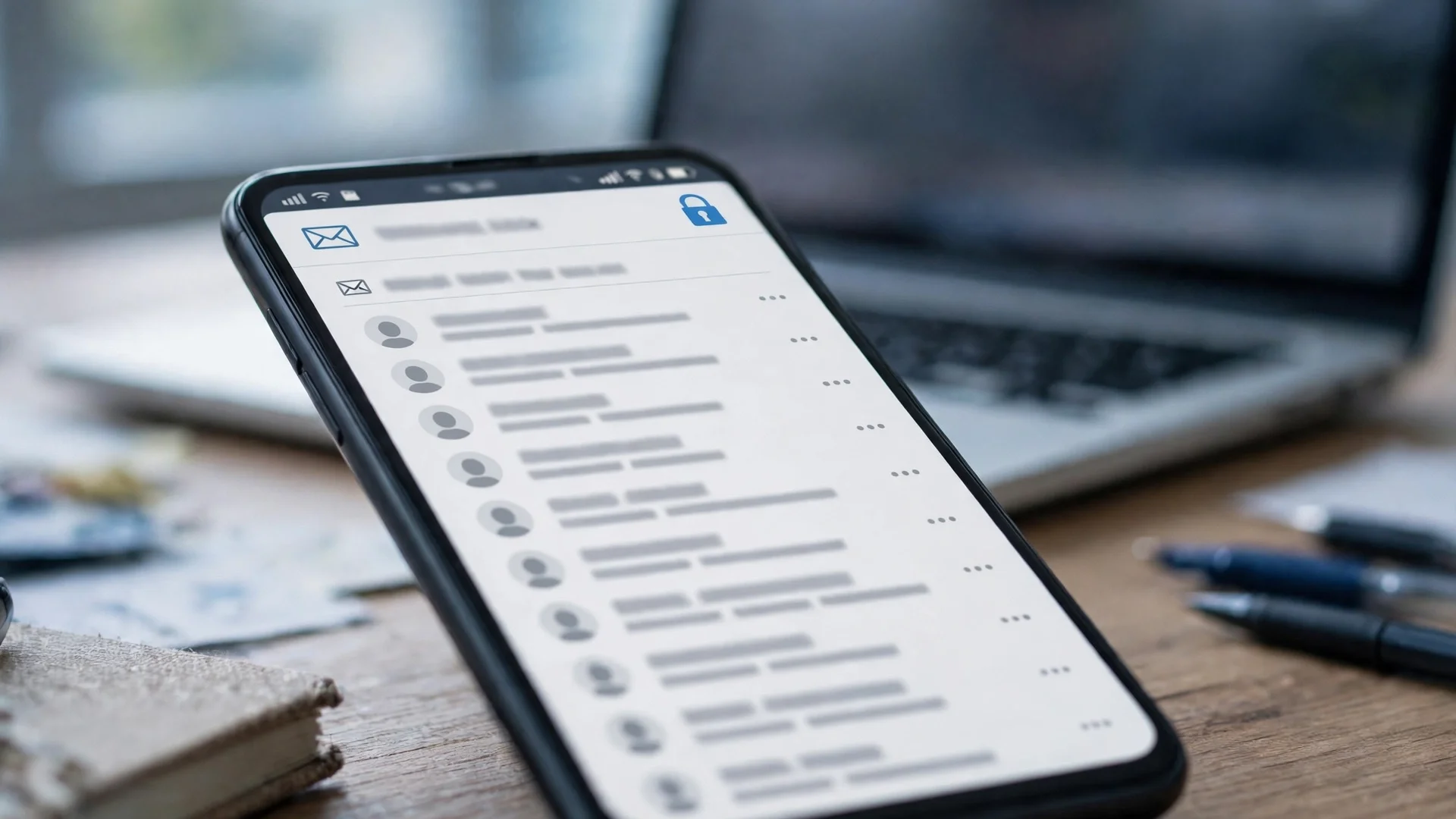
The first break point is device approval. Exchanges treat a new device or a new location as a security event, and they confirm it by email. Coinbase, for example, uses device confirmation that requires verifying a new device through email before granting access. Sign in from a new laptop after your disposable inbox expires and you are not just inconvenienced; you are indistinguishable, to the security system, from someone who stole a password. The system is doing its job. It just cannot tell the difference between an attacker and an owner who threw away the key.
The second break point is the withdrawal confirmation. Many exchanges email a confirmation link or code before releasing funds, and some impose a waiting period after an email change or a security change. If the inbox is gone, the confirmation never arrives, the withdrawal never releases, and support has to decide whether you are the owner through a manual process that can take weeks. During that time your money is not lost, but it is not yours to move either, which for an asset as volatile as crypto is a real cost, not a theoretical one.
The third break point is account recovery, and it is the one that turns a delay into a crisis. Password resets, email changes, suspicious-activity reviews, and deletion requests all route through the original address. When that address is gone, recovery depends on support staff believing documents you send them, and on the exchange having a process for owners who cannot access their original email. Some do. Some handle it slowly. None of them treat it as routine, because from their side it looks exactly like an account-takeover attempt. And if you compounded the problem by reusing one throwaway everywhere, a single expired inbox can strand several accounts at once, each with its own support queue.
None of these failures require bad luck. They are the normal operation of security systems meeting an inbox with an expiry date.
Coinbase, Kraken and Binance do not fail the same way
It is tempting to ask which exchange is most forgiving of a disposable address, and the honest answer is that none of them are forgiving where it matters, but they do break differently.
Coinbase is the strictest at the front door. Its own help material states that local anti-money-laundering rules require identity verification before users can fully use services like trading, staking, or sending funds. Expect verification early, device confirmation by email, and little patience for an address that bounces. The upside of that strictness is predictability: you know before you deposit that the account will demand a real identity and a working inbox.
Kraken is tiered and explicit about it. Its support pages describe verification levels, with higher levels requiring documents similar to opening a bank account: government ID plus proof of address before trading or withdrawing past small limits. A disposable address might get you through the door, but the door only leads to a lobby. The practical effect is the same as Coinbase, delivered more gradually, which arguably makes it more dangerous: you can spend longer believing the account works before you hit the wall.
Binance is the cautionary tale of the three, because it shows what happens when an exchange tries the lenient route and regulators answer. Binance historically allowed large volumes with little more than an email address. Over time it introduced mandatory identity verification for most functions and stricter rules for sub-accounts. The lenient era is over, and anyone choosing Binance today on the assumption that it still works like the old Binance is working from outdated information. When we checked, all three exchanges, along with Bybit, OKX, KuCoin, Bitget and MEXC, listed identity verification as required on their own support or terms pages for withdrawals and most trading in regulated markets.
The conclusion is not that one exchange is safe for throwaways. It is that the entire category has converged on the same rule, and shopping around for a lenient one means shopping among smaller, less regulated platforms whose leniency is itself a risk signal.
The 4.3 billion dollar reason nobody trusts anonymous accounts anymore
If you want one number that explains why exchanges stopped tolerating anonymous signups, it is 4.3 billion dollars. In 2023, the United States Department of Justice forced Binance to pay a 4.3 billion dollar settlement over anti-money-laundering failures, among other charges. That settlement did not just punish one company. It reset the risk calculation for the whole industry. An exchange that lets anonymous money move freely is no longer making a product decision. It is making a legal gamble with its own existence.
That history matters for a privacy-minded user because it explains why appeals to convenience do not move exchanges. Support staff cannot waive identity verification for a sympathetic customer, and product teams cannot quietly keep a no-verification tier for small traders, because the enforcement environment treats those tiers as the violation, not the exception. The 2024 and 2025 enforcement actions against other centralized exchanges pushed the same direction. By 2026, near-universal KYC on centralized exchanges is not a trend to wait out. It is the settled regulatory floor.
There is a fair criticism inside that story, and I will not pretend otherwise. KYC concentrates extraordinary amounts of sensitive data — passports, selfies, addresses, financial records — in companies that have themselves been hacked, breached, and subpoenaed. That concentration is a genuine privacy risk, and it is reasonable to dislike it. But a disposable email does nothing to reduce it. The exchange still holds your passport. All the throwaway does is remove your own access to the account those documents protect. If the data concentration is the objection, the coherent responses are using a decentralized exchange, holding assets in your own wallet, or simply not trading on centralized platforms. Pretending a throwaway email makes a centralized account private is the one response that combines the worst of both worlds: full identity disclosure to the company, zero recovery power for yourself.
The one corner where a throwaway still belongs
None of this means disposable addresses have no place in crypto. They have a real place, just not on the account itself. The rule I use is simple: a throwaway can touch anything that cannot move money or lock an account.
Price-alert newsletters and research mailing lists are the cleanest case. Sign up for market commentary, project updates, and exchange blogs on a disposable address, and your main inbox stays quiet while you decide whether the content is worth a durable subscription. Airdrop waitlists and testnet faucets are a second case, with a caveat: if a future reward is tied to a wallet address rather than an email, the email is genuinely disposable, but if the reward is tied to an account, treat it like an account and use a durable address. Comparing exchanges is a third case. Open accounts on paper — read the fee schedules, the verification tiers, the withdrawal limits — before committing an identity to any of them, and use a throwaway for the marketing drip that follows a brochure download.
The line is always the same: can losing this inbox cost me access, money, or a tax record? If the answer is no, a throwaway is a good tool. If the answer is yes, it is the wrong tool, however well it worked at signup.
The setup I would use instead

Here is the setup I actually recommend, in the order I would do it, for someone who wants both privacy and access.
First, create one durable email address used only for financial accounts — not your main personal inbox, not your work inbox, but a real address you control and will keep for years. A dedicated address limits exposure without introducing expiry. If your provider supports them, email aliases are a strong version of this: one inbox, one alias per exchange, so a breach at one exchange does not hand attackers the address you use everywhere else.
Second, turn on app-based two-factor authentication or, better, a hardware security key, and store the backup codes somewhere offline. Email-based two-factor alone is weak precisely because it makes the inbox a single point of failure. A hardware key breaks that dependency: even if someone controls your email, they still cannot sign in without the key.
Third, turn on withdrawal address whitelisting wherever the exchange offers it, and set a waiting period for new addresses. Whitelisting means that even a successful account takeover cannot drain funds to an attacker's wallet without a delay during which you get an email alert to your durable inbox. That alert is only useful if the inbox exists, which brings the argument full circle.
Fourth, keep a paper record of which email, which alias, and which second factor belongs to each exchange, stored offline, not in a note-taking app synced to the same email. When you change devices in two years, that note is the difference between a five-minute recovery and a five-week support ticket.
This setup gives up nothing that matters. You still keep marketing mail out of your main inbox. You still compartmentalize exchanges from each other. You simply stop pretending that an address designed to vanish can protect an account designed to hold money.
Frequently asked questions
Can I sign up to Coinbase with a temp email?
You can usually pass the first email-verification step with a disposable address, but Coinbase requires identity verification under anti-money-laundering rules before you can fully use trading, staking, or sending. Device confirmations and recovery also route through that email, so an expired inbox strands the account even after verification succeeds.
Do Kraken and Binance accept disposable emails?
Both list identity verification as required on their own support and terms pages for withdrawals and most trading in regulated markets. Kraken uses tiered verification, with government ID and proof of address required past small limits. Binance moved from lenient early years to mandatory verification for most functions. A disposable address may open the door, but it does not release withdrawals.
What happens if my temp inbox expires after I deposit?
Your funds are not automatically lost, but withdrawals, device approvals, and password recovery all depend on that inbox. Support can sometimes recover the account through manual identity checks, but the process is slow, and during the wait you cannot move your funds. In a volatile market, that delay has a real price.
Is there any safe way to stay anonymous in crypto?
On a centralized exchange, no, not anymore. The anonymous option is to avoid centralized accounts entirely: use a decentralized exchange connected to your own wallet, where there is no email-based account to recover. That path carries its own risks — lose your private keys and nobody can help you — but at least the risk is honest and in your own hands.
Can I use a temp email for crypto newsletters and airdrops?
Yes, and this is where throwaways shine. Newsletters, price alerts, research lists, and brochure downloads cannot move money or lock an account, so a disposable address is the right tool. Just check whether an airdrop or reward is tied to an account rather than a wallet before you commit to a throwaway.
Need a disposable temporary email?
Protect your real inbox from spam and promotional clutter instantly and free.
Received a suspicious email, text, or charge alert?
Verify whether the sender domain is disposable, spoofed, or unverified before clicking links.