Powerball Email Scam: Why the $847M New Jersey Win Means 'You Won' Messages Today
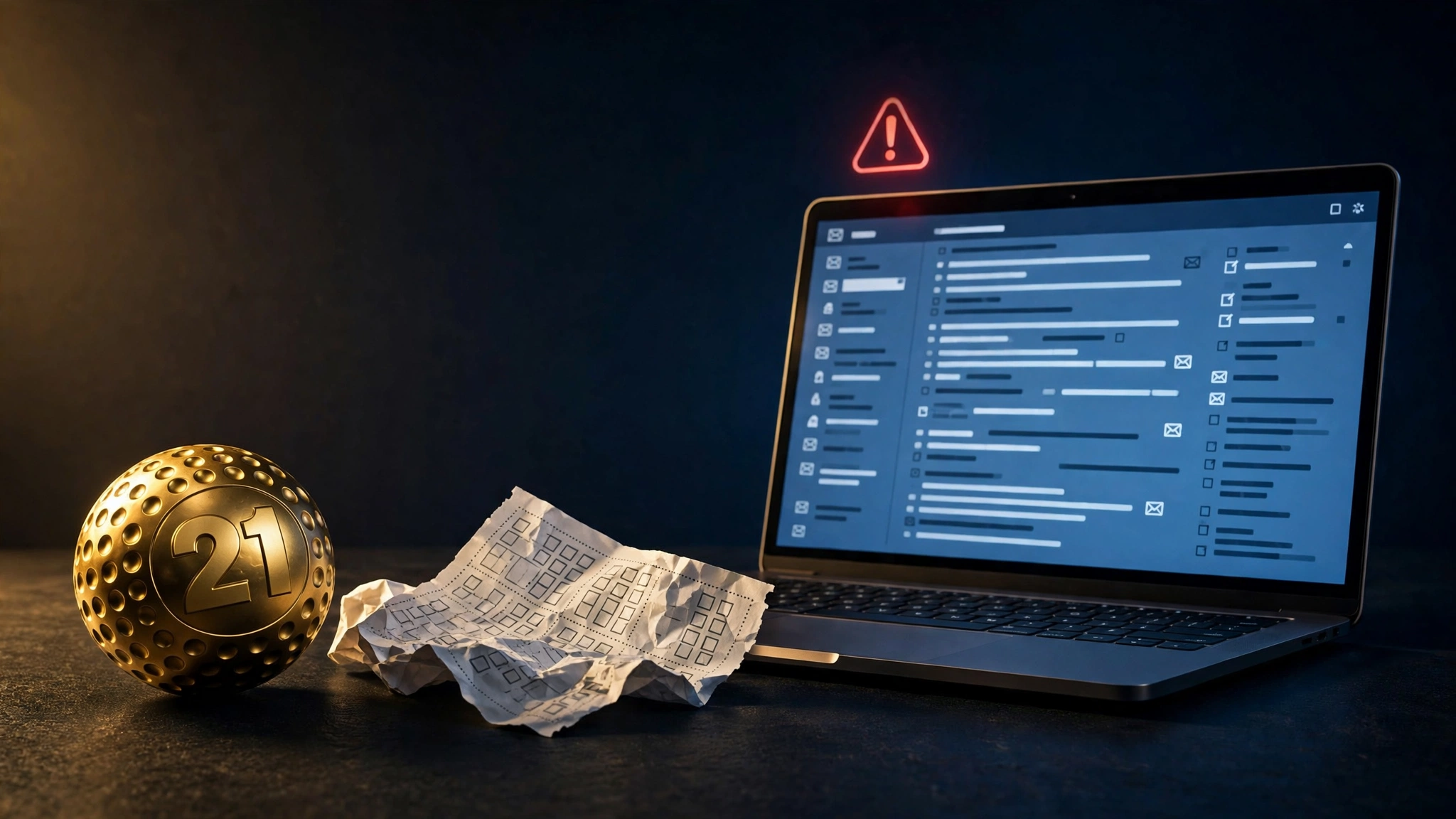
Somebody in New Jersey is $847 million richer this morning. Everybody else who gets an email saying they won the Powerball is being scammed — and the timing is not a coincidence. The moment a jackpot that big gets claimed, the "you won" messages start landing, because the scammers know millions of people are checking their tickets, refreshing results pages, and half-believing that this time it might be them.
This is the part of a big jackpot win nobody talks about on the morning news. The winner is one person with one ticket. The audience for the scam is everyone who bought a ticket, everyone who thought about buying one, and everyone whose email address has ever appeared on a lottery or sweepstakes list. That is a very large audience, and it is wide awake right now.
What actually happened on Wednesday night
The facts first, because the scam works by getting you to skip them. A single ticket sold in New Jersey matched all six numbers drawn on Wednesday, November 4, 2026 — 15, 34, 41, 53, 56, with Powerball 21 and a 2X Power Play — to win an $847 million jackpot. Powerball calls it the ninth-largest jackpot in the game's history. The cash option is $363.1 million. Going into Wednesday night the advertised jackpot was $835 million; the final figure climbed to $847 million as ticket sales closed.
That is the whole winner list. One ticket. One state. If your ticket was not bought in New Jersey and did not carry those six numbers, you did not win the jackpot, and no email is going to change that. The jackpot has now reset to an estimated $20 million, with a cash value of $8.6 million, for the next drawing on Saturday, November 7, at 10:59 p.m. ET. Drawings run every Monday, Wednesday, and Saturday, and the odds of hitting the jackpot on any single $2 ticket are 1 in 292,201,338.
Keep those numbers in your head while you read the rest of this. Every scam email you get this week is built on the hope that you will forget them.
The scam starts before the confetti settles
There is a rhythm to lottery scams, and it follows the news cycle with almost comic precision. A jackpot climbs for weeks, ticket sales spike, and the scammers warm up their lists. The night the jackpot is won, they send. By Thursday morning — while the winner is still anonymous, the winning store is still unnamed, and the details are still thin — inboxes fill with congratulations addressed to people who never won anything.
The reason is simple: a huge win creates a window of plausibility. On an ordinary Tuesday, an email saying you won the Powerball is easy to dismiss. On the morning after an $847 million win, when every headline is screaming about the jackpot and your group chat is full of people comparing tickets, the same email lands differently. You did buy a ticket. You did check the numbers half-asleep. Maybe you misread one. That flicker of doubt is the entire product.
Scammers also know something else: the winner's identity stays private for a while. New Jersey is one of the states where winners can stay anonymous, and the gap between "someone won" and "here is who" is exactly when a fake winner announcement feels hardest to disprove. The email does not need to convince you for long. It needs about ninety seconds — long enough for one click and one form.
This is not a new pattern. The North Carolina Education Lottery has warned for years about text messages telling people they won a $250,000 Powerball prize they never entered, and state lotteries repeat the same warning every time a jackpot goes large. What changes each time is only the dollar figure in the subject line. This week it is $847 million.
Anatomy of a "you won Powerball" email
Open one of these messages and it looks, at first glance, almost legitimate. That is the point — the people writing them have studied real lottery branding. Here is what the anatomy usually looks like, piece by piece, so you can recognise it in your own inbox without having to think hard at 7 a.m.
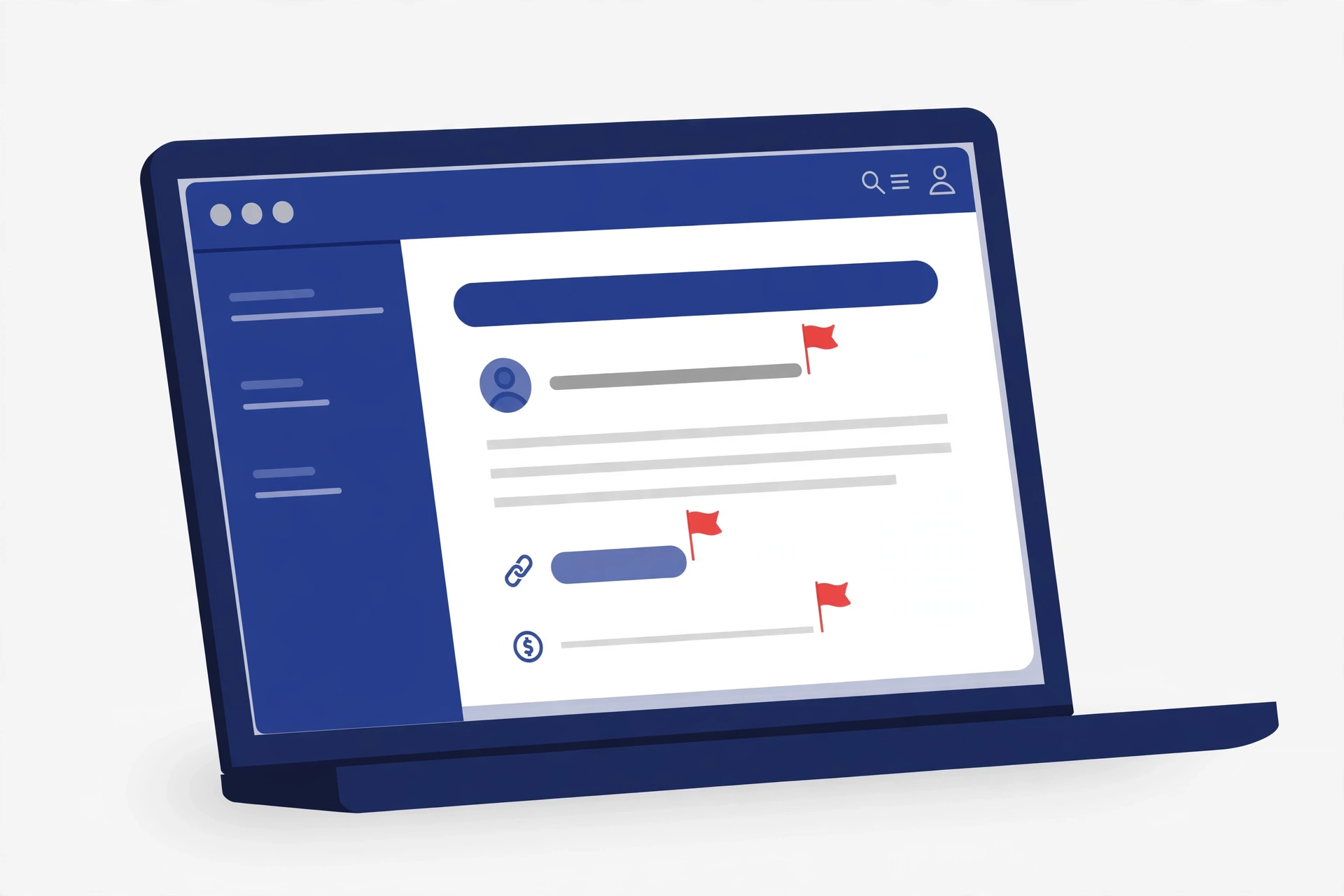
The sender address is the first tell, and it is the one most people skip. The display name will say something like "Powerball Prize Commission" or "Powerball Claims Department," but the actual address is a free mailbox, a lookalike domain, or a string of words with a digit swapped in — powerball-claims.net instead of powerball.com, or an address that ends in a country code you would not expect. Real lotteries do not announce jackpot wins from Gmail accounts. They also do not announce them by email at all, which brings us to the central fact of this whole scam: Powerball does not email winners. The winning ticket is a piece of paper. The lottery has no idea who holds it until that person walks in with it.
The subject line is the second tell. It will carry the jackpot figure and a word designed to short-circuit your scepticism — "Congratulations," "Final Notice," "Claim Your $847,000,000 Prize." A real lottery has nothing to notify you about, because it does not know you played. The more specific the dollar amount, the more suspicious you should be; the scammer is borrowing a real number from last night's news to make a fake claim feel sourced.
The body of the message usually contains a claim code, a reference number, and a deadline. The deadline is doing the heavy lifting — 24 or 48 hours to claim, or the prize is "forfeited." Urgency is the oldest trick in the book because it works: it pushes you to click before you verify. It is the same manufactured-deadline trick that powered the voter-verification scam emails around Election Day — a fake clock, a real fear, and a link you are supposed to click before thinking. The message will also contain a link to a claim portal, and that portal is where the damage happens. It will ask for your full name, address, phone number, and then — the turn — a "processing fee," "tax clearance," or "release fee" to unlock the prize. The amounts vary. Lottery-scam reports commonly cite fees from around $20 to well over $100 at the first ask, and the fee is never the last ask: pay once and there is always a second fee, a tax form, a courier charge. The prize never arrives because there is no prize.
The final tell is what the message asks for that a lottery would never need by email: your bank details, a photo of your ID, or a one-time code sent to your phone. A code request is especially dangerous, because it usually means the scammer is sitting on a login page for one of your real accounts — your email, your bank, your lottery app — and is trying to get you to hand over the key while you think you are claiming a prize. If a "Powerball" email ever asks you for a verification code, stop. That code belongs to a different account entirely, and the person asking for it is not from the lottery.
Why your email address is the real prize
It is worth asking why scammers bother with email at all, when the fee is the obvious payday. The answer is that the fee is only one of three paydays, and the other two are worth more.
The first is your address itself. Every reply, every click, every "unsubscribe" on a scam email confirms that the address is live, monitored, and attached to a person who plays the lottery. Verified live addresses are sold and resold between scam operations, which is why one "you won" email so often becomes ten. Your inbox becomes the product.
The second is what the claim portal harvests. A form that asks for your name, address, phone, date of birth, and the first few answers to security questions is building a profile that can be used to reset passwords, open accounts, or impersonate you to your bank. A fake lottery claim is one of the cheapest ways to get a stranger to type their own identity into a form voluntarily. People who would never hand those details to a cold caller will type them into a page that promises $847 million.
The third is the verification code, which deserves its own warning. If you use the same email address for your lottery account, your bank, and your primary inbox, a scammer who tricks you into handing over one code can be inside an account that matters within minutes. This is the part of the scam that does not need you to pay anything. Your attention and your trust are enough.
That is also why the advice in this post is not only "delete the email." It is about how you set up your inbox before the next jackpot — because there will be a next jackpot, and the same emails will come back with a new number in the subject line.
Three checks that kill the scam in thirty seconds
You do not need a security degree to beat this. You need thirty seconds and three checks, done in order, before you click anything.
First, check the numbers yourself, on the official source. Powerball publishes results at powerball.com, and your state lottery publishes them too. If your ticket does not match 15, 34, 41, 53, 56 with Powerball 21, the email is lying. This check alone ends the scam in nearly every case, because the scammer is counting on you taking their word for the win instead of checking your own ticket.
Second, check the sender the slow way. On your phone, tap the sender's name to expand the real address. On a computer, hover over it. If the domain is not powerball.com or your state lottery's official domain, it is not the lottery. Close the message. A display name is free; a domain is not.
Third, apply the one rule every lottery repeats, because it is the rule the scam cannot survive: no real lottery ever asks you to pay money to collect a prize. Not a processing fee, not taxes up front, not a release charge, not a courier cost. The Powerball guidance puts it plainly — no lottery asks for money to release your winnings, and if someone emails to say you have won and asks for a fee, taxes up front, or your bank details, it is a scam. Washington's Lottery says the same thing in plainer language: it will never ask for payment to claim a prize, and it will never ask for banking information or a Social Security number over the phone. If the message asks for money, the message is the scam, and the rest of the details do not matter.
If all three checks fail the message — and they will — report it and delete it. In the United States the reporting routes are the FTC at reportfraud.ftc.gov and the FBI's Internet Crime Complaint Center at ic3.gov. Reporting takes two minutes and it matters: these reports are how patterns like this week's wave get tracked.
The one legitimate way a throwaway inbox fits lottery season
Here is the honest part: not every lottery email is a scam, and not every lottery interaction needs your real address. There is a legitimate, boring middle ground that a disposable inbox handles better than your primary one — and this week is a good time to set it up.
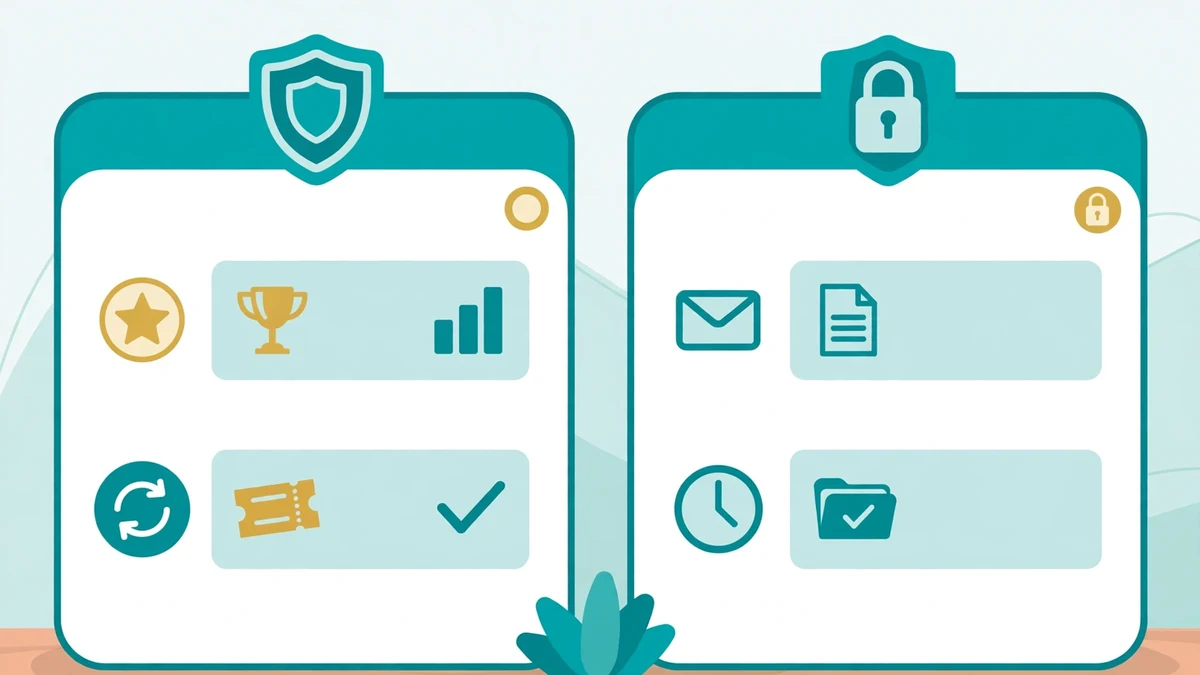
If you play the lottery online through your state lottery or a licensed courier app, that account deserves a real, recoverable email address, because that is where a real win notification would go and where password resets live. Do not use a throwaway inbox for an account that holds money or a winning ticket. That is the line, and it matters more than anything else in this section.
But around that account, there is a ring of lottery-adjacent signups that do not deserve your real inbox at all. Second-chance draws, lottery newsletters, results-alert services, promotional sweepstakes tied to the jackpot news, and the "enter your email to check your numbers" pages that multiply every time a jackpot goes large — these are exactly the places where your address gets shared, sold, or leaked, and exactly the places a temporary email earns its keep. Give the throwaway address to the draw-entry form and the results-alert page. Keep your real address for the account that can actually pay you.
The same split applies to the verification codes. A signup that demands an email OTP before it will even show you results is asking you to prove your address is real before it has earned that proof. Route the code through a disposable inbox you can abandon, read the code, and walk away. If the service turns out to be a list-harvesting operation, the address it harvested is one you never use again. If you ever get a verification code you did not request, treat it as an alarm, not a message: somebody is trying to get into an account of yours right now, and the code is the only thing standing between them and it.
One more practical note. A throwaway inbox does not make you anonymous to a lottery, and it should not. If you win a real prize, you claim it with your real identity, through the official channel, with the physical ticket. The disposable address is a filter for the noise around the game, not a way to play the game itself. Used that way, it quietly does the job this week was built for: it lets you follow the jackpot, enter the second-chance draw, and check your numbers without handing the address you actually care about to every site that noticed the jackpot too.
If you want the longer version of where a disposable inbox wins and where it loses, the comparison with a permanent private mailbox is worth reading before you move anything important. And if you are unsure who can actually read the mail in a throwaway inbox — the honest answer is more people than you think — read the privacy breakdown before you use one for anything sensitive.
If you already clicked or replied
Do not panic, and do not pay the "second fee" to fix the first one. What you do next depends on what you handed over.
If you only clicked the link and closed the page without entering anything, you are probably fine — but change nothing and watch for follow-ups. Do not click "unsubscribe" on the same message; that only confirms your address is live.
If you entered your name, address, or phone number, expect more scam mail and calls, and consider that those details are now circulating. Put a fraud alert in place with the credit bureaus if you are in the United States, and watch your accounts for password-reset emails you did not trigger.
If you entered banking details or a card number, call your bank now — not tomorrow, now — and tell them exactly what happened. They can freeze the card and watch for the test charges that usually follow.
If you handed over a verification code, treat the account that code belonged to as compromised. Change its password from a device you trust, check its login history and recovery settings, and turn on an authenticator app instead of SMS codes where the service allows it. Then change the passwords of any other account that shared the same password, because that is the first thing an attacker tries next.
And if you paid a fee, report it to the FTC and the FBI's IC3, and tell your bank. The money is almost certainly gone — these operations are built to be unrecoverable — but the report is what lets the next person's bank flag the same account faster.
FAQ
Did anyone actually win the $847 million Powerball? Yes. A single ticket sold in New Jersey matched 15, 34, 41, 53, 56 and Powerball 21 in the Wednesday, November 4, 2026 drawing. It is the ninth-largest Powerball jackpot ever, with a $363.1 million cash option. There is exactly one winner, and the lottery does not email them.
Can Powerball email me to say I won? No. Powerball does not know who holds a winning ticket — it is a piece of paper until someone claims it. The only time a state lottery contacts a player directly about a win is for a second-chance drawing or a promotional draw you entered through an official account, and even then it will never ask for payment, banking details, or a verification code.
The email has my name and the right jackpot amount. Is it real? No — your name and the jackpot amount are public information. Your name has leaked in a hundred data breaches, and the $847 million figure was on every news site this morning. A scam email that gets two public facts right is still a scam email. Check your own ticket against the official numbers instead.
I never bought a Powerball ticket. Can I still have won? No. You cannot win a lottery you did not enter. Every unsolicited "you won" message sent to someone who never played is a scam by definition, and it is the easiest one to spot.
What is the next Powerball drawing? Saturday, November 7, 2026, at 10:59 p.m. ET. The jackpot resets to an estimated $20 million with an $8.6 million cash value. Drawings are held every Monday, Wednesday, and Saturday. The odds of winning the jackpot are 1 in 292,201,338.
Should I use a temp mail address for lottery sites? For results alerts, second-chance entries, and promotional draws — yes, that is what a disposable inbox is for. For the actual lottery account that holds your tickets or your winnings, no: use a permanent, recoverable address. Keep the money account and the noise filter separate.
The jackpot will climb again, the headlines will come back, and the emails will come back with them. The winner this week was one ticket in New Jersey. The rest of us got a reminder instead — and a reminder is worth something, as long as it arrives before the fee request does.
Need a disposable temporary email?
Protect your real inbox from spam and promotional clutter instantly and free.
Received a suspicious email, text, or charge alert?
Verify whether the sender domain is disposable, spoofed, or unverified before clicking links.