
NSA Net Is Down: The Agency That Watches Everyone's Email Can't Keep Its Own Network Up
NSA Net Is Down: The Agency That Watches Everyone's Email Can't Keep Its Own Network Up
There is a particular kind of irony that only the internet can produce. The National Security Agency — the organisation that built the most formidable signals-intelligence machine on the planet, the one whose name shows up in every conversation about who can read your email — lost its own internal network on Tuesday. Its people could not talk to each other on the system built specifically so they could talk to each other.
CNN broke the story on November 17, 2026, citing six people familiar with the matter. The network is called NSA Net. It is the classified channel NSA employees use to share classified information inside the agency. It went down. The agency introduced staggered arrival times for staff while it worked out the scope of the problem. And the NSA itself, at the time of writing, has said nothing at all.
Searches for "nsa" jumped 1,000% and hit 50,000+ in the United States, landing the term at number seven on Google's trending list. That is a lot of attention for a network most Americans had never heard of until it stopped working. The attention is justified — but not for the reason most of the people searching think. The outage does not mean your email is suddenly private. It means something else, and it is worth understanding properly, because the same week has been quietly teaching the same lesson five times over.
The Outage, in Plain English
Here is what is actually known, and it is worth separating from what is being guessed.
NSA Net is the NSA's internal classified communications network. Think of it as the agency's own private intranet, built for one job: letting employees communicate classified information with each other. It is not the internet. It is not your email provider. It is not a system you or I will ever log into.
On Tuesday, November 17, that network went down. CNN reported it first, with six sources, and the story was quickly picked up by Reuters, The Record, and outlets around the world. The agency has not issued a public comment. Nobody has established a cause yet.
Two things are confirmed by the reporting. First, there is no evidence, at this stage, that a cyberattack caused the outage. That matters, because the first assumption everyone makes when a spy agency's network goes dark is that somebody hacked it, and the sources who spoke to CNN were explicit that the evidence points nowhere near that conclusion yet. Second, the outage did not cut off the president: a current and a former US official told CNN that urgent intelligence could still reach President Trump while he travels in Asia — he was in the Philippines on Tuesday and scheduled to travel to China — because the government has backup networks and multiple layers of redundancy for exactly this situation.
So the honest summary is boring in the best possible way. A classified internal network stopped working. The cause is unknown. Nobody has shown it was an attack. The workarounds worked. The reason this is a story at all is who owns the network — and what its failure says about the week it happened in.
Six Days, Six Failures: The Week That Kept Breaking
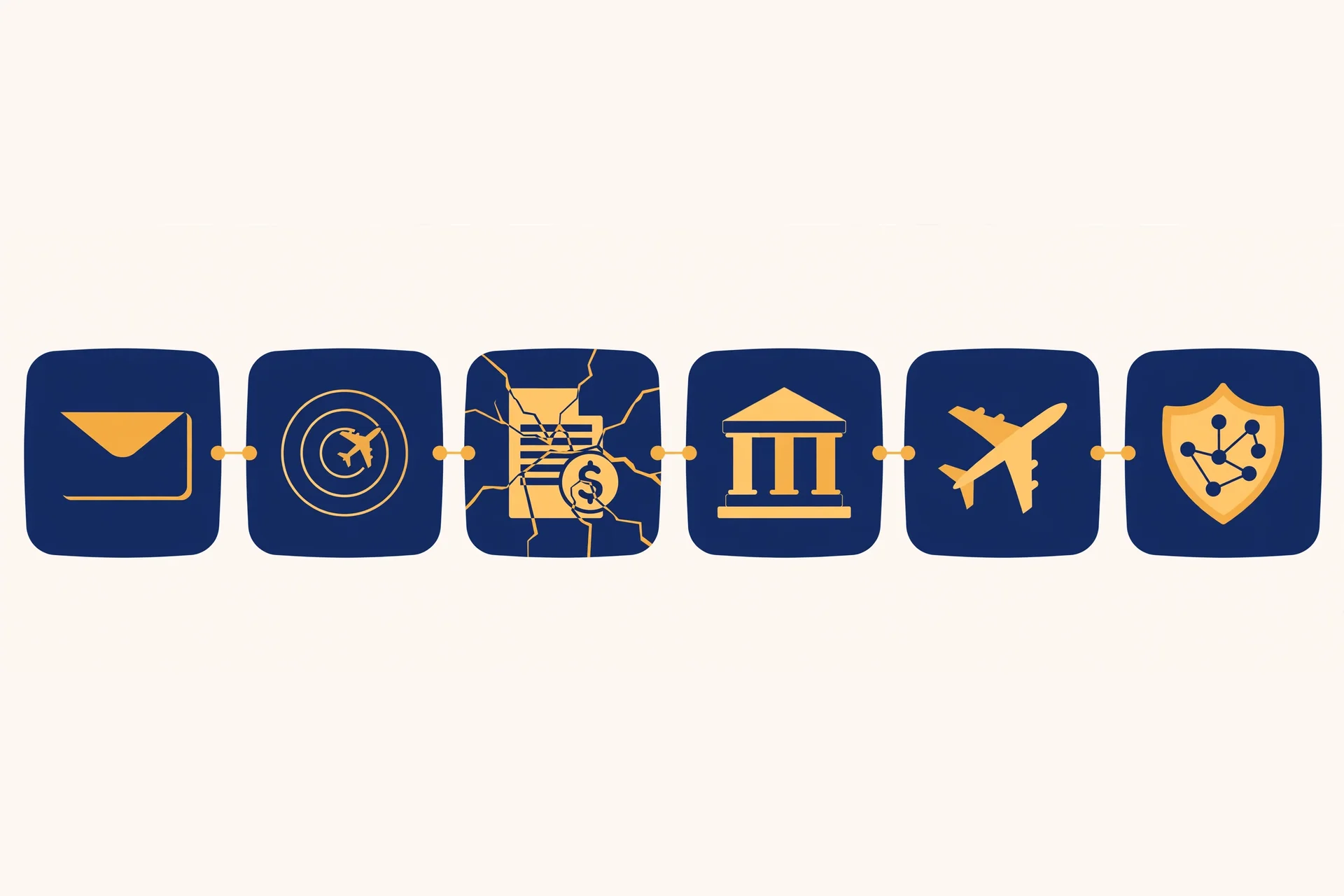
The NSA outage did not happen in isolation. It was the sixth major failure in six days, and the list reads like a stress test of everything Americans depend on without thinking about it.
On November 12, Microsoft 365 went down. Outlook, Teams, Copilot and other services were disrupted for nearly 24 hours, with services restored on Friday morning. Microsoft executive Charles Lamanna attributed it to a combination of a previously undetected software defect, increased traffic, and reduced server capacity. Microsoft 365 has more than 430 million users worldwide — that is the user base, not the number affected, but it gives you the scale of what a single defect can touch.
On November 13, the Federal Aviation Administration ordered a nationwide ground stop for departing flights. Take-offs were halted for about four hours, lifted at 8:15 p.m. Eastern. It was only the second nationwide halt since September 11, 2001. The communications failure affected 17 of the country's 22 major air traffic control centres, and about 9,200 flights were cancelled on Friday, according to FlightAware. The cause, per Transportation Secretary Sean Duffy: an ageing system that became overloaded. The Wall Street Journal pointed to old networking equipment in Arkansas, and possibly Texas.
Also on November 13, Workday — the HR and payroll software used by about 11,500 organisations, including government agencies — suffered a service disruption that blocked some employees and administrators from its tools.
On November 16, JPMorgan Chase customers started reporting transaction delays. Chase said a software bug affecting its internal hardware systems was responsible, and customers at Bank of America and Wells Fargo felt knock-on delays when their transactions involved Chase. Chase was explicit that it was not a cyberattack.
Also on November 16, United Airlines had a systemwide technical outage that briefly delayed departures across the country. It lasted more than 90 minutes.
Then, on November 17, NSA Net.
Are they connected? Every official source says no. The Associated Press reported that the Microsoft, banking and aviation incidents were unrelated, and there is no evidence linking the NSA disruption to any of them. Different causes, different systems, different days. What they share is timing — and the timing is what makes people nervous. Six failures in six days looks like a pattern even when it is a coincidence, and that feeling is itself the story: the infrastructure underneath ordinary life is older, more interdependent, and more fragile than the marketing suggests. Your flight, your paycheque, your bank balance, your email, and the spy agency's internal chat all run on systems that can, and do, just stop.
What NSA Net Actually Is
Most of the confusion about this story comes from the name. "NSA network down" sounds like the NSA itself is down, or like the internet is down, or like surveillance is down. None of those is true.
The NSA is the US government's principal agency for foreign signals intelligence — SIGINT, in the jargon. Its job is collecting and analysing electronic communications from foreign targets: foreign governments, foreign militaries, foreign networks. NSA Net is the plumbing inside the building. It is the classified network that lets analysts, linguists, and engineers inside Fort Meade pass classified material to each other without it ever touching the public internet.
That distinction matters for two reasons. First, an outage on the internal network does not stop the agency's collection systems, which run on separate infrastructure. Second, it does not change anything about your email. NSA Net going down has no effect on Gmail, Outlook, or your inbox, because your inbox was never on NSA Net and never will be. The people searching "nsa" today hoping the outage means someone stopped watching are going to be disappointed. The watching was never done on this network.
What the outage does show is something more useful: even the agency that builds the most hardened networks in the world cannot keep its own internal chat running on a Tuesday. Redundancy saved the mission — the president still got his intelligence — but redundancy is a luxury most of us do not have. Your email has no backup network. Your inbox is a single point of failure, and it fails in ways you never see until the damage is done.
The Uncomfortable Question: Does an NSA Outage Make Your Email Private?
No. And it is worth being straight about why, because the honest answer is more interesting than the conspiracy version.
The NSA's stated mission is foreign signals intelligence. The 2013 Snowden disclosures documented bulk collection programs that swept up far more than their targets, and the reforms that followed — the USA FREEDOM Act of 2015, which ended the bulk collection of domestic call records — changed how some of that collection works. The real picture is neither "the NSA reads all your email" nor "the NSA never touches your email." It is a legal and technical apparatus aimed at foreign targets, with rules about Americans' data that are real, contested, and constantly litigated.
Here is the part that matters for your inbox. The threat to an ordinary person's email is not a spy agency. It is a data broker that bought your address from a signup form. It is a breach at a company you forgot you registered with. It is a phishing email that looks exactly like your bank. It is a password reset link sitting in an inbox you abandoned three years ago. Those are the things that actually cost people money and accounts, and they happen every day, to people who have never once thought about the NSA.
The week's outages prove that point better than any lecture. Microsoft's outage locked people out of their email. Chase's bug delayed people's money. United's outage stranded people's travel plans. None of those involved surveillance. All of them involved ordinary people discovering, in real time, how much of their life runs through one inbox, one account, one address. That is the actual privacy problem. It is not who is watching you. It is how many copies of you exist in how many databases, and how little control you have over any of them.
So no — the NSA outage does not make your email private. Nothing the NSA does or does not do will make your email private. Your email becomes private when you stop handing your real address to every website that asks for it, and start treating your inbox like the single point of failure it is.
The Second Wave Is Already Coming: Fake "NSA Alert" Messages
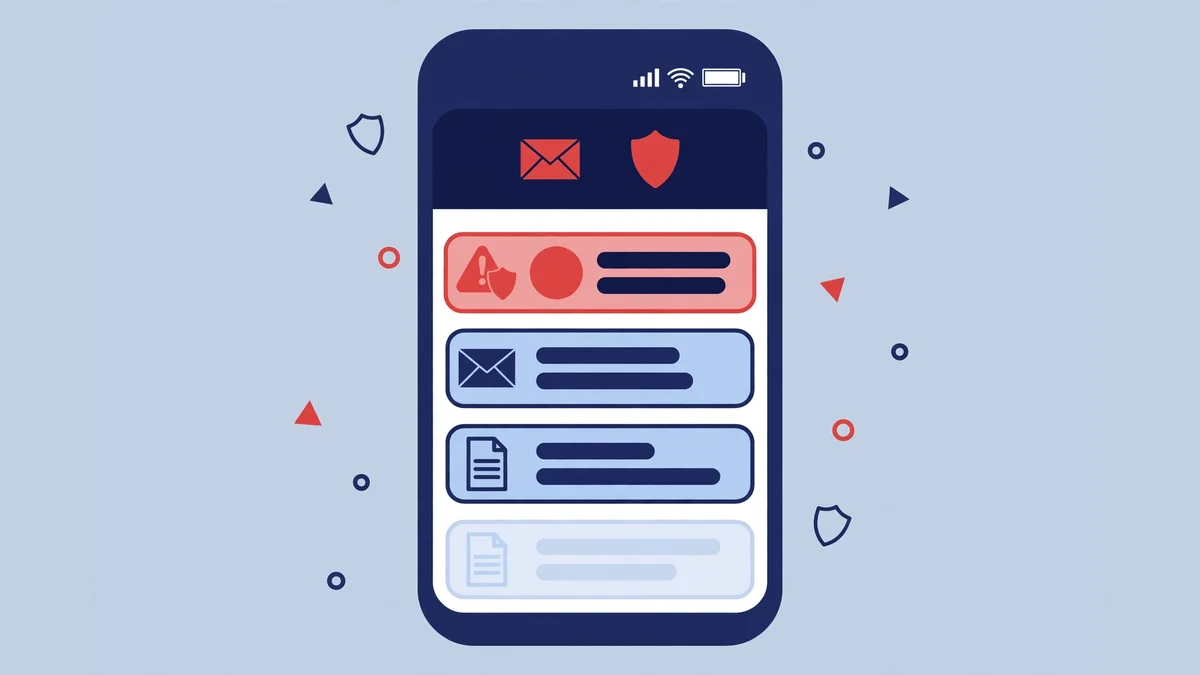
If the last six days have taught us anything, it is that every outage produces a second wave, and the second wave is always a scam.
When the banks glitched on November 16, the fake emails started within hours — messages pretending to be from Chase, warning about frozen accounts, linking to credential-harvesting pages. We covered that wave in detail in our bank outage report, and the pattern was depressingly familiar: a real disruption creates real anxiety, and scammers rent that anxiety for the afternoon.
When United Airlines went down the same day, the same thing happened with flights — fake rebooking emails and texts, offering to "fix" a cancelled flight if you would just confirm your details. Our United Airlines outage piece documented how that one worked, and the answer was the same as always: the airline will never rebook you by email link.
Now it is the NSA's turn. An outage at the world's most famous spy agency is a perfect pretext for a phishing message, because it comes pre-loaded with fear and authority. Expect messages claiming to be from the NSA, or from "national security" or "federal security services," warning that your email has been flagged, your account is under review, or your data was exposed in the outage. Some will ask you to verify your identity. Some will link to a page that looks official and asks for a password. All of them will be fake.
Here is the rule that settles every one of them in seconds: the NSA does not email the public. It does not send outage alerts to your inbox. It does not ask you to verify your identity by email. It does not have a customer service department. Any message claiming to be from the NSA, about this outage or anything else, is a scam by definition — no further investigation required. The same goes for any message about the week's other outages that asks you to click a link to "restore" something. Your bank restores your account. Your airline rebooks your flight. Nobody restores anything through a link in an email you did not expect.
And remember what a real cyberattack actually looks like. The cyberattack that hit 178 websites through Optimizely earlier this week was quiet, technical, and discovered by researchers — not announced by a dramatic email to your inbox. Real attacks do not introduce themselves. The ones that do are selling something.
What I Did in the Five Minutes After Reading the News
Advice is cheap, so I tested the obvious fix instead of just recommending it. The single most effective thing an ordinary person can do about inbox exposure is to stop giving their real address to websites that do not need it — and the tool for that is a disposable address.
I opened TempoMailUSA at about 10:45 p.m. IST on November 17, with no account and no sign-in. The homepage loaded with a temporary address already generated: a6d7e4e7q1@rover.info. It appeared in the pill at the top of the mailbox card immediately; the address textbox took a few seconds to fill in, and the Copy button was enabled within five seconds of page load. I reloaded to check: same address, same behaviour, fully usable in under five seconds, and the session persisted across the reload.
The inbox itself was empty — zero messages, auto-refreshing, with a countdown showing the address expires in about 30 days (the free tier's lifetime; Pro inboxes last 365 days). The Copy button worked on the first click and produced a "Copied!" toast. A Refresh button sits alongside Delete, Change, History, QR Code and Restore, and there is a custom-name field if you want an address that reads less like a random string. The page showed 482,922 emails created and 609,973 messages received at the time I looked, and the counter ticked up while I watched.
That is the whole test, and that is the point. Five seconds, no account, no email address handed over, no password created, and you have an inbox that can receive a verification code and then be thrown away. The NSA outage does not change the maths here. The maths was already obvious: every signup that gets your real address is another database that can be breached, sold, or leaked. A disposable address is not paranoia. It is the cheapest possible way to make your real inbox boring to everyone except you.
The Inbox Audit Worth Doing Tonight
The outage news will fade by the weekend. The habit it should trigger should not. Here is a short audit, in the order that matters, that takes less time than reading about the outage did.
First, count your exposure. Open your email and search for "welcome to" and "verify your email." The number of accounts tied to that one address is the number of databases holding it. If the count surprises you — and for most people it is in the hundreds — that is the problem, stated plainly.
Second, stop feeding it. From tonight, new signups that do not involve money, identity, or anything you need to recover later get a disposable address. Trials, newsletters, downloads, one-off purchases, forum accounts. Your real address is for your bank, your government services, and the handful of accounts whose password reset you genuinely need to receive. Everything else is a guest.
Third, check what your real inbox is already sharing. Google's October 16 change lets Gmail's AI features use your inbox content to shape your ads and suggestions, and most people never touched the setting. We walked through the exact toggles in our Google Gmail AI privacy updates guide — five minutes, and your inbox stops training models you never agreed to feed.
Fourth, assume the scam wave is already in your spam folder. Search it for "NSA," "outage," "account frozen," and "verify now." Do not click anything in the results. Delete them. The point is not that you would fall for one — it is to see how many arrived, because that number is the honest measure of how exposed your address already is.
Fifth, fix the recovery chain. Your password resets, your two-factor backup codes, and your account recovery all flow through one inbox. If that inbox is the same address you gave to a quiz site in 2019, your security is exactly as strong as that quiz site's database. Move the important accounts to an address you have never used for signups, turn on two-factor authentication where it is offered, and stop reusing passwords. This is unglamorous work. It is also the only work that matters.
FAQ
Is the NSA network outage a cyberattack?
There is no evidence of a cyberattack so far. CNN's sources were explicit on that point, and the cause of the NSA Net outage has not been established. The agency has not commented publicly. The week's other outages — Microsoft, the FAA, Chase, United — all had ordinary technical causes, and the Associated Press reported that the Microsoft, banking and aviation incidents were unrelated.
Did the outage affect the president's communications?
No. A current and a former US official told CNN that urgent intelligence could still reach President Trump while he travels in Asia, because the government has backup networks and multiple layers of redundancy. The outage affected the agency's internal communications, not its ability to relay intelligence to the president.
Are the week's outages connected?
There is no evidence that they are. The Associated Press reported that the Microsoft, banking and aviation incidents were unrelated, and officials have given a different cause for each one: a software defect at Microsoft, ageing equipment in air traffic control, a software bug at Chase, a systemwide failure at United, and an unexplained failure at the NSA. Six failures in six days looks like a pattern, but the evidence says coincidence — and coincidence at this scale is itself the warning.
Does the NSA read my email?
The NSA's stated mission is foreign signals intelligence, aimed at foreign targets. The 2013 Snowden disclosures showed that bulk collection programs swept up far more than their targets, and the USA FREEDOM Act of 2015 ended bulk collection of domestic call records. The honest answer is that your email is far more likely to be exposed by a data breach, a data broker, or a phishing email than by a spy agency — and those are the threats a disposable address actually protects against.
Will the NSA email me about the outage?
No. The NSA does not email the public about outages, does not ask anyone to verify their identity by email, and does not have a customer service department. Any message claiming to be from the NSA is a scam by definition. The same rule applies to any unexpected message about the week's outages that asks you to click a link to restore an account or rebook a flight.
Should I use a temp email because of the NSA outage?
The outage itself changes nothing about surveillance — your email was never on NSA Net. Use a temp email for the reason that was already true before Tuesday: every signup that gets your real address is another database that can be breached, sold, or leaked. A disposable address keeps your real inbox out of databases that do not need it, and that is worth doing whether or not a spy agency's network is having a bad week.
The Bottom Line
The NSA lost its internal network on a Tuesday, and the world noticed because of whose network it was. The cause is unknown. There is no evidence of an attack. The backups worked, the president still got his intelligence, and the agency has not said a word.
The useful lesson is not about spies. It is about single points of failure. In six days, Microsoft's email, America's air traffic control, a payroll system used by 11,500 organisations, the country's biggest bank, a major airline, and the NSA's classified network all stopped working — each for its own ordinary reason. None of it was a conspiracy. All of it was a reminder that the systems underneath daily life are held together by redundancy most of us do not have.
Your inbox is the one system in that list you can actually fix tonight. Give your real address to the accounts that need it. Give everything else an address you can throw away. Check the settings that let your inbox train someone else's AI. Delete the scam messages riding in on the outage news. Five minutes, once, and the next time a network goes down — whoever owns it — your exposure is smaller, your inbox is quieter, and your real address is nowhere near the blast radius.
Need a disposable temporary email?
Protect your real inbox from spam and promotional clutter instantly and free.
Received a suspicious email, text, or charge alert?
Verify whether the sender domain is disposable, spoofed, or unverified before clicking links.