

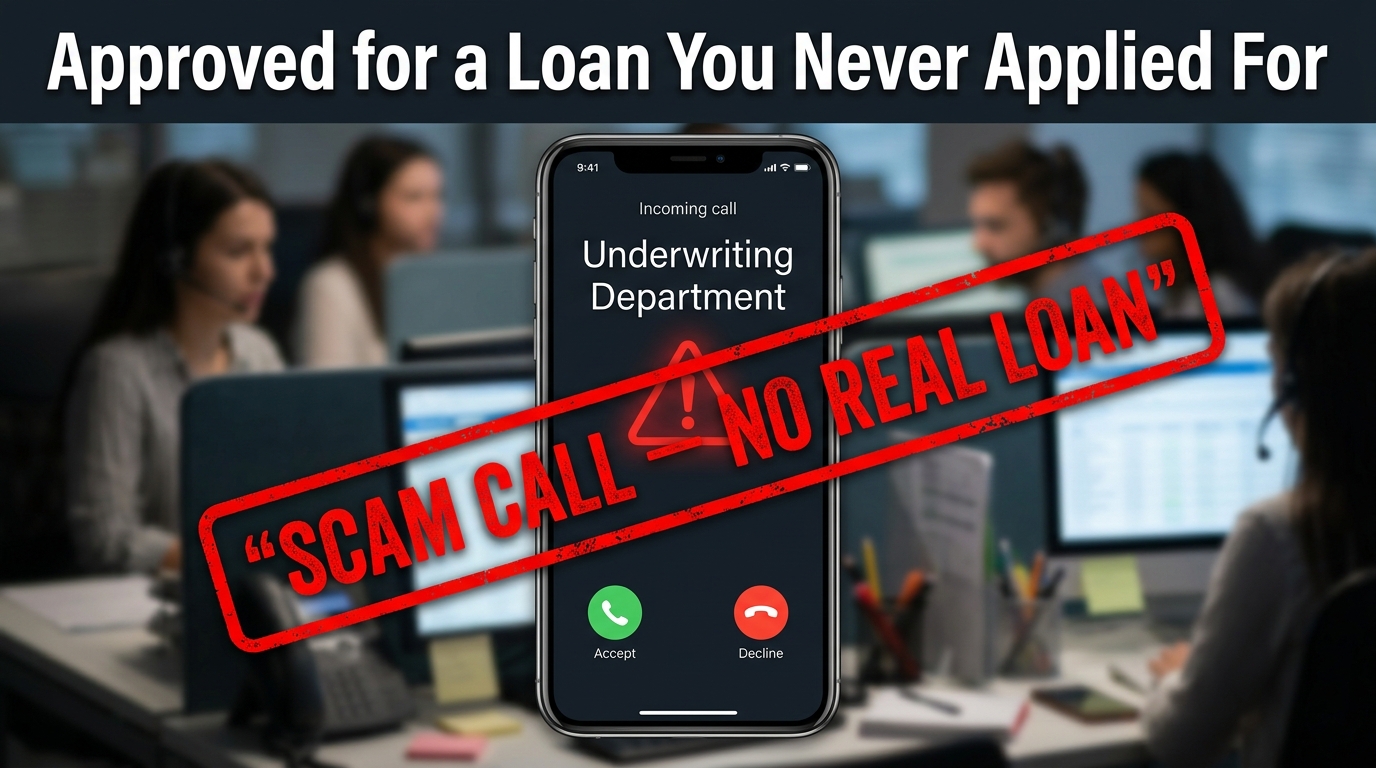

The Loan Underwriting Robocall Scam Is Flooding Phones Across America
The loan underwriting robocall scam is a widespread fraud where automated calls or voicemails claim your loan application is "nearly approved" — even though you never applied for one. The goal is to steal your personal information or trick you into paying fake upfront fees.
Quick answer — what you need to know right now:
- It's a scam. No real lender cold-calls you about a loan you didn't apply for.
- Do not press any buttons. Even pressing "9 to opt out" confirms your number is active and triggers more calls.
- Do not call back. Callback numbers connect you to live scammers trained to extract your SSN, bank details, or money.
- Do not pay any fees. Legitimate lenders never demand upfront payments before releasing funds.
- Hang up immediately and block the number.
You've probably heard the voicemail already. A friendly-sounding voice — often calling herself "Evelyn from underwriting" or "Mark from the business lending division" — tells you your loan file has been reviewed and is ready to close. All you need to do is call back to verify a few details.
It sounds oddly official. It sounds like someone did their homework. That's exactly the point.
The FTC has received complaints from people getting bursts of five to 20 calls every single day, all from different numbers, all with the same story. The Better Business Bureau has logged over 4,000 reports of these calls just since the start of this year alone.
These aren't random nuisance calls. They are engineered to steal your identity or your money — and they're getting harder to ignore.
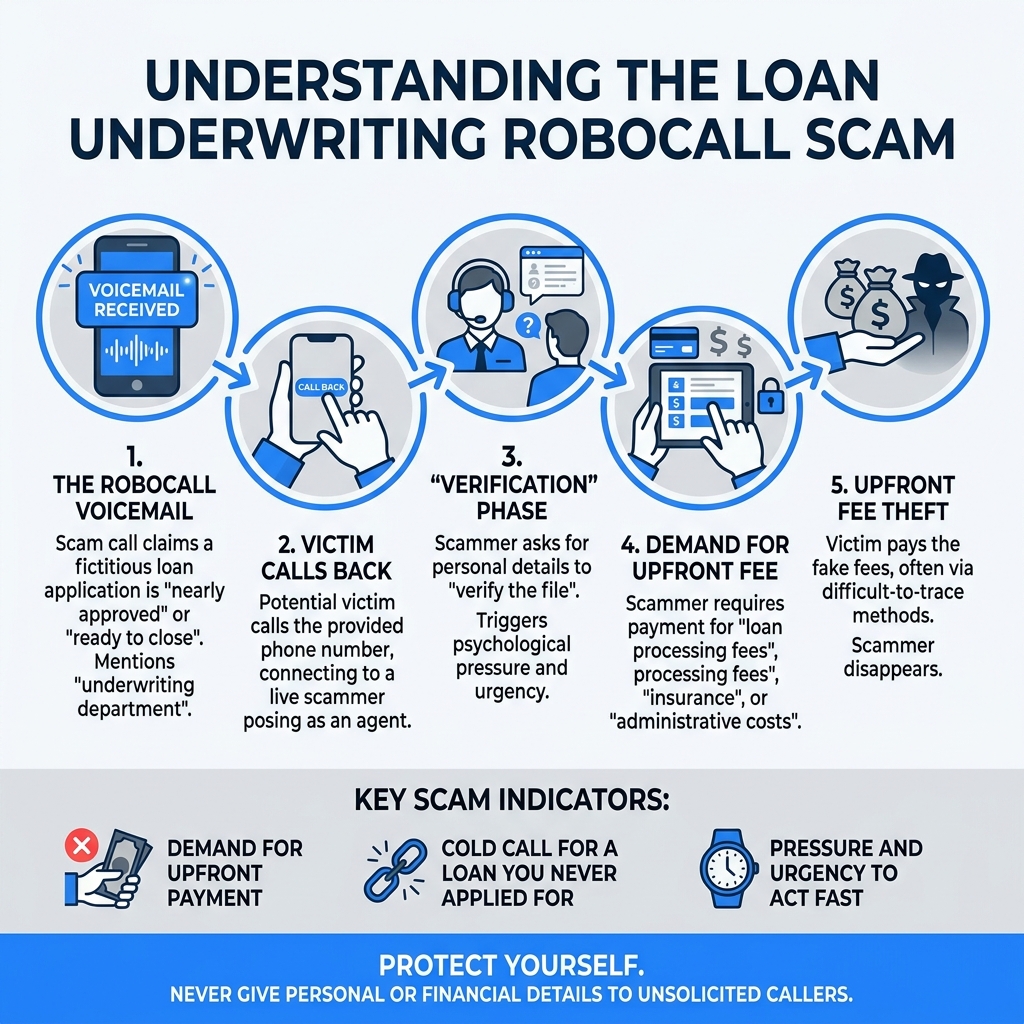
Anatomy of the Loan Underwriting Robocall Scam
To protect ourselves, we first need to understand how these criminals operate. The loan underwriting robocall scam isn't just one person with a telephone; it is a sophisticated operation involving automated dialers, spoofed caller IDs, and psychological triggers.
Scammers use "spoofing" technology to make their calls appear as if they are coming from local area codes or legitimate business hubs. You might see a call from your own city and pick up, only to hear a pre-recorded message. These groups often hide behind fictitious company names that sound incredibly boring and professional, such as "Lending Union," "Capital Union Funding," or the "Lemming West Coast Branch."

According to AARP Fraud Watch Network insights, these scammers aim to create an "established relationship" illusion. By using names like "Mark" or "Lauren" and acting as if they are following up on a previous conversation, they lower your defenses. This is a common tactic also seen in the McAfee Geek Squad Renewal Scam: How to Spot It, where the scammer pretends a transaction is already in progress to create a sense of obligation.
The "Evelyn from Underwriting" Script Breakdown
The most famous iteration of this scam features a persona named "Evelyn." Her voicemails are masterpieces of social engineering. She doesn't sound like a robot; she sounds like a busy office worker.
Scammers have even started adding "human" touches to these recordings, such as the sound of a throat being cleared or a slight pause as if she’s looking at a file. The script usually goes something like this:
"This is Evelyn from underwriting. I’m reaching out about a time-sensitive personal matter. Your file has been reviewed and is nearly approved for a $52,000 loan. I just need to verify a few last things to get this wrapped up. Call me back at 800-555-0199."
This message hits several psychological triggers:
- Urgency: It’s "time-sensitive."
- Authority: She’s from the "underwriting department."
- Reward: You’ve been "approved" for a large sum of money.
Learning to deconstruct these messages is vital. Much like when you Master How to Spot Phishing Emails, you should look for the lack of specific details. Notice she never mentions which bank she’s with or your actual name.
Red Flags of a Fake Loan Approval
How can we distinguish a real financial offer from a loan underwriting robocall scam? Real lenders have strict regulatory hurdles they must follow. Scammers, obviously, do not.
| Feature | Legitimate Lender | Robocall Scammer |
|---|---|---|
| Initial Contact | You applied first; they follow up via secure portal or mail. | Unsolicited call or voicemail for a loan you never requested. |
| Upfront Fees | Fees are deducted from the loan proceeds or paid at closing. | Demands "insurance," "processing," or "collateral" fees upfront. |
| Payment Method | Standard banking transfers. | Requests payment via Zelle, wire transfer, or gift cards. |
| Pressure | Provides time for you to review documents. | Uses high-pressure "approval window is closing" tactics. |
| Personal Info | Uses secure, encrypted applications. | Asks for SSN and bank details over a standard phone call. |
How Scammers Exploit the Underwriting Process
The term "underwriting" is the secret sauce that makes this scam work. In the real world, underwriting is the process where a lender verifies your income, assets, and credit to decide if they should give you a loan. It sounds technical, official, and slightly intimidating.
By referencing the "underwriting department," scammers bypass our natural skepticism. We think, "Oh, this must be the final stage of some application I forgot about," or "Maybe my spouse applied for this."
Scammers aren't just guessing, either. They often purchase "lead lists" from the dark web—data stolen from previous hacks or shady "check your credit score" websites. This is similar to the Cloud Storage Email Scam: The Fake Alert Draining, where scammers use just enough of your real information to make their lies feel like truths. According to BBB Scam Tracker data, thousands of people have fallen for this because the scammers knew just enough about their financial history to seem legitimate.
Why the Loan Underwriting Robocall Scam Targets Your PII
The ultimate goal of the loan underwriting robocall scam is to harvest your Personally Identifiable Information (PII). Once you call back, a live agent (who is actually a trained con artist) will "verify" your file by asking for:
- Your full Social Security Number.
- Your bank account and routing numbers (to "deposit the funds").
- Your date of birth and current address.
Once they have this, they don't even need the "upfront fee" to ruin your life. They can sell your profile on the dark web or open new lines of credit in your name. We’ve seen similar data-harvesting goals in the Apple Security Alert Scam, where the "security" warning is just a front to get your login credentials.
Furthermore, if you engage once, you are marked as a "live lead." This leads to "secondary targeting," where other scam groups start calling you with different stories because they know you are willing to answer the phone.
Immediate Steps to Stop Harassing Loan Calls
If your phone is blowing up with these calls, don't panic. There are concrete steps we can take to silence the noise.
- Hang Up and Block: The moment you realize it’s a robocall, hang up. Don't say "take me off your list."
- Avoid Keypad Prompts: Never press a button to "opt out." In the loan underwriting robocall scam, pressing a button is like waving a flag that says, "Hey! A real person is holding this phone!" This will actually increase the number of calls you get.
- Register on the National Do Not Call Registry: While scammers ignore the law, being on the National Do Not Call Registry helps you identify scams. If you are on the list and a "company" calls you to sell something, you know immediately they are a criminal enterprise.
- Report to the FTC: Use the FTC reporting tools to submit the phone number and the callback number provided in the voicemail. This helps authorities track the "bursts" of calls and shut down the VoIP providers the scammers are using.
We should treat these calls with the same skepticism we apply to suspicious texts, like those mentioned in the Robinhood Scam Text Alert: Fake Security Messages. If you didn't initiate the contact, it's probably a trap.
Tools and Apps to Block the Loan Underwriting Robocall Scam
Since scammers spoof numbers constantly, blocking one number is like playing a game of Whack-A-Mole. You need better tech.
- Carrier Tools: Most major carriers provide free spam-labeling services. Check your phone settings to enable "Silence Unknown Callers" (iOS) or "Spam Protection" (Android).
- Third-Party Apps: Apps like RoboKiller, Hiya, and Truecaller use massive databases to identify scam patterns in real-time.
- CTIA Resources: You can find a comprehensive list of CTIA call-blocking resources for various devices.
Using the Best Phishing Detection Tools for Ultimate Security can also help protect your digital footprint, making it harder for scammers to find your number in the first place.
What to Do if You’ve Already Engaged with Scammers
If you’ve already spoken to "Evelyn" or "Mark" and shared information, you must act quickly. Scammers move fast, but you can move faster.
- Freeze Your Credit: This is the most important step. Contact the three major credit bureaus — Equifax, Experian, and TransUnion — and place a freeze on your credit report. This prevents anyone from opening new accounts in your name.
- Report Identity Theft: Go to IdentityTheft.gov to create an official recovery plan and report.
- Alert Your Bank: If you shared bank details or paid a "fee," call your bank’s fraud department immediately. They may need to close your account and issue new cards.
- Change Passwords: If you used the same password for a loan site as you do for your email, change it immediately. Enable Two-Factor Authentication (2FA) on every sensitive account.
- Watch for Hidden Charges: Some scams involve signing you up for recurring "memberships." Be as vigilant as you would be when checking if a service like Joinfansclub Scam or Legit: Hidden Charges is draining your account.
Frequently Asked Questions about Loan Robocalls
Is "Evelyn from Underwriting" a real person?
No. "Evelyn" is a fictional persona. The voice you hear is a pre-recorded audio file. In some cases, scammers use AI-generated voices that can respond to basic questions, but most of the time, it is a "soundboard" operated by a scammer in a call center who presses buttons to play specific clips like "I'm sorry, I didn't catch that" or "Let me check your file."
Why am I getting 20 calls a day from different numbers?
This is known as "burst calling." Scammers use automated dialers to hit thousands of numbers at once. They rotate through hundreds of spoofed VoIP (Voice over Internet Protocol) numbers so that your phone's "Block Number" feature doesn't stop the next call. They do this to wear you down until you finally pick up out of frustration or curiosity.
Does the Do Not Call Registry stop these scams?
The National Do Not Call Registry is effective against legitimate telemarketers who follow the law. However, because the loan underwriting robocall scam is run by criminals (often operating outside the U.S.), they simply ignore the registry. You should still register, as it makes it easier to spot illegal calls, but it is not a "firewall" against scammers.
Conclusion
The loan underwriting robocall scam thrives on the gap between our financial needs and our understanding of the lending process. By staying calm, hanging up, and refusing to engage with the "Evelyns" of the world, we take away their power.
At Tempo Mail USA, we believe that your real identity should be a closed book to anyone you haven't explicitly invited in. Just as a temporary email alias acts as a privacy firewall for your inbox, being proactive about your phone security protects your most sensitive PII from being auctioned off to the highest bidder.
Don't let a robocall dictate your financial security. Stay skeptical, use the tools available to you, and Protect your identity with Tempo Mail USA to keep your private life truly private.