


Understanding the Mechanics of Healthcare Fraud
To defend ourselves, we first need to understand how these criminals operate. The kaiser permanente scam typically relies on a technique called "vishing" (voice phishing). Unlike a standard spam call, vishing uses psychological manipulation to trick you into handing over data.
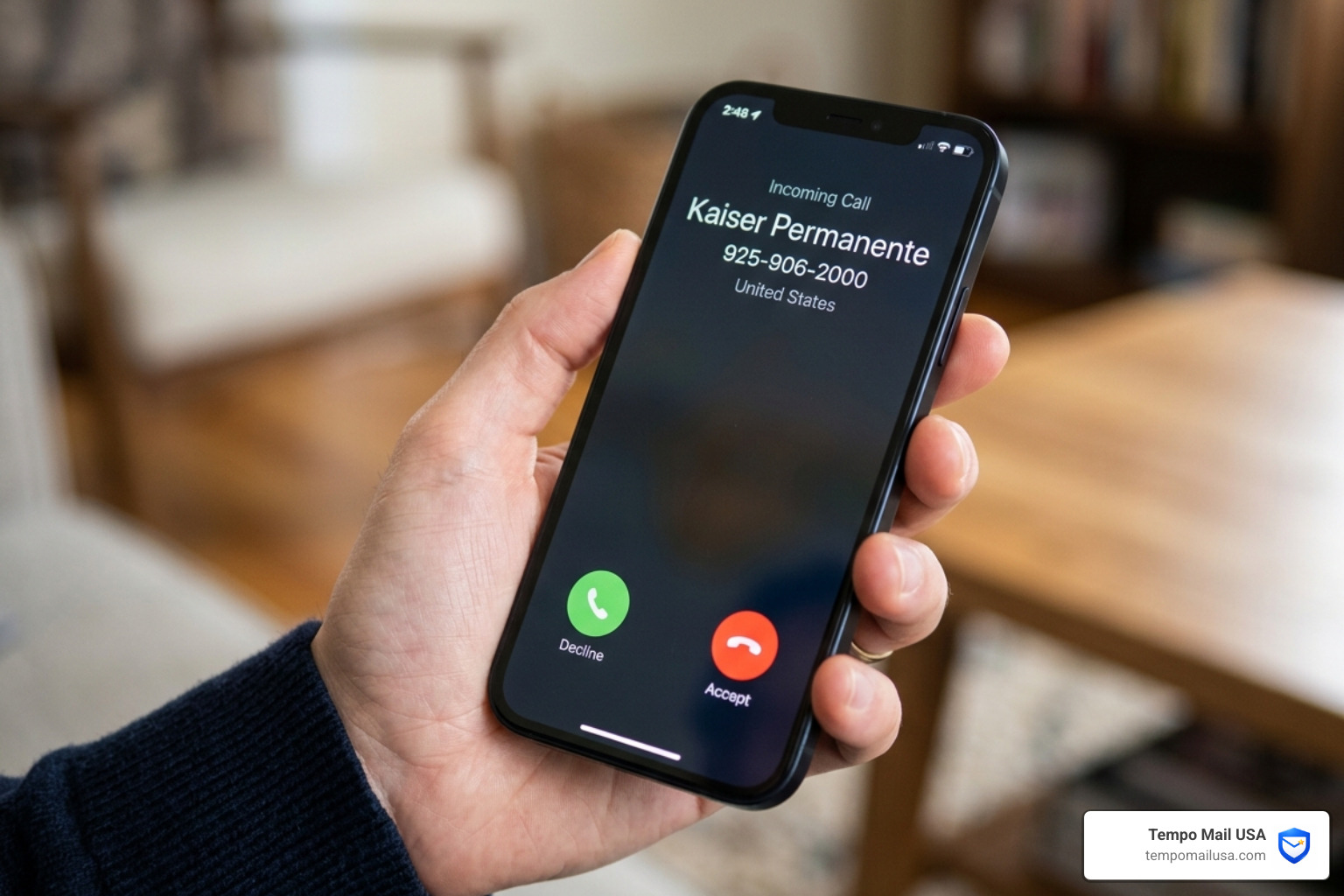
One of the most effective tools in a scammer’s arsenal is caller ID spoofing. Using black-market devices and software, scammers can make any name or number appear on your smartphone screen. Even if your phone displays "Kaiser Permanente" or a known local facility number like 925-906-2000, it is no guarantee of legitimacy. Companies like Kaiser Permanente cannot prevent these spoofing attacks; the technology simply doesn't exist to block them at the source.
The Mechanics of a Kaiser Permanente Scam Call
When you answer a kaiser permanente scam call, you aren't just talking to a random person. These are often organized operations using AI-enhanced scripts that sound professional and authoritative.
The scam often follows a specific "hook, line, and sinker" pattern:
- The Hook: The caller claims there is an urgent issue—perhaps a "manual claim" filed for a surgery you never scheduled, or a "waiver denial" for a medical procedure.
- The Transfer: If you question the claim, they offer to "transfer" you to a supervisor, the FTC, or even "international police" (often targeting Mandarin speakers with claims of crimes committed in China).
- The Ask: Once you are sufficiently worried, they ask for "verification details." This is where they steal your Social Security number, Medicare ID, or bank account information.
Why Healthcare Providers are Primary Targets
Why are we seeing such a massive surge in these attacks? The answer lies in the value of the data. As noted in Kaiser Permanente Phishing Scams: How to Spot & Stop Them in 2025, medical records are a goldmine for cybercriminals.
A credit card can be canceled in minutes. A medical identity, however, contains your full name, birth date, Social Security number, and insurance details. This "Fullz" (as it's called on the dark web) allows criminals to:
- Open fraudulent bank accounts.
- File fake insurance claims.
- Obtain expensive medical equipment or prescriptions in your name.
- Commit tax fraud.
With healthcare-focused phishing attacks up by 240% in 2025, the industry is under siege because the trust we place in our doctors is a powerful weapon for a fraudster.
Common Types of Kaiser Permanente Impersonation
The kaiser permanente scam isn't limited to phone calls. Scammers use a multi-channel approach to catch you off guard. Whether it's an email (phishing) or a text message (smishing), the goal remains the same: harvesting your PII (Personally Identifiable Information).
If you’re unsure how to tell a fake email from a real one, our Quick Guide: How to Spot Phishing Emails provides a solid foundation for identifying these digital traps.
Recruitment Fraud
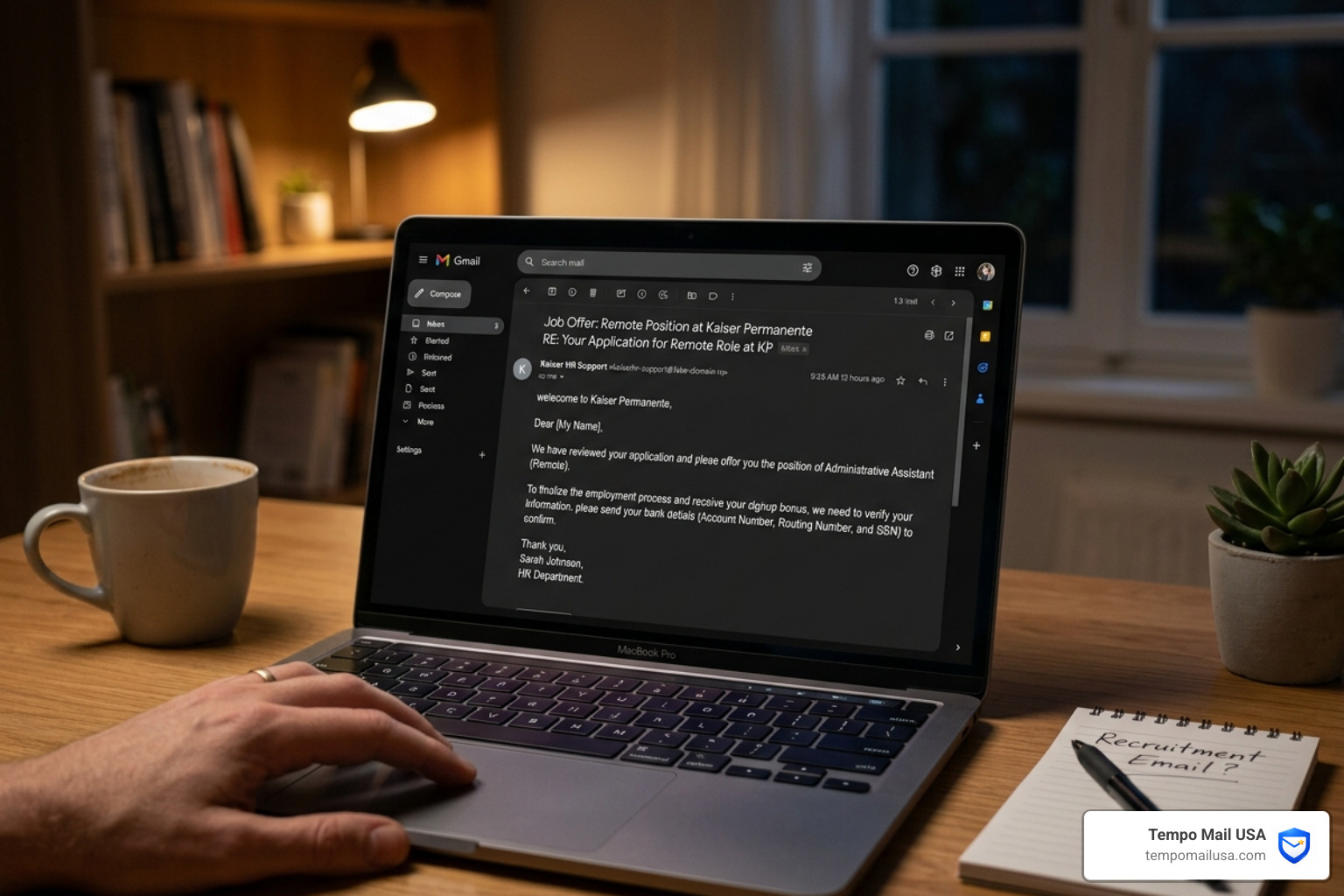
In April 2026, we are seeing a massive spike in recruitment fraud. This is a particularly cruel version of the kaiser permanente scam that targets job seekers. Scammers post fake job listings on social media or job boards. When you apply, you receive a professional-looking offer letter—sometimes even using real employee names found on LinkedIn.
They will ask you to pay for "training materials" or "home office equipment," promising to reimburse you. They might also ask for your bank details for "direct deposit setup" before you've even had a real interview. Remember: Kaiser Permanente will never ask for money or credit card information during the hiring process.
Billing and Payment Scams
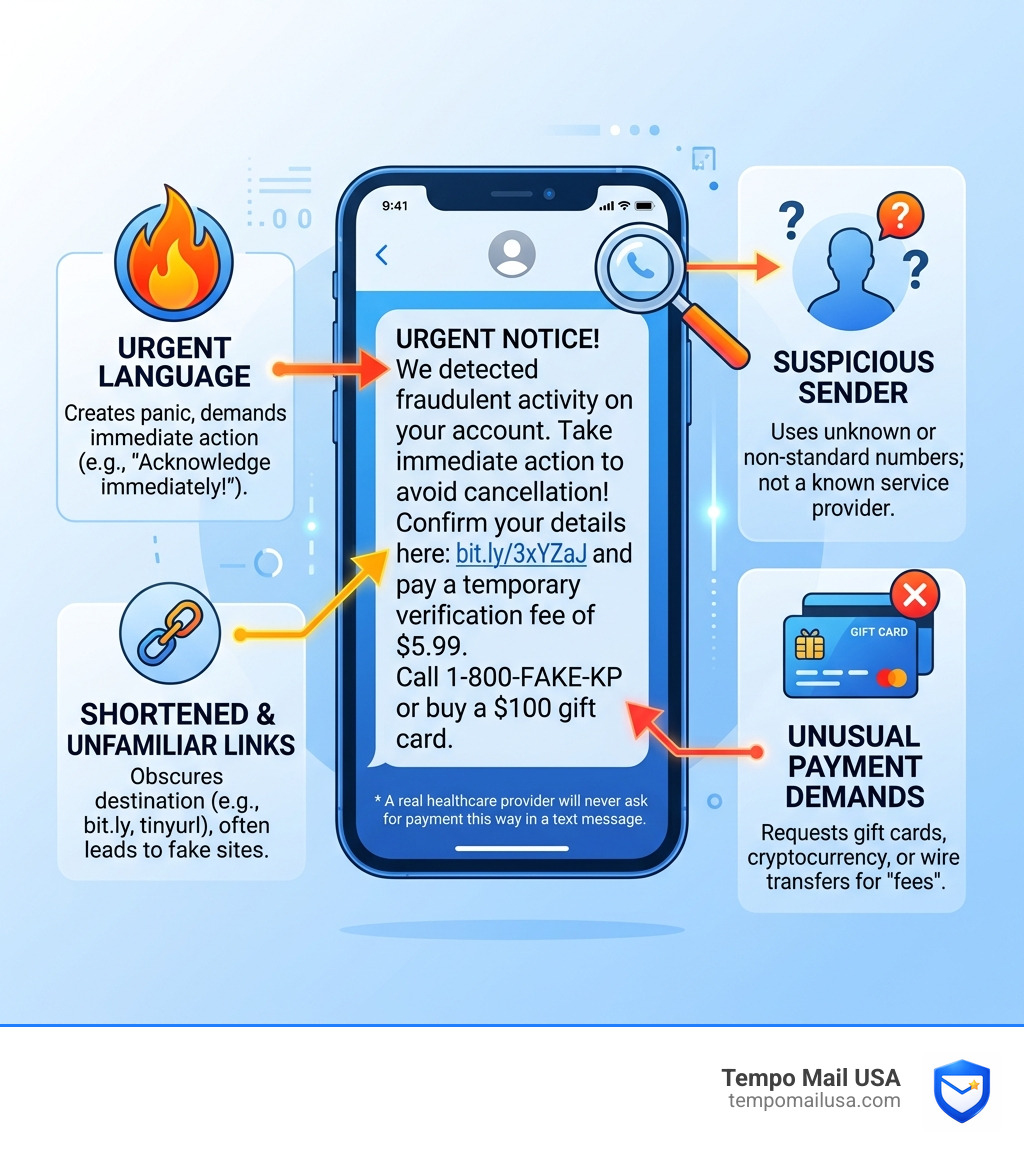
Another common tactic involves fake debt collection. You might receive a call or email stating you have an "overdue medical bill" that must be paid immediately to avoid a lapse in coverage. They often pressure you to pay via untraceable methods like gift cards, wire transfers, or cryptocurrency.
If you receive a high-pressure demand for money, it’s likely a Fake Debt Collector Scam. Real healthcare providers offer secure payment portals and installment plans; they don't demand Apple Gift Cards.
Medical Claim and Surgery Scams
Scammers frequently use specific terminology to sound legitimate. We’ve seen reports of callers referencing a "Global Medical Insurance plan" or "manual claim filings." They may even send forged letters on what looks like official Kaiser letterhead. These scripts are designed to create confusion, making you think you’ve been a victim of identity theft so that you’ll "verify" your real info to "fix" the problem.
Red Flags: How to Spot a Kaiser Permanente Scam
Knowing the red flags can be the difference between staying safe and becoming a statistic. Use the table below to compare how Kaiser actually communicates versus how a scammer operates.
| Feature | Legitimate Kaiser Communication | Kaiser Permanente Scam Tactic |
|---|---|---|
| Payment Method | Secure portal, check, or official billing line. | Gift cards, Bitcoin, or wire transfers. |
| Urgency | Professional reminders about appointments. | Threats of arrest, lawsuits, or immediate cancellation. |
| Personal Info | May ask for birth date to verify you (if you called them). | Asks for full SSN, Medicare ID, or passwords. |
| Email Domain | Always ends in @kp.org. | Generic (gmail.com) or misspelled (kaiser-perms.org). |
| Greeting | Usually uses your legal name. | "Dear Member" or "Valued Patient." |
Identifying Fraudulent Email Addresses
Always look closely at the sender's address. Scammers are masters of "typosquatting"—registering domains that look almost identical to the real thing. They might also use document-sharing services to hide their intent. For instance, if you get a request to sign a "medical release" via a link that looks suspicious, be sure to check out our guide on Docusign Email Scam Warning.
Unusual Payment Demands
This is the biggest "smoking gun." No legitimate healthcare organization—including Kaiser Permanente—will ever ask you to pay a bill using:
- Store gift cards (Target, Amazon, etc.).
- Prepaid debit cards (MoneyPak, etc.).
- Cryptocurrency (Bitcoin).
- Wire transfers (Western Union).
If they ask for these, hang up immediately.
What to Do if You Are Targeted or Victimized
If you realize mid-call that you’re talking to a scammer, don’t feel the need to be polite. Just hang up. If you receive a suspicious email, do not click the links. Much like Paypal Scam Emails, these messages are designed to lead you to a "spoofed" website that looks exactly like the real Kaiser login page but exists only to steal your credentials.
Reporting a Kaiser Permanente Scam to Authorities
Reporting is vital because it helps authorities track patterns and shut down scam infrastructure.
- Contact Kaiser Directly: Report the incident to Member Services at 1-800-464-4000.
- Email Phishing: Forward suspicious emails to phishing@kp.org.
- The FTC: File a report at ReportFraud.ftc.gov.
- IC3: If you lost money, file a complaint with the FBI’s Internet Crime Complaint Center at ic3.gov.
Steps for Identity Recovery
If you’ve already shared sensitive information, you need to act fast:
- Freeze Your Credit: Contact Equifax, Experian, and TransUnion to place a credit freeze. This prevents scammers from opening new accounts in your name.
- Change Passwords: Immediately update your Kaiser Permanente password and enable Two-Factor Authentication (2FA).
- Notify Your Bank: If you shared financial details, call your bank's fraud department to secure your accounts.

Protecting Your Healthcare Data in 2026
As we navigate the digital landscape of 2026, we must be proactive about our privacy. One of the best ways to protect yourself from the kaiser permanente scam is to limit the amount of real data you have "in the wild."
Scammers often get your name and number from data breaches or public records. This is where using a service like Tempo Mail USA becomes a game-changer. By using secure email aliases, you can shield your primary identity. If an alias starts receiving spam or phishing attempts, you simply delete it—leaving your real inbox (and your identity) untouched. Understanding Why Temporary Email is Essential can help you build a "firewall" between your personal life and the services you use.
Additionally, always:
- Review Your EOBs: Check your "Explanation of Benefits" statements every month for procedures you didn't receive.
- Use Secure Portals: Only communicate through the official kp.org message center.
- Stay Informed: Scammers move from brand to brand. Whether it’s a Costco Scam or a healthcare scam, the tactics of urgency and impersonation remain constant.
Frequently Asked Questions about Kaiser Scams
Will Kaiser Permanente ever call me about an unpaid bill?
Yes, Kaiser may call to remind you of a balance or offer payment arrangements. However, they will never demand immediate payment via gift cards or threaten you with arrest. If you are unsure, hang up and call the number on the back of your membership card to check your balance.
How do scammers get my Kaiser membership information?
Scammers don't always have your specific Kaiser info. Often, they buy "lead lists" from data breaches or the dark web. They call thousands of people, knowing that statistically, many will be Kaiser members. If they happen to call a member and use the right "script," it feels like they have inside knowledge, which builds false trust.
Can I block spoofed Kaiser Permanente phone numbers?
You can block individual numbers, but scammers change them constantly (a tactic called "neighbor spoofing"). The best defense is to use a call-filtering app or simply let unknown calls go to voicemail. If it’s important, a real Kaiser representative will leave a message with a verifiable callback number.
Conclusion
The kaiser permanente scam is a sophisticated threat, but it relies entirely on your cooperation. By staying vigilant, verifying every unsolicited contact, and refusing to act under pressure, you take the power away from the fraudsters.
At Tempo Mail USA, we believe that your personal information belongs to you. In an era where healthcare data is a high-value target, using privacy-first tools like email aliases can provide the essential layer of protection you need. Don't let your PII become a commodity on the black market.
Stay skeptical, stay secure, and always verify before you trust. For more information on how to shield your digital identity, explore our secure email services and take control of your privacy today.