


Is Finelo a Scam? Here's the Short Answer
Is Finelo a scam is a fair question — and you deserve a straight answer before reading further.
Quick verdict:
| Question | Answer |
|---|---|
| Is Finelo a scam? | No, but it has real issues worth knowing |
| Does it teach real trading? | No — it's education only, no real money |
| Are the high ratings legitimate? | Mostly yes — 4.6 stars from 25,000+ Trustpilot reviews |
| What causes complaints? | Billing surprises, auto-renewal, and refund denials |
| Is it safe to try? | Yes, with caution — read the fine print first |
Finelo is a legitimate investment education app. It is not a fraudulent scheme designed to steal your money. But "not a scam" doesn't mean "no problems."
A meaningful number of users feel burned — not by fake lessons, but by unexpected charges, aggressive auto-renewals, and ads that oversell what the app actually does. Some found themselves charged for subscriptions they thought they'd canceled. Others signed up expecting an AI trading tool and got a beginner education course instead.
That gap between expectation and reality is where most of the "scam" talk comes from.
This guide breaks down exactly what Finelo is, what users actually experience, and what you should know before handing over your card details — including how to protect your personal information when signing up for any trial like this.
What is Finelo and Is Finelo a Scam?
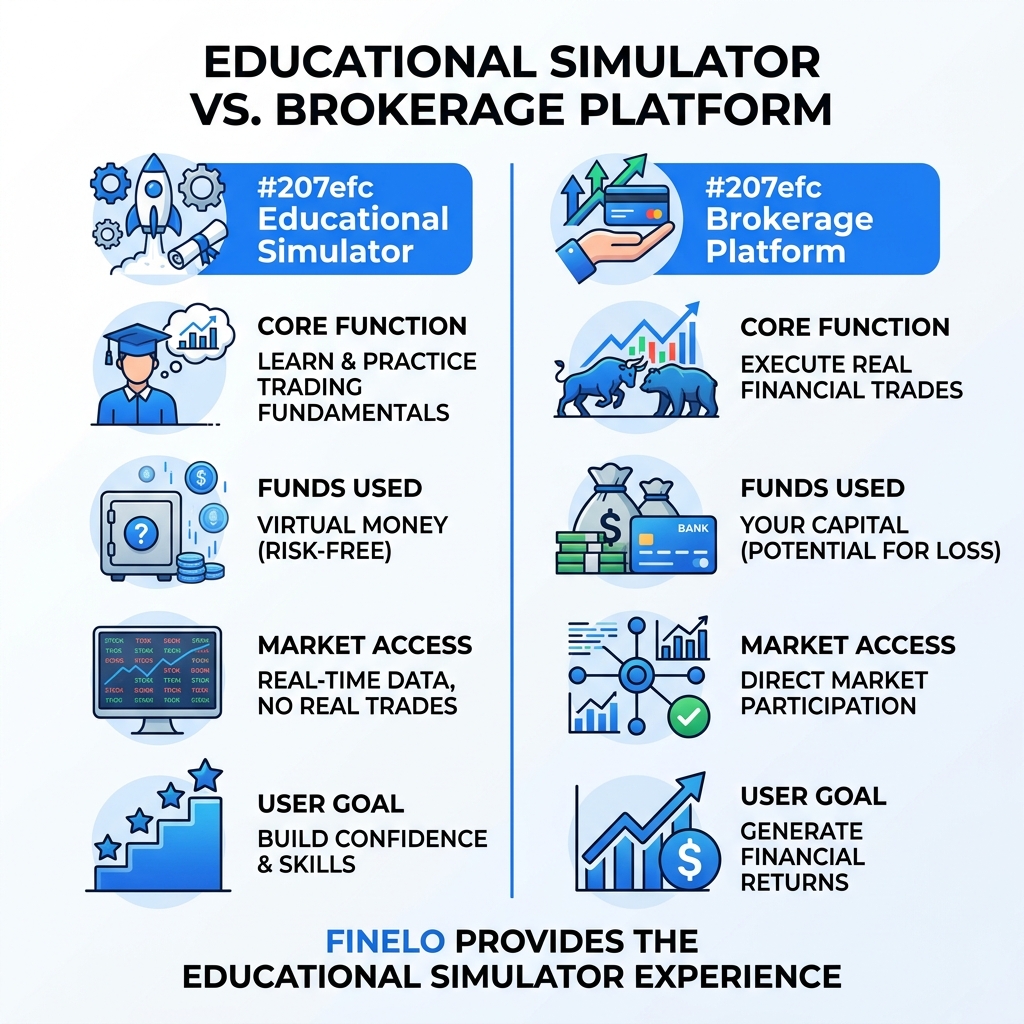
At its core, Finelo is an educational platform designed to teach the fundamentals of investing and trading. It isn't a bank, a brokerage, or a hedge fund. Instead, think of it as "Duolingo for trading." It uses a gamified approach to help people who feel intimidated by Wall Street jargon.
The platform centers around a 28-day challenge that promises to take you from zero knowledge to being confident enough to open your first brokerage account. It features a risk-free simulator where you can trade with virtual money based on real-time market data. This allows you to practice without the terrifying possibility of losing your life savings on a "hot tip."
However, the question "is finelo a scam" often pops up because of how the app is marketed. Some advertisements on platforms like TikTok and Instagram can be a bit... enthusiastic. They might lead you to believe you're getting an automated AI trading bot that prints money while you sleep. When users sign up and find a series of 5-minute reading lessons instead of a money-printing machine, they often feel misled.
According to research from Is Finelo a Legit or Scam Website?, the site is technically legitimate but operates in a way that can lead to a "scam-like" experience for the unwary. To help you navigate these waters, we've put together an Is Finelo Legit or a Scam? Ultimate Checklist to see if it aligns with your needs.
Features and Learning Tools
Finelo's curriculum is broken down into bite-sized lessons that average about 3.5 to 5 minutes each. This is perfect for busy people who want to learn during their morning coffee or commute. The features include:
- Interactive Quizzes: To test what you've actually retained.
- AI Assistant: A chatbot designed to answer basic financial questions (though its depth is debated).
- Market Forecaster: A tool that uses historical data to show potential market movements.
- Trading Simulator: A playground with virtual funds to practice technical analysis.
While these tools are great for learning, they require you to share personal data. We always recommend practicing good Account Security, Verification & Digital Hygiene when signing up for any new digital service.
The Reality of the "AI Trading" Claims
This is where things get sticky. Finelo's marketing often leans heavily on "AI" buzzwords. While they do have an AI assistant, it is strictly for educational guidance, not for making real trades on your behalf. There is no real-money trading allowed within the app.
If you see an ad promising that Finelo's AI will manage your portfolio and guarantee returns, be very careful. Those are common marketing tactics that can border on deceptive. In finance, "guaranteed returns" is a massive red flag often seen in a Ponzi Scam Explained: Meaning, Red Flags. Finelo itself doesn't promise these returns in its terms of service, but its social media ads can sometimes paint a different picture.
Analyzing User Reviews and Reputation
To figure out is finelo a scam, we have to look at the numbers. And the numbers are actually quite impressive:
- Trustpilot: 4.6 stars from over 25,516 reviews (94% are 4 or 5 stars).
- App Store: 4.7 out of 5 from 22,000+ ratings.
- Google Play: 4.6 out of 5 from 13,577 reviews.
- Subscribers: Over 1.15 million paid users worldwide.
Finelo was even nominated for Newsweek's 'America's Best Online Platform 2025.' These aren't the stats of a fly-by-night operation.

Why some users ask "is finelo a scam" on Reddit
Despite the high ratings, if you head over to Reddit or the Better Business Bureau (BBB), you'll find a different story. Most complaints center on:
- Auto-Renewal: Users sign up for a "trial" and forget to cancel, leading to charges ranging from $19.99 to $79.
- Refund Denials: Finelo has a very strict refund policy. If you don't cancel before the renewal, getting your money back is notoriously difficult.
- Billing Confusion: Some users report being charged for "add-ons" or "mentor programs" they don't remember selecting during the checkout process.
The BBB has recorded 18 complaints in the last three years, with 12 specifically related to billing. While 18 complaints out of 1.15 million users is statistically low, the intensity of the frustration is high. Some users even feel the need to learn What is Wire Fraud? Real Examples, Scams & How to Avoid It because they feel their bank details were used unfairly.
Positive Feedback from Beginners
On the flip side, thousands of beginners love the app. Users like "Zaki" and "Isaac Fregene" have praised the clean, intuitive structure. Many older users, some in their 70s, find the pace perfect for finally understanding what their financial advisors are talking about. It takes the "scary" out of the stock market.
If you're looking for a way to build confidence without the pressure of "get rich quick" schemes, Finelo might be for you. It's a different vibe than something like Freecash, which you can read about in Is Freecash.com a Scam? Unveiling the Truth.
Red Flags and Misleading Advertising Concerns
While we've established that the educational content is real, there are some "red flags" we need to discuss.
- The "Arnegen Digital" Mystery: Charges on bank statements often appear as "ARNEGEN DIGITAL CORP." Some investigators have noted that the U.S. address listed for this company sometimes points to an Apple Store or other generic retail locations.
- Scamadviser Score: Scamadviser has given the app a very low trust score (1/100) in the past, primarily because the owners hide their identity and the site uses frames to pull in content.
- Aggressive Upselling: During the signup process, you might be hit with several "one-time offers" for AI analyzers or specialized ebooks. If you click too fast, you might end up with a much higher bill than expected.
For a deeper dive into these concerns, check out Finelo.com Scam Alert: Don’t Invest Until You Read This! – Infoquu.
Marketing Claims vs. Actual Features
| Marketing Claim | Actual Feature |
|---|---|
| "AI Trading Assistant" | A chatbot that explains trading terms |
| "Market Forecaster" | A tool showing historical trends, not future guarantees |
| "Start Investing Today" | You learn how to invest; you don't actually trade real money |
| "Risk-Free" | The simulator is risk-free; the subscription costs real money |
Subscription Models and Billing Issues
The "trial-to-paid" pipeline is the number one reason people scream "scam." Many users report signing up for a $1 or $6 trial, only to be hit with a $40 or $80 charge a few days later. This is standard subscription behavior (like Netflix or Spotify), but Finelo's cancellation process can feel like running an obstacle course.
If you aren't careful, you could find yourself in a situation reminiscent of a Pig Butchering Scam: Meaning, How It Works, How to Avoid, where you feel pressured to keep putting money into a system that isn't giving you the "returns" (or in this case, the service) you expected.
How to avoid an "is finelo a scam" experience
If you want to try Finelo without the headache, follow these steps:
- Read the Terms: Don't just click "Accept." Look for the renewal price.
- Set a Reminder: Put a notification in your phone for 24 hours before the trial ends.
- Screenshot Everything: Keep a record of your cancellation confirmation.
- Use a Privacy Shield: Sign up using a temporary email alias from Tempo Mail USA. This prevents the company from flooding your real inbox with marketing and makes it harder for your data to be sold to third-party "mentors."
Learning to protect yourself is just as important as learning to trade. You can Master How to Spot Phishing Emails to stay safe across all your financial apps.
Who Should Use Finelo (and Who Should Skip It)
Finelo isn't for everyone. Here’s the breakdown:
You should use Finelo if:
- You are a complete beginner who doesn't know a "call option" from a "telephone call."
- You enjoy gamified learning (streaks, quizzes, bite-sized content).
- You want a safe place to practice trading with "monopoly money" first.
- You are a senior citizen looking for simple, jargon-free explanations.
You should skip Finelo if:
- You already have a basic understanding of the stock market.
- You are looking for an "AI bot" to trade for you.
- You hate subscription models and auto-renewals.
- You want deep, technical analysis or professional-grade charting tools.
Suitability for Different Learners
Finelo is great for visual and audio learners. The lessons are succinct (average 3.5 minutes), and the audio versions allow you to learn on the go. However, if you're looking for a massive marketplace of goods or a different kind of platform, you might be asking Is AliExpress a Scam? Legitimate Platform? instead. Finelo is strictly a "school."
Practical Advice Before Signing Up
Before you give them your credit card:
- Check your budget: Can you afford the $20-$80 renewal if you forget to cancel?
- Look for free alternatives: YouTube and Investopedia offer much of this info for free, though it's less structured.
- Protect your PII: Use a proxy email service. This is your first line of defense against aggressive marketing.
Staying safe online requires a proactive approach. We recommend reading up on how to Stop Phishing: Effective Strategies to Prevent Attacks to keep your digital life secure.
Frequently Asked Questions about Finelo
Does Finelo offer real-money trading?
No. Finelo is an educational simulator. You trade with virtual currency to learn the ropes. To trade real money, you will need to open an account with a regulated brokerage like Fidelity, Charles Schwab, or Robinhood.
How do I cancel my Finelo subscription?
If you signed up via the App Store or Google Play, you must cancel through your phone's subscription settings. If you signed up on their website, you need to email support@finelo.com. We recommend doing this at least 24-48 hours before your trial expires.
Is the Finelo AI assistant accurate?
It is generally accurate for basic definitions and educational concepts. However, users have reported that its "Chart Analyzer" can sometimes misidentify stocks or provide vague, horoscope-like advice. Do not use it as your sole source for financial decisions.
Conclusion: Final Verdict on Finelo
So, is finelo a scam? No. It is a legitimate educational tool that has helped over a million people gain financial literacy. It provides high-quality, bite-sized lessons that make a complex topic accessible.
However, the company’s billing practices and aggressive marketing can make it feel like a scam to those who aren't paying close attention. The "red flags" like unverifiable corporate addresses and difficult refund policies are real and should be taken seriously.
Our advice? If you’re a beginner who wants a structured way to learn, Finelo is a solid choice — provided you manage your subscription like a hawk.
To stay safe, use a "privacy firewall." By signing up with a temporary email alias from Tempo Mail USA, you shield your primary identity and keep your real inbox clean from the inevitable marketing emails. Protecting your Email Privacy & Cybersecurity is the best investment you can make before you ever spend a dime on the stock market.
Happy learning, and stay safe out there!