


Understanding the Payne Richards & Associates Scam Allegations
The payne richards & associates scam concerns center around a legitimate company that uses questionable tactics to charge fees for services you can access for free. Here's what you need to know immediately:
Quick Answer: Is Payne Richards & Associates a Scam?
- Not technically illegal - They are a BBB-accredited business with an A+ rating since 2017
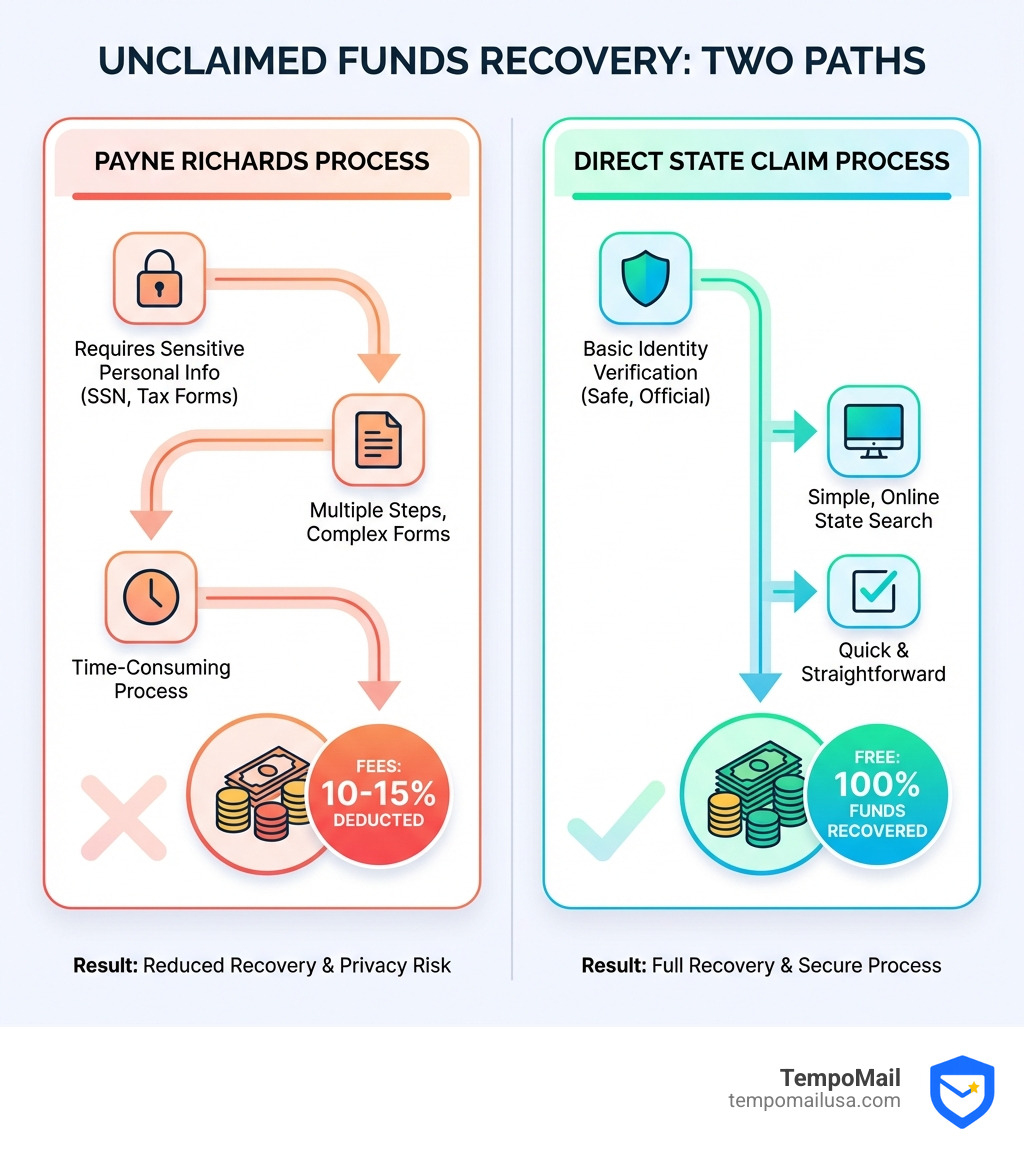
- Predatory practices - They charge 10-15% fees to recover unclaimed funds you can claim yourself for free
- Deceptive tactics - Letters create urgency (14-day deadlines) and don't mention free state alternatives
- Real complaints - 26 BBB complaints in 3 years, with customers reporting misleading practices
- Bottom line - While not a traditional scam, their business model exploits people's lack of awareness
Many people receive official-looking letters from Payne Richards & Associates claiming they have unclaimed funds from previous addresses, old accounts, or "underfunded overcharges." The catch? These funds are publicly available through your state's unclaimed property office at zero cost.
The company operates in a legal gray area. They scan public databases for unclaimed property, contact owners with urgent-sounding letters requesting sensitive information like your Social Security number and tax forms, then charge a percentage of funds you recover. As one attorney stated in our research: this is "a 100% scam trying to collect 10% of money that is 100% FREE for a person to collect themselves."
The deception lies in what they don't tell you. State controllers maintain free online databases where you can search for and claim your own property in minutes. Payne Richards & Associates positions themselves as the only way to access these funds, when they're simply acting as an unnecessary middleman.
I'm Mohammad Waseem, and through my work building privacy-focused web platforms and analyzing deceptive online practices, I've researched the payne richards & associates scam allegations to help you protect your personal information and avoid unnecessary fees. This guide will show you exactly how their tactics work and how to claim your funds directly.
Legitimacy vs. Predatory Practices: The PR&A Business Model
When we first hear the word "scam," we often think of outright illegal activities, like a classic Nigerian Prince email. However, the situation with Payne Richards & Associates is a bit more nuanced, operating in what we might call a "legal gray area." Our research indicates that Payne Richards & Associates, also known as PRClaims.com, is a legitimate business entity. They've been incorporated in California since 2018, with a business history that dates back further in Texas. Furthermore, they boast an A+ rating with the Better Business Bureau (BBB) and have been accredited since 2017.
An A+ rating from the BBB usually signals a trustworthy business. So, how can a company with such credentials be at the center of a "scam" discussion? The answer lies in their practices, which many consumers and experts deem predatory and deceptive, even if not strictly illegal. Our investigation into their scientific research on PR&A business history reveals a pattern of complaints that contradict their stellar BBB rating.
Over the last three years, Payne Richards & Associates has accumulated a total of 26 complaints, with 11 of those being closed in the last 12 months alone, and nine complaints filed in the past year. These complaints paint a picture of consumer dissatisfaction centered around misleading tactics, unexpected fees, and services that many argue are entirely unnecessary.
One key person of interest behind the PRClaims operation is a certain Mr. Paul R. Hashim. He has been involved with several similar companies over the years, including one called US Claims Services, which was the focus of an investigative article from the LA Times. This history suggests a long-standing business model focused on unclaimed funds recovery, which, as we'll explore, comes with significant caveats for consumers.
The core issue isn't that Payne Richards & Associates doesn't recover funds; it's that they charge a substantial fee for a service that individuals can easily perform themselves for free. They capitalize on the public's unawareness of state unclaimed property programs. While it's not illegal to charge for a service that's otherwise free, their methods often obscure this crucial fact, leading to feelings of being swindled.
This distinction is vital for us. As a cybersecurity and privacy company, we at TempoMail USA believe in empowering you with knowledge to protect personal information online and make informed decisions, especially when it comes to your finances. Understanding this business model helps us recognize that a high BBB rating doesn't always tell the whole story about a company's ethical standing or the value they provide.
Analyzing the Payne Richards & Associates Scam Tactics
So, how exactly does the Payne Richards & Associates scam (or rather, their predatory business model) work? It's a masterclass in exploiting information asymmetry and creating a sense of urgency.
Their operation typically begins with an unsolicited letter or communication, often titled something like a "Standard Recovery Agreement." This letter informs you that they have located "unclaimed funds" or "underfunded overcharges" belonging to you, held in escrow. They then offer to retrieve these funds on your behalf, but, naturally, not out of the goodness of their hearts. Our research shows they typically charge a hefty finder's fee, ranging from 10% to 15% of the recovered amount. Imagine paying 15% of your own money just to get it back!
These companies are essentially private investigators who scour publicly available databases for unclaimed property. These databases are maintained by state controllers and are freely accessible to anyone. Payne Richards & Associates then acts as an intermediary, contacting the rightful owners and offering their "service." The deception lies in their aggressive pitch and the omission of a critical piece of information: you can claim these funds yourself for free. They leverage the fact that many people don't know about state unclaimed property websites or find the process intimidating.
One common tactic highlighted in our research is the use of high-pressure deadlines. For instance, a Laramie resident received a letter from Payne Richards & Associates imposing a 14-day deadline to claim funds. This creates a sense of urgency, pushing individuals to sign their "Standard Recovery Agreement" quickly without fully understanding the terms or exploring alternatives. It's a classic move to prevent people from doing their due diligence.
Furthermore, the language used can be vague, referring to funds from "underfunded overcharges" or "escrow" without clear explanations. This ambiguity can confuse individuals, making them believe that Payne Richards & Associates possesses some unique ability to access these funds that they couldn't on their own.
We've also seen instances where customers report being charged fees for services they did not receive or for funds they had already initiated claims for. Some complainants on the BBB allege being billed for 10% of recovered property even after finding and claiming it themselves, as Payne Richards & Associates provided no updates. This suggests they might be monitoring public records and swooping in to claim credit and fees for work already done or easily done by the individual.
The investigative work into Paul R. Hashim, a key figure behind PRClaims, and his past involvement with US Claims Services, which was featured in an investigative report from the LA Times, further underscores the long history of such asset recovery tactics. This isn't a new phenomenon, but a persistent business model that relies on consumer ignorance and a willingness to pay for convenience, even when that convenience is overpriced and unnecessary.
Red Flags of a Payne Richards & Associates Scam
Knowing the tactics is one thing, but recognizing the red flags in a real-world scenario is paramount. When you receive a letter or communication from a company like Payne Richards & Associates, here are the critical warning signs we've identified that should make you pause:
- Requests for Sensitive Personal Information (SPI): If they ask for your Social Security Number (SSN), tax forms, W2s, or other highly sensitive personal information upfront, be extremely cautious. While legitimate processes for claiming unclaimed funds will require identity verification, reputable entities (especially state governments) will clearly explain why it's needed and will have secure channels for submission. Unsolicited requests for such data, particularly from third-party "finders," should raise a giant red flag. This is a common tactic in various scams, including the Unifin text scam exposed that we've seen.
- Unsolicited Mailers or Calls: The very act of receiving an unexpected letter or call about unclaimed funds should make you wary. While some legitimate state programs do outreach, these third-party companies aggressively solicit clients. If you didn't initiate contact, proceed with extreme caution.
- High-Pressure Tactics and Deadlines: As mentioned, a common tactic is to impose short deadlines (like a 14-day window) to sign agreements. This is designed to prevent you from researching the company, understanding the terms, or finding that you can claim the funds for free. Legitimate processes rarely involve such artificial urgency.
- Omission of Free Alternatives: A glaring red flag is the absence of information about your ability to claim the funds directly from the state for free. A truly transparent service would inform you of all your options, not just their paid one.
- Vague Language about Funds: If the letter talks about "underfunded overcharges," "funds in escrow," or other unclear financial terms without specifying the source or the exact nature of the funds, it's a sign of potential obfuscation.
- Demanding a Percentage Fee: While not illegal, demanding a percentage of your own money to help you retrieve it is a strong indicator that you're dealing with a service you likely don't need. Why pay someone for something you can do for free?
- Website and Contact Info Discrepancies: Some customers have reported that the company's website or contact information can be misleading or filled with excessive ads, further blurring the lines of legitimacy. Always verify contact details through official, independent sources.
Our advice is always to err on the side of caution. If something feels off, it probably is. Your personal information is a valuable asset, and giving it away needlessly, especially to a company charging for a free service, is a risk we don't want you to take.
How to Claim Unclaimed Funds Directly Without Fees
Now that we understand the tactics of Payne Richards & Associates, let's talk about the good news: you don't need them! The vast majority of unclaimed funds can be claimed directly from your state government, free of charge. It's a process designed to return money to its rightful owners, not to create a revenue stream for third-party "finders."
Here's the typical process we recommend for claiming unclaimed funds directly from the state:
- Search Your State's Unclaimed Property Database: Every U.S. state has a department, often under the State Controller or Treasurer's office, dedicated to unclaimed property. We recommend starting your search with the state where you currently live, and any states where you've previously resided or conducted business. A simple online search for "[State Name] unclaimed property" or "[State Name] State Treasurer unclaimed funds" will usually lead you to the official government website. For example, if you're in Wyoming, you'd head to the Official Wyoming Unclaimed Property portal.
- Enter Your Information: On the official website, you'll typically find a search tool where you can enter your name (and sometimes previous names, business names, or addresses). This search is free and usually yields immediate results if there's property linked to you.
- Initiate a Claim: If you find property belonging to you, the website will guide you through the claims process. This usually involves filling out an online form.
- Provide Proof of Identity and Ownership: This is where you'll need to provide documentation to prove you are the rightful owner. This might include your SSN, a copy of your driver's license, proof of previous addresses, or other relevant documents. The state needs to verify your identity to prevent fraud, but they do so through secure channels.
- Wait for Processing: Once you submit your claim and documentation, the state agency will review it. Processing times can vary, but generally, it's a straightforward process. You won't be charged a fee, and all communication will be directly with the government agency.
Why is this so much better than using a third-party service like Payne Richards & Associates?
- It's FREE: The most obvious benefit. Why pay 10-15% of your own money to someone else when you can get it all yourself?
- Security: You're dealing directly with a government entity, which has established secure protocols for handling your sensitive personal information. With third-party finders, you're exposing your data to another private company, increasing your risk of identity theft or data breaches.
- Transparency: The state websites are clear about the process, what documents are needed, and that the service is free. There are no hidden fees or misleading agreements.
- Direct Control: You maintain full control over your claim and information.
What are the risks of using a third-party service like Payne Richards & Associates?
The risks are significant. Beyond the unnecessary fees, you're potentially:
- Exposing Sensitive Data: Handing over your SSN, W2s, or other PII to a company you didn't initiate contact with, and whose practices are under scrutiny, increases your vulnerability.
- Delaying Your Claim: Some customers reported that using these services actually delayed their recovery or led to confusion, forcing them to restart the process themselves.
- Paying for Nothing: If you've already initiated a claim or the funds are easily findable, you might end up paying a fee for a service that provided no real value.
- Legal Disputes: Signing their "Standard Recovery Agreement" can lead to legal disputes if you later decide you don't want their service but are contractually obligated to pay their fee.
Here's a quick comparison of DIY state claims versus using Payne Richards & Associates:
| Feature | DIY State Claim | Payne Richards & Associates (PRClaims) |
|---|---|---|
| Cost | FREE | 10-15% commission of recovered funds |
| Process | Search state website, submit claim, verify ID | Receive unsolicited letter, sign agreement, provide PII, wait |
| Information Security | Secure government channels | Private company, potential for data exposure |
| Transparency | Fully transparent about process and fees (none) | Often omits fact that service is free elsewhere |
| Control | Full control over your claim | You hand over control to a third party |
| Urgency/Pressure | None | High-pressure tactics, deadlines (e.g., 14 days) |
| Required Documents | SSN, ID, proof of ownership (secure submission) | SSN, tax forms, W2 (often via mail/less secure means) |
| Reputation | Official, trusted government service | Legitimate business, but with many complaints of predatory practices |
We strongly advise you to bypass any third-party "finders" and go straight to the source. It's the safest, most secure, and most economical way to recover your money.
Frequently Asked Questions about Asset Recovery
We understand that navigating unclaimed funds can be confusing, especially with companies like Payne Richards & Associates muddying the waters. Let's tackle some common questions we hear.
Is the Payne Richards & Associates Scam Real or Just Predatory?
This is the million-dollar question, isn't it? Based on our extensive research and analysis of consumer complaints, we conclude that the Payne Richards & Associates scam is best described as a predatory business model rather than an outright illegal scam.
They are a legally incorporated business with a BBB A+ rating and accreditation. This means they are not, by legal definition, fraudsters. However, their practices are highly deceptive. They capitalize on the average person's lack of knowledge about unclaimed property laws and processes. They charge a significant fee (10-15%) for a service that is entirely free and easy to perform directly through state government channels.
The "scam" aspect comes from their intentional omission of this crucial information, their use of high-pressure tactics (like strict deadlines), and their requests for sensitive personal information without clearly explaining why you need their service. They are not stealing money directly, but they are taking a percentage of your money for an unnecessary service, which many consumers rightly feel is unethical and exploitative. As one attorney aptly put it, it's a "100% scam trying to collect 10% of money that is 100% FREE for a person to collect themselves."
What should I do if I already signed an agreement?
If you've already signed an agreement with Payne Richards & Associates or a similar company, don't panic, but do act quickly.
- Review the Agreement: Carefully read every clause in the document you signed. Look for cancellation policies, terms regarding fees, and any clauses that might bind you.
- Contact Them to Cancel: If possible, contact Payne Richards & Associates directly and inform them in writing (email or certified mail) that you wish to cancel their services. Reference any cancellation clauses in the agreement.
- Claim Funds Directly: Immediately go to your state's official unclaimed property website and initiate a claim for your funds yourself. If you get your money directly from the state, you can then argue that Payne Richards & Associates did not perform the service they were contracted for.
- Dispute Charges: If they attempt to bill you or have already charged you, dispute the charges with your bank or credit card company. Provide them with documentation of your cancellation and your direct claim with the state.
- Report the Incident:
- File a complaint with the Better Business Bureau (BBB) against Payne Richards & Associates. Our research shows they have 26 complaints in the last 3 years, and adding your experience helps others.
- Report the deceptive business practice to your State Attorney General's Office (e.g., Wyoming Attorney General’s Office, Consumer Protection).
- File a complaint with the Federal Trade Commission (FTC) at www.ftc.gov/complaint.
- If you provided sensitive personal information and are concerned about identity theft, report to the FBI at www.ic3.gov and take steps to protect your identity at www.IdentityTheft.gov.
- The AARP Fraud Watch Network also offers a helpline (877-908-3360) and emotional support programs for victims at www.aarp.org/fraudsupport.
- Seek Legal Advice: If the amount of money is substantial or they are aggressively pursuing you for fees, consider consulting with a consumer protection attorney.
How can I verify if unclaimed funds are actually mine?
Verifying if unclaimed funds are genuinely yours is thankfully straightforward and, most importantly, free!
- Go to the Official Source: Always, always, always start with your state's official unclaimed property website. Do not click links from unsolicited emails or letters. Type the state name and "unclaimed property" directly into your search engine.
- Search Your Name: Use their search tool to look up your name, previous names (maiden names, etc.), and any past addresses where you might have lived or done business.
- Review the Details: If a match appears, the official site will provide details about the property, its source (e.g., an old bank account, forgotten utility deposit, uncashed payroll check), and the amount (though sometimes exact amounts are only revealed during the claim process for security reasons).
- Initiate a Claim: If it appears to be yours, follow the instructions on the official state website to initiate a claim. They will guide you through the necessary documentation for proof of identity and ownership.
- Be Skeptical of Third-Party Verification: If Payne Richards & Associates (or any similar company) sends you a letter, use their information as a hint to search the official state database yourself. Never rely on their "verification" or provide them with sensitive documents. The state is the ultimate authority on unclaimed property.
The state's goal is to return the money to you, not to profit from it. Any company trying to charge you for this basic service is providing zero added value that you can't get for free.
Conclusion: Protecting Your Identity from Predatory Services
The saga of the Payne Richards & Associates scam serves as a stark reminder that not all "legitimate" businesses operate with your best interests at heart. While they may hold an A+ BBB rating, their business model, which charges substantial fees for services you can access for free, is undeniably predatory and exploits consumer unawareness. We've seen how they use unsolicited communications, high-pressure tactics, and requests for sensitive personal information to secure agreements for an unnecessary service.
Our key takeaway is simple: always go directly to the source. For unclaimed funds, that means your state's official unclaimed property website. It's free, secure, and ensures you retain 100% of what's rightfully yours. Never pay someone to retrieve money that is already yours for the taking.
In an increasingly complex digital world, protecting your personal information (PII) is paramount. Companies like Payne Richards & Associates, by requesting your SSN and other sensitive documents, highlight the constant need for vigilance. This is where services like TempoMail USA come into play. We are in the cybersecurity/privacy industry, dedicated to offering identity proxying services. Our platform generates secure aliases that act as a firewall, protecting your Personally Identifiable Information (PII) from online services and unsolicited requests. By creating a buffer between your real identity and the digital world, we help you safeguard against the very vulnerabilities that predatory companies and outright scams seek to exploit.
Stay informed, stay vigilant, and protect your hard-earned money and your identity. If you ever suspect a scam or need to verify the legitimacy of an online interaction, tools and resources exist to help you. For more insights into identifying and countering deceptive practices, especially those related to digital threats, we encourage you to explore more info about AI phishing detection and other privacy-focused solutions. Your financial well-being and digital security are too important to leave to chance.