



Analyzing the Blue Rocket SEO Scam Review and Complaints
When we look at the sheer volume of blue rocket seo scam review and complaints, a clear and troubling pattern emerges. This isn't just a one-time mistake or a simple misunderstanding between a vendor and a client. Instead, it appears to be a calculated, long-running operation designed to exploit the administrative processes of small to medium-sized businesses.
The Better Business Bureau (BBB) has historically issued an "F" rating for Blue Rocket SEO, a grade reserved for companies that fail to respond to complaints or have underlying patterns of deceptive practices. In fact, the BBB initiated a formal investigation as far back as 2018 after being flooded with reports of unsolicited invoices. Fast forward to April 2026, and the tactics remain eerily similar.
According to reports from Online Threat Alerts, these phishing tactics often involve sending high-pressure invoices for "Search Engine Optimization" or "Managed Domain" services. If you are unsure about a digital request, using an AI Scam Checker can help identify common phishing language before you open a suspicious attachment.
Common Blue Rocket SEO Scam Review and Complaints Patterns
One of the most insidious aspects of this scam is the target list. Data from Ripoff Report suggests that the perpetrators don't just target tech companies; they go after churches, non-profits, and local small businesses. These organizations often have smaller administrative teams where a $95.87 invoice might not trigger an immediate red flag.
Common patterns reported by victims include:
- The "Foot in the Door" Quote: Some businesses report receiving a fake invoice shortly after simply asking for a quote or information, suggesting their contact details were immediately weaponized.
- The Fax Machine Strategy: While most modern scams are email-based, Blue Rocket SEO heavily utilizes fax machines. This gives the invoice a false sense of "physical" legitimacy.
- The Specific Amount: By billing for amounts like $95.87 or $99.58, the scammers stay under the threshold that usually requires senior management approval in many corporate settings.
Before you ever consider cutting a check to an unknown firm, it is vital to do this 30-second BBB check to see if other businesses are reporting similar "billing errors."
Red Flags in Digital Marketing Invoices
Identifying a fake SEO invoice requires a keen eye. Legitimate agencies provide detailed monthly reports, have dedicated account managers, and usually operate out of verifiable physical offices. Blue Rocket SEO, by contrast, lists a PO Box in Houston, TX (77042) as its primary address.
Other red flags include:
- Automated-Only Contact: When victims call the provided number, they are often met with an automated system that redirects them to an email address, making it impossible to speak with a live representative.
- Unsolicited Renewals: Invoices often claim to be for "domain renewals" or "managed services" for accounts that the business never opened.
- Vague Project Descriptions: Instead of specific keywords or ranking data, the invoices use generic terms like "SEO Services" or "Web Maintenance."
If you receive a call from a number associated with these invoices, you should check the unknown call to see if it has been flagged by other users in the security community.
Anatomy of a Fraudulent SEO Invoice
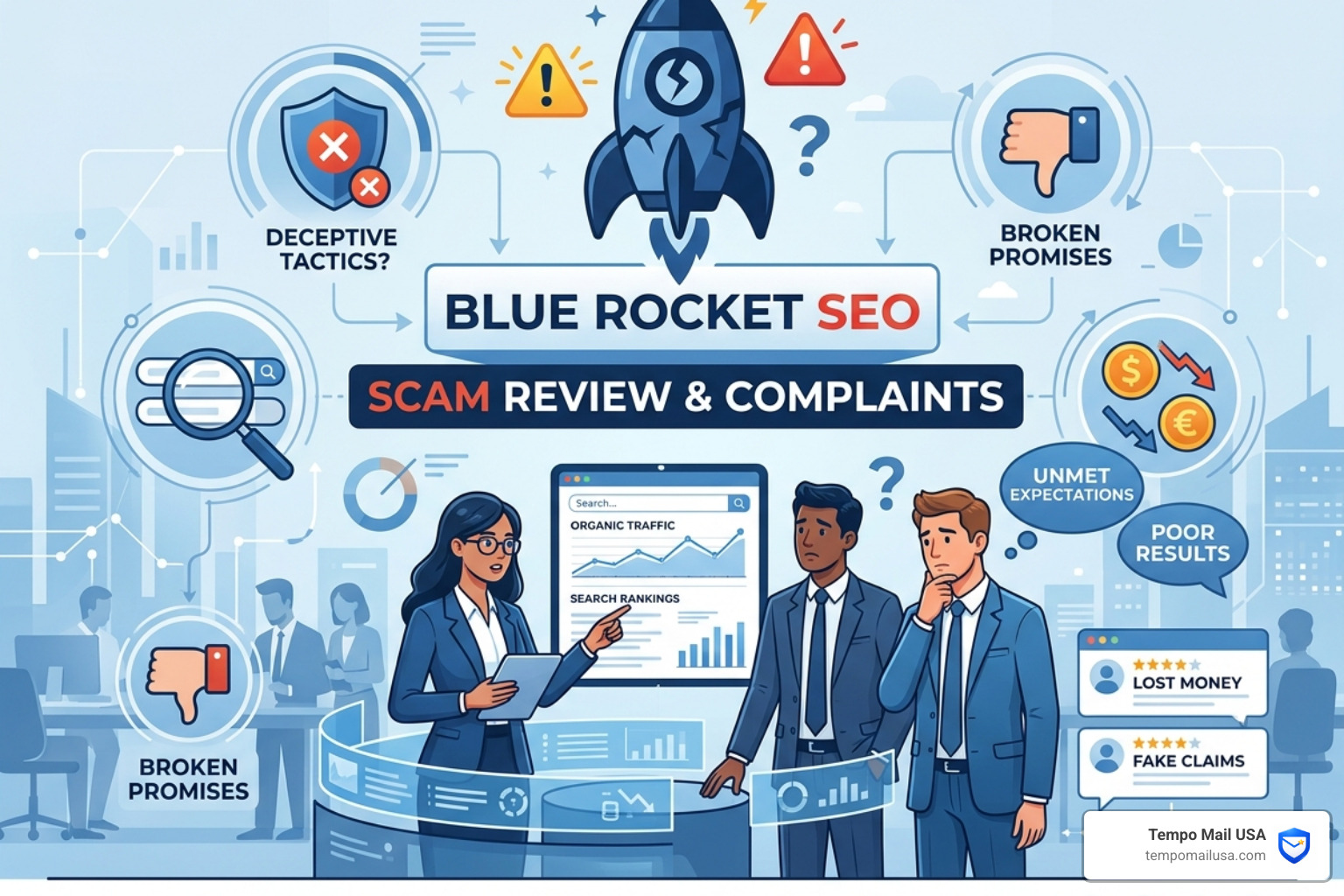
The "Blue Rocket" invoice is a masterclass in social engineering. It isn't a poorly written email full of typos; it is a professionally designed document that mimics the branding of legitimate digital marketing firms.
In May 2023, reports surfaced of invoices demanding $99.58 for unspecified services. By late 2025 and early 2026, the amount seen in BBB Scam Tracker reports had jumped to $249.00. These invoices often use the term "Managed Domain," which confuses business owners into thinking they are paying for their website's registration—a bill they know they must pay to keep their site online.
Many users now rely on advanced security tools and VPN protection to prevent these attacks by hiding their digital footprint from data scrapers. It’s also worth noting that these scams often follow a similar blueprint to other famous frauds, such as the McAfee fake email alerts, which use brand recognition to lower a victim's guard.
The "Billing Error" Defense: Why It Fails

When the BBB first investigated Blue Rocket SEO in 2018, the company offered a peculiar defense. They claimed that a transition to a new ERP system (Microsoft Dynamics AX) caused a "mix-up" between their list of leads and their actual client base. They alleged that only about 50 erroneous invoices were sent out and promised to rectify the situation.
However, this explanation holds very little water for several reasons:
- Persistence: If it were a one-time technical glitch in 2018, why are businesses still receiving identical unsolicited invoices in 2023, 2025, and 2026?
- Lack of Transparency: The company's Texas corporate registration remains unverified, and their "office" is a PO Box. Legitimate corporations using high-end ERP systems typically have a physical headquarters.
- The Phishing Pattern: The invoices are sent via fax to people who have never had any contact with the company. A "billing mix-up" implies a pre-existing relationship that simply doesn't exist here.
This "oops, it was a glitch" defense is a common tactic used by companies facing regulatory heat. It’s a strategy we’ve seen analyzed in other contexts, such as the FTC fines and complaints against Carshield, where the gap between marketing promises and reality leads to significant consumer harm.
How to Choose the Right Protection Against Invoice Fraud
Protecting your business from the blue rocket seo scam review and complaints cycle requires both a change in protocol and the right technical tools. Scammers rely on the fact that your real business data (like your fax number or email) is publicly available.
| Feature | Manual Verification | Automated Security Tools |
|---|---|---|
| Detection Speed | Slow (requires human review) | Instant (flags known scam domains) |
| Accuracy | High (if staff is trained) | High (based on global blacklists) |
| Cost | High (labor hours) | Low (subscription-based) |
| PII Protection | None | High (masks real data) |
To truly firewall your business, you should consider a multi-layered approach:
- Identity Theft Protection: Services like LifeLock can monitor for unauthorized use of your business's credit or identity.
- VPN and Privacy: Using a NordVPN Security Solution ensures that your team’s browsing habits don't leave a trail of data that scammers can use to build "personalized" fake invoices.
- PII Firewalling: This is where we at Tempo Mail USA come in. By using temporary email aliases for quote requests or software signups, you ensure that if a company like Blue Rocket SEO "leaks" or "mixes up" a lead list, they don't have your permanent, primary contact information.
- Endpoint Security: Always ensure you have the best antivirus software for Mac and iPhone installed across all company devices to catch malicious links in email-based invoices.
Steps to Take if You Receive a Fake Invoice
If a Blue Rocket SEO invoice lands on your desk, do not pay it. Even if the amount is small, paying validates your contact information to the scammers, marking you as a "live" target for future, more expensive frauds.
Follow these steps instead:
- Verify Independently: Never use the phone number or email provided on the suspicious invoice. Look up the company through the BBB or your state’s Secretary of State website.
- Educate Your Team: Ensure your accounting department knows about the "Small Amount Invoice" tactic. Use resources like the Finelo legitimacy checklist to train staff on spotting fraud.
- Implement Two-Step Approval: No invoice, regardless of how small, should be paid without two different people verifying that the service was actually ordered and received.
Reporting Your Blue Rocket SEO Scam Review and Complaints
Reporting is the only way to stop these operations. By adding your experience to the public record, you prevent the next business owner from falling victim.
- BBB Scam Tracker: Reference recent Scam IDs like 1192951 (February 2026) or 1105186 (November 2025) to show a pattern of behavior.
- FTC: File a report at ReportFraud.ftc.gov. The Federal Trade Commission uses these reports to build cases against fraudulent telemarketers and mail scammers.
- Ripoff Report: Document the fax or email details on Ripoff Report to ensure that when others search for "Blue Rocket SEO," they see the warnings immediately.
Frequently Asked Questions about Blue Rocket SEO
Is the Blue Rocket SEO invoice legitimate?
No. Exhaustive research and hundreds of consumer complaints confirm that these are unsolicited invoices. The company bills for services that were never requested, never performed, and never agreed upon. Whether it is for $95.87 or $249.00, it is a fraudulent billing attempt.
What should I do if I already paid a Blue Rocket SEO invoice?
If you have already paid, contact your financial institution immediately. If paid by credit card, initiate a chargeback for "services not rendered." If paid by check, notify your bank's fraud department. You should also file a formal report with the FBI's Internet Crime Complaint Center (IC3) and the FTC.
Why does Blue Rocket SEO have my business information?
Scammers often use "web scrapers" to pull business names, fax numbers, and addresses from public directories, Google Maps, and state registration databases. They may also purchase "lead lists" from third-party brokers. This is why using a PII firewall and temporary aliases for your business's public-facing contact points is so critical.
Conclusion
The blue rocket seo scam review and complaints serve as a stark reminder that in 2026, digital marketing fraud is more persistent than ever. These scammers rely on the "noise" of modern business—the hundreds of small transactions we process every month—to hide their theft in plain sight.
At Tempo Mail USA, we believe the best defense is a proactive one. By adopting a "PII Firewall" strategy, you can protect your business's real identity from being harvested by these predatory entities. Secure identity proxying ensures that your real contact details stay private, making it much harder for scammers to reach you in the first place. Stay vigilant, verify every bill, and keep your digital hygiene a top priority.