



Is the Unifin Text Scam Real or Legitimate?
The Unifin text scam is a real threat — but the answer isn't always black and white. Some texts are outright fraud from scammers impersonating Unifin. Others are genuine (if aggressive) debt collection attempts from the real company. Either way, you should not respond, click any links, or share personal information until you've verified what you're dealing with.
Here's a quick breakdown:
| Scenario | What It Means |
|---|---|
Text from unknown number, link to unif.in or similar | Almost certainly a scam |
| Text referencing a debt you don't recognize | Could be scam or a collection error — verify first |
| Text with urgent legal threats or requests for wire transfer | Strong scam indicator |
| Text matching a known debt on your credit report | May be legitimate — still verify independently |
Bottom line: Never pay or share information based on a text alone — whether it's a scam or the real Unifin.
Receiving an unexpected debt collection text is unsettling. One example reported by consumers reads something like: "This is Unifin regarding a past due balance of $1,427.90 from The Home Depot. Please visit t.unifininc.com/xxxx or risk legal action." No prior notice. No credit report entry. Just a vague, urgent message with a suspicious link.
That kind of text is designed to make you panic and act fast — before you think clearly.
The real Unifin, Inc. is a licensed debt collection agency based in Illinois. But scammers actively impersonate them. And even the real Unifin has collected over 400 BBB complaints in three years — meaning even legitimate messages deserve scrutiny.
This guide will help you tell the difference, protect your personal information, and know exactly what to do next.
What is Unifin, Inc. and Is It a Legitimate Company?
To understand the Unifin text scam, we first need to look at the actual company being impersonated. Unifin, Inc. is a legitimate, third-party debt collection agency headquartered in Skokie, Illinois. They are a licensed agency that typically collects on consumer debts like credit cards, medical bills, and retail accounts.
Unifin works in two ways:
- As an Agent: They are hired by a creditor (like a bank or hospital) to collect money on their behalf.
- As a Debt Buyer: They purchase "charged-off" or past-due debts from other companies for pennies on the dollar and then try to collect the full amount for their own profit.
While they are a real business, their reputation is... complicated. According to BBB complaints and ratings, Unifin currently holds a "B" rating but has faced over 424 complaints in the last three years. Common issues reported by consumers include billing errors, harassment, and attempts to collect on debts that the consumer doesn't actually owe.
Because Unifin is a real company that uses aggressive tactics, it provides the perfect "cover" for scammers. A scammer can send a text claiming to be Unifin, and if you Google the name, you'll see a real company, which might make you more likely to believe the lie.
Legitimate Unifin vs. Scammer Tactics
| Feature | Legitimate Unifin Communication | Unifin Text Scam Tactics |
|---|---|---|
| Initial Contact | Usually a letter via USPS first. | Often starts with a random, urgent text. |
| Website Link | Uses unifininc.com. | Uses unif.in, t.unifininc.com, or bit.ly links. |
| Phone Number | US-based toll-free or local numbers. | Often from international (e.g., Indian) numbers. |
| Payment Method | Check, credit card, or secure portal. | Requests wire transfers, gift cards, or crypto. |
| Debt Validation | Must provide proof of debt if requested. | Will threaten "legal action" if you ask for proof. |
Identifying the Unifin Text Scam: Red Flags and Variations
Scammers are getting better at mimicking professional language, but they almost always leave "digital breadcrumbs" that give them away. If you receive a text, look for these specific red flags.
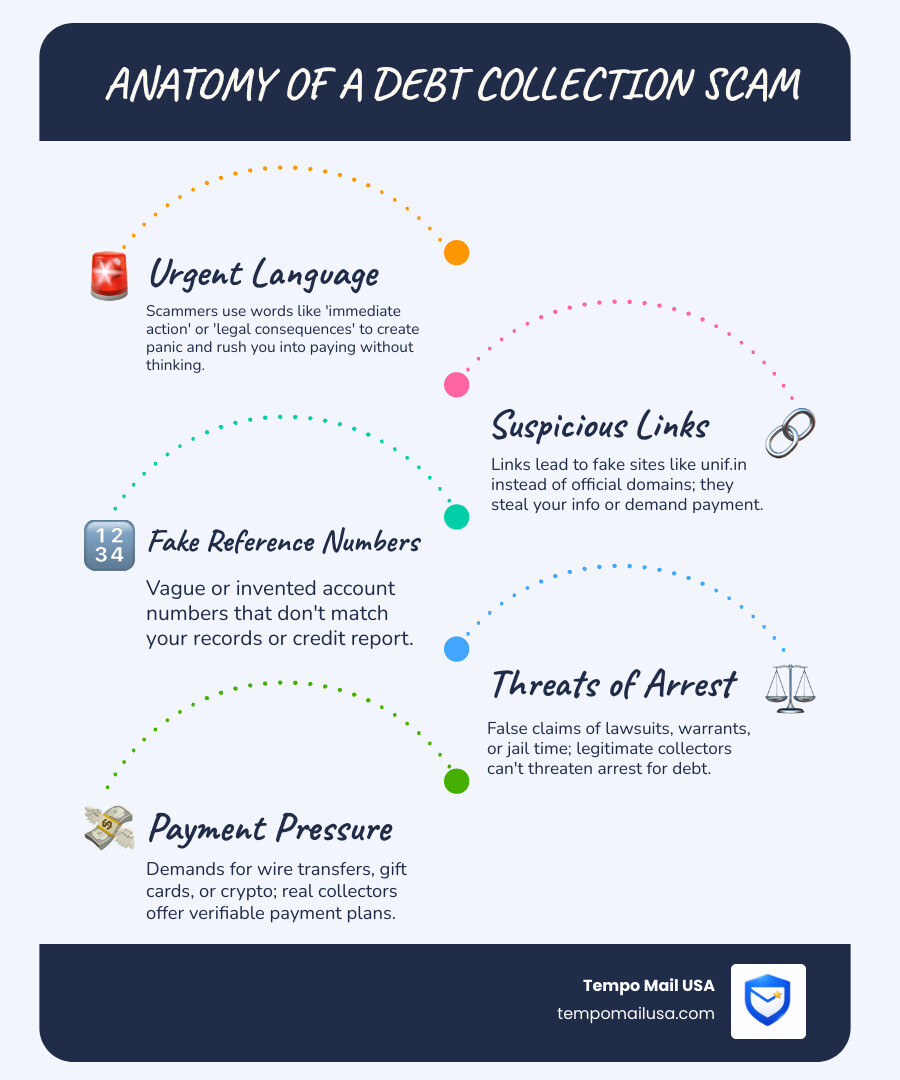
Urgent and Threatening Language
The hallmark of any scam is "artificial urgency." The text might say you have "24 hours to respond" or that "legal proceedings have begun." Legitimate debt collectors have to follow specific legal timelines and cannot threaten you with arrest or immediate jail time.
Suspicious URLs
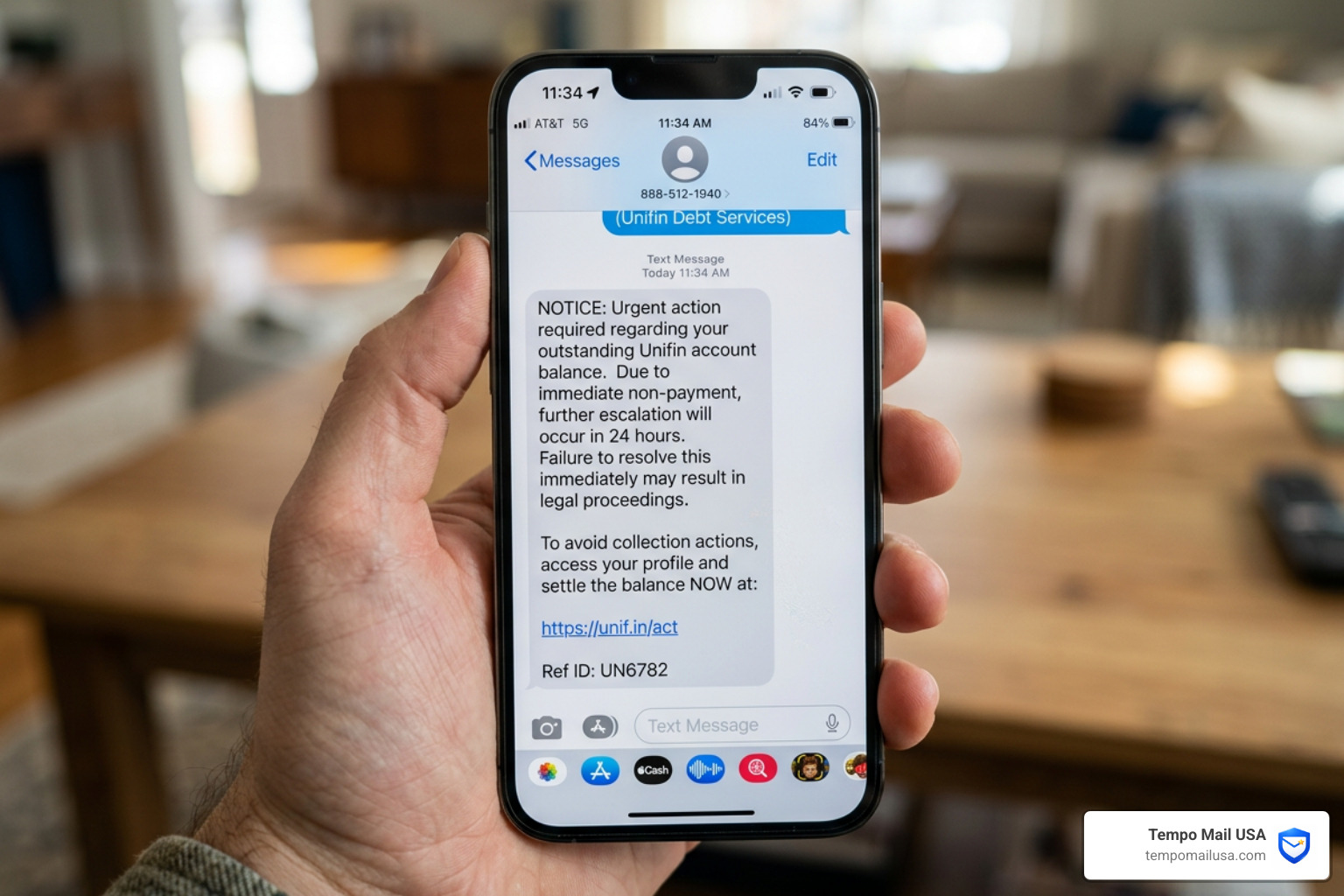
Take a close look at any link provided. A common Unifin text scam uses the domain unif.in/act or t.unifininc.com. While these look similar to the real name, they are often registered in different countries or used specifically for phishing.
The "Home Depot" or Retail Variation
Many users have reported receiving texts claiming they owe a specific amount—often around $1,400—to retailers like The Home Depot. The scammer hopes you have a store card or recently shopped there, making the claim feel plausible.
Indian or International Phone Numbers
Some variations of this scam involve texts originating from Indian phone numbers (+91). When victims call back, they often encounter "agents" with heavy accents who pressure them for immediate payment via untraceable methods. A US-based debt collector like Unifin will almost exclusively use US-based contact centers.
Common Tactics Used in a Unifin Text Scam
Scammers don't just pick numbers at random; they often use data harvested from various sources to make their messages more convincing.
- Data Breaches: If your phone number or name was leaked in a past data breach (like the T-Mobile or Equifax breaches), scammers use that info to "personalize" the text. Seeing your real name can make you lower your guard.
- SMS Spoofing: Scammers can "spoof" the caller ID so that the text appears to come from "Unifin" or a legitimate-looking 800 number.
- Phishing Links: Clicking the link in a Unifin text scam doesn't just ask for money; it may lead to a fake login page designed to steal your Social Security number or banking credentials.
To stay safe, we recommend learning how to report phishing effectively so you can help shut these operations down.
How to Distinguish a Legitimate Unifin Text Scam from Real Debt Collection
Even if a debt collection attempt is "legitimate" (meaning it's the real Unifin contacting you), it could still be an error. They might have the wrong person or be trying to collect a debt that is past the statute of limitations.
- Verify the Domain: Legitimate electronic communication from Unifin will typically direct you to their official site,
unifininc.com. - Look for the Disclosure: By law, debt collectors must state: "This is an attempt to collect a debt, and any information obtained will be used for that purpose." If the text is missing this "Mini-Miranda" warning, it’s likely a scam.
- Check for Written Notice: The law requires collectors to send a written "validation notice" within five days of their first contact. If they refuse to send a physical letter to your address on file, hang up.
- Consult Official Resources: Use the OCC fraud resources to see if the tactics being used match known fraudulent patterns.
Your Rights and How to Verify a Debt Claim
If you're being hounded by Unifin—whether it's the real company or an imposter—you have powerful legal protections. The Fair Debt Collection Practices Act (FDCPA) is your best friend here.
The Power of Debt Validation
You have the right to demand that the collector prove you owe the money. This is called a Debt Validation Letter. Once you request this (ideally in writing within 30 days of first contact), the collector must stop all collection activities until they provide:
- The name of the original creditor.
- The exact amount owed.
- Proof that they have the legal right to collect it.
If they can't provide this, they can't legally collect from you. This is a great way to "smoke out" a Unifin text scam because a scammer will never have this documentation.
Check Your Credit Report
Before you panic about a $1,400 Home Depot bill, check your credit report. You can get a free report from all three bureaus at AnnualCreditReport.com. If the debt isn't listed there, or if the "original creditor" listed doesn't match the text message, you are likely looking at a scam or a major clerical error.
Reporting Harassment
If the real Unifin is calling you before 8 a.m. or after 9 p.m., or if they are using abusive language, they are violating federal law. You can file a formal CFPB complaint to hold them accountable. Understanding how debt is sold to collection agencies can also help you trace where a mystery debt might have come from.
Steps to Take if You Receive a Unifin Text Scam
If a text lands in your inbox and your "scam-dar" is pinging, follow these steps:
- Do Not Click: Never click links in unsolicited texts. They can install malware or track your location.
- Block the Sender: Use your phone's built-in block feature immediately.
- Forward to 7726: This is a universal "spam" reporting code for most mobile carriers. Forward the message to 7726 (which spells "SPAM") so your carrier can investigate the number.
- Report to the FTC: Use the Report Fraud FTC website to help authorities track the surge in debt collection scams.
- Clean Up Your Digital Footprint: If you're getting bombarded, it's time to look into stopping spam emails and texts for good.
Protecting Your Personal Information from Debt Scammers
The best way to deal with the Unifin text scam is to prevent your information from reaching scammers in the first place. Once your phone number and email are on a "sucker list," the messages won't stop.
Create a Digital Perimeter
Think of your personal information (PII) like a fortress. You need a "moat" to keep the bad guys out.
- Credit Freeze: This is the "nuclear option" for protection. A credit freeze prevents anyone from opening new accounts in your name. Check the FTC credit guidance for instructions on how to set this up for free.
- Two-Factor Authentication (2FA): Always use an app-based authenticator (like Google Authenticator) rather than SMS-based 2FA, which can be intercepted by sophisticated scammers.
- Monitor Your Scores: Keep an eye on your FICO score versions to spot sudden drops that might indicate identity theft.
Use a "PII Firewall" with Tempo Mail USA
The reason you get these texts is often because you used your real email or phone number on a website that was later breached. We provide a solution to this. By using a temporary email alias from Tempo Mail USA, you create a "firewall" between you and the internet.
If a site you signed up for gets hacked, the scammers only get your alias—not your real identity. This is one of the most effective simple tips on how to reduce spam emails fast.
Why Data Breaches Fuel Debt Collection Scams
Data breaches are the "oil" that keeps the scam machine running. When a major retailer or service provider loses customer data, that info is sold on the dark web. Scammers buy these lists to launch:
- Targeted Phishing: They know you shop at certain stores, so they send a "Unifin" text about a debt from that specific store.
- Social Engineering: They use your full name and address to sound authoritative.
To stop the cycle, you need to be proactive. Whether it's stopping personal loan spam or stopping tax consultant spam, the strategy is the same: Shield your real data.
Frequently Asked Questions about Unifin
Does Unifin actually send text messages?
Yes, the real Unifin, Inc. does use SMS as a communication channel. However, they are legally required to identify themselves as a debt collector and provide a way to opt-out (usually by replying STOP). They should never send you a text as the very first form of contact without having sent a letter first.
Why does Unifin have so many BBB complaints?
Most complaints stem from two issues:
- Zombie Debts: Attempting to collect on debts that are very old or have already been settled.
- Wrong Numbers: Because they buy large "portfolios" of debt, their data is often outdated. They frequently text or call people who have no connection to the debt simply because they inherited a recycled phone number.
What happens if I ignore a legitimate debt from Unifin?
If the debt is real and you ignore it, Unifin could potentially sue you, which could lead to wage garnishment or a bank levy. However, never pay until you have verified the debt. Ignoring a scam text is the right move; ignoring a legal summons is a mistake. If you're unsure, check your credit report first.
Conclusion
The Unifin text scam is a perfect example of how modern fraudsters exploit the "gray area" between legitimate business practices and outright theft. By impersonating a real (and often aggressive) company like Unifin, scammers use fear and confusion to steal your hard-earned money.
Remember:
- Verify everything. Use official channels and never click links in texts.
- Know your rights. The FDCPA protects you from harassment and requires debt validation.
- Protect your PII. Use tools like credit freezes and identity monitoring.
At Tempo Mail USA, we believe the best defense is a good offense. By using our temporary email aliases, you can keep your real identity off the "scammer lists" that fuel these attacks. Think of us as your personal PII firewall—keeping your inbox clean and your identity secure.
Stay vigilant, stay informed, and don't let the "debt collectors" (real or fake) bully you into making a mistake. For more protection, visit Tempo Mail USA and start shielding your data today.