
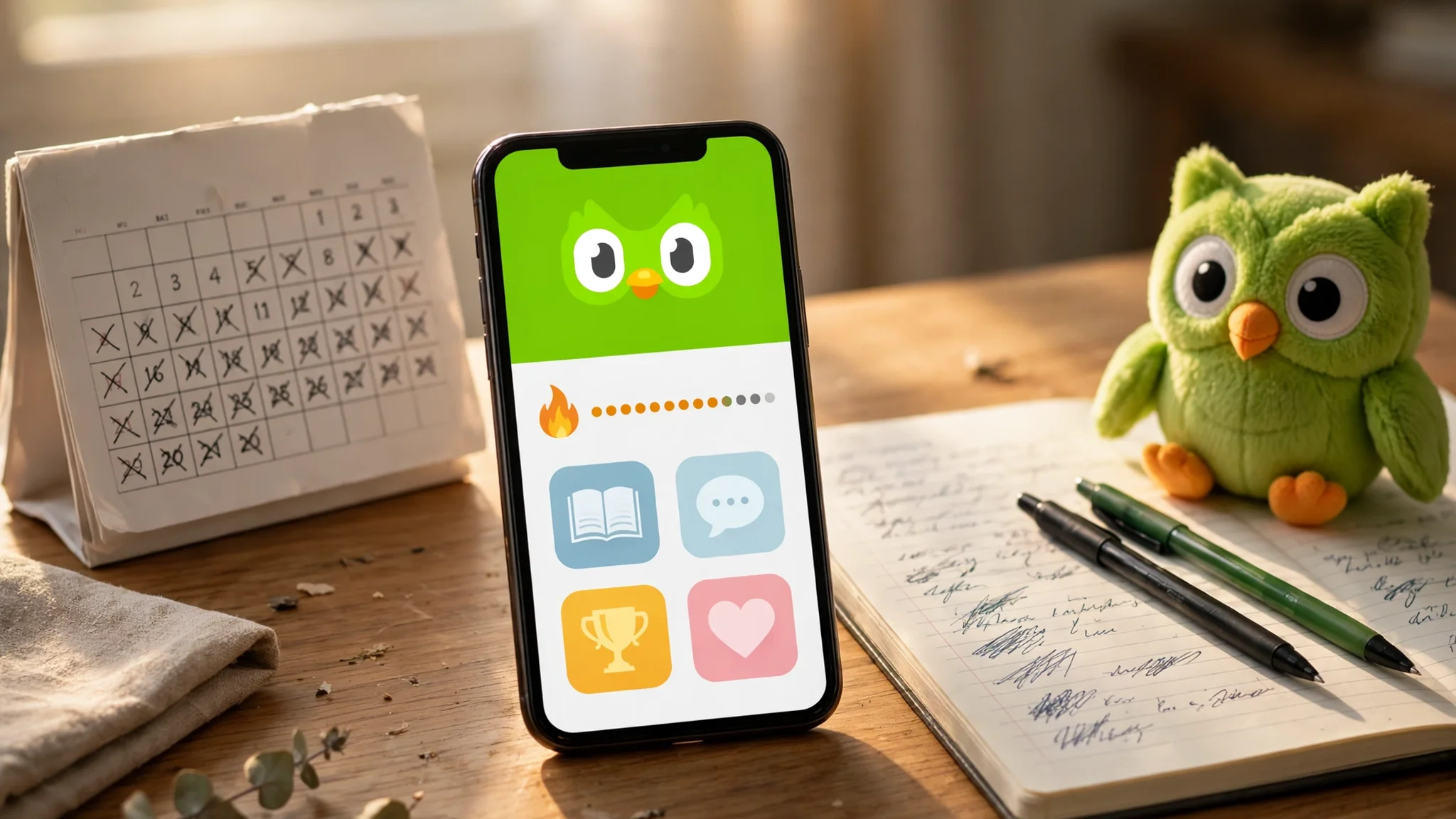
Temp Mail for Duolingo Signup: Does It Work in 2026?
Picture this, because it happens quietly and it happens a lot. Somebody starts learning Spanish in January, on a whim, with a disposable email address because they did not want another newsletter. By June they have a 170-day streak. They open the app every morning before coffee; the streak is the one habit they have actually kept all year. Then they get a new phone. They log out, log back in, and Duolingo asks them to confirm something through the email on the account. The inbox expired in February. The streak is not deleted, exactly. It is just unreachable, which for the person staring at the login screen amounts to the same thing.
That is the whole Duolingo story in one paragraph, and it is why this guide is structured backwards from most signup guides. Most guides start with "does the form accept it?" and stop there. With Duolingo, the form accepting it is the easy part. The expensive part comes months later, when the account has quietly become worth something.
What Duolingo actually asks for at signup
Duolingo's signup is email-first, and that matters more than any other single fact in this article. You pick a language, you answer a few onboarding questions about your level and your daily goal, and you create an account with an email address and a password — or you sign in through Google, Facebook, or Apple instead. There is no phone-number wall at the front door. No SMS code stands between you and your first lesson. The confirmation, if one is needed, goes to email.
That is a genuinely different shape from the phone-first apps that dominate the temp-mail question. On Tinder or WhatsApp, the email question is almost decorative; the phone number is the account. On Duolingo, the email address is the account's spine. It is how you log in, how you reset a forgotten password, and how Duolingo reaches you when something about the account changes. A disposable address can carry all of that on day one. It cannot carry it on day 170, because by day 170 it no longer exists.
One more detail worth stating plainly: Duolingo's free tier is real, and its paid tier, Super Duolingo, is a subscription attached to the account. If you ever pay for Super on an account registered to a temp address, you have now tied money to an inbox with an expiry date. Billing receipts, payment-failure notices, and subscription-change confirmations all route to the email on file. That is not a reason to panic about a free account. It is a hard line for a paid one, and I will come back to it.
Why email-first makes Duolingo more dangerous, not less
People hear "Duolingo accepts temp mail" and file it under "works." I file it under "works, which is the trap." When a form rejects a disposable domain outright, the user learns something immediately: this service does not want burner addresses, find another way. The rejection is information. When a form accepts the address, the user learns nothing — except, falsely, that the setup is sound.
Duolingo sits in the second category for most disposable domains, most of the time. The famous domains may trip a filter here and there, and that filter behaviour changes as blocklists update — the blocklist system behind those rejections explains why a domain that works in March can die in June without Duolingo changing anything at all. But the typical experience is acceptance, a working account, and a first lesson within minutes. Everything feels fine. The failure is deferred, not avoided, and deferred failures are the ones people never plan for.
Compare that with an app where the email step is trivial because nothing valuable accumulates. A coupon account that dies costs you a coupon. A language account that dies costs you the only visible record of months of daily effort. The signup guides that rate Duolingo as "temp-mail friendly" are measuring the wrong thing: they measure the door, and the door was never the hard part.
The streak is the asset, and the asset lives in the account

Here is what actually accumulates inside a Duolingo account, and why each piece raises the stakes of a dead inbox.
First, the streak itself. A streak is not a cosmetic number; it is the mechanism Duolingo uses to keep you coming back, and for many learners it becomes a point of personal pride. Streak freezes exist, but they are account features, not inbox features — they only help if you can still get into the account.
Second, XP and league placement. Weekly leagues rank you against other learners, and your XP history is a record of work done. Lose the account and you lose the history, not just the current week.
Third, progress through the course itself. Units completed, vocabulary learned, the path position you fought your way to — all of it is account-bound. Duolingo does not keep a copy of your progress in your email. Your email is the key to the room where the progress lives. Lose the key and the room stays locked with everything inside it.
Fourth, and most quietly, the social layer. Friends, followers, and classroom connections, if you use them, are tied to the account. A learner who joined a classroom or a friends' leaderboard through a temp address has the same problem as every other account on this list, with one extra twist: other people may notice you vanished before you do.
My opinion, without softening it: a Duolingo account crosses from "experiment" to "mine" far faster than almost any other throwaway signup, because the streak gives it a daily heartbeat. The moment you would be upset to see the streak number reset to zero, the account has stopped being disposable. Most learners cross that line within two weeks. They just do not notice they crossed it until the login screen tells them.
The .edu myth, plainly
A whole corner of the temp-mail internet sells "edu" addresses for Duolingo, as though a university-style address unlocks something special. Let me be direct: Duolingo does not hand out student perks for .edu-style addresses, and there is no student gate to game with a disposable .edu lookalike. The edu-tool pages that rank for Duolingo queries are selling addresses for a discount that does not exist.
This matters beyond wasted money. A learner who signs up with a fake .edu address has built their account on two layers of fragility instead of one: an inbox that expires, and an institutional identity they do not hold. If Duolingo ever asks for verification of that identity — and platforms that offer education features do check, at least sometimes — the account has no answer. The honest version of the edu story is short: learn on a normal address, free tier or paid, and ignore anyone selling you a shortcut to a perk Duolingo never offered.
The same warning applies, in smaller letters, to "Duolingo for Schools" thinking. A classroom account is an account with a teacher and classmates attached. Putting a disposable address on a classroom seat is how a student vanishes from a roster mid-term. If a teacher assigned the account, the teacher's instructions outrank any privacy tip on this blog, including mine.
Where a disposable address honestly earns its place
None of this means temp mail has no legitimate job on Duolingo. It has several, and they share one trait: the account does not need to survive.
The cleanest is the one-week test drive. You are curious about Japanese, or about Duolingo itself, and you want to try five lessons without handing over your real address or starting a relationship with another app's marketing emails. A disposable address is perfect for this. You learn whether the app fits your life, and if it does not, nothing follows you. If it does, you migrate — the rescue section below tells you how, and the migration only works while the temp inbox is alive, so do it in week one, not month six.
The second is the separation experiment. Some learners keep a second account for a language they are embarrassed about, or for a fresh start after abandoning a course they associate with failure. A disposable address keeps that experiment apart from the main inbox. The rule is the same as everywhere else in this guide: separation is fine, storage is not. The day the experiment starts mattering is the day it gets a permanent address.
The third is the classroom-adjacent case handled honestly: a parent or teacher testing the signup flow before rolling it out to students. Test accounts are meant to be discarded. A disposable address per test run is cleaner than burning permanent addresses, and the test account's death costs nothing because nothing real was ever in it.
What a disposable address is not for on Duolingo: a primary learning account, a paid Super subscription, a classroom seat you actually occupy, or anything with a streak you would defend. If any of those descriptions fit, the address on the account should be one you will still own next year.
The two ways it breaks
When a Duolingo-on-temp-mail setup fails, it fails in one of two ways, and they need different responses.
The loud failure is form rejection or a code that never arrives. The domain is on a blocklist, or the confirmation is silently dropped, or it arrives after the window closes. The fix for the loud failure is ordinary temp-mail hygiene: try a fresher domain from the provider's pool, keep the inbox tab open beside the signup form, verify in the same session, and never request a code twice in quick succession — the second request usually kills the first. The six gates a verification code passes will tell you which gate killed yours, but the practical rule is simpler: if the first domain dies, the correct conclusion is "that domain doesn't work on Duolingo," not "temp mail doesn't work on Duolingo."
The quiet failure is the one this article is about: the account works, the streak grows, and months later a new device, a cleared browser, or a password you forgot sends a confirmation to an inbox that expired long ago. There is no fix at that point inside the temp-mail toolkit. You are in support-ticket territory, and Duolingo's support will ask you to prove ownership through the email on the account — the one thing you cannot do. That asymmetry is the whole argument: the loud failure costs you ten minutes, the quiet failure costs you the account.
There is a third wrinkle worth naming because it surprises people: the public-inbox problem. On many temp-mail services, the inbox has no lock — whoever knows or guesses the address can open it and read the same mail. That public-inbox exposure turns a password-reset link into something a stranger could click first. Duolingo's email-based login makes this worse than on a phone-first app, because the email is not one recovery channel among several. It is the channel. A guessable temp address on a Duolingo account with a real streak is a standing invitation, and the invitation stays open until the inbox expires — after which the problem flips from "stranger can read it" to "nobody can read it, including you."
The rescue you do while the inbox is still alive

Sometimes the experiment stops being an experiment. The language sticks, the streak matters, the test account becomes the real one. If that happens, do these in order, immediately, while the temp inbox still works:
- Change the account email to a permanent address you control. Do it from inside the account settings, and confirm via the temp inbox while it is still alive. Let the inbox expire first and you have locked the exit behind you.
- Set a password you have saved in a password manager, and make sure it is not the same password as anything else. "Forgot password" without inbox access is a locked door with no key.
- If you pay for Super, or ever intend to, check that the billing email matches the new permanent address. A paid subscription anchored to a dead inbox is how a payment failure becomes an account loss.
- Download or note anything you would miss. Duolingo does not offer a full export of your learning history the way some platforms do, which is exactly why the account itself must stay reachable — there is no backup copy to fall back on.
- Turn on any additional recovery Duolingo offers at the time you migrate. Options change; the principle does not: replace one fragile recovery path with every sturdy one available, in the same session.
None of this makes temp mail "safe" for Duolingo. It makes a fragile setup recoverable, which is the realistic goal. And if you are reading this after the inbox already died, be honest with yourself about the odds before spending a week on support tickets: without access to the email on file, recovery depends on what else Duolingo can verify, and a burner account by design has nothing else to verify with.
What to use instead when the streak matters
If you already know, on day one, that the account will matter — a language you are serious about, a streak you intend to keep, a classroom seat, a paid subscription — do not start it on a temp address at all. The right tool is an authenticated alias: Apple's Hide My Email, Firefox Relay, or SimpleLogin. An alias forwards to your real inbox behind a password gate, so you can receive password resets forever, reply normally if needed, and revoke the alias if it starts attracting spam. It costs you the instant, no-signup convenience of temp mail, and it buys you the one thing temp mail cannot sell: permanence.
The three-question filter for when a signup gets your real address puts Duolingo in the gray zone with unusual clarity. Will I need this account in a year? For a language learner, the honest answer is often yes. Does money or recovery hang on it? The streak and the subscription say yes. Can the service reach me another way if the inbox dies? On an email-first account, no. Fail any one of those three and the signup gets your real address — and a serious Duolingo account fails at least two.
Frequently asked questions
Does Duolingo accept temp mail at signup?
Usually, yes — Duolingo is email-first and most disposable domains pass the form, at least until blocklists catch up with that domain. Acceptance is not approval, though. The account you build on that address inherits the inbox's expiry date.
Will I lose my streak if my temp inbox expires?
Not immediately. The streak lives in the account, not the inbox. You lose the streak when you lose access to the account — a new device, a forgotten password, a cleared browser — and the recovery email goes to an inbox that no longer exists. The expiry sets the trap; the next login springs it.
Can I change the email on my Duolingo account later?
Yes, from inside the account settings — but the change itself may need to confirm via the old address. That is why the migration must happen while the temp inbox is still alive. After it expires, the exit is locked from the inside.
Does a .edu temp address get me a Duolingo student discount?
No. Duolingo does not offer student perks for .edu-style addresses, so the edu addresses sold for this purpose buy nothing. A normal free account is the same product without the extra fragility.
Is temp mail safe for Duolingo's free tier?
For a short test drive, yes — that is exactly what disposable addresses are for. For a streak you care about, a classroom seat, or a paid Super subscription, no. The risk is not at signup; it is at the first recovery moment, months later.
What should I use instead for a Duolingo account I want to keep?
An authenticated alias (Apple Hide My Email, Firefox Relay, SimpleLogin) or your real address. Both survive indefinitely, both receive password resets forever, and both let you revoke or filter the address if it starts attracting spam — without putting your streak behind an expiry date.
The verdict, in one paragraph
Duolingo and temp mail are a good match for a week and a bad match for a year, and the difference is entirely about what accumulates in between. Use a disposable address to find out whether you like the app, whether the language sticks, whether the daily habit survives contact with your real life. The moment the answer to any of those is yes — the moment the streak number would hurt to lose — move the account to a permanent address while the temp inbox is still alive to confirm the move. A streak is a record of showing up every day. It deserves an email address that will still be there on the day you need it most.
Need a disposable temporary email?
Protect your real inbox from spam and promotional clutter instantly and free.
Received a suspicious email, text, or charge alert?
Verify whether the sender domain is disposable, spoofed, or unverified before clicking links.