

Temp Email for Leonardo AI Signup: 150 Free Tokens a Day, No Password, and the Inbox That Owns Your Gallery
Leonardo AI is the most generous free image generator on the internet right now, and that sentence is doing a lot of work. Every day it hands you 150 tokens, asks for no card, and lets you make images with models that cost ten dollars a month or more everywhere else. The catch is not in the price. It is in the signup, which takes three minutes and an email address, and in what that address becomes once the account exists: the key to a wallet that refills itself, a public gallery with your name on it, and the only way back in when the magic link stops arriving.
This post is about that gap, measured against what Leonardo actually publishes. The token counts, plan prices, and signup steps below were read on November 19, 2026, from Leonardo's pricing page and from independent reviews published this month. Where the sources disagree — and on how many images 150 tokens buys, they disagree by a factor of five — this post says so instead of picking the flattering number. Where Leonardo publishes no policy on disposable email, this post says that too.
The wallet that refills at midnight
The free plan is simple enough to state in one sentence: 150 fast tokens every day, refreshed every 24 hours, no credit card, no trial that turns into a paid plan. Unused tokens expire. Whatever is left in the evening will not be there in the morning, and the balance is back to exactly 150. There is no rollover, no saving up for a big day, and no monthly cap to game — the wallet refills whether you spent it or not, and it empties itself on the same schedule.
Tokens are Leonardo's currency for everything: images, short videos, background removal, upscales. The cost of any action depends on the model, the resolution, the number of images in a batch, and any extra features you switch on. That is where the honest numbers start to scatter, and the scatter is worth reporting properly. One review published November 17, 2026, says the daily allowance buys roughly 30 to 40 images a day at standard resolution. Another, updated the same week, says 25 to 40. A third, working from a per-image cost of 10 to 15 tokens, says 10 to 15. A fourth, pricing high-resolution and feature-heavy generations at up to 50 tokens, says as few as 8. The gap comes from different settings, not different facts: a standard-resolution image on Leonardo's own Phoenix or Lucid models costs roughly 10 to 15 tokens, and the same prompt at higher resolution, in a bigger batch, or with the Alchemy refiner switched on can cost several times more.
So the true answer is a range, and anyone quoting a single number is hiding the settings. Your 150 tokens buy somewhere between a handful and a few dozen images a day, and the number is yours to control. Leonardo helps, in a way almost no AI tool does: it prints the exact token cost on the Generate button before you click. Check it every time. The wallet is generous, but it is not unlimited, and a day of video clips will eat it before lunch.

Three minutes, a magic link, and a question about who you are
Signing up takes about three minutes and the whole thing happens in the browser — nothing to install, desktop, tablet, or mobile. Go to leonardo.ai and click Launch App or Get Started. A sign-in window opens, and you choose how to sign in. The fastest routes are Google or Apple. Email works too, and this is the part that matters for everything that follows: email sign-in arrives as a link in your inbox, not a password field. If the link does not arrive within a couple of minutes, check your spam folder. Then Leonardo asks you to pick a username and say who you are — hobbyist, professional, developer, or other — and a token counter appears in the corner. It should say 150.
There is a parallel in this series worth naming. On Framer, there are no passwords either — every sign-in is a magic link to your inbox, and the Free plan hands you 500 AI credits that never come back. Leonardo runs the same door with a different room behind it: the credits refill every day, the images are public, and the account is built around a gallery rather than a website. Same mechanism, very different stakes. And the username you pick in those three minutes matters more than it looks, because it is the name printed on everything you make in public — which is the next section's subject, not a footnote.
What the signup email actually owns
On most tools the signup email is an address on file. On Leonardo it is the account, because the magic link is the login. There is no password to memorize and no password reset to fall back on. The inbox is the credential, and everything else hangs off it.
Your gallery and generation history live behind that account: the images you made, the prompts that made them, the models you used, the settings you settled on. Billing lives there too — the upgrade, the receipts, the renewal reminders, the failed-payment notices, the plan changes. Leonardo has a production API for developers, and API keys are issued per account, so the signup email is also the paper trail for any key you generate. And recovery runs through the same address, because there is nothing else on file. Leonardo signup asks for no phone number. There is no second factor sitting on a SIM card, no backup code sheet, no support form that can verify you by voice. If the inbox goes away, the account has no second door. That is not a hypothetical. It is the direct consequence of a passwordless login, and it is the whole reason the temp-email question deserves a careful answer instead of a shrug.
Public by default: the free plan's trade
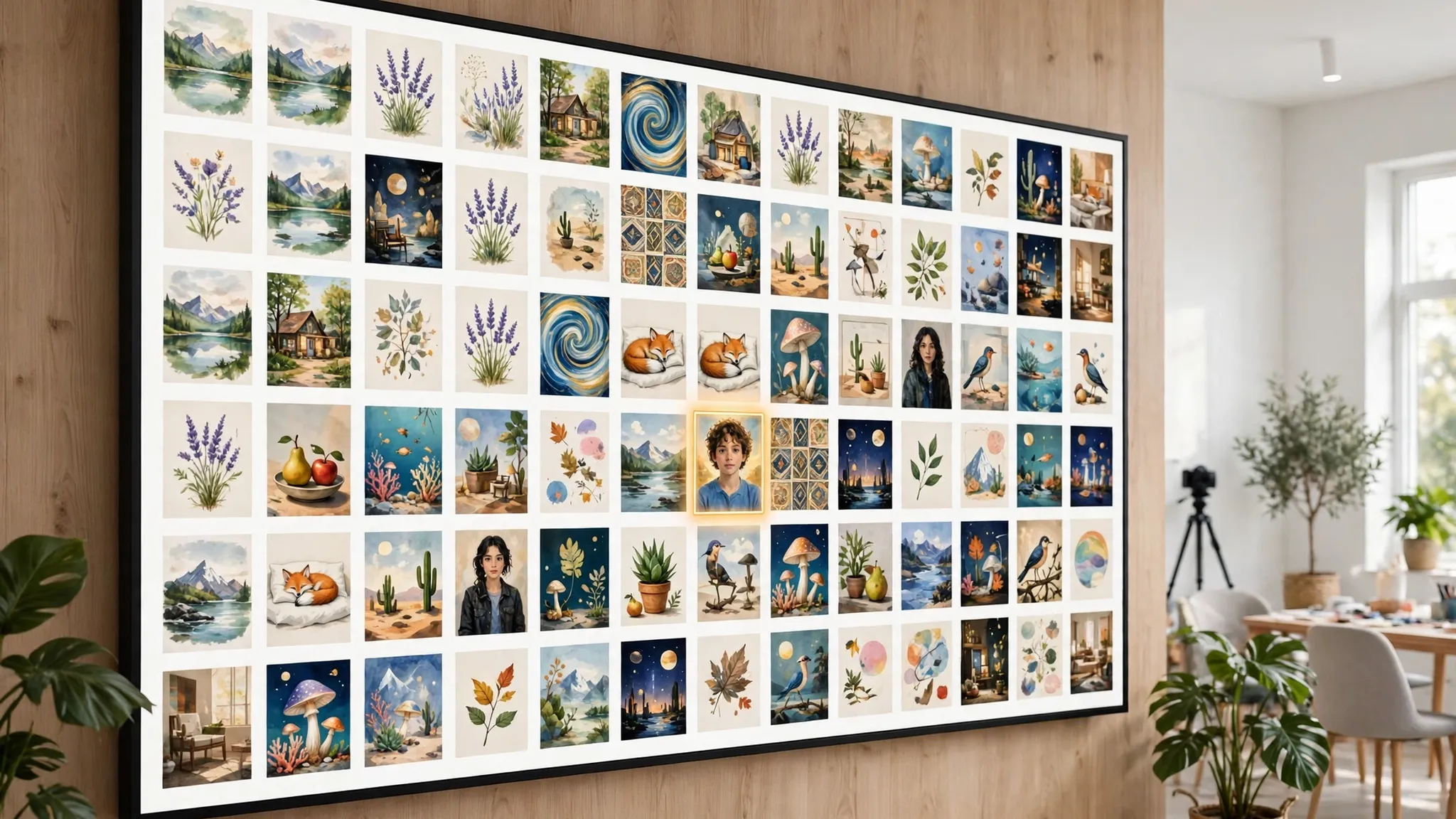
Here is the trade that makes the free plan free. On the free plan, every generation is public — visible to the wider Leonardo community, with no private mode. Your images sit in a community feed under the username you picked in those first three minutes, and anyone can see them. Private generation starts on the paid plans, at Essential, twelve dollars a month.
The rights work the same way, split down the middle. On the free plan, Leonardo keeps the rights to what you generate and gives you a non-exclusive, royalty-free licence to use the images commercially. Pay, and the ownership flips: paid plans grant full ownership of what you make. One review warns that the free plan's commercial terms are narrower than the paid ones and that you should check the current terms before using a free image in client work. That warning is worth keeping, because the two facts sit together uneasily — commercial use is included, and ownership is not yours — and the terms page, not a review, is the authority if a client ever asks.
Put the two halves together and the temp-email picture sharpens. A disposable inbox does not make your work anonymous. It makes your account unrecoverable while the work stays visible. The gallery is public, the username is yours, and the email behind both is the one private part. If you ever need to prove where an image came from, or take one down, or move it to a paid plan, the address that can do those things is the signup address — and a ten-minute inbox will be long gone by then.
The token math that decides your day
The daily wallet only makes sense once you know what things cost, so here is the math as the November 2026 reviews report it. Treat this as a snapshot, not a price list — Leonardo reprices features, and the cost printed on the Generate button is the only number that counts at the moment you click.
| What you generate | Typical cost | What it means for the daily 150 |
|---|---|---|
| Standard image, Phoenix or Lucid, one image | About 10 to 15 tokens | Roughly 10 to 15 images a day |
| Higher resolution, larger batch, or extra features | 12 to 50 tokens | The same prompt can cost five times more |
| Short video clip, Veo or Kling | Token-hungry, priced per clip | One clip can eat most of a day's wallet |
| Background removal or upscale | A small token cost per action | Small spends that add up across a session |
Two habits follow from that table. First, generate one image at a time while you are learning what a model costs — batches are where the wallet disappears. Second, read the cost on the button before every generation, because the price of the same prompt changes with the settings, and the reviews disagree with each other precisely because they tested different settings. The reviewers who quote 30 to 40 images a day tested standard settings. The ones who quote 8 to 10 tested the expensive ones. Both are right, and neither number is yours until you check your own settings.
Free against paid, in one table
Leonardo renamed its paid tiers in 2026 — Apprentice, Artisan, and Maestro became Essential, Premium, and Ultimate — and reviewers still disagree on the current names, so check the pricing page before you buy. The shape below is what the November 2026 reviews agree on.
| Plan | Price per month | Tokens | Private generations | Ownership |
|---|---|---|---|---|
| Free | $0 | 150 a day | No, public by default | Non-exclusive licence, Leonardo keeps rights |
| Essential | $12, or $10 billed yearly | 8,500 a month | Yes | Full ownership |
| Premium | $30, or $24 billed yearly | 25,000 a month | Yes | Full ownership, relaxed generation, token rollover bank |
| Ultimate | $60, or $48 billed yearly | 60,000 a month | Yes | Full ownership, largest rollover bank |
Paying yearly brings the price down by about twenty percent. The paid plans also unlock unlimited relaxed generations on Leonardo's own models, which is the feature that matters if you generate all day: once the fast tokens run out, relaxed mode keeps going at a slower pace. My advice is the same one the reviews give, and it is worth stating plainly: do not upgrade on day one. Use the free plan for two weeks first. Two weeks of 150 tokens a day is enough to learn whether you need 8,500 a month or whether the free wallet already covers you — and it is enough to learn whether the account is worth tying to an inbox you actually own.
Four ways a temp inbox breaks a Leonardo account
First, the magic link dies with the inbox. Email sign-in is a link, not a password, and a ten-minute inbox that expires takes the account with it. There is no password reset to request, no phone number on file to text, nothing to recover with. The 150 tokens keep refilling every morning for an account nobody can open. The wallet outlives its owner by design.
Second, the public gallery outlives the inbox. Your generations stay visible in the community feed under your username while the email behind them is gone. If a client ever asks where an image came from, or you want an image taken down, or you want the gallery moved to a paid plan with private generations, the account that could do those things is locked. The work is public and permanent; the key to it is disposable.
Third, upgrades bill an address you no longer own. The moment you pay twelve dollars for Essential, receipts, renewal reminders, and failed-payment notices all go to the signup email. A dead inbox means a subscription you cannot manage, pause, or cancel cleanly — and a card still being charged every month for an account you cannot open. This is the most expensive of the four breakages, and the easiest to walk into, because the upgrade button sits right next to the token counter and the free plan trains you to click without thinking.
Fourth, the API key and the licence trail point at a dead address. If you generate images for client work on the free licence, the account email is the paper trail: it is what ties the image to the licence, the key to the account, and the account to you. Lose the inbox and you lose the ability to prove the licence, reset the key, or answer a client who asks for the source file's origin. None of these four is a hypothetical. The magic-link login and the public-by-default gallery are documented facts, and the billing and recovery consequences follow directly from them.
Leonardo against Midjourney: the free-tier gap
The comparison that decides which inbox you risk is the one with Midjourney. Midjourney ended its free trial in April 2023, and there has been no free tier since — the door is ten dollars a month for Basic and a card on file, and the images answer to one inbox. Leonardo's door is an email address and 150 tokens a day, no card, no expiry. That gap changes the temp-email question completely. On Midjourney you are protecting a paid account from day one, so the inbox decision is obvious. On Leonardo you are protecting a free wallet that refills itself, which sounds low-stakes until the gallery, the username, and the API key are sitting in it.
The tools differ in scope too. Leonardo is one window with dozens of models: its own Lucid and Phoenix models, plus FLUX, GPT-Image, Nano Banana, Veo, and Kling for video, all spending from the same daily wallet. Midjourney is one model family with one house style. The honest comparison is not which one is better — it is which free tier actually exists. Leonardo's exists, and it is the most generous in image generation. That generosity is exactly why the signup email deserves more care than the three-minute form suggests.
The same pattern shows up across this series. On Vercel, the Hobby tier is free forever with hard caps instead of bills, and the signup email owns every deployment and domain behind it. On Replit, the Agent spends credits whether the build works or not, and the inbox owns the app, the database, and the meter. Leonardo is the friendliest version of the pattern — the wallet refills, the price is printed before you click — and the email still owns everything.
When a throwaway is the right tool
A temp inbox is the right tool when the account will never be worth more than the afternoon. A one-afternoon test of Phoenix against FLUX. A single project where you do not care about keeping the images. Keeping Leonardo's marketing mail out of your main inbox while you decide whether the tool deserves it. Trying the tool before deciding whether your real email deserves it. For any of those, a disposable address is exactly what it is for, and the magic link will arrive just fine.
It is the wrong tool when the account will ever be worth more than the afternoon. A portfolio you will build for months. Anything you will upgrade to paid. API work. Client work where the licence trail matters. Any username you want to keep. The rule is simple enough to carry: if the account will ever be worth more than the afternoon, use an inbox you will still own in a year. If it is a test drive, use the disposable address and enjoy the 150 tokens.
The same logic runs through the rest of the AI-tools series. On Perplexity, search is free with no account at all — and then Pro, Comet, and your history all want the real inbox. The free tier is the trial. The real inbox is for the real account. Leonardo is no different, except that the trial refills every day, which makes it easy to forget it is still a trial.
The bottom line
Leonardo's free plan is the most generous in AI image generation, and the signup is the easiest: an email, a link, a username, 150 tokens. The price of that ease is that the email is the whole account — the login, the recovery, the billing, and the paper trail for a public gallery. A temp inbox buys you a clean test drive and nothing else. Use it for the test drive. When the gallery starts mattering, move the account to an inbox you own, before the day the magic link stops arriving — because on Leonardo, there is no other way in.
Questions people actually ask
Can I sign up for Leonardo AI with a temp email?
Yes. Email signup is a magic link, and any inbox that can receive it works. But the link is the login: lose the inbox and you lose the account, because there is no password and no phone fallback. A ten-minute inbox is a ten-minute account.
Is Leonardo AI really free?
Yes. 150 fast tokens a day, no card, no expiry — the free plan never ends. The trade is that generations are public and tokens do not roll over. Paid plans start at $12 a month.
How many images does 150 tokens buy?
Somewhere between about 8 and 40 standard images a day, depending on model, resolution, and settings. A standard Phoenix or Lucid image costs roughly 10 to 15 tokens; higher resolution, bigger batches, and extra features push the cost up. Leonardo prints the exact cost on the Generate button before you commit.
Are Leonardo AI free images private?
No. Free-plan generations are visible to the whole Leonardo community. Private generation starts on the Essential plan at $12 a month.
Can I use Leonardo AI images commercially on the free plan?
Leonardo grants a non-exclusive, royalty-free licence for commercial use on the free plan, but it keeps the rights — full ownership comes with a paid plan. One review warns the free plan's commercial terms are narrower than the paid ones, so check the current terms before using a free image in client work.
What happens to my Leonardo account if I lose access to the signup email?
You lose the login. Email accounts sign in by magic link, and there is no password reset or phone recovery. Your public gallery stays visible under your username, but you cannot get back in, upgrade, or manage billing. That is the one breakage that matters most — and the reason a throwaway inbox is for test drives only.
Need a disposable temporary email?
Protect your real inbox from spam and promotional clutter instantly and free.
Received a suspicious email, text, or charge alert?
Verify whether the sender domain is disposable, spoofed, or unverified before clicking links.