
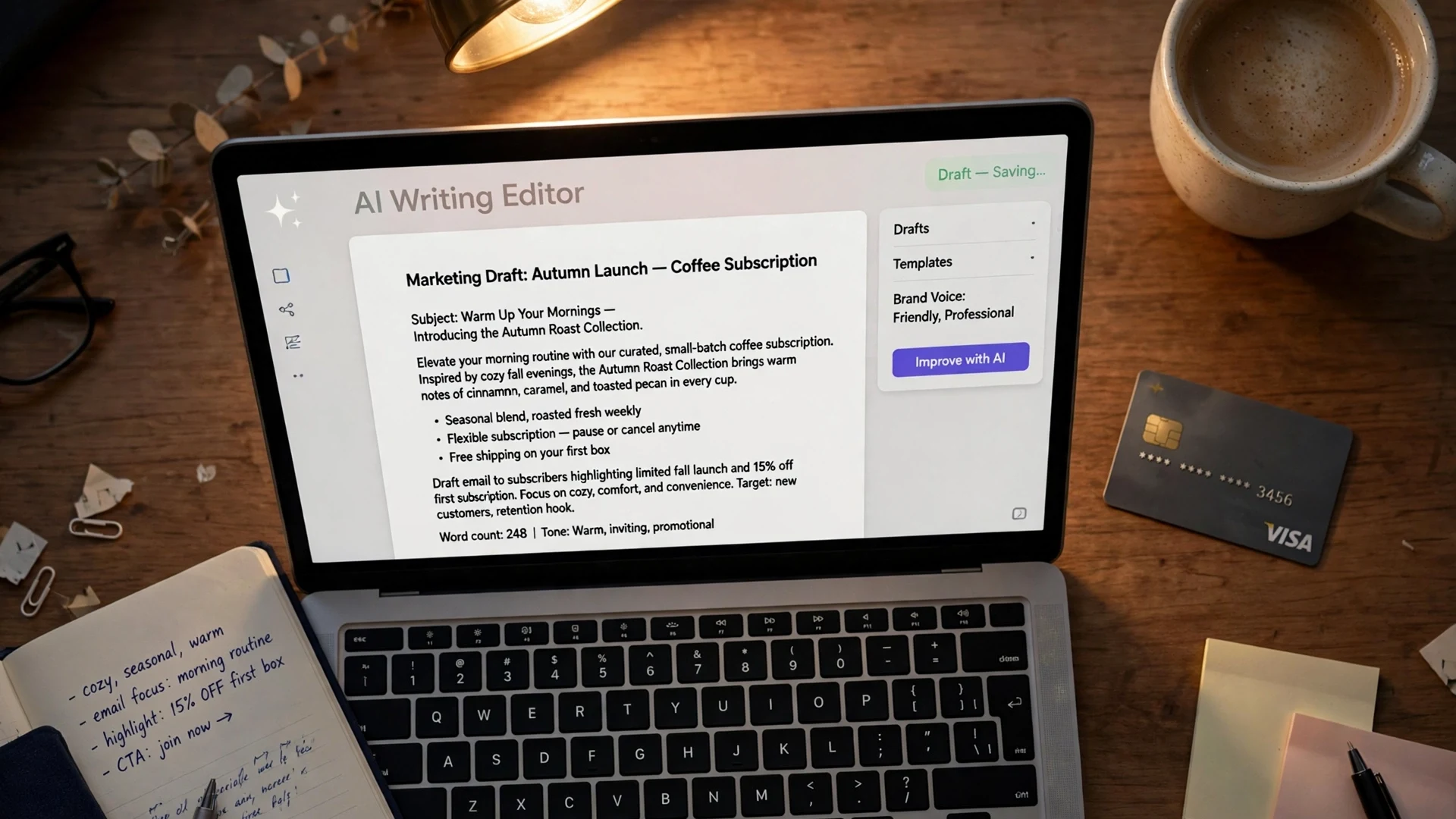
Temp Email for Jasper AI Signup: the Email Door Opens — but the Card on File Is the Real Gate
The one-line verdict, and the number that matters
Yes, you can start a Jasper AI signup with a temporary email address. The verification email will reach a disposable inbox, because Jasper's email check is a standard confirm-your-address step and nothing in its signup flow is built to interrogate where the address came from. But the number that decides whether this trial is actually free is not in your inbox at all. It is $69 — the monthly Pro price Jasper charges the card on file when the 7-day trial ends, or $708 up front if you picked annual billing at signup. A temp inbox protects your email address. It does nothing for the card, and the card is where this trial is won or lost.
That split is the whole story of this post, and it is why Jasper belongs in a different box from most of the AI tools I have covered in this series. With ChatGPT or Claude, the email question is the interesting one, because the free tier is the product and the inbox is the only thing standing between you and it. With Jasper, the email question is the easy half. The hard half is a seven-day clock attached to a payment method, and the guides I checked in November 2026 do not even agree with each other about how that clock works. So this post does two jobs: it answers the temp-email question, and it lays out the trial mechanics with the disagreements left visible instead of smoothed over.
One honesty note before the details, in the same spirit as the rest of this series: I did not create a live Jasper account for this post, and I did not hand Jasper a card. What follows is built from Jasper's own pricing page, which I fetched on November 26, 2026, from its free-trial and cancellation help articles as reported by three independent guides that re-checked them in November 2026, and from Jasper's terms of service as those guides quote them. Where the sources disagree — and on the trial they disagree in ways that cost real money — I give you both versions with dates, instead of picking the one that makes a tidier story.
Jasper in November 2026: a marketing platform, not a writing app
The first thing to update if your picture of Jasper is a few years old: the company that started as Jarvis, then Conversion.ai, then Jasper the AI writing assistant, now sells itself as an AI marketing platform. The pricing page I fetched on November 26, 2026 leads with Jasper IQ — a layer that turns a company's brand, products, and audiences into context that governs every output — plus Canvas, a document editor for on-brand content, and purpose-built agents for marketing workflows like GEO and AI search optimization, SEO, personalization, and campaigns. There are 100+ purpose-built marketing agents on the page, a no-code builder for custom agents on the Business plan, and a browser extension for Chrome and Edge.
The pricing is simpler than the product. There are two plans and no free tier. Pro is $69 a month per seat on monthly billing, or $59 a month per seat when billed annually — $708 up front for the year. It includes one seat, the Canvas platform, agents for core marketing workflows, and Jasper IQ customization capped at 2 Brand Voices, 5 Knowledge assets, and 3 Audiences. Business is custom-priced and adds the complex-workflow agents, the custom agent builder, Jasper Grid for scaled content execution, unlimited IQ customization, API access, and enterprise governance. The page also lists SOC 2 compliance, 99% uptime, and support for 30+ languages.
That positioning matters for the temp-email question because it tells you who the signup is designed for. This is not a consumer app with a free tier and a gentle upsell. It is a $69-a-month seat aimed at marketing teams, and the trial is the only free way in. Everything about the signup — the onboarding questions about your role and use case, the Brand Voice setup, the seat-based pricing — assumes you are a professional evaluating a work tool, not a curious individual poking at a chatbot. A disposable inbox fits the first ten minutes of that evaluation fine. It fits the following seven days less well, for reasons the next sections spell out.
The signup, screen by screen
The signup flow itself is short, and the guides that walked it most recently agree on the shape of it. You land on jasper.ai and click Start free trial, which opens the signup page. You create the account with Google or with an email address and password. If you go the email route, Jasper sends a verification email and you confirm the address — the standard link-or-code check that every service in this series uses, and the step a temp inbox handles without any fuss. Then comes a short onboarding: Jasper asks about your role and your main use case so it can tailor suggestions. Then you pick a plan — in practice Pro, the only plan with a trial button on the pricing page — choose monthly or annual billing, and add a payment method. The whole thing takes a few minutes, and Jasper's own help material suggests using a private or incognito window if you hit signup errors.
Two details in that flow deserve a second look from a temp-email reader. First, the Google route skips the email question entirely: your Google address becomes the account, and there is no verification email to wait for. That is the fastest door, and it is also the one a temp email can never use, because you cannot create a Google account with an address you do not own. Second, the verification step is a link, not a code, on the email route — which matters because verification codes expire on their own clocks, and a link that sits unclicked in a short-lived inbox is a link you lose. Open the temp inbox, click the link while the inbox is still alive, and the account is created. Leave it for later and the inbox may be gone before you get back.
Nothing in the signup pages or the guides suggests Jasper blocks disposable domains at the door. I would not state that as a guarantee — Jasper does not publish a list of blocked domains, and blocklists change without notice — but there is no report of a temp address being rejected at Jasper signup in the material I checked, and the verification step is the same shape as the ones Grammarly and Gemini use, where disposable addresses pass. If one domain is rejected, the practical answer is the same as everywhere else in this series: generate a different style of address and try again, rather than assuming the whole approach is blocked.
The card, not the inbox, is the gate
Here is where the post earns its title. Jasper's trial is 7 days of full Pro access, and it requires a credit card to start. Three independent guides that re-checked Jasper's pricing page, free-trial help article, cancellation help article, and terms of service in November 2026 agree on this: DroidCrunch, DesignHey, and HyperWrite all record the trial as 7 days, card required, no free plan. The trial includes everything in Pro — Chat, Canvas, every template, Brand Voice — and you are not charged during the seven days. On day 8, Jasper moves you onto the plan you chose at signup and charges the card it has on file.
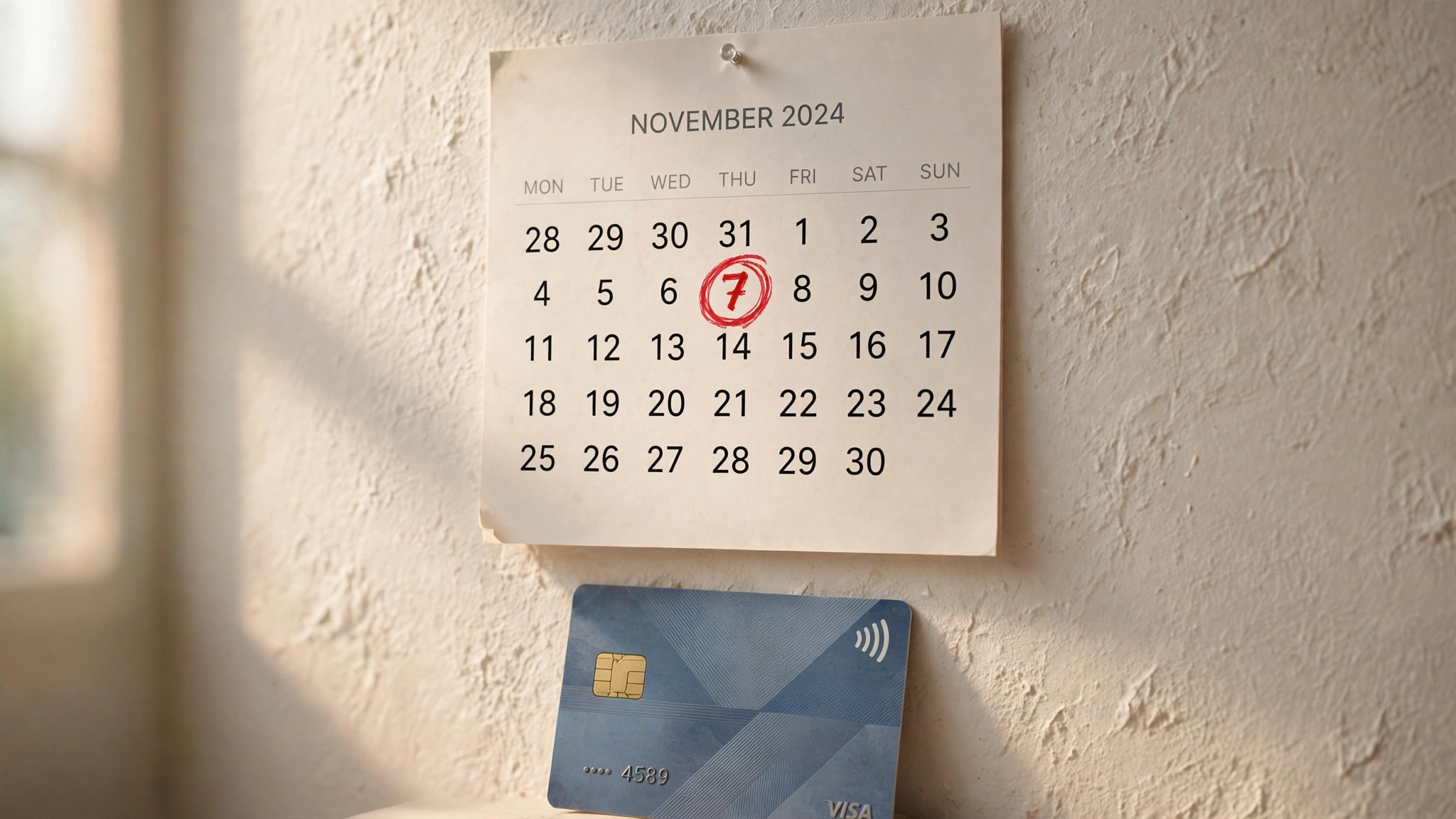
The billing toggle you pick at signup is the decision that matters most, and it is the one the signup screen does not dramatize. Pick monthly and the first possible charge is $69. Pick annual and the first charge after the trial is $708 for twelve months, not $59 — the $59 figure is the per-month equivalent, and the money leaves your account in one payment. DesignHey's November 2026 check adds two details that should change how you set your reminders: Jasper takes major credit and debit cards with 3D Secure checks, it does not accept PayPal or prepaid cards, and its terms say you will not get a notice that the trial has ended. The trial does not end quietly in the sense of expiring — it ends by converting, and the conversion is the part nobody emails you about.
That last point is the real collision with a temp inbox. If your billing notices, trial reminders, and plan emails all go to an address that expired on day one, you have removed the only channel Jasper uses to tell you the clock is running. The $69 or $708 charge is not a surprise Jasper springs on you — the terms describe it plainly — but it is a charge that arrives exactly when the inbox that could have warned you is gone. This is the same structural problem as every card-required free trial, only sharper here because there is no free plan to fall back to when the trial ends. With a tool that has a free tier, forgetting to cancel costs you nothing. With Jasper, forgetting to cancel costs you a month or a year of Pro.
There is one more gate worth naming, because it limits what a temp inbox can do even for someone acting in good faith: Jasper limits the free trial to one per email address and payment method. A fresh disposable address does not buy a second trial, because the card is the deduplication key, not the email. That rule is aimed at trial farming, and it works — which is also why it is worth stating plainly rather than letting a reader discover it after a second signup attempt fails.
Two guides, two different answers
I promised the disagreements, so here they are, because they change the advice. A fourth guide, FindFreeAI, describes the same trial differently: it says no credit card is required for the trial, and it lists a 20,000-word trial limit. That contradicts the three November 2026 checks above, and it contradicts Jasper's own pricing page, which lists unlimited word output on the paid plans. I cannot resolve this from the outside, and I am not going to pretend I can. The plausible explanations are the usual ones: FindFreeAI's page is dated July 2026 and may describe an older trial shape, or it may be describing a promotional or regional variant, or it may simply be wrong. What I can say is which version is better supported right now. The card-required version is the one three separate guides reached independently in November 2026 after reading Jasper's own help articles and terms, and it is the version consistent with the pricing page I fetched this week. Treat "no card required" as stale until Jasper's own trial page says otherwise, and treat any word limit as retired — the old 10,000-word offer and the Starter and Boss Mode plans it belonged to are gone, and the current trial is time-limited, not word-limited.
The honest way to handle a contradiction like this is the same as in the rest of this series: assume the version that costs you money if it is true. If you sign up expecting no card and Jasper asks for one, you have lost two minutes. If you sign up expecting a card-free trial, hand over a disposable address, and then discover on day 8 that a card you did provide has been charged $69, you have lost $69. The asymmetry is the whole reason the careful version wins.
What a temp inbox actually buys you here
So, with the mechanics laid out, here is the balance sheet. A temp inbox buys you three real things at Jasper signup. First, it receives the verification email and gets you through the door in under a minute, with no marketing list attached to your real address afterwards. Second, it keeps Jasper's onboarding and promotional mail out of the inbox you use for everything else — and Jasper is a marketing company, so the promotional mail is not a hypothetical. Third, it lets you evaluate the product's first impression — the onboarding, the Canvas editor, the template library — without handing a vendor your permanent contact details before you know whether you want a relationship with it.
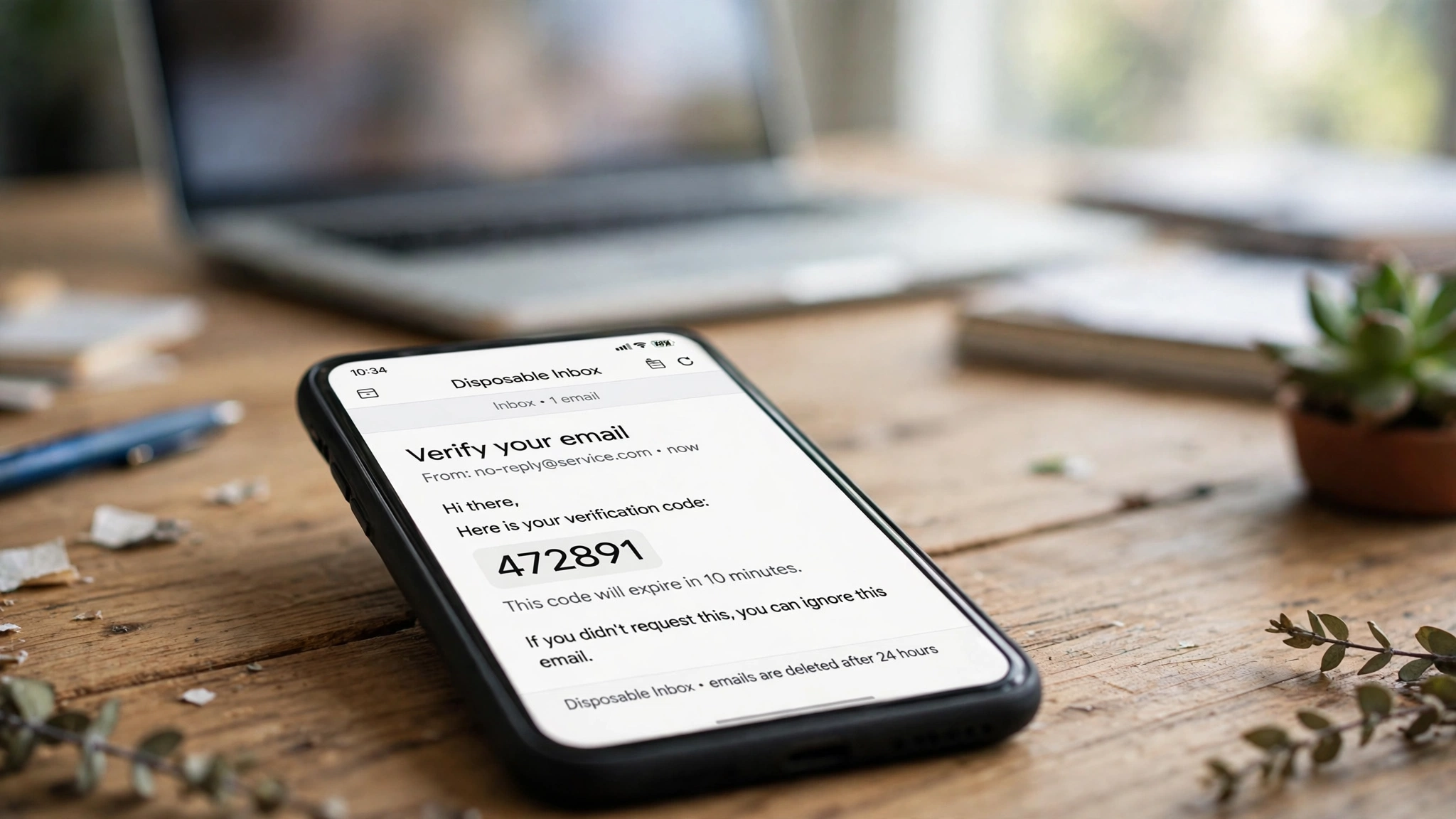
What it does not buy you is anything on the other side of the trial. It does not receive the billing notice, because billing notices go to the account email, which is the address you signed up with. It does not receive the trial-end reminder, because Jasper's terms say there is not one to receive. It does not hold your Brand Voice, your Knowledge assets, or your documents — those live in the Jasper workspace, and the only way back into that workspace after a password reset is the signup inbox. And it does not get you a second trial, because the trial is keyed to the card.
That last pair is the decision in miniature. If you are testing Jasper for an afternoon — opening Canvas, trying two Brand Voices, seeing whether the output sounds like your team — a temp inbox is a reasonable, honest choice, and the account it creates is genuinely disposable. If you are evaluating Jasper for a week, which is what the trial is for, the account stops being disposable on day two, because the work you put into Brand Voice and Knowledge assets is work you will want to keep, and the billing clock is a clock you will want to hear. For a week-long evaluation, use an address you control — a real inbox, or an alias you can switch off later — and keep the temp inbox for the first-look signups where the account itself is throwaway.
The cheaper doors, honestly priced
Part of evaluating Jasper is knowing what the money buys that the cheaper tools do not, because $69 a month is a real commitment next to the alternatives. ChatGPT Plus is $20 a month, and its signup takes a temp email with a free tier behind it. Claude's Pro plan is also $20 a month, with the same shape. Grammarly's free tier does the job for most individual writers without a card at all. Gemini's free tier is bundled into a Google account most people already have. None of those is Jasper — none of them has Brand Voice trained on your published copy, Knowledge assets grounding output in your product docs, or agents that run a campaign workflow end to end — but the comparison sets the bar Jasper has to clear in your seven days. If, by day five, Jasper has not produced copy that is visibly more on-brand than what ChatGPT gives you for $20, the $49-a-month difference is not buying you anything, and the correct move is to cancel and keep the cheaper door.
That is also the right frame for the trial itself. Seven days is a short evaluation window for a tool whose value is consistency across a team's output, not a single clever paragraph. Go in with a test that matches the product: feed Brand Voice a few pages of your published copy, ask for a product email, then ask for the same email in a second voice and compare. Run one real workflow end to end — a brief in, a campaign asset out — instead of generating ten disconnected samples. And decide on day five, not day seven, because day seven is when the decision makes itself.
If you still want the trial: the careful way
If the balance sheet above still points to trying Jasper, do it in a way that keeps the card safe. Pick Pro on monthly billing at signup, so the worst case is $69, not $708 — you can switch to annual later if Jasper earns it, and the annual discount is not worth the risk of a $708 charge you did not mean to authorize. Use an address you control for the account, not a disposable one, so the billing emails have somewhere to land. Set two reminders the moment the trial starts: one on day five to decide, one on day six to cancel if the answer is no. And know the cancel path before you need it: cancel inside the app during the trial, and the cancellation takes effect when the trial period ends, with no charge made. Two guides that read the cancellation help article disagree about refunds if you miss the cut-off, which is another reason to cancel on day six rather than test the refund policy on day eight.
The temp inbox still has a job in this careful version — just a smaller one. Use it for the first look if you want to see the signup screen and the onboarding questions before committing an address you care about. Then, if you decide to run the real seven-day evaluation, create the trial account with an address you control. Two signups sounds wasteful, but it is the honest split between a throwaway look and a real trial, and it is cheaper than either a lost workspace or a $69 charge you did not expect.
FAQ
Does Jasper AI accept a temp email for signup?
Yes, as far as the public signup flow shows. Jasper accepts an email address and password alongside Google sign-in, and the verification email is a standard confirm-your-address message that reaches a disposable inbox. No guide I checked in November 2026 reports disposable domains being blocked at Jasper signup, though Jasper publishes no allowlist, so a rejected domain is possible and the fix is to try a different address style.
Does the Jasper free trial require a credit card?
Yes, on the best-supported current evidence. Three guides that re-checked Jasper's help articles and terms in November 2026 record a 7-day trial with a card required, and Jasper's pricing page offers no free plan. One older guide says no card is required, but that version conflicts with the November checks and with the pricing page, so treat it as stale.
How much does Jasper cost after the trial?
Pro is $69 a month per seat on monthly billing, or $59 a month per seat billed annually — $708 up front. Business is custom-priced. The trial converts automatically to the plan and billing period you chose at signup, so the annual choice means a $708 first charge, not $59.
Can I get a second Jasper free trial with a new temp email?
No. Jasper limits the trial to one per email address and payment method, so a fresh disposable address does not reset the trial when the card is the same. The card is the deduplication key.
What happens to my Jasper account if the temp inbox expires?
The account and its workspace survive — the inbox is not the account — but you lose the only route back in. Password resets, billing notices, and support threads all go to the signup address, and Brand Voice, Knowledge assets, and documents are tied to the workspace, not to anything you can recover without that inbox.
Is there a Jasper free plan?
No. Jasper offers a 7-day free trial of Pro and no permanent free tier. If you need a free AI writing tool rather than a trial, ChatGPT, Claude, Grammarly, and Gemini all have free tiers, and the trial is the wrong tool for that job.
Should I use a temp email or my real email for Jasper?
For a first look — an afternoon of poking at Canvas and the templates — a temp email is fine, because the account is disposable. For the real seven-day evaluation, use an address you control, because the trial has a card attached, the work you do in Brand Voice is worth keeping, and the billing emails need somewhere to land.
Need a disposable temporary email?
Protect your real inbox from spam and promotional clutter instantly and free.
Received a suspicious email, text, or charge alert?
Verify whether the sender domain is disposable, spoofed, or unverified before clicking links.