

Temp Email for Car Rental Bookings: The Confirmation You Still Need 90 Days After You Return the Keys
You land, you follow the signs to the rental counter, and you hand over a license, a credit card, and an email address. The whole transaction takes about four minutes, and it feels like the least important thing you do on the trip. It is not. That email address is about to become the rental company's only way to reach you about money you may owe, and it will keep mattering long after you have forgotten the car's license plate.
Here is the part most travelers never think about at the counter: a car rental is not one transaction. It is a transaction with a tail. You pay at pickup, you drive for a few days, you return the car, and then, weeks or months later, the bills that were quietly accumulating behind you start arriving. A toll you drove through without thinking. A parking ticket mailed to the car's registered owner, which is the rental company, not you. A damage report filed by the next renter, or by an inspector who looked at the car after you left. Every one of those arrives by email, and every one of them has a deadline attached.
That tail is what decides whether a temporary email address is a good idea for a car rental, and the honest answer is split down the middle. For one half of the process, the shopping half, a temp address is the best tool you have. For the other half, the booking half, it is the worst tool you could pick. Getting that split wrong in either direction costs you: use your real address for everything and you spend the next year unsubscribing from rental marketing; use a throwaway for everything and you may miss the email that would have let you dispute a charge before it hit your card. This post draws the line exactly where it belongs.
The rental email timeline does not end at drop-off
Most people picture a rental as three emails: the confirmation, the receipt, and maybe a survey. When we checked what actually lands in a renter's inbox, the timeline is much longer, and each stage has a different level of urgency.
Before pickup, there is the confirmation and the check-in reminder, plus any price-drop or upgrade offer if you booked through a broker or an aggregator. At pickup, there is the rental agreement itself, usually emailed as a PDF, and it is the document you will need if anything is disputed later. During the rental, there may be an extension reminder, a return-time reminder, or a notice that your return location has changed its hours. At drop-off, there is the final receipt, which you should check on the spot because it is much harder to correct a fuel or late-return charge a week later.
Then comes the part nobody warns you about. Toll authorities do not bill rental companies instantly. A toll or a red-light camera violation is first mailed to the registered owner of the vehicle, the rental company receives it, matches it to your rental period, and then forwards the charge to you, usually with an administrative fee added on top. That chain routinely takes four to twelve weeks. Parking tickets follow the same slow path. Damage claims are slower still: a company may not inspect a returned car in detail until it is cleaned and turned around, and a claim can surface a month or more after you flew home.
The survey email is the only message in the whole sequence that does not matter. Everything else is either money, evidence, or a deadline. So the question is never "should I protect my inbox from the rental company?" It is "which inbox should each stage of this timeline go to?"
Quote first, book second: two different inboxes for two different jobs
This is the setup that actually works, and it is the same principle that runs through the rest of this series: the shopping phase and the commitment phase are two different jobs, and they should not share an inbox.
Start with a temporary address for the shopping phase. Rental pricing is one of the most comparison-heavy purchases travelers make. You will check the rental company's own site, two or three aggregators, maybe a discount-code site, and a price-tracking alert, and each one of those wants an email before it shows you its best number. Put a temp address on all of it. The quote emails, the "your price dropped $14" alerts, the abandoned-search reminders, the upgrade pitches — all of it lands in an inbox you can abandon the day you book. You lose nothing, because a quote is not a commitment and no quote email will ever contain a deadline that matters.
One discipline matters here, and it is the same one that trips people up everywhere else: do not reuse a single temp address across every aggregator and broker for months. A permanent throwaway quietly becomes a profile, and every site you touched can now connect the same address to the same trip. Our piece on reusing the same temp email explains why that shortcut rebuilds exactly the profile you were trying to avoid. Use one temp address per shopping session, or one per aggregator, and let them die when the search ends.
Then, when you have picked a car and a price, switch. The booking itself — the reservation with your name, your license, your credit card, and your travel dates — goes on a durable address you control and will still check in three months. It does not have to be your main personal inbox. A separate address used only for travel bookings works even better, because it keeps every rental document findable in one place without mixing it into your daily mail. What matters is that it is an address you will still open in February for a trip you took in November, because that is when the toll letter arrives.
The toll and ticket letter that arrives two months later
Tolls are the cleanest example of why the booking inbox must survive, so it is worth walking through exactly how a toll becomes a charge.
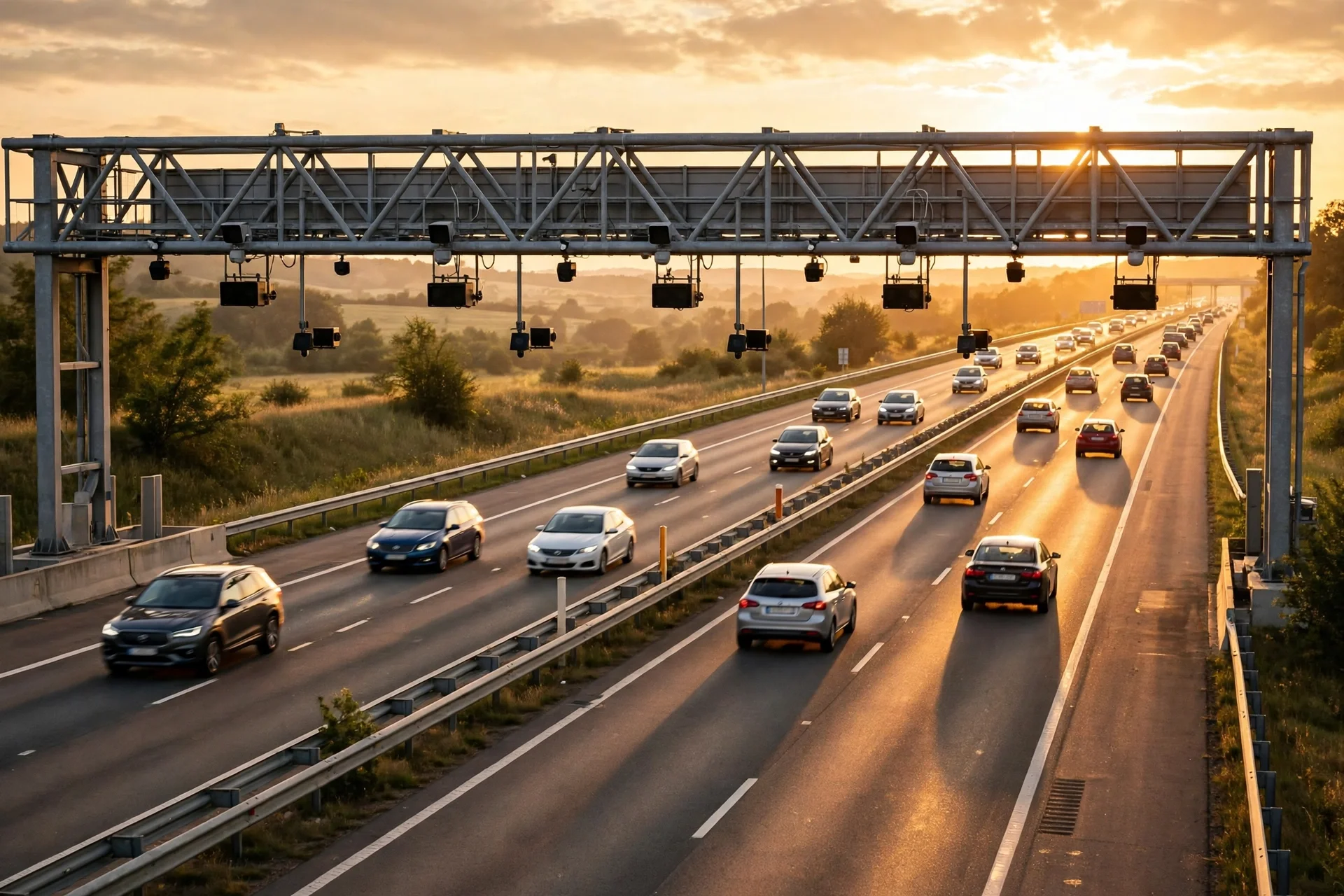
You drive through an electronic toll gantry on a highway outside Orlando, or Denver, or anywhere else that has replaced toll booths with cameras and transponders. Nothing happens at the time. There is no booth, no ticket, no beep you notice. Weeks later, the toll authority mails a bill to the vehicle's registered owner. The registered owner is the rental company. The company looks up which rental covered that date and time, adds its own administrative fee — rental agreements commonly put this in the $25 to $50 range per incident, on top of the toll or fine itself, though the exact figure is in your agreement and varies by company and state — and charges the card on file. Then it emails you the breakdown.
Notice what that email is doing. It is not marketing. It is the only notice you get before money leaves your account, and it is often the only document that shows which toll, on which date, on which road. If you want to dispute it — wrong car, wrong date, a toll you already paid through the rental company's own transponder program — that email is your starting evidence, and the dispute window is usually short. A temp inbox that expired six weeks after your trip does not just miss a message. It removes your chance to argue.
The same chain applies to parking tickets and camera fines, with one extra sting: some cities add late penalties if the registered owner does not respond promptly, and the rental company passes those penalties straight through. A missed email can turn a $40 ticket into a much larger charge, and the company will not accept "I never saw it" as an answer when the address on the booking was one you chose to abandon.
There is also a defensive move worth making at pickup, and it costs nothing: ask at the counter how tolls are handled for your rental, and whether the car has a transponder or a toll program you are already paying for. Some companies charge a daily convenience fee for toll coverage whether you use a toll road or not, and opting out at the counter — where you can, and where the local roads allow it — is a decision you make once, not a dispute you fight later. Write down the answer and keep it with the rental agreement PDF in your booking inbox.
The damage claim is the real reason your inbox must survive
If tolls are the slow bill, damage claims are the expensive one, and they are the strongest argument in this whole post for keeping a durable booking address.
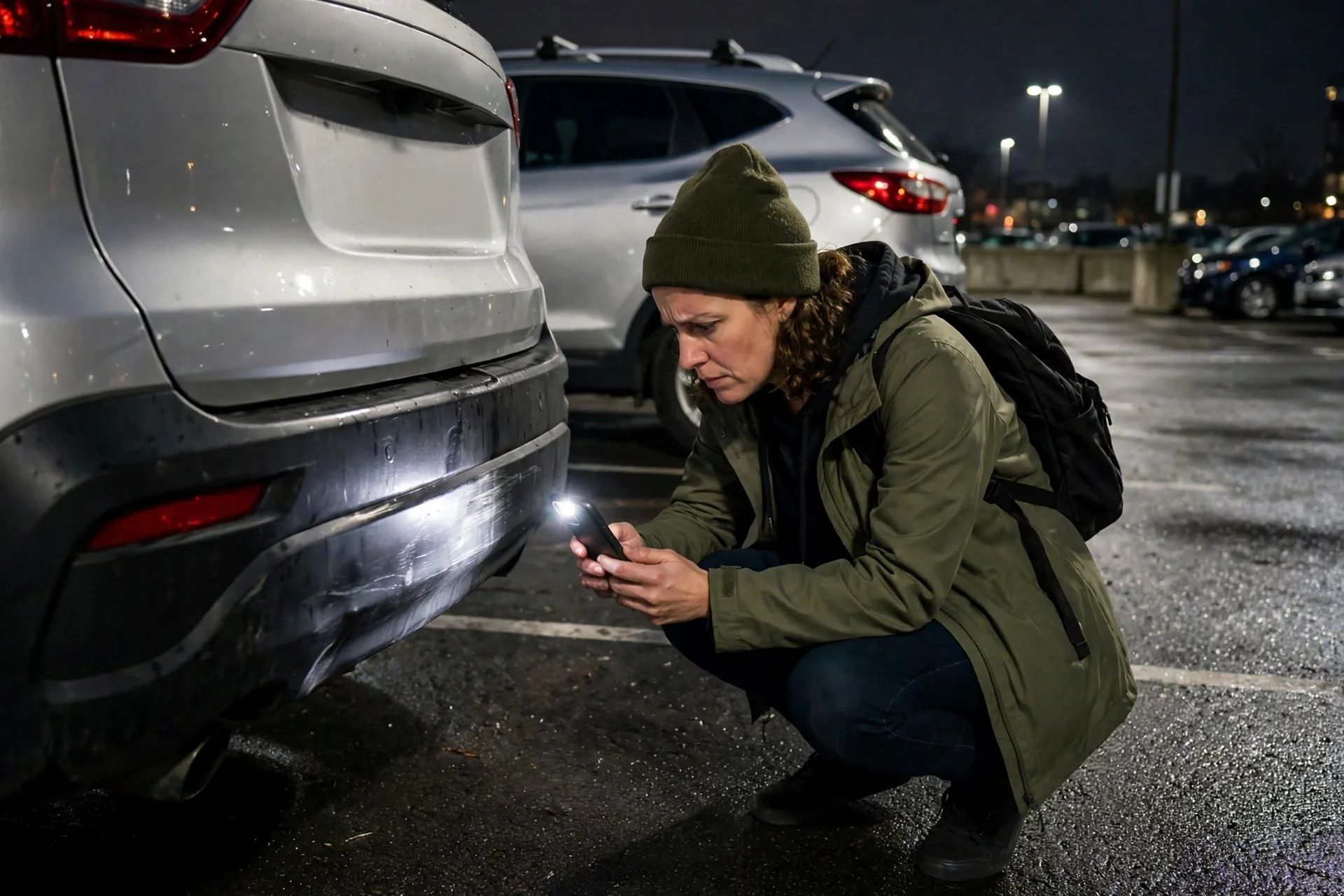
Here is how a damage claim usually works. You return the car, an agent gives it a quick walk-around, and you leave. The car is then cleaned, and at some point it gets a closer inspection — sometimes the same day, sometimes days later, sometimes by the next location it is transferred to. If that inspection finds a scratch, a dent, a cracked windshield, or a stained seat that was not noted at pickup, the company opens a claim against your rental and emails you photos, an estimate, and a deadline to respond. The amounts are not trivial: even a minor bumper repair can run into several hundred dollars, and a windshield replacement can run higher.
Your defense, if you have one, is almost entirely email-shaped. It is the pickup inspection photos you took, the rental agreement showing pre-existing damage noted at handover, and the drop-off receipt showing the car was accepted without comment. If those live in an inbox you can still open, you can reply with evidence inside the deadline. If they live in a temp inbox that is gone, you are arguing from memory against a company holding timestamped photos.
So do the unglamorous work at both ends of the rental. At pickup, walk around the car and photograph every panel, every wheel, and the windshield, in daylight if you can, and email the photos to yourself at your booking address right there in the lot. Do the same at drop-off, including the dashboard showing mileage and fuel level. It takes three minutes and it is the single most valuable habit in this post. Travelers who skip it are the ones who end up paying for damage they did not cause, not because the company is dishonest, but because nobody can prove otherwise a month later.
And here is the part that connects back to the inbox question: those photos are only useful if they are still retrievable when the claim email arrives. A booking inbox you keep for at least six months after every rental is not paranoia. It is the filing cabinet for the one dispute that actually costs real money.
Where a temp address will cost you the car
Honesty first: there are places in the rental process where a temporary address is not just unhelpful, it can cost you the reservation or the car itself.
First, pickup verification. Many rental locations, especially airport counters and smaller franchise locations, verify the reservation by matching the email on the booking to the person standing at the counter, or they send a pickup code to that address. If you cannot open the inbox at the counter, you cannot produce the code, and the agent has no reason to hand you the keys. A temp address you generated on your laptop at home and never opened on your phone is a liability at the exact moment you need it most.
Second, loyalty and corporate accounts. If you rent through a loyalty program, a corporate travel account, or an employer's booking tool, the email address is often the account identifier. A throwaway address breaks the link to your status, your free days, and your company's negotiated rate, and it can strand the receipt in a place your expense system never sees. Business rentals should never run through a temp address at all; the receipt is a tax document.
Third, the credit card and identity match. Rental companies already treat mismatches as fraud signals, and an email domain that looks disposable, combined with a booking made minutes before pickup, can trigger extra verification or a declined reservation at some locations. It does not happen every time, but it happens often enough that it is not worth gambling a trip on.
Fourth, the modification problem. Plans change. Flights get delayed, return times move, pickup locations switch. Every one of those changes goes through the email on the booking. If that inbox is dead, you cannot confirm the change, and the company may treat the original reservation as a no-show and release the car. During holiday travel weeks, when cars are scarce, a released reservation is not a minor inconvenience. It is a ruined arrival.
The rule that covers all four cases is simple: a temp address is for asking about prices. A durable address is for anything with your name, your money, or your keys attached. Our guide on when not to use a temp email draws the same boundary across other kinds of accounts, and rentals sit firmly on the durable side once you book.
The booking-day checklist
If you take one thing from this post, make it this sequence, in this order:
- Shop on a temp address. Compare the rental company's site, two aggregators, and any discount codes, all on an address you will abandon when you book.
- Read the toll and administrative-fee clause in the agreement before you pay, not after the toll letter arrives. Note the per-incident fee and whether a transponder program is already included.
- Book on a durable travel address you will still check in three to six months. Save the confirmation and the agreement PDF there, not just on your phone.
- At pickup, photograph the whole car and email the photos to your booking address from the lot. Note any existing damage on the agreement before you drive away.
- At drop-off, photograph the car again, including mileage and fuel, and check the final receipt before you leave the lot. If a charge looks wrong, dispute it at the counter, in person, while you still have leverage.
- Keep the booking inbox alive for six months after the trip. That is how long toll, ticket, and damage mail can take to arrive, and it costs you nothing to wait.
- Only then, delete the shopping-phase temp address, and with it every quote alert, upgrade pitch, and abandoned-search reminder that came with it.
Notice what this checklist does. It does not ask you to give up privacy. It asks you to spend your privacy budget where it pays: on the noisy, valueless shopping mail, not on the quiet, valuable booking mail. A traveler who follows it gets the same inbox peace as the person who used a throwaway for everything, without the risk of missing the one email that actually costs money.
Frequently asked questions
Can I use a temp email to book a rental car?
Technically, most booking forms accept any working address. Practically, you should not. The booking address receives the agreement, the receipt, and months later the toll, ticket, and damage mail. Use a temp address to shop and compare prices, and a durable address to book.
Will a rental company reject a disposable email address?
Some locations and some aggregators filter disposable domains, and the rejection usually shows up at the worst moment: at pickup, when a verification code goes to an inbox you cannot open, or when a loyalty account fails to match. Even when the booking goes through, the risk is not the rejection. It is the mail you miss later.
How long should I keep the booking email address active?
At least six months after drop-off. Toll and ticket mail routinely takes four to twelve weeks to reach you through the rental company, and damage claims can take longer. Keeping the address for six months covers the realistic tail of almost every rental.
What if I already booked with a temp email that has expired?
Contact the rental company as soon as you realize it, through their customer service line or your loyalty account if you have one, and ask them to update the email on the reservation before pickup, or on the closed rental record after drop-off. Do it before the toll and damage window closes, not after a charge appears on your card. If the trip is already over, check your card statements monthly for several months for rental-company charges you do not recognize.
Does this apply to peer-to-peer rentals too?
The same timeline applies, and in some ways it matters more. Peer-to-peer platforms also forward toll and damage claims after the trip, and the host's claim goes through the platform's messaging and email system. Use a temp address to browse listings, and a durable address for the booking and all host communication. The same logic that protects you with a traditional rental company applies to flight bookings too: anything with a confirmation that has to outlive the trip needs an inbox that outlives it.
Should I use a temp email for rental car loyalty programs?
No. Loyalty programs, free rental days, and status benefits are tied to your account, and the email address is usually the account key. A temp address breaks that link and can strand your benefits. Keep loyalty accounts on a durable address, and use the temp address only for anonymous price shopping before you log in.
The short version is this: a rental car is the rare purchase where the most important email arrives after you have stopped thinking about the purchase. Shop like you do not care, on an address you can burn. Book like you will be asked about it in three months, on an address you will still have. And when the next trip turns into a move, or the next form you fill out is a quote rather than a booking, the same split applies — one moving company quote can put your move date in front of every mover in town, so run that search on a throwaway too, and save the durable address for the mover you actually hire. The same discipline that keeps a rental from costing you twice will keep every other quote from following you home either.
Need a disposable temporary email?
Protect your real inbox from spam and promotional clutter instantly and free.
Received a suspicious email, text, or charge alert?
Verify whether the sender domain is disposable, spoofed, or unverified before clicking links.