
Temp Email for Car Dealership Quotes: Get the Out-the-Door Price Without the Sales Blitz
The 9:04 AM form and the 9:11 AM phone call
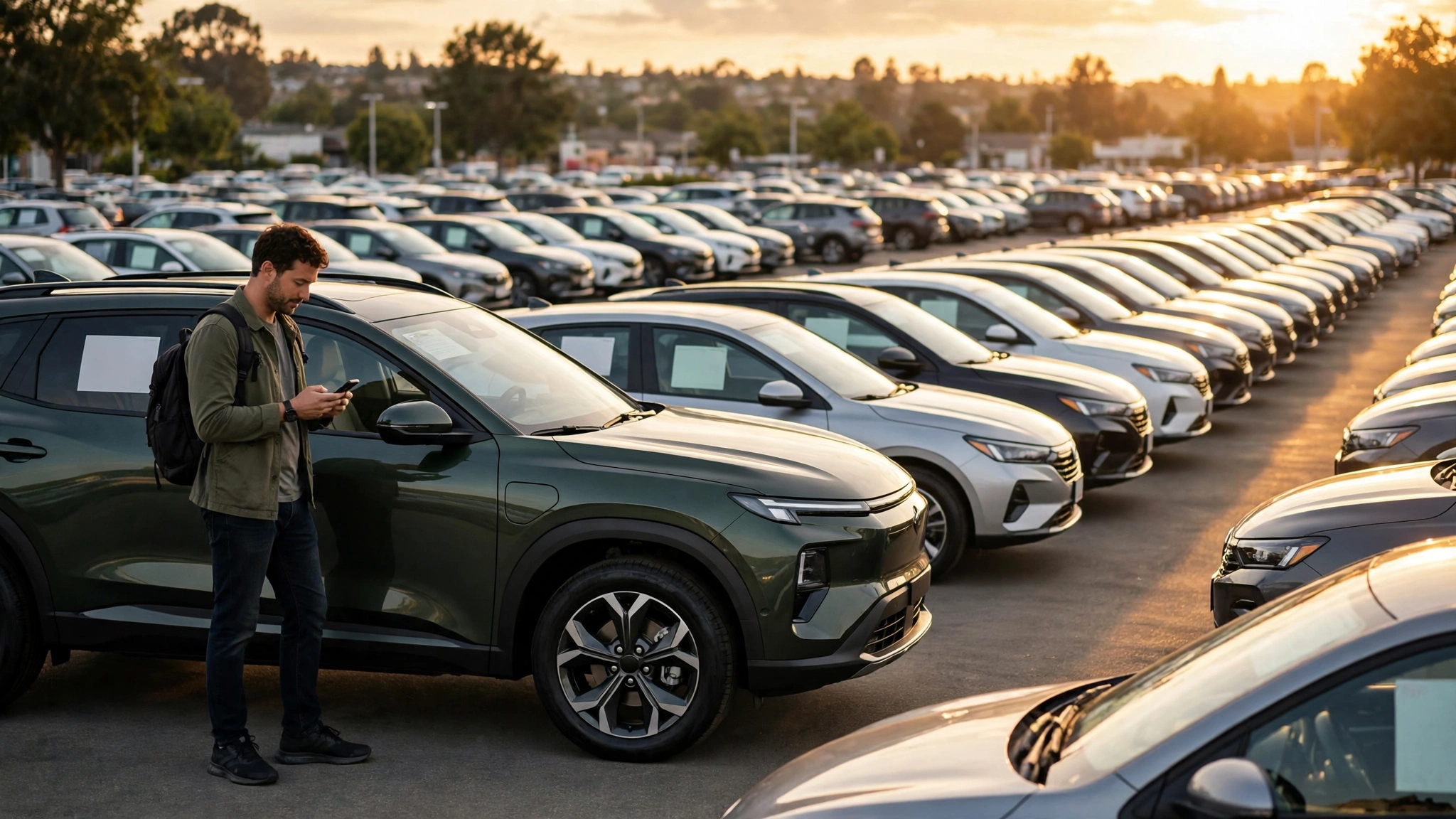
You find the car on a Tuesday night. A silver RAV4 Hybrid, one trim above base, at a dealer forty minutes away. The listing has an "ePrice" button, so you fill in the form: name, email, ZIP code, a checkbox that says you would like a quote. You hit submit at 9:04 on Wednesday morning and go back to your coffee.
The first call comes at 9:11. The second at 9:26, from a different number. By lunch you have three voicemails, two texts, and an email thread titled "Still interested in the RAV4?" from a salesperson you have never met, plus a follow-up from the dealership's "internet sales manager," plus a message from a lender you did not contact. You asked one dealer for one price. You got a sales team.
This is not a malfunction. It is the system working exactly as designed. Car dealers live and die by response speed: Cox Automotive research has found that internet leads contacted within five minutes convert at rates of 25 to 32 percent, while the same lead contacted after an hour converts at just 3 to 5 percent. Industry reporting puts the average dealership's first response at about one hour and thirty-eight minutes, and one widely cited claim holds that 78 percent of deals go to whichever dealer responds first. The 2026 Pied Piper internet-lead study, which evaluated responses from 3,290 dealership websites, found that 89 percent of dealers sent an automated text within three minutes, though the median time for a live phone call was 47 minutes.
My view is simple: none of this makes dealers villains. It makes them rational. A lead that goes cold is a sale lost to the store across town, so every form submission triggers a machine built for speed, not patience. But you do not owe that machine your permanent inbox in exchange for a price. A quote is a number. It should cost you nothing that follows you for years.
Why your email is worth more than your trade-in
A car purchase is one of the largest transactions most people make, and the data around it is priced accordingly. When your quote request lands in a dealer's customer system, it rarely stays there. It feeds the business development center that works the phones, the service department that will send maintenance reminders for a car you may never buy, and in many cases the lender and warranty partners the dealer works with. Third-party listing sites widen the circle further: submit a lead on one of them and it can be routed to several dealers at once, each of which starts its own follow-up sequence.
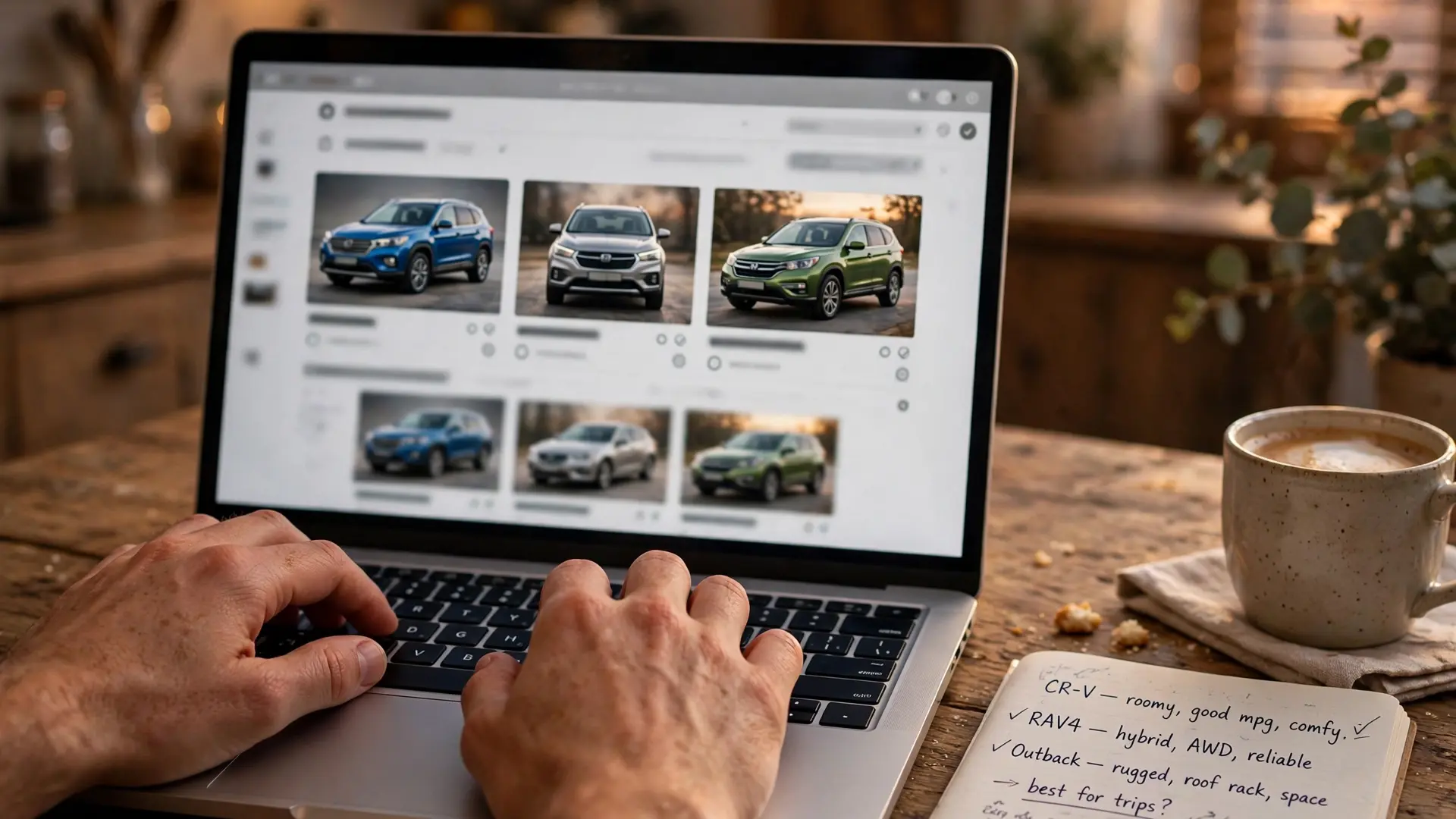
The scale of the research phase is what makes this so noisy. Cox Automotive's 2025 Car Buyer Journey Study found that buying a vehicle takes just under 14 hours in total, much of it spent researching online. A separate Cox study of independent-dealership buyers found they spend an average of 16.5 hours researching vehicles online, that 77 percent use third-party listing sites during the search, and that 83 percent begin shopping without knowing exactly which vehicle they want. That is a long window in which your address is circulating among strangers while you are still deciding between a RAV4 and a CR-V.
Here is the part people miss: the email address is the only part of the form that keeps working after you stop shopping. A phone number can be screened. A ZIP code is just geography. An email address is a permanent, routable channel into your attention, and it can be passed along, appended to a profile, and mailed for years. Extended-warranty pitches, "your trade-in value just went up" letters, service coupons from a dealer you visited once — most of that river flows through the address you typed into a quote form on a Tuesday night.
What each field on the quote form actually costs you
Not every field is equal, and knowing the difference is what lets you shop freely without going dark entirely.
Your email address is the most durable thing you hand over. It survives the purchase, the trade-in, and the next car after that. Treat it as the one field worth protecting with a disposable address.
Your phone number is the most aggressive channel. Calls and texts demand attention in a way email does not, and a number given to three dealers becomes three call lists. Give your real number only to the dealer you are actually going to visit, and only when you are ready for the call that will follow within minutes.
Your ZIP code is mostly harmless on its own — it routes your lead to nearby stores and shapes regional offers — but combined with your name and vehicle choice it completes a profile that data brokers can match against other records.
Your name and the exact vehicle you want are the payload. They are what make the lead sellable: a named shopper, actively pricing a specific model, is worth far more than an anonymous browser. You cannot avoid giving them — a quote for "a car, somewhere" is useless — so protect the channel instead of the content. Give them the real shopper and a disposable mailbox.
Where a temp email wins in car buying
A temporary email address is not a trick. It is a mailbox you control, with an expiry date, that receives exactly what a quote process produces and nothing else. It works best in the parts of car buying that are pure information exchange:
- Initial price quotes and ePrice requests. The dealer's system emails you a number. A disposable address receives it identically to your real one.
- Inventory availability checks. "Is this VIN still on the lot?" is a question, not a commitment. It needs no permanent channel.
- Third-party listing leads. This is where a temp email earns its keep most, because one submission can fan out to several dealers. Each of them can reply to the same disposable address, and none of them gets your real one.
- Trade-in value estimates. Online estimators email you a range. The estimate is the product; your permanent inbox is not part of the deal.
- Price-drop alerts on a specific listing. Same logic as any alert: useful for a week, noise forever after.
The test I use is blunt: if the only thing coming back is information, a disposable address is the right address. If the thing coming back is a contract, a title, or a loan, it is not. That line is the whole discipline, and it is worth being strict about, because the moment you blur it you lose the benefit.
The hard line: where your real inbox has to take over
There are places in car buying where a disposable address will cost you more than it saves, and pretending otherwise would be bad advice. Use your real email for all of these:
- Credit applications and financing. A lender needs to reach you, verify you, and send legally required documents. A mailbox that expires mid-application is a self-inflicted wound.
- Purchase agreements and buyer's orders. The paperwork that binds the deal must live somewhere you can find it in three years.
- Title, registration, and loan servicing. These follow the car, not the shopping trip, and they last for years.
- Insurance binding and warranty registration tied to your VIN. If a recall notice or a claim goes to a dead mailbox, you are the one who pays.
This is the same rule that governs every other high-stakes signup, and it is worth reading once in full: our guide to when not to use a temp email lays out the same line across banking, government, and account recovery. The principle never changes: disposable addresses are for shopping, real addresses are for owning.
One dealer, one address: the comparison system that actually works
The strongest move in car buying is not a single disposable address. It is one per dealer. Here is the system, and it takes about ninety seconds per dealer:
Generate a fresh temp address for each dealer you contact, and keep a one-line note of which address went where: "Dealer A — north side Toyota," "Dealer B — the one with the blue RAV4," "Dealer C — third-party lead." Then send every dealer the same out-the-door request (more on that below) and let the replies land in separate boxes.
Three things happen that a single address cannot give you. First, comparison becomes trivial: each dealer's quote sits in its own thread, with no interleaved follow-ups from other stores muddying the numbers. Second, you can see who respects the channel and who does not — the dealer still emailing you weekly six months later has told you something about how it treats customers. Third, and most usefully, you can catch forwarding red-handed. If an address you gave only to Dealer A starts receiving mail from a lender or a warranty company, you know exactly who shared it. That knowledge is worth more than any single quote, because it tells you which store to trust with the real transaction.
When you pick a winner, the handover is clean: reply from your real address, say "let's proceed on this thread," and the dealer has everything it needs. The losing addresses get deleted, and with them the drip campaigns, the service reminders, and the warranty pitches that would otherwise have followed you for years.
The out-the-door email: copy, paste, compare
Dealers quote different numbers for the same car because they are often quoting different things. One price includes destination and nothing else; another quietly folds in a protection package, a documentation fee, and a nitrogen-filled-tire charge. The fix is to ask every dealer the same question, in writing, so the answers are comparable:
"Could you please send me your out-the-door price for stock number [X] / VIN [last 6], including all taxes, title and registration fees, documentation fee, and any dealer-installed options? Please itemize each fee separately, and let me know how long this price is valid."
Four details in that message do real work. The stock number or VIN pins the quote to one specific car, so the dealer cannot answer with a cheaper trim's price. "Out-the-door" forces the fees into the open instead of letting them appear in the finance office. Itemization exposes the padding — documentation fees vary enormously by state and store, and add-on packages are where the margin hides. And the validity window stops the classic move of a quote that evaporates the moment you arrive.
Send that message from your per-dealer address, and send it to at least three dealers for the same model. The spread between the answers is usually the most honest education in car buying you will ever get. It is also why the disposable address matters: you are deliberately creating a competitive process, and a competitive process generates exactly the kind of follow-up volume no real inbox should absorb.
Dealer site or third-party listing? The lead route matters
Where you submit the form changes how far your address travels. A form on a dealer's own website generally lands in that dealer's system alone. A form on a third-party listing site — the big marketplaces where most shoppers start, and which 77 percent of independent-dealership buyers use, per Cox — is routed to the dealers advertising that vehicle, and sometimes sold on as a lead to others. The price you see and the inbox you get are two different transactions.
My rule of thumb: the further your form travels from the dealer, the more disposable the address should be. Direct dealer form, one address for that store. Third-party form, a fresh address you are fully prepared to burn. And if you are cross-shopping the same model across five listings, remember the rental trick too: before committing to a car, a weekend with the same model from a rental fleet tells you more than a second test drive — and rental quotes deserve the same disposable treatment, as we covered in our guide to temp email for car rental quotes.
The same quote-blitz pattern shows up anywhere a form turns into a sales queue. Moving companies do it, which is why our guide to temp email for moving company quotes reads so similarly, and so do insurance agents — dealers will often introduce their insurance and warranty partners mid-process, which is where our guide to temp email for insurance quotes becomes relevant. The vertical changes. The mailbox discipline does not.
After you buy: shutting the whole thing down
The purchase is the moment most shoppers forget the shopping. Do not. The day you sign, delete the per-dealer addresses for every store you did not buy from. Keep the winner's thread — it now lives on your real address — and let the rest expire. Unsubscribe from anything that slipped through to your real inbox during the process, and expect one more wave: lenders, warranty companies, and service departments have long memories, and the "your factory warranty is expiring" mail will find you eventually. It finds everyone. It just finds you less if the address it was sold is already dead.
One more honest note: a temp email does not make you anonymous to the dealer you buy from, and it should not. The dealer needs your real identity to sell you a car, register it, and finance it. What the disposable address buys you is control over the shopping phase — the weeks when you are comparing, not committing. That phase is where the noise lives, and it is the phase you can now run on your own terms. After the sale, the dealer's service department will send you exactly one kind of mail that matters — maintenance reminders for the car you actually own — and you may even want those, on the loyalty account you choose deliberately. We wrote about that distinction in our guide to temp email for store loyalty programs: take the benefit, refuse the dossier.
You are not gaming anyone. You are deciding, in advance, which conversations get a permanent channel to your attention and which get a temporary one. A car dealer gets the permanent channel when you buy the car. Until then, a price is just a number, and a number does not need your real inbox.
Frequently asked questions
Will a dealer refuse to quote a temp email address?
Almost never. Most quote replies are automated or semi-automated, and the system does not inspect your domain before sending a number. If a form rejects a disposable domain outright, generate an address on a different domain or use an alias-style address — the rejection is a spam filter, not a policy, and no dealer turns away a priced lead over it.
Can I use a temp email to book a test drive?
Yes. Booking a test drive is an information exchange, and it belongs in the disposable phase. Bring your real ID and your real phone number to the visit itself; the appointment confirmation does not need to live in your permanent inbox.
Does using a temp email hurt my negotiating position?
In my experience it improves it. A dealer that cannot track your urgency across channels — cannot see that you also asked about the same car at three rival stores from the same address — negotiates against the quote, not against your behavior. Separate addresses keep each negotiation honest and separate.
What about online trade-in value tools?
Estimates are fair game for a disposable address. The number emailed to you is a starting range, not an offer. The final appraisal happens in person, with the car in front of them, and that conversation happens on your real contact details if you choose to proceed.
How long should I keep the quote addresses alive?
Until you buy, plus about thirty days. That window covers the follow-up quote, the "price dropped" email, and the second-round negotiation. After that, delete them. Anything still arriving after thirty days is exactly the mail you were trying to avoid.
Is it legal to use a temp email with a dealer?
Yes. You are choosing which email address to share, not misrepresenting who you are. Your name, your intent, and your money are all real. The mailbox is simply a contact channel you control, and controlling your own contact channels is not deception — it is the entire point of having an inbox.
Need a disposable temporary email?
Protect your real inbox from spam and promotional clutter instantly and free.
Received a suspicious email, text, or charge alert?
Verify whether the sender domain is disposable, spoofed, or unverified before clicking links.