
Temp Email for Store Loyalty Programs: Keep the Discounts, Starve the Profile
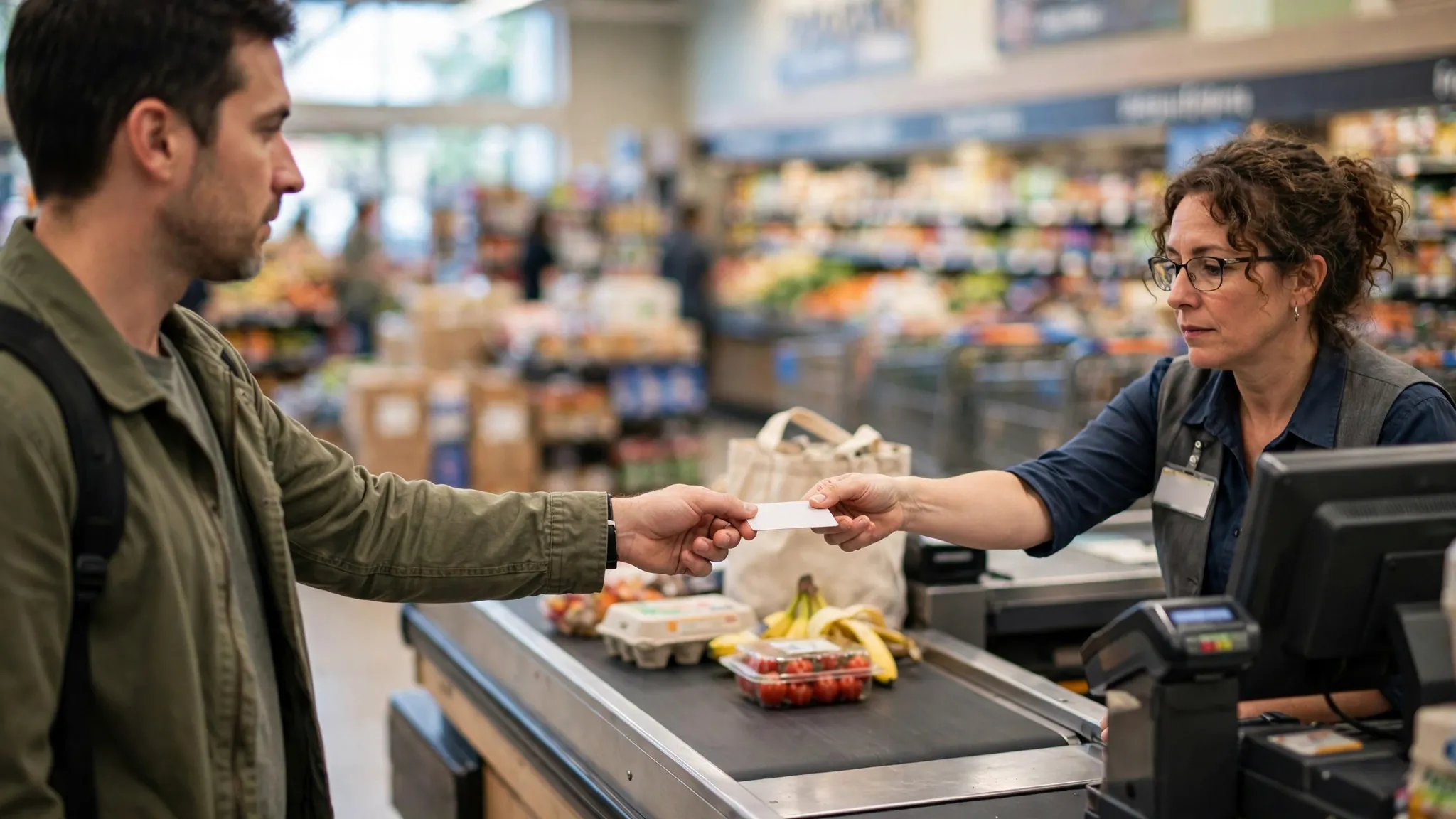
The discount happens in about three seconds. You hand over the card or type in the phone number, the total drops by four dollars, and the cashier is already scanning the next customer. Nothing about the moment feels like a data transaction. That is the whole trick of the modern loyalty program: the exchange that matters does not happen at the register. It happens later, in a database, when your receipt gets attached to your name, your address, your email, and every receipt that came before it.
A Consumer Reports investigation into Kroger, the largest traditional grocery chain in the United States, put numbers on that exchange. Kroger's precision-marketing arm, run through its data subsidiary 84.51 degrees, generated about 527 million dollars in 2024, and alternative-profit ventures like it accounted for more than 35 percent of the company's net income. Roughly 95 percent of Kroger transactions are now linked to an identifiable customer profile. One Oregon shopper who used his state's privacy law to request his data found that Kroger had marketed his profile to more than 50 outside companies. The loyalty card did not just save him money. It turned his grocery list into a product with dozens of buyers.
My view is blunt: take the discount and refuse the dossier. A loyalty program is worth joining. It is not worth joining with the email address your bank, your employer, and your family use. The card and the email do different jobs, and once you separate them, the program gets a lot less interesting to the people buying your profile.
Your loyalty card is a receipt with your name on it
Before loyalty apps, a receipt was anonymous. The store knew that somebody bought milk, eggs, and diapers on a Tuesday. It did not know it was you, and it certainly did not know what you bought last Tuesday, or the Tuesday before that. The loyalty card changed the receipt from a record of a purchase into a record of a person. Every scan adds a line to a timeline: the store, the time, the items, the quantities, the prices, the payment method. Over months that timeline stops being a shopping list and starts being a biography. It shows when your household grew, when someone got sick, when money got tight, when a baby arrived, when a diet started and when it failed.
The signup form is where the timeline gets its name. Most programs ask for an email address and a phone number, and many ask for a home address and a birthdate too. The email is the important field, because it is the key that joins databases together. Your phone number changes when you switch carriers. Your address changes when you move. Your email follows you for a decade, and it is the same string in the grocery app, the pharmacy app, the coupon app, and the data broker's file. When a program asks for your email, it is not asking how to send you coupons. It is asking for the identifier that lets everyone in the chain agree that all of those receipts belong to the same person.
That is why a temp email belongs at the center of this, not at the edges. Sign up for the grocery, pharmacy, and big-box programs on a disposable address, and the receipts still accumulate, but the key that joins them to your permanent identity is a key you can throw away. The coupons still arrive. The member prices still apply at the register, because the register only checks the card or the phone number, not the inbox behind it. What stops arriving is the follow-up that ties this program to everything else in your life.

The profile you never get to read
The part of this that should bother you is not the coupon targeting. Getting a coupon for the cereal you already buy is a fair trade and a mildly useful one. The part that should bother you is the profile built on top of the receipts, which you never see, cannot correct, and did not agree to in any meaningful sense.
Consumer Reports found that Kroger builds inferred attributes from purchase history, including an income predictor that assigns economic classifications to shoppers based on what they buy and demographic approximations. The same investigation found those profiles are often wrong: gender, age, household size, income, and education level misrecorded in shopper files. Kroger's position, as reported, was that demographic data helps filter audiences for relevant promotions, and that inaccuracies sourced from data enrichment providers are not corrected. So the profile that gets marketed to more than 50 companies can be wrong about who you are, and wrong in ways that follow you: a guessed income bracket is exactly the kind of attribute that advertisers, insurers, and lenders pay for, and a wrong guess is not a harmless guess when it is sold as a fact.
This is the honest reason to keep loyalty signups off your real email. You cannot audit a profile you cannot see. You cannot correct an income guess you were never shown. What you can do is make sure the profile is attached to an address that leads nowhere once you stop using it. A disposable signup does not stop the store from building a profile. It stops that profile from being easily joined to your real identity across every other program that bought, shared, or rented the same key.
There is a second, quieter cost to the profile economy, and it is the price itself. When a store knows what you will pay, the discount stops being a reward and starts being a lever. The Federal Trade Commission has described an ecosystem in which companies combine demographics, location, browsing, and purchase history with algorithmic systems to tailor prices and offers at the individual level. A loyalty member price is not necessarily the lowest price the store would accept. It is the price the store calculated for a shopper with your history. I am not saying every member price is a trap; most are genuine discounts, and the grocery bill is real money. I am saying that the shopper with no history gets the shelf price, and the shopper with a rich history gets the price the algorithm chose. Signing up on an address you control keeps you in the first group more often than the second.
Why the email is the key, not the card
People focus on the plastic card because it is visible. The card is the least important part. A loyalty card number can be reissued, and a phone number can be changed. What makes the whole system work is the email address, because it is the one identifier that is stable, unique to you, and shared across companies that otherwise have nothing in common.
Data brokers exist to exploit exactly that stability. They buy, license, and stitch together records from retailers, apps, publishers, and public sources, keyed most often on email and phone. A grocery profile on its own says what you eat. Joined to a pharmacy profile it says what conditions you manage. Joined to a coupon app it says what you can be nudged to buy. The loyalty signup is the moment you hand over the stitching thread, and the thread is your permanent email. Every program you join with the same address adds another dataset to the same bundle, and the bundle is what gets sold.
This is also why a second permanent email is a weaker move than a disposable one, though it is better than nothing. A second address you keep for years accumulates the same history, the same stitching, and the same bundle, just under a different name. A disposable address for loyalty signups works differently: it is per-purpose, not per-person. One address for the grocery chain, another for the pharmacy, another for the big-box store, and each one abandoned when the program stops being worth it. The bundle never forms, because there is no single key that ties the pieces together. When you stop shopping at a chain, you stop checking that address, and the marketing, the partner mail, and the profile updates go to an inbox nobody reads.
The same logic covers the coupon drip that follows every signup. A loyalty program is a marketing list with a discount attached, and the drip behaves like every other list: welcome series, weekly ad, personalized offers, partner promotions, and eventually mail from brands you never joined. The newsletter signup rules apply here for the same reason they apply anywhere: a list joined for one purpose will find other purposes for your address. On a disposable address, the drip is a feature. You check it when you want the coupons, and you ignore it the rest of the time, and it costs you nothing when you walk away.
The two-card checkout system
Here is the setup that keeps the discounts without feeding the bundle. Run two loyalty identities, with a hard line between them.
The first is the discount identity. It holds every grocery, pharmacy, big-box, coffee, and fast-food program you joined for the price. Each one gets its own disposable address. At the register you use the card, the app, or the phone number, exactly as before. The member price applies because the register checks membership, not the inbox. Once a week, before the shop, you check the discount inboxes for the coupons worth using, and you ignore the rest. When a chain stops being worth it, or its app starts demanding more data than the discount justifies, you stop checking that address. Nothing else in your life notices, because nothing else was ever attached to it.
The second is the keeper identity. It holds the small number of programs where the account itself has lasting value: the airline miles you actually redeem, the hotel status you actually use, the retailer where returns, warranties, or order history genuinely matter. Those stay on your real address, because losing access to them would cost you something real. The rule for deciding which group a program belongs to is simple: if losing the account tomorrow would cost you money or a booking, it is a keeper. Everything else is a discount, and discounts do not need your permanent identity.

Two practical details make this work instead of collapsing into chaos. First, use the phone number at the register, not the email. Most grocery and pharmacy programs let you check out with a phone number, and the phone number is what the register actually needs. The email is only for the account, which is why it can be disposable without breaking anything at the till. Second, keep a note with one line per program: store, card or phone number used, and which disposable address it belongs to. That note is what makes the discount identity abandonable. Without it, you are chained to an inbox full of coupons because it is also the only record of which address goes with which card. With it, any single address can be dropped without losing the rest.
One warning about the signup itself: some store apps reject disposable domains outright, and that rejection is a blocklist decision, not a judgment on you. The reasons sites reject temp email explain the mechanics. When a loyalty app blocks a disposable domain, the fallback is a forwarding alias you control, one per store, that you can disable for that one sender. The alias preserves the per-store separation even when the app refuses a fully disposable address. What you should not do is fall back to your real address out of impatience at the signup screen. The signup screen is the one moment in the whole relationship when you have leverage, because you have not joined yet.
Where the loyalty card stops
The line is the same one that runs through every temp-email decision, and it is worth stating plainly because checkout lines and pharmacy counters blur it. Anything where losing the account costs you money, medicine, or proof of purchase belongs on an address you control permanently.
Prescriptions are the clearest stop. A pharmacy loyalty account that is also your prescription account is not a discount program; it is a health record with a coupon attached. Refill reminders, pharmacist messages, and insurance correspondence must reach an inbox you actually read, and a disposable address that you stop checking is the wrong place for a refill notice. The same applies to any program where the account holds a balance you paid for: a gift card balance, a prepaid coffee balance, a membership you paid cash for. If the money lives in the account, the account lives on your real address.
Returns and warranties sit on the same side of the line. If a retailer uses your loyalty account as your receipt for returns, and you buy electronics, appliances, or anything you might need to return or claim warranty on, that account needs to be reachable months later. A discount identity that you abandoned in January cannot produce a receipt in June. Buy the big-ticket item on the keeper identity, or keep the paper receipt, and do not let a member price talk you into putting a warranty on an address you plan to throw away.
Credit-linked offers are another stop. Card-linked rewards, where a card issuer or network offers cash back for shopping at a particular store, are loyalty programs in disguise, and they are tied to your real card and your real identity by design. There is no disposable version of a card-linked offer, and trying to route one through a throwaway address only creates a mismatch between the offer and the card that earns it. Take those on your real identity or skip them; they are the one corner of the loyalty world where the discount genuinely requires the dossier.
For everything else, the general rule from the places where temp email fails still applies: money, identity, and anything you must recover months later stay on your real address. A grocery discount is none of those three. A pharmacy refill is at least one. The difference is the whole decision.
App-based rewards deserve a final note, because they are where the loyalty world is heading. Coffee apps, fast-food apps, and delivery apps are loyalty programs with location tracking, order history, and payment data built in, and the free-trial promo rules apply to them for the same reason: the promo is the lure, the account is the product. Sign up on a disposable address where the app allows it, pay with the card you already use, and treat the app as a coupon wallet, not a relationship. When the app starts asking for contacts, precise location, or a birthday it does not need for a coffee discount, that is the moment to ask whether the discount is still worth the profile. Usually, for a free coffee, it is not.
Frequently asked questions
Can I use a temp email for a grocery loyalty program?
Usually yes, for the signup and coupon phase. Create the account on a disposable address, use the card or phone number at the register, and check the inbox when you want coupons. Some apps block disposable domains; in that case use a per-store forwarding alias you can disable, rather than your real address. The register checks membership, not the inbox, so the member price still applies.
Will I lose my member prices if I use a temp email?
No. Member pricing is tied to the loyalty account, card, or phone number, not to whether you read the marketing emails. You check the disposable inbox for digital coupons before shopping, and you use the card at the till. If a program ever ties a reward to clicking an email link, that reward is a marketing engagement trick, not a member price, and it is safe to skip.
What if the store app requires a phone number too?
Use the phone number at the register; that is normal and unavoidable for most grocery and pharmacy programs. The phone number is a weaker stitching key than the email because it changes, and it is the field the register actually needs. Keep the email disposable even when the phone number is real. The two fields do different jobs, and only one of them joins databases across companies for a decade.
Can I use a temp email for a pharmacy loyalty program?
For the discount card, yes. For prescriptions, no. If the same account holds your prescriptions, refill reminders, and pharmacist messages, keep it on an address you read every day. A missed refill notice is a real cost, and a disposable inbox you stop checking is the wrong place for health correspondence. Split them if the pharmacy allows it: discount card on one address, prescription account on your real one.
Do loyalty programs really sell my data, or just use it for coupons?
Both, and the distinction matters less than the movement. Kroger's precision-marketing business generated about 527 million dollars in 2024, and one shopper's profile was marketed to more than 50 outside companies. Some programs sell aggregated data, some share named segments with partners, and nearly all use purchase history for targeting. Whether a given transfer counts legally as a sale or a share, your data still leaves the store and lands in databases you never joined.
What should I do with loyalty accounts I already opened on my real email?
Do not panic, and do not delete accounts with balances or order history you need. For pure discount accounts, change the email to a disposable address where the program allows it, or create a fresh account on a disposable address and stop using the old one. For keeper accounts, leave them, and use the state privacy tools where you live: several states now give residents the right to see collected data, correct errors, and opt out of sales and targeted profiling. The profile already built will not vanish, but every new receipt can go to an address you control.
Is it against the rules to sign up with a temp email?
It is against some programs' terms, and those programs will say so, usually by blocking disposable domains at signup. That is a block, not a penalty: you lose the account, not anything else. No store can fine you for it, and no loyalty account is a legal identity. If a program blocks disposable domains, use a per-store alias or accept that this particular program costs your real address, and weigh that cost against the discount before joining.
Take the discount, not the dossier
A loyalty program is a good deal when it is a discount, and a bad deal when it is a dossier. The difference is not the card, the app, or the store. It is the email you hand over at signup, and whether that email can follow you for a decade or dies the day you stop shopping there. Join the programs. Take the member prices, clip the digital coupons, and check the discount inbox before the weekly shop. Just do it on addresses you can abandon, keep the keepers on your real one, and never let a four-dollar discount buy a profile that gets sold to fifty companies. The store will still get your money. It does not need your biography as well.
Need a disposable temporary email?
Protect your real inbox from spam and promotional clutter instantly and free.
Received a suspicious email, text, or charge alert?
Verify whether the sender domain is disposable, spoofed, or unverified before clicking links.