
Temp Email for Airbnb and Vrbo Bookings: The Check-In Code Lives in an Inbox You Might Delete
The porch at 11 p.m. is the wrong place to learn your inbox expired
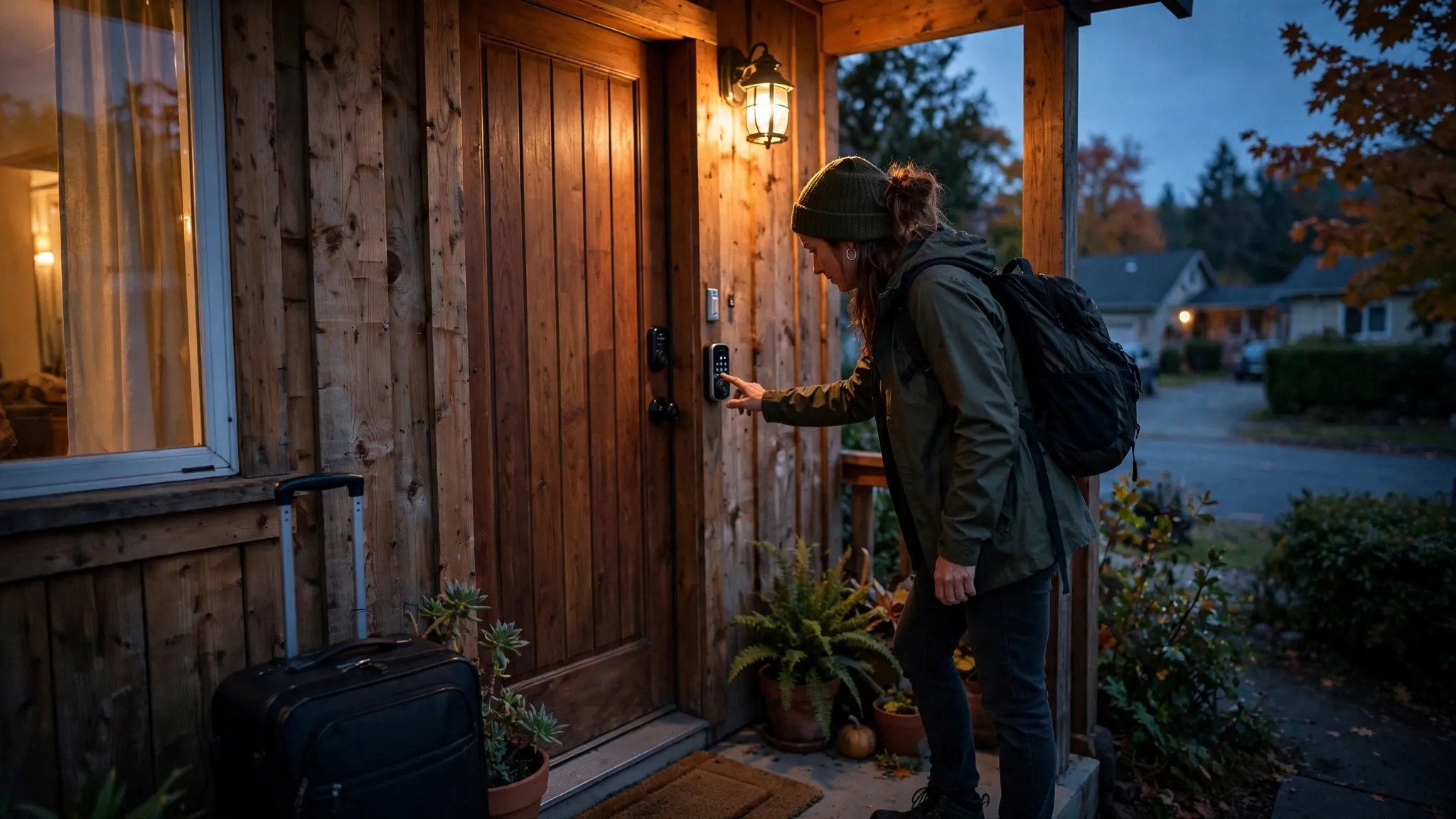
Picture the scene, because it is the whole argument in miniature. You land late, you reach a house you have never seen, and the door opens with a code, not a key. The code is in an email your host sent three days ago, or in a message thread inside the booking app that you can only reopen by proving you own the account. If the address behind that account was a throwaway you created to dodge marketing mail, and that inbox has since expired, you are standing on a dark porch trying to remember a number you never wrote down, calling a host who is asleep, with your luggage at your feet.
That is not a hypothetical edge case. It is the normal failure shape for vacation rentals booked on disposable addresses, and it is worse than the equivalent failure for a hotel, a flight, or a newsletter. A hotel has a front desk. A flight has an airport counter. A vacation rental has a lockbox, a host who may be in another time zone, and an email thread as the only bridge between you and the front door. My blunt position, up front: never put a stay you actually intend to take on an address you cannot still open ninety days after checkout. Browse on a throwaway all you like. Book on an inbox you keep.
The reason is that a rental booking is not a purchase with a receipt. It is a relationship that lasts weeks, and the email address is the thread that holds it together. The booking confirmation is only the first message. After it come host questions, check-in instructions, mid-stay problems, checkout rules, a review request, and sometimes a money claim you did not expect. A disposable inbox is built to be abandoned. A rental booking is built to keep talking to you. Those two designs are in direct conflict, and the conflict resolves itself at the worst possible moment: when you need the thread and it is gone.
The booking email is a timeline, not a receipt
Most people think of the booking email as proof of payment. For a vacation rental it is closer to a project file, and it fills up in a sequence that is worth walking through, because each stage is a separate reason the inbox has to survive.
First comes the confirmation itself, with dates, guests, price breakdown, cancellation terms, and the property address. On Airbnb this usually arrives within minutes of booking; on Vrbo it lands in the traveler account and the email tied to it. Either way, it is the document you will search for later when the dates blur, and searching a dead inbox returns nothing.
Second comes the host conversation. Before check-in, hosts commonly ask arrival times, guest counts, parking needs, and whether you have read the house rules. They also send the things that actually get you inside: gate codes, lockbox combinations, Wi-Fi passwords, parking instructions, and the quirks of the place, like which key sticks or which breaker trips. Some of this also lives inside the platform's message thread, which is a real safety net, but the thread is attached to the account, and the account is attached to the email. Lose the email and you can lose the thread at the exact moment a password reset or a new-device check asks you to prove who you are.
Third is the stay itself. Something breaks, the heating fails, the neighbors complain, or you need a late checkout. Every one of those conversations starts from the booking record, and hosts reasonably expect to reach the person who booked, at the address on file. A guest who cannot be reached looks, from the host's side, like a guest who has vanished, and that shapes how much help you get.
Fourth is checkout and review. Airbnb's review window runs fourteen days after checkout, and both sides write under that clock. If you cannot get into the account, you cannot respond to a review, correct a misunderstanding, or leave the account of your own stay that future hosts will read when they decide whether to accept you.
Fifth, and most expensive, is the post-stay money stage. Damage claims, cleaning fees, extra-guest charges, and security-deposit disputes arrive after you have gone home, sometimes weeks later. Airbnb's published rules give hosts fourteen days after checkout to submit a damage claim under its host protection program. A claim sent to a dead inbox is a claim you never contest, and an uncontested claim is a claim that usually stands. The same long tail applies to other travel bookings, which is why our post on temp email for flight bookings makes the same point about confirmations that have to outlive the trip. A rental stay outlives its trip by even more.
So the question is never just "will the booking go through on a temp address?" It usually will. The question is whether the address will still be there for the fifth message, the one with money attached, and disposable addresses are designed to answer that question with a no.
Three breaks that actually strand guests
Let me name the three specific breaks, because vague warnings about "losing access" do not change anyone's behavior, and concrete ones do.
The first break is account recovery at the worst time. Rental platforms treat a login from a new device or a new location as a security event, which is exactly what a trip is: new device, new city, possibly a new country. Recovery runs through the email on file, and sometimes through the phone number too. A guest who created the account on a throwaway, then travels, then gets logged out by an app update, faces a reset link sent to an inbox that no longer exists. The account is not deleted. It is simply unopenable, and the booking inside it is unopenable with it. Support can sometimes help, but support works on its own clock, and your check-in is tonight.
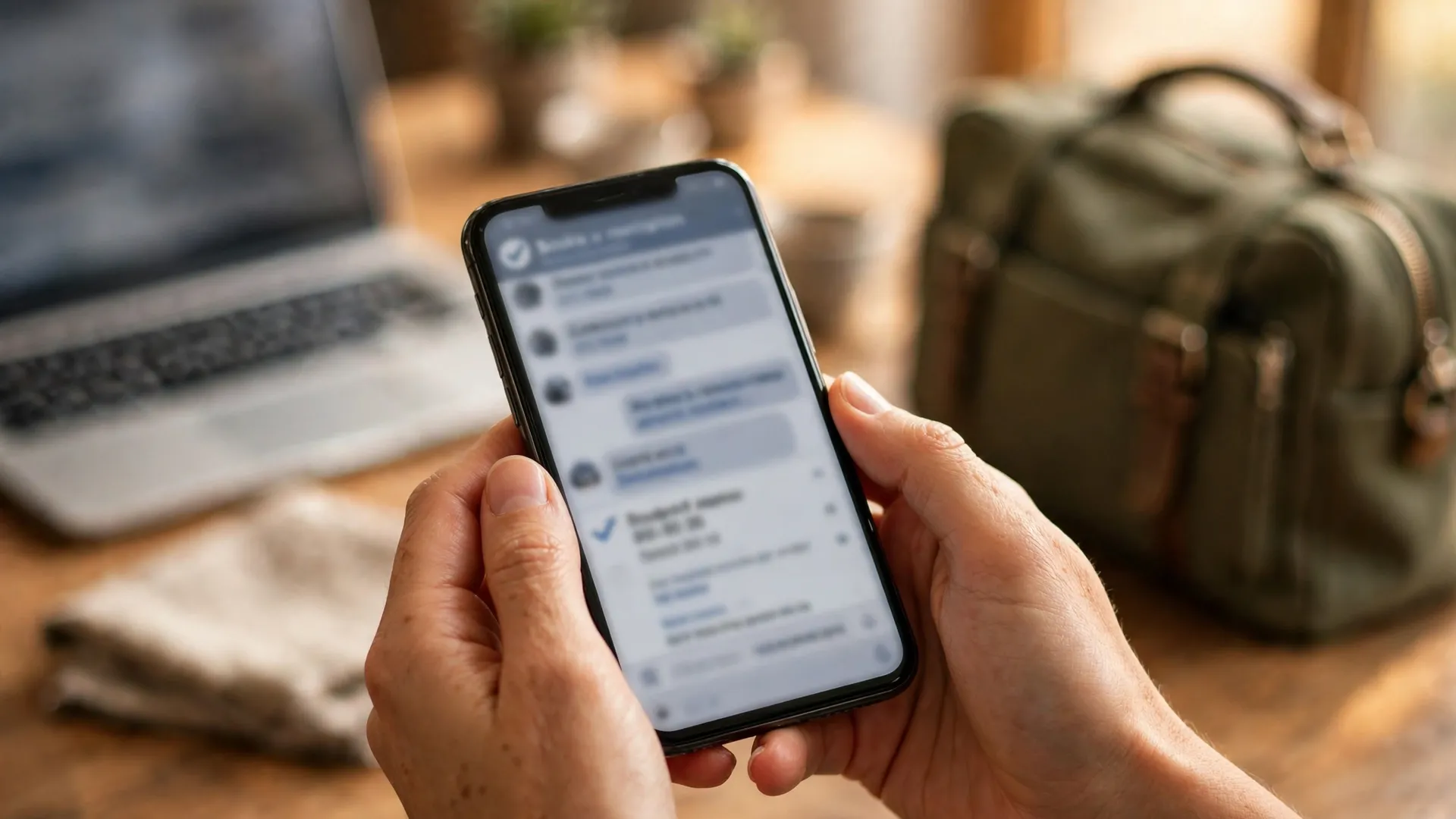
The second break is the host thread itself. Even when the platform keeps messages in its own system, hosts also email directly, and the most important messages, the door code, the last-minute change of lockbox, the "the cleaner is running late, use the side entrance" note, often arrive by email first. Guests who only check the app thread miss the email-only update, and guests who only check email miss the thread. Either way, the booking has two channels and you need both. A throwaway address guarantees you will lose one of them, and you will not know which one mattered until you are outside the house.
The third break is the money after checkout, and it deserves its own emphasis because it is the one people dismiss until it costs them. A host who believes you damaged something, or stayed with extra guests, or left the place needing deep cleaning, files a claim through the platform. The platform notifies the email on the booking. If that email is dead, you miss the window to respond, upload your own photos, or dispute the charge, and the platform decides on the host's evidence alone. The same long-tail problem shows up with rental cars, where tolls and damage claims arrive months later, which is why the advice in our post on temp email for car rental bookings is identical: quote on a throwaway, book on a keeper. A vacation rental is a car rental with a front door and a much larger deposit.
There is a fourth break that is smaller but surprisingly common: the group trip. One person books for four friends, on a throwaway, and the friends cannot help when something goes wrong because the booking, the thread, and the code all live behind one person's dead inbox. If you are booking for a group, the booking address should be one the group can actually reach, not a private joke of an inbox that expired in March.
Airbnb and Vrbo do not treat your email the same way
The two platforms rhyme but do not match, and the differences decide where a throwaway hurts most.
Airbnb ties almost everything to the account: the booking, the message thread, the review history, the identity verification, and the payment method. Creating an account requires a verified email address and a phone number, and many hosts require guests to complete government ID verification before booking. That identity layer is why Airbnb accounts feel sticky: your review history follows you, hosts read it before accepting you, and a fresh account with no history is a weaker booking than an established one. Booking on a throwaway therefore costs you twice on Airbnb, once in recovery risk and once in reputation, because the account you build history on is the account you cannot keep. An Airbnb account is a record, not a ticket, and records should not be built on disposable foundations.
Vrbo is closer to a booking system than a social system. The traveler account holds reservations, host messages, and payment records, and Vrbo sends confirmations and host communications to the account email. Vrbo also leans more heavily on direct host contact in some listings, with property managers running their own communication, and its Book with Confidence program covers payment protection for bookings made through the platform. The practical difference for a throwaway user is that a Vrbo booking can feel more transactional, and the temptation to use a burner is stronger because there is less visible reputation at stake. Resist it for the same reason: the host still needs to reach you, the manager still emails check-in details, and a dispute still notifies the booking address. The reputation cost is lower on Vrbo, but the porch-at-midnight cost is exactly the same.
One more platform difference matters for families. Airbnb stays often involve children, pets, cribs, and accessibility needs, and those details live in the pre-arrival conversation. A host who cannot confirm the crib, the stair gate, or the pet fee before arrival will either guess or cancel, and neither outcome is fixed by a disposable inbox. If the stay involves anyone vulnerable, the booking address should be the most reliable one you own, full stop. This is the same line drawn in our guide to when not to use a temp email: the higher the stakes of the conversation, the less disposable the address should be.
The split setup: browse on a throwaway, book on a keeper
Here is the setup that keeps the privacy benefit without the porch problem, and it is deliberately boring, because boring is what survives a trip.
Use the throwaway for the noisy part. Price alerts, saved-search emails, "is this place still available" inquiries to five listings you will never book, and the marketing flood that follows any travel search: all of that belongs on a disposable address. Travel sites are among the worst offenders for follow-up mail, and a throwaway is the right tool for absorbing it. Our post on temp email for travel deal alerts makes the same split for flights and hotels: let the throwaway take the spam, keep the booking clean.

Use a durable address for the booking itself, and make it a secondary real address rather than your primary personal one. That distinction matters. Your primary address is tied to banking, work, and family, and handing it to every host and property manager expands its exposure for no benefit. A secondary address you control, check daily, and keep for travel bookings gives you nearly all the privacy benefit of a throwaway with none of the expiration risk. It receives the confirmation, the host thread, the review request, and the damage claim, and it is still there in ninety days when the last of those arrives.
Then do three small things before you pay. First, confirm the booking address can receive mail from the platform: check the spam folder for the confirmation within ten minutes, and whitelist the platform's domain if it landed there. Second, save the door code, the host's phone number, and the property address somewhere that does not depend on email at all: a note on your phone, a screenshot in your photos, a printed copy in your bag. Email is the delivery channel, not the storage system. Third, if you are traveling with others, share the code and the host's number with at least one other person before departure, so a dead phone battery does not become a dead booking.
For hosts and property managers reading this, the mirror advice applies. If a guest's address bounces, do not assume the guest vanished: message through the platform thread as well as email, and put the door code in the thread, not only in an email. The guests most likely to strand themselves are the ones who tried hardest to protect their privacy, and a second channel costs you nothing.
The night-before checklist
The night before check-in, run this list. It takes five minutes and it prevents the only failure that matters.
Confirm the booking is still in your account, not just in an old email. Open the app or the site, log in, and see the reservation with the correct dates. If you cannot log in, you have found the problem with a night to fix it, which is the whole point of checking early.
Save the check-in instructions offline. Screenshot the door code, the lockbox combination, the parking instructions, and the Wi-Fi password, and keep them in your phone's photos, not only in an inbox that needs a connection to open. Rural rentals and basement apartments both have a habit of killing mobile signal at the door.
Message the host with your arrival time, from the account, so the thread shows a live guest. Hosts notice the difference between a booking that goes quiet and a guest who confirms, and that attention is worth real money when something goes wrong during the stay.
Check that your payment method on file is still valid, and that the email on the booking matches the address you are actually monitoring. If you booked on a throwaway and it is still alive, this is your last cheap chance to change it: update the account email from inside the settings while you are logged in, confirm the new address, and re-check that the reservation moved with it. Changing the email after you are locked out is a support case. Changing it before departure is a settings page.
Finally, photograph the place on arrival, especially anything already damaged, and send the photos to the host in the thread the same day. That single habit has saved more deposits than any dispute strategy I know, and it only works if you can still open the thread. A guest who cannot message the host cannot prove the stain was already there.
Where a temp address still earns its keep
None of this is an argument against disposable addresses. It is an argument against using them for the wrong job, and vacation rentals have several jobs where a throwaway is exactly right.
Shopping around is the first. Contacting six hosts about availability, rates, and house rules generates six marketing streams, and you will book at most one of them. A throwaway absorbs the other five without a trace, and you can abandon it when the search ends.
Price watching is the second. Saved searches and fare-style alerts for a destination, a date range, or a property type are pure noise until one of them becomes a booking, and noise belongs in a disposable inbox.
One-off questions are the third. Asking a host whether a place allows a dog, has a crib, or sleeps six comfortably does not require a durable relationship, and a throwaway keeps the answer without the follow-up campaign.
And testing a platform is the fourth. If you have never used Vrbo, or you are comparing it with Airbnb for the first time, a throwaway lets you browse, save, and ask without committing your real address to another account. The line is simple and it never moves: the moment you pay, the address stops being disposable. Everything before payment can be. Everything after payment cannot.
That line is also why this post does not tell you to stop using temp mail. Temp mail is a good tool, and the people who use it most carefully are the people who understand its limits best. A rental booking is simply past the limit. The booking is a contract, a conversation, and a key, all in one, and contracts, conversations, and keys all need an address that answers.
Frequently asked questions
Can I book an Airbnb with a temp email?
You usually can complete the booking, because Airbnb accepts any verified email address at signup, but the booking then depends on that address for check-in details, host messages, reviews, and damage claims. If the inbox expires before checkout or before the fourteen-day post-stay window closes, you can lose access to the booking and miss a claim you could have disputed. Book on an address you control for at least ninety days past checkout.
Does Vrbo work with a disposable email address?
Vrbo, like Airbnb, sends booking confirmations and host communications to the email on the traveler account, so a disposable address will receive the booking, but it will not survive the trip. Vrbo bookings still involve host contact, check-in instructions, and post-stay communication, and a dead inbox cuts all three. Use a throwaway for browsing and price alerts, and a durable secondary address for the paid booking.
What happens if my temp inbox expires during my stay?
The booking itself is not cancelled, but you lose the email channel: new host messages, code changes, and checkout instructions stop reaching you. If you can still log in to the platform account, use the in-app message thread and update the account email immediately. If you cannot log in, contact the host through the platform using any still-logged-in device, and keep the door code saved offline from now on.
Can I change the email on an Airbnb or Vrbo booking after I book?
You can change the email on the account, and future messages go to the new address, but you should do it while you are still logged in and still control the old address, because verification messages go to both sides. Do it before departure, confirm the reservation is visible under the new address, and re-save the check-in instructions. After a lockout, changing the email becomes a support case, not a settings change.
Should I use a temp email when messaging hosts before booking?
Yes, for early inquiries to listings you may never book, a temp address is a sensible way to avoid five marketing streams for one stay. Once you choose a place and pay, switch to a durable address you monitor, so the host, the platform, and any post-stay claim can all reach you. The rule is payment: before payment, disposable is fine; after payment, it is not.
Is a secondary real email address private enough for rentals?
For most travelers, yes. A secondary address you control, used only for travel, keeps rental mail out of your primary inbox, gives hosts and platforms a working address, and survives the full booking timeline including the post-stay window. It is less anonymous than a throwaway, but a rental booking is not an anonymous transaction: the host knows your name, your payment method, and where you are sleeping. Privacy here means controlling the channel, not disappearing from it.
Need a disposable temporary email?
Protect your real inbox from spam and promotional clutter instantly and free.
Received a suspicious email, text, or charge alert?
Verify whether the sender domain is disposable, spoofed, or unverified before clicking links.