



The Phone Call That Could Cost You Everything
tax abatement scam calls are fraudulent phone calls where criminals pretend to be IRS agents or fake tax agencies, claiming you have unpaid taxes, missed filings, or outstanding issues — then pressure you to pay or hand over personal information.
Here is what you need to know right now:
- These calls are scams. The IRS does not call you out of the blue about tax debts.
- The IRS always contacts you by mail first — never by unsolicited phone call.
- Hang up immediately. Do not press any buttons, answer questions, or call back.
- Never share your Social Security number, bank details, or payment info with an unexpected caller.
- Report the call to the FTC at ReportFraud.ftc.gov and to TIGTA at 1-800-366-4484.
Tax season brings a predictable surge in these calls. Scammers know that millions of people feel anxious about their taxes — and they exploit that anxiety expertly.
The calls sound surprisingly professional. A calm, official-sounding voice leaves a voicemail. They mention "missed filings" or "outstanding issues." They offer a special "no-wait verification line." They may even use your name.
It feels real. That's the point.
The FTC has reported a large wave of these scams in recent years, and IRS impersonators have stolen close to five million dollars from victims over the last five years alone. Meanwhile, 73% of adults believe they can spot a scam — yet 57% were scammed anyway. The gap between confidence and reality is exactly where these criminals operate.
If you are privacy-conscious and protective of your personal information, this guide is for you.
What is a Legitimate Tax Abatement?
Before we dive into the dark world of tax abatement scam calls, we need to understand what the scammers are actually mimicking. A tax abatement is a real, legal process, but it doesn't work the way the voice on your phone claims it does.
In the legitimate world, a tax abatement is a reduction or an exemption from taxes granted by a government for a specific period. This is most common in property taxes, where local governments offer abatements to encourage property development or help residents after a natural disaster.
There is also something called "penalty abatement" from the IRS. If you have a valid reason for not filing or paying your taxes on time—such as a death in the family or a natural disaster—the IRS might waive the penalties. This is often referred to as "First-Time Abate" (FTA) or administrative relief.
Here is the kicker: The IRS or your local tax authority will never call you out of the blue to offer you an abatement. If you qualify for one, you usually have to apply for it, or you will receive a formal Written notice via the U.S. Postal Service.
If you are ever unsure about your status, you should IRS.gov Check it out through IRS.gov. This is the only safe way to verify your tax account. You can also reach out to the Taxpayer Advocate Service, an independent organization within the IRS that helps taxpayers resolve problems, but again—they aren't going to cold-call you while you're eating dinner.
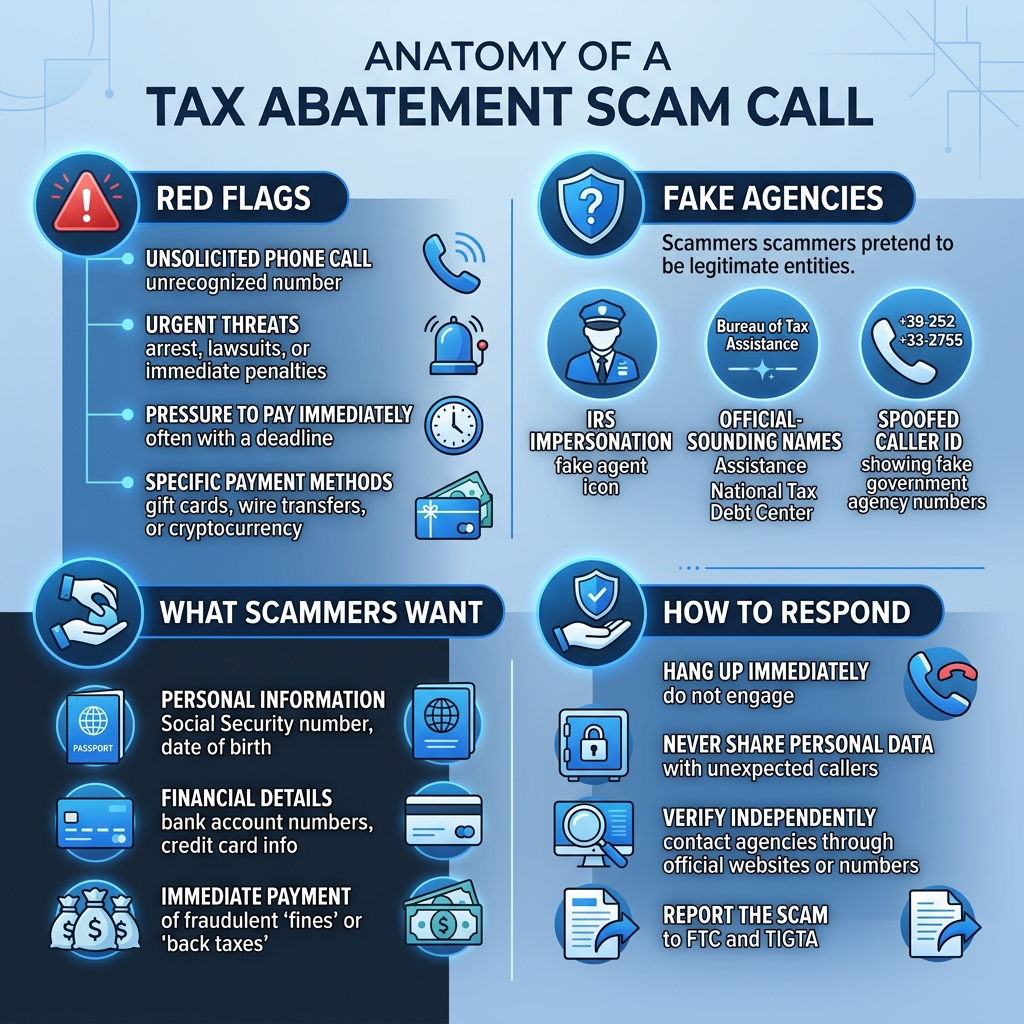
Anatomy of Tax Abatement Scam Calls
Scammers are essentially the "method actors" of the criminal world. They don't just call and ask for money; they build a character and a setting. When you receive tax abatement scam calls, you are often dealing with a sophisticated operation that mimics a professional call center.

The most common persona used in these calls is "Taylor Carson from the tax review office." Other names like "Jessica" from "US Tax Consultants" are also frequently reported. These scammers use specific phone numbers that have become notorious in the fraud-fighting community, such as 866-766-3904 or 888-471-0706.
They often use phrases like "no-wait proprietary verification lines" to make themselves sound like a high-end government service. They want you to believe that if you just call them back, you can bypass the "nightmare" of the real IRS.
Legitimate IRS Contact vs. Scam Calls
| Feature | Legitimate IRS / Tax Authority | Tax Abatement Scam Calls |
|---|---|---|
| First Contact | Always by U.S. Mail | Unsolicited Phone Call / Text |
| Payment Method | Official Treasury Check or IRS.gov | Gift Cards, Crypto, Wire Transfer |
| Tone | Professional, allows for appeals | Urgent, threatening, aggressive |
| Verification | Provides specific tax years/amounts | Vague "missed filings" or "issues" |
| Action | Follow Hang up on unexpected calls saying you owe back taxes | Demands immediate action on the call |
Common Scripts Used in Tax Abatement Scam Calls
Scammers love a good script. It helps them stay in character and ensures they hit all the psychological "pain points" that make people panic. Most tax abatement scam calls follow a variation of this:
"Good morning. This is Taylor Carson from the tax review office. I'm calling to follow up on your account, which is still marked for possible missed filings or outstanding issues. We have a proprietary no-wait verification line set up for you to confirm your status and see if you qualify for the new abatement options. Please call us back at 866-766-3904. This may be our only attempt to reach you."
Notice the "possible debt" framing? They don't say you definitely owe money—they say there are "possible issues." This is a clever trick. It lowers your defenses because it doesn't feel like a direct accusation, but it creates just enough anxiety to make you want to "clear things up."
They also frequently mention fake programs like the "IRS liability reduction program" or a "red flag check" on your credit. These sound official, but they do not exist. We've also seen a rise in IRS warns of "Tax Transcript" email scam tactics, where they try to get you to open a malicious attachment by claiming it's your "tax transcript."
Why You Are Targeted by Tax Abatement Scam Calls
You might be wondering, "How did they get my number?" or "Why do they know my name?" It feels personal, but it's usually just business—dark business.
Scammers get your information from several sources:
- Data Brokers: These companies collect and sell your personal information (PII) to anyone with a credit card, including scammers.
- Public Records: If you've ever had a tax lien (especially pre-2018), that information is public. Scammers mine these old records to find people who might still be worried about tax debt.
- Lead Mining: If you've ever searched for "tax relief" or "IRS help" online, you may have unknowingly triggered a tracking pixel that sold your interest to a "lead generator."
- Random Dialing: Sometimes, it’s just a numbers game. Automated systems dial thousands of numbers in a specific area code until someone picks up.
This is why we always recommend taking proactive steps to Stop US Tax Consultants Spam Calls and other robocalls by limiting how much of your real data is available online.
Red Flags: How to Spot a Tax Scam
Spotting tax abatement scam calls is easier when you know the "tells." Scammers are limited by their goals—they need your money or your data, and they need it fast. This leads them to make mistakes that the real IRS would never make.
The "Big Three" Payment Red Flags
If a caller asks for payment via any of the following, it is a scam 100% of the time:
- Gift Cards: (iTunes, Google Play, Target, etc.) The IRS does not shop for apps or groceries.
- Cryptocurrency: Bitcoin or Ethereum are not accepted for tax payments.
- Wire Transfers: Sending money via Western Union or MoneyGram is like sending cash in an envelope—once it's gone, it's gone.
The Threat Factor
The real IRS will not threaten to bring in local police, immigration officers, or other law enforcement to have you arrested for not paying. They also won't threaten to revoke your driver's license or business license over a phone call. These are "fear levers" designed to stop you from thinking clearly.
Spoofed Caller IDs
Don't trust the name on your screen. Scammers use "spoofing" technology to make it look like they are calling from Washington D.C., or even your local IRS office. If you're suspicious, hang up. You can always report the number to the Treasury Inspector General Scam Reporting tool.
We have seen these tactics evolve every year. For a deeper dive into the most current threats, check out our guide on the More info about IRS Dirty Dozen threats.
What to Do If You Receive a Suspicious Call
If your phone rings and you suspect it’s one of those tax abatement scam calls, your best weapon is silence.
- Hang Up Immediately: Do not engage. Do not try to "prank" them. Do not press "2" to be removed from their list (this often just confirms your number is active).
- Zero Engagement: If you accidentally answer, don't say "Yes" to any questions. Scammers sometimes record your voice saying "Yes" to authorize fraudulent charges later.
- Verify Independently: If you are genuinely worried you owe taxes, go to IRS.gov and log into your official account. Never use a link sent in a text or a phone number given in a voicemail.
- Report the Call: Help protect others by Report to the Federal Trade Commission. The more data they have, the better they can track these criminal networks.
- Block the Number: Most smartphones allow you to block numbers easily. While scammers change numbers often, blocking the current one provides immediate peace of mind.
Criminals are getting craftier. There is even a IRS, Security Summit Partners warn of new twist on phone scam where they actually tell you to go to IRS.gov to "verify" them, using the site's own legitimacy to build a false sense of security before they pivot back to the scam. Stay vigilant!
Frequently Asked Questions about Tax Scams
Does the IRS ever call without mailing a letter first?
In the vast majority of cases, no. The IRS initiates contact through the U.S. Postal Service. While there are very rare circumstances where the IRS might call (such as a recurring appointment or a special audit), they will have already sent you several letters before that happens. If the first time you are hearing about a tax problem is a phone call, it's a scam.
Be especially wary of IRS and Security Summit Partners Warn of Fake Tax Bills that look like official CP2000 notices but are actually sophisticated forgeries.
Can I get my money back if I paid a scammer?
It depends on how you paid, but it is often difficult:
- Credit Card: You have the best chance here. Contact your bank immediately to dispute the charge as fraud.
- Bank Transfer/Debit: Contact your bank right away. They may be able to stop the transfer if it hasn't cleared, but it’s a race against time.
- Wire/Gift Cards/Crypto: Unfortunately, these payments are almost impossible to recover. However, you should still report the incident to the Internet Crime Complaint Center (IC3).
How do I safely check if I actually owe back taxes?
The only 100% safe way is to go directly to IRS.gov/payments. There, you can view your tax balance, payment history, and even get digital copies of your tax transcripts. If the website says you owe $0, then that "Taylor Carson" person calling you is definitely a liar.
Conclusion
The rise of tax abatement scam calls is a symptom of a larger problem: our personal data is too easy to find. When scammers know your name, your phone number, and your history, they can craft "survival" scenarios that feel all too real.
At Tempo Mail USA, we believe that privacy is your best defense. By using temporary email aliases and secure identity proxying, you can create a "firewall" between your real identity and the services you use online. This prevents your PII (Personally Identifiable Information) from ending up in the hands of the data brokers who feed the scammer ecosystem.
Don't wait until you're on the phone with a scammer to worry about your privacy. Take control of your digital footprint today.