
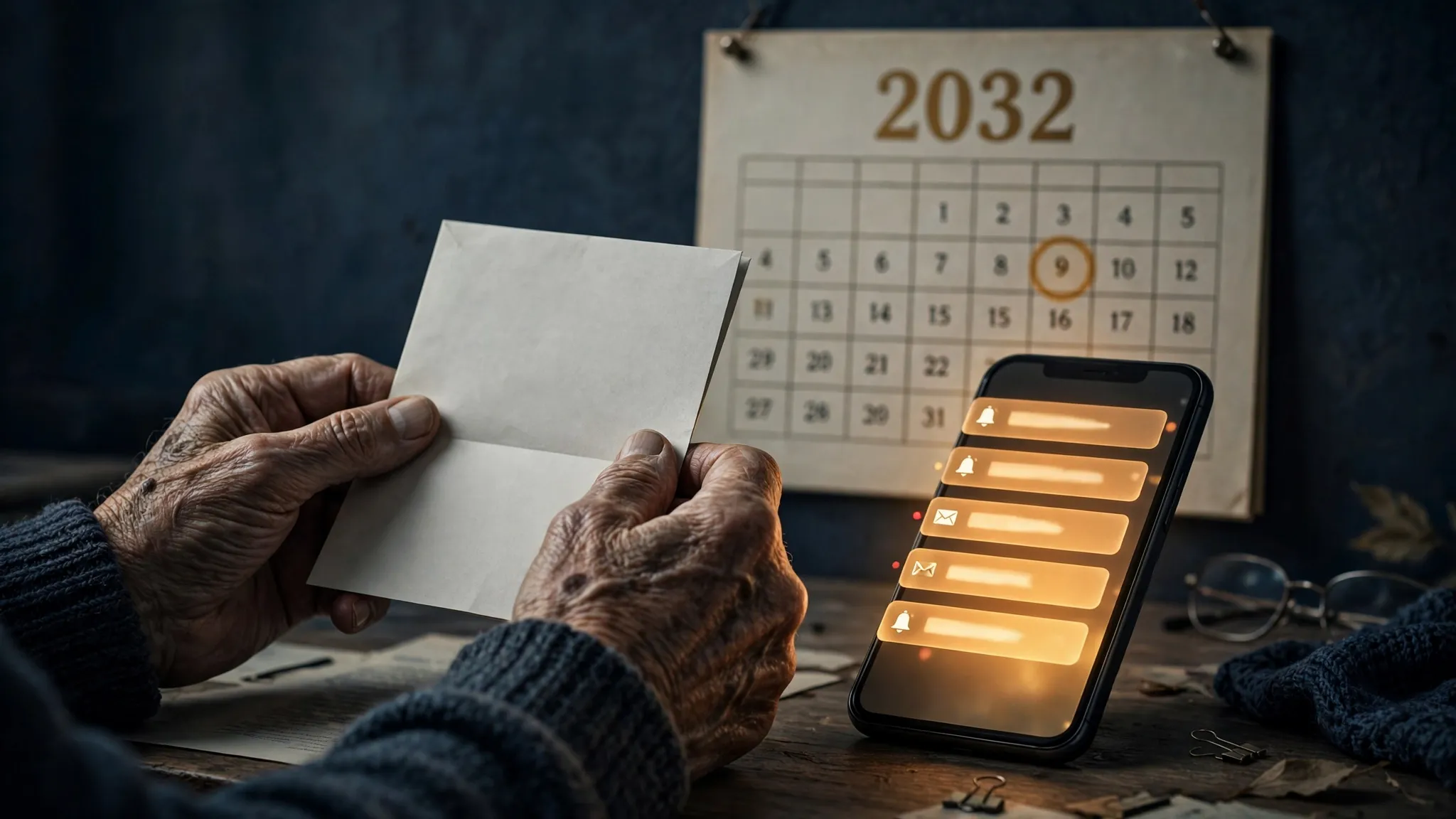
Social Security Benefit Cuts 2032: What the 22% Cut Really Means — and Why Your Inbox Is the Next Target
On Sunday afternoon, one search phrase jumped 1,000% in a single day: "social security benefit cuts 2032." Twenty thousand-plus Americans typed it into Google, most of them within the last seven hours. That is not a slow-burn policy story. That is a lot of people, all at once, asking the same frightened question: is my check about to shrink?
The short answer is that the number behind the panic is real, the cut is not happening tomorrow, and the most expensive thing you can do this week is click the wrong email about it. Because every time a benefits headline spikes, a second industry wakes up — the one that sells fear back to you, one inbox at a time.
The number that started it: late 2032, 78 cents on the dollar
The 2026 Social Security Trustees Report, published this year, moved the depletion date for the Old-Age and Survivors Insurance (OASI) trust fund to late 2032 — the fourth quarter of the year. The previous report had said early 2033. One year closer, and the internet noticed.
Here is what depletion actually means, because the headlines keep skipping the second half of the sentence. When the reserves run out, Social Security does not stop paying. Payroll taxes keep flowing in, and those taxes would cover about 78% of scheduled benefits. The gap is the other 22% — an automatic, across-the-board reduction of roughly 22% unless Congress changes the law first.
That is a projection, not a passed law. The trustees run the same math every year, and the date has moved before. But the direction has been one way for a while, and 2032 is now close enough that people retiring in the next few years are doing the math on their own checks.
What 22% looks like on an actual check
Percentages are abstract. Dollars are not. The Committee for a Responsible Federal Budget worked the cut through to household level: the average monthly benefit, about $2,084, would drop to roughly $1,626 after a 22% reduction. That is about $458 less every month, or $5,496 over a year.
Moneywise's read of the same numbers lands in the same place: more than 60 million retirees facing an average cut near $500 a month, with the hit varying by state — from about $459 in the lowest states to about $556 in Connecticut, New Jersey, and New Hampshire, where average benefits run higher.
The Congressional Budget Office is, if anything, gloomier. Its estimate has the fund running dry as soon as mid-2032, with cuts reaching 26% once it is insolvent. And the combined retirement and disability funds (OASDI) are projected to reach depletion in the third quarter of 2034, at which point incoming revenue would cover about 83% of scheduled benefits — a 17% cut.
None of this is a reason to panic today. Your January check is not changing. But it is a reason to stop treating Social Security as a fixed number in a retirement plan, and to start treating it as a number with a range.
Why the date moved a year closer
Three things pushed the date forward, according to the trustees. First, fertility assumptions fell — fewer future workers paying in. Second, immigration projections were reduced, which shrinks the same contributor pool. Third, the One Big Beautiful Bill Act, signed on July 4, 2025, made permanent lower income tax rates and a larger standard deduction from the 2017 tax law — which means less income tax collected on Social Security benefits, one of the program's revenue streams.
The 75-year financing gap is now $31 trillion, the steepest shortfall recorded since 1977, per the Committee for a Responsible Federal Budget. The combined cash deficit is projected to reach $270 billion in 2026, with roughly $3.8 trillion in cumulative shortfall over the coming decade. The 75-year actuarial deficit has grown to 4.42% of taxable payroll, up 16% in a single year.
Congress has three broad options, and none of them is painless: raise the payroll tax (workers currently pay 6.2% on earnings up to $184,500 in 2026), cut benefits, or raise the retirement age. Delay makes each option steeper — waiting until the fund actually runs dry would require a 40% payroll tax increase or a 29% benefit cut, the CRFB analysis found. One advocacy-group estimate puts the payroll tax needed to maintain scheduled benefits at 17.3% combined, up from today's 12.4%, by 2034.
My read: the politics will get louder every year from here, and the 2032 date will keep moving in small increments. The people who get hurt worst by that noise are not the ones reading trustees' reports. They are the ones opening an email that says "your benefits are being cut — verify now."
The part nobody warns you about: your inbox
Benefit news is scam fuel, and the numbers behind that are worse than the trust fund math. In 2025, the Federal Trade Commission received more than 330,000 government impersonation complaints — a 25% jump from the year before — with the Social Security Administration consistently among the top targets. The FTC told Congress in October that fraud losses reported by adults 60 and over rose about fivefold between 2020 and 2025, from $600 million to $3 billion. For victims over 60 who lost more than $100,000 to government impersonation scams, combined losses grew eightfold between 2020 and 2024, from $55 million to $445 million. The FBI counted more than $1.6 billion lost to people posing as police and government officials in 19 months. The FTC put total 2024 losses to government impostors at $789 million.
And the timing is not a coincidence. On October 14, Social Security announced a 3.6% cost-of-living adjustment for 2027, covering about 76 million people — about 7.3 million SSI recipients from December 31, and nearly 72 million beneficiaries with their January payments. The COLA notices themselves go online in late November, in the Message Center of each person's my Social Security account. Scammers know that window well. On October 21, the agency's inspector general warned that impostors are reaching out by phone, text, email, social media, and mail, claiming they can raise payments or "activate" the COLA. The pitch ends in a fee, a request to change direct deposit, or a link to a site that looks official. Some send fake documents. Some use the names of real employees. None of it is needed. A COLA does not need activating.
This is the pattern that repeats every time a money headline spikes. Bitcoin crashed below $76,000 this same morning, and the "withdraw now" emails were in inboxes within hours. The stock market's worst day since April 2025 produced the same flood of verification emails three days ago. Benefit-cut news is a slower burn than a market crash, but it reaches a much wider audience — and the audience it reaches is, on average, older, more trusting of official-looking mail, and more likely to act on a deadline.
Four things Social Security will never do
Memorize these four. They resolve almost every doubtful message without any research at all, and they are the reason the SSA's own guidance reads like a scam checklist in reverse.
It will never threaten you. The SSA does not threaten arrest, deportation, legal action, or the immediate loss of your benefits to pressure an instant response. Threats are a scam signature, not a government procedure. Your Social Security number cannot be suspended. There is no such procedure, no such form, and no such department.
It will never demand unusual payment. The SSA never asks for gift cards, wire transfers, cryptocurrency, Bitcoin ATMs, payment apps, or cash sent by mail or courier. If you genuinely owe an overpayment, the agency mails a written notice and offers ordinary options, including appeal and waiver.
It will never ask you to move money to protect it. There is no "safe government account." No real agency needs you to keep a call secret, stay on the line, or pay to make an accusation go away.
It will never ask for your full Social Security number, bank details, or login credentials by phone, text, or email. Real SSA communication happens through mailed notices or through your my Social Security account. The agency may send emails in limited cases, such as account notifications — but those do not ask for personal information, and they direct you to log in through ssa.gov rather than asking you to click a link or download an attachment. Nearly every legitimate SSA email comes from an address ending in .gov. A display name that says "Social Security Administration" with a sender address ending in .com is a forgery wearing a costume.
The three emails to expect this week
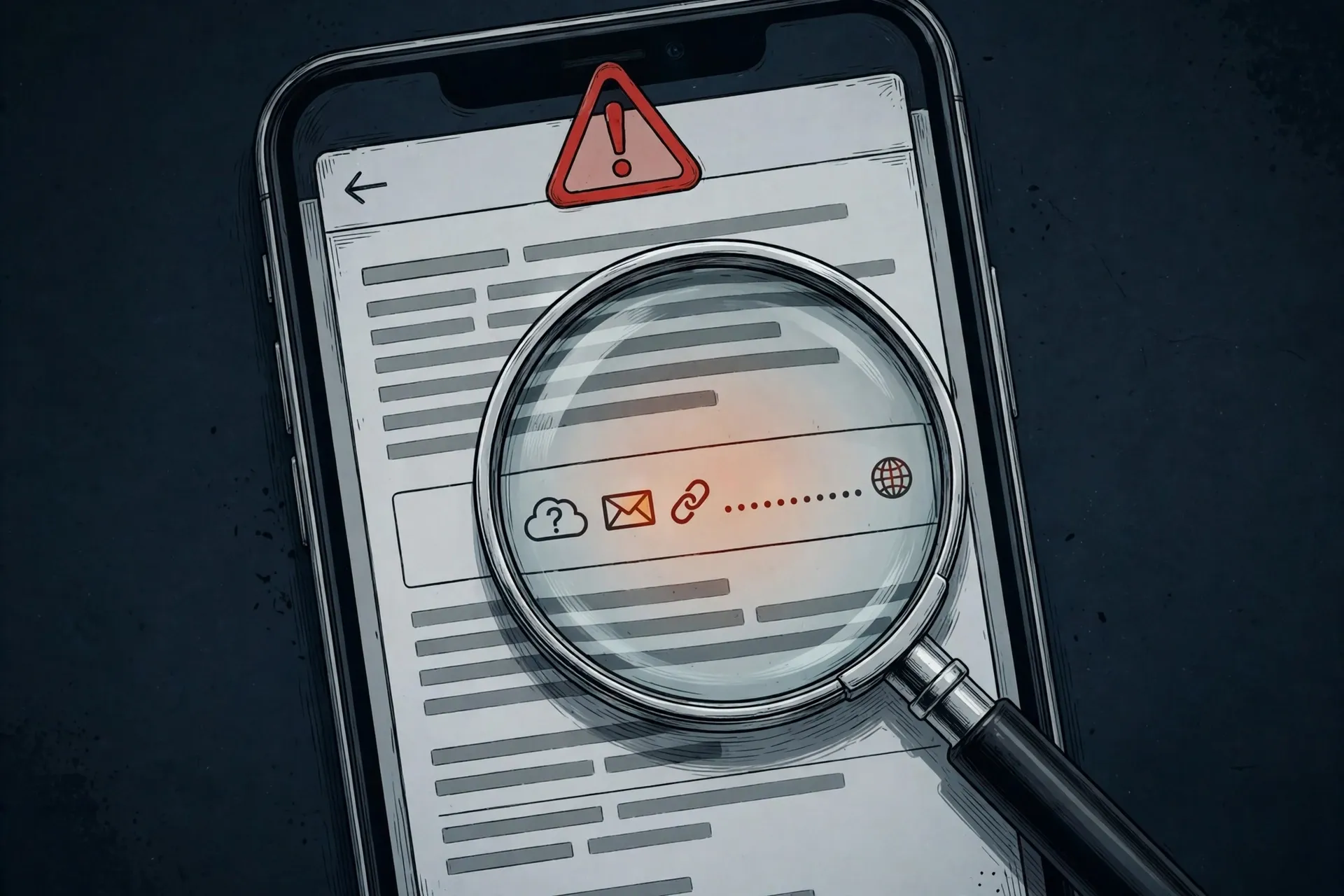
If the trend holds — and it has held for every benefits headline this year — these are the three messages already being drafted, or already in someone's inbox.
1. "Activate your 3.6% COLA increase." A text or email says you qualify for the 2027 cost-of-living adjustment but must confirm your identity through a link to receive it. The real COLA applies automatically. There is nothing to activate, no link to click, and no fee. The inspector general specifically warned about this script on October 21.
2. "Download your 2026 Social Security statement." An email carrying a copied SSA logo and a button that leads to a near-perfect replica of the my Social Security login page. The giveaway is the sender domain — anything that is not .gov — and the fact that the real SSA does not send statements by email link. If you want your statement, type ssa.gov yourself and log in there.
3. "Your Social Security number has been suspended." The classic, still running. A robocall or email claims suspicious activity — sometimes drug trafficking or money laundering in Texas — and demands immediate payment or your SSN to reinstate the number. The SSA will not threaten you, suspend your number, or demand immediate payment. Hang up. The number to call, if you are worried, is 1-800-772-1213, which you dial yourself.
According to one scam-tracking review, 90% of reported Social Security scams involved the scammer mentioning a problem with the victim's my Social Security account or direct deposit information. That is the pressure point: the account, not the benefit. Guard the login and you guard most of the risk.
Where a disposable email actually helps — and where it doesn't
Here is the honest version, because the dishonest version would be to tell you a temp mail fixes this. It does not fix the big risk. It fixes a smaller, real one.
The big risk is your my Social Security account itself, and no disposable address belongs anywhere near it. Your mySSA login should sit on an email address you control permanently, protected with two-factor authentication, and never reused anywhere sketchy. If a scammer gets into that account, they can change direct deposit details. That is the 90% attack above, and a throwaway inbox makes it worse, not better.
Where a disposable email genuinely helps is everything around the edges. Benefit-cut news sends people to benefit calculators, retirement newsletters, "check your estimated cut" tools, and COLA explainers — dozens of sites that want your email before they show you a number. Most of them are legitimate-ish. All of them will email you forever. Give those signups a temporary address: the calculator result arrives, the follow-up marketing does not, and your real inbox stays clean for the mail that matters — like the actual SSA notice, which arrives by post anyway.
The same logic applies to the phishing wave Microsoft counted — 7.3 billion phishing emails in three months. Almost none of them try to install anything anymore. They try to get you to type your credentials into a page that looks right. The fewer places your real email address lives, the fewer convincing forgeries can find you.
And if you do get a suspicious message, do not reply to it, do not click anything in it, and do not call a number printed in it. Report it to the SSA Office of the Inspector General at oig.ssa.gov and to the FTC at reportfraud.ftc.gov. If money was lost, add ic3.gov. Keep the case numbers — banks ask for them.
A ten-minute check you can do today
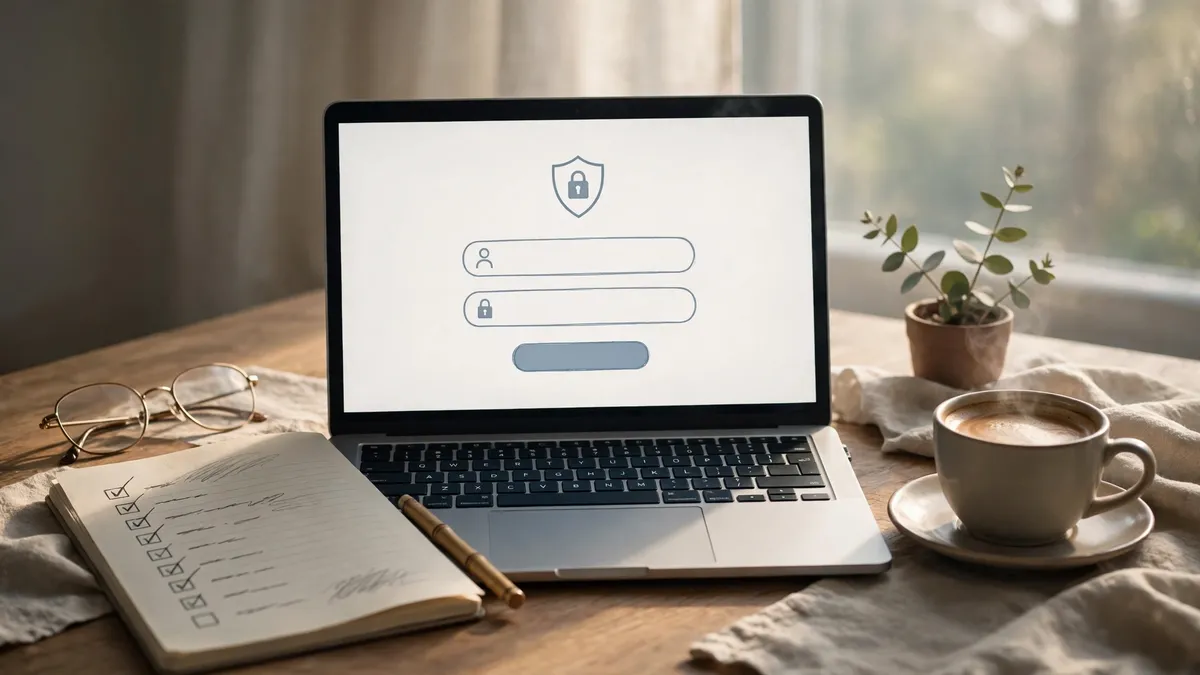
This is the whole post in actionable form. Ten minutes, no purchases, no downloads.
First, log in to your my Social Security account by typing ssa.gov yourself — never through a link — and confirm your earnings record and direct deposit details look right. If you do not have an account, create one the same way. Second, turn on two-factor authentication on that account and on the email address tied to it. Third, look at your inbox for any message claiming to be from the SSA and check the sender domain: if it does not end in .gov, delete it. Fourth, tell one person in your family — a parent, an older relative, anyone who gets benefit mail — the four things the SSA will never do. The FTC's own data says the losses are concentrated among people over 60, and the most effective warning is usually the one that comes from family, not from an agency.
The 2032 cut is a real problem with a slow fuse. The scam wave it triggers is a real problem with a fast one. The first needs Congress. The second needs ten minutes and a healthy suspicion of any email that wants you to hurry.
FAQ
Is Social Security really being cut by 22% in 2032?
Not yet, and not automatically on a date you can circle. The 2026 Trustees Report projects the OASI trust fund will exhaust its reserves in late 2032. After that, payroll taxes would cover about 78% of scheduled benefits, which implies a 22% reduction — unless Congress acts first. It is a projection of what happens if nothing changes, not a law that has passed.
Will my current Social Security check change?
No. Nothing in the trustees' report changes benefits being paid today. The 3.6% COLA for 2027 was announced on October 14 and applies automatically — about 76 million people are covered, with SSI recipients seeing it December 31 and most beneficiaries in their January payments.
Does the SSA ever email or text me about my benefits?
Rarely, and never to ask for personal information. The SSA communicates mainly by mail and through your my Social Security account. Legitimate SSA emails come from .gov addresses and direct you to log in at ssa.gov yourself. A message asking you to click a link, download a statement, or "activate" a COLA is a scam.
Can my Social Security number be suspended?
No. A Social Security number cannot be suspended. There is no such procedure. Any call, text, or email claiming your number is suspended — often with threats of arrest — is a scam. Hang up and call the SSA yourself at 1-800-772-1213.
Should I use a temp mail for my Social Security account?
No. Your my Social Security account should use a permanent email address you control, with two-factor authentication. Use a disposable address for the surrounding signups instead — benefit calculators, retirement newsletters, and "check your cut" tools that want your email before showing results. That keeps your real inbox clean for the mail that actually matters.
Where do I report a Social Security scam?
Report it to the SSA Office of the Inspector General at oig.ssa.gov and to the FTC at reportfraud.ftc.gov. If money was lost, also report to ic3.gov. Keep the case numbers.
Need a disposable temporary email?
Protect your real inbox from spam and promotional clutter instantly and free.
Received a suspicious email, text, or charge alert?
Verify whether the sender domain is disposable, spoofed, or unverified before clicking links.