



IRS Scam Letters 2026 Are on the Rise — Here's What You Need to Know Fast
IRS scam letters 2026 are fraudulent mailings designed to look like official IRS notices — and they're more convincing, more common, and more dangerous than ever before.
Quick answer: The most common signs a letter is a fake IRS notice include:
- A QR code directing you to an external website
- Demands for immediate payment via gift cards, wire transfer, or cryptocurrency
- Threats of arrest or deportation
- Missing or unverifiable notice numbers (like CP14 or CP2000)
- Requests for your full Social Security Number
- Payment instructions made out to anything other than "United States Treasury"
- Aggressive tone with no mention of your appeal rights
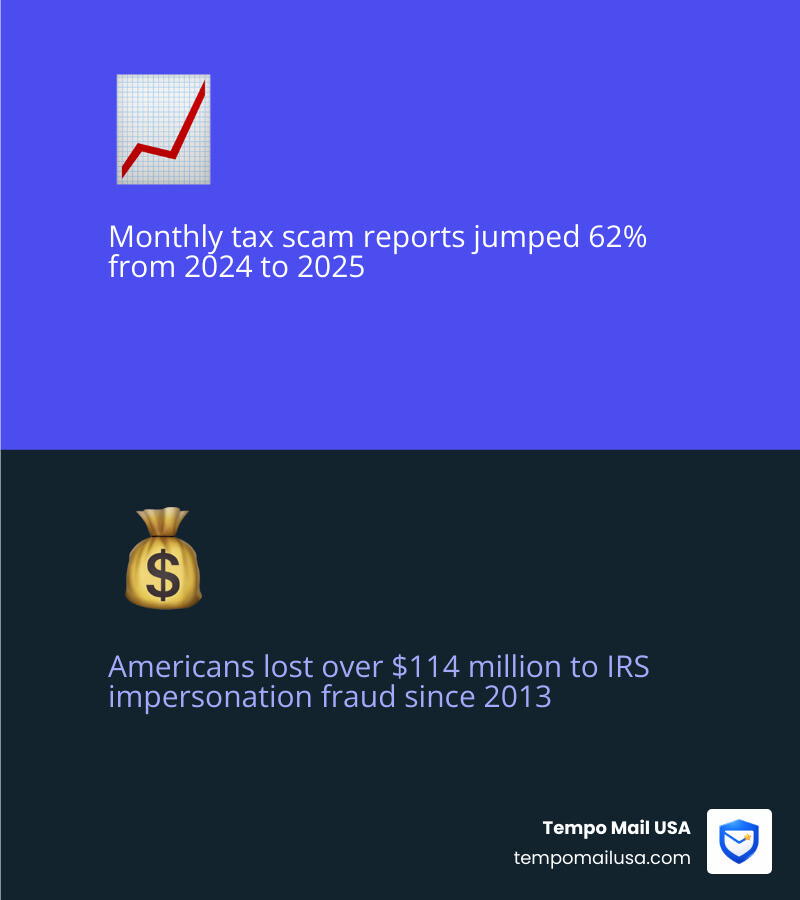
The numbers tell a stark story. Monthly tax scam reports jumped 62% from 2024 to 2025. Since 2013, Americans have lost over $114 million to IRS impersonation fraud. In just the first few months of 2025, losses topped $5.7 million — with the average victim losing more than $32,000.
Scammers aren't just sending emails anymore. They're mailing physical letters to your mailbox — sometimes with near-perfect IRS branding. One family in Allen Park nearly fell for one. Their daughter spotted it just in time, thanks to a suspicious QR code printed right on the letter.
And in 2026, the threat has evolved further. AI-generated voice calls, deepfake technology, social media impersonators, and increasingly realistic fake notices have made these scams harder than ever to catch at a glance.
This guide walks you through everything you need to protect yourself.
Anatomy of IRS Scam Letters 2026
To the untrained eye, a fraudulent mailer in 2026 can look identical to a legitimate notice from the Department of the Treasury. Scammers use high-quality printers, official-looking seals, and complex tax jargon to create a sense of legitimacy. However, once you know what to look for, the cracks begin to show.
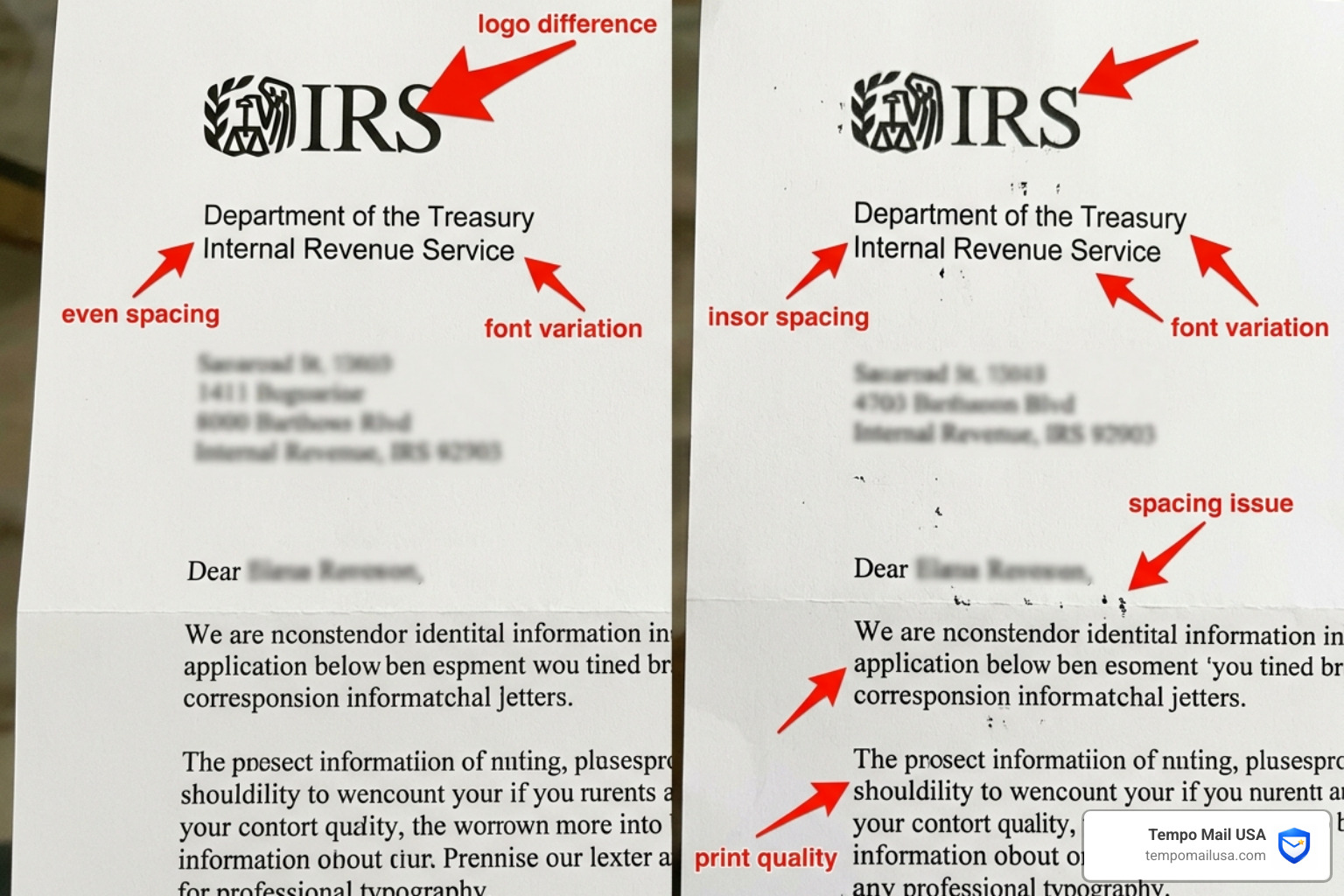
One of the biggest red flags in irs scam letters 2026 is the use of aggressive, threatening language. Real IRS notices are generally matter-of-fact. They state a problem, provide a deadline (usually 30 days), and explain your rights to appeal. Scam letters, conversely, often jump straight to "Final Notice" or "Immediate Action Required," threatening wage garnishment, driver’s license revocation, or even arrest if you don't pay within 24 hours.
Another giveaway is the missing or incorrect notice number. Every real IRS letter has a specific code, such as a CP or LTR number, located in the top or bottom right corner. If you can't find a number like CP14 or CP2000, or if the number provided doesn't return results on the official IRS website, it's a fake. You can learn more about these warning signs in this guide on How to Spot a Fake IRS Letter: Warning Signs and What to Do.
Furthermore, be wary of any letter that requests your full Social Security Number. The real IRS already has your information and will only ever include the last four digits of your SSN to protect your privacy. If a letter asks for your full number or bank details to "verify your identity" for a Tax Return Falsification Loan or a refund, it is a scam.
Identifying Fraudulent QR Codes and Links
The "QR code trap" is the hallmark of irs scam letters 2026. While the IRS has begun using QR codes on some limited, legitimate notices to help taxpayers reach IRS.gov faster, scammers have hijacked this technology.
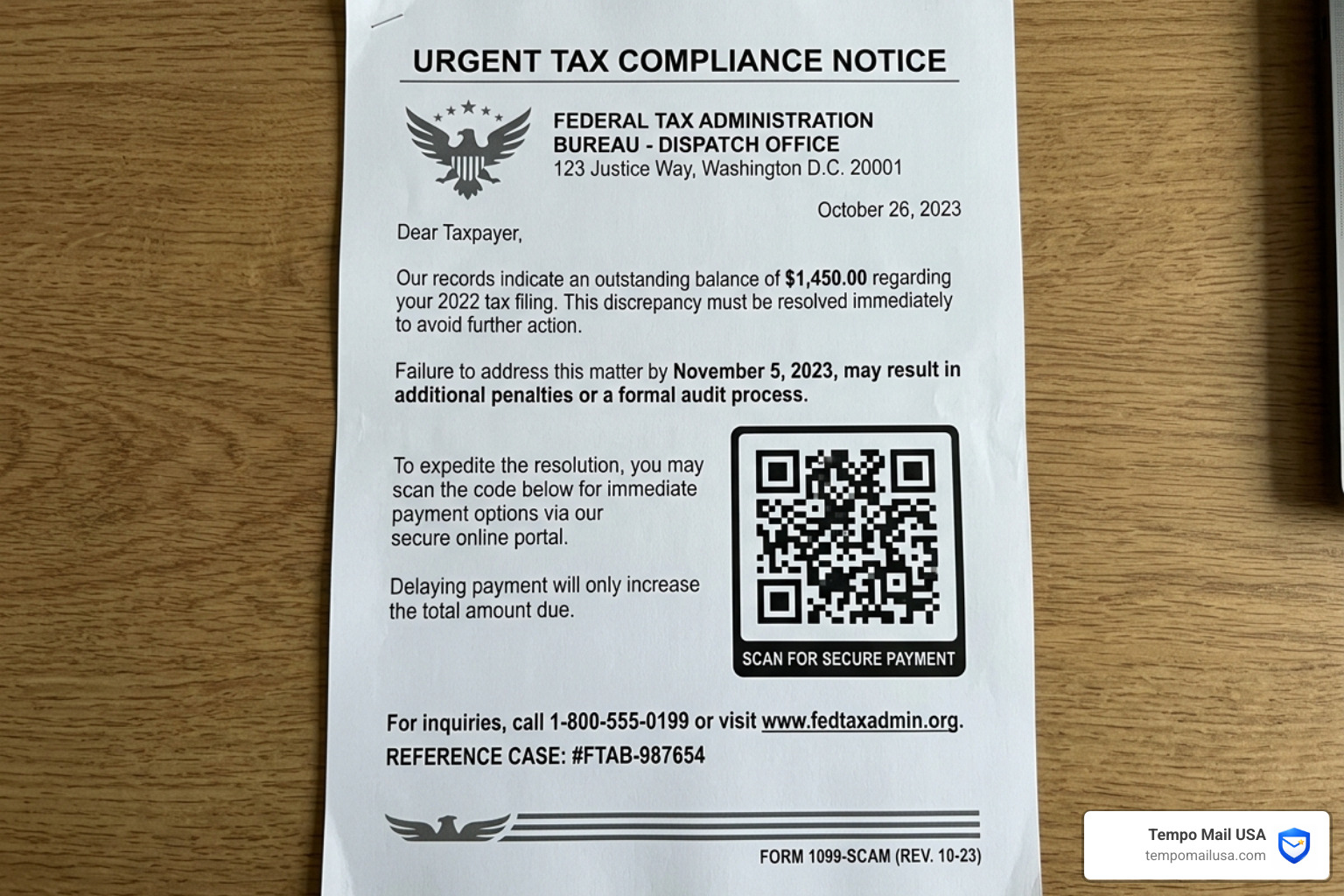
When you scan a fraudulent QR code, it often takes you to a sophisticated phishing site that mimics the IRS login page. These sites are designed to steal your PII (Personally Identifiable Information) or plant malware on your device. We saw a high-profile case in Allen Park where seniors were targeted with physical mailers containing these malicious codes. The daughter of one recipient noticed the URL the QR code pointed to was a string of random characters rather than a ".gov" address.
Always remember: if a QR code in a letter asks you to enter your credit card number or bank login, it is 100% fraudulent.
How to Verify a Real IRS Notice vs. a Fraudulent One
Verification is your best defense. Before you pick up the phone or log into a website, use the following comparison to vet the letter sitting on your kitchen table.
| Feature | Real IRS Notice | IRS Scam Letter 2026 |
|---|---|---|
| Notice Number | Visible (e.g., CP2000, CP14, LTR 6001) | Often missing or fabricated |
| Language | Neutral, professional, outlines rights | Aggressive, urgent, threatening |
| Payment Method | To "United States Treasury" only | Gift cards, Crypto, Wire, "I.R.S." |
| Contact Info | Official 800-numbers or IRS.gov | Random cell numbers or "Direct Lines" |
| SSN Display | Last 4 digits only | Requests or shows full SSN |
| QR Code | Links only to official .gov sites | Links to third-party or shortened URLs |
If you receive a notice about underreported income (CP2000) or a balance due (CP14), don't take the letter's word for it. You should cross-reference the notice with the official list of codes provided in this resource: Is Your IRS Notice Real or a Scam? How to Tell the Difference.
Using IRS.gov to Validate IRS Scam Letters 2026
The safest way to handle any IRS communication is to go directly to the source. Do not use the phone number or the link provided in the suspicious letter. Instead, open a new browser tab and type in IRS.gov.
We recommend logging into your IRS Online Account. This secure portal uses ID.me for identity verification, which involves a face scan and a government ID check. Once logged in, you can view your "Notices and Letters" history. If the letter you received in the mail isn't listed in your digital account, it didn't come from the IRS.
You can also request a tax transcript to see if there are truly any adjustments or balances on your account. If you are still confused, you can call the official IRS individual assistance line at 1-800-829-1040. For those concerned about legal-sounding threats, keep in mind that official warnings, like the Judge Michael Rodriguez Missouri Scam Warning, often highlight how scammers use the names of real officials to scare you.
The 2026 Dirty Dozen: New Tactics and AI-Powered Threats
Every year, the IRS releases its "Dirty Dozen" list to warn the public about the most prevalent tax schemes. In 2026, the list reflects a terrifying shift toward high-tech fraud.
One of the most dangerous additions to the list involves AI voice mimicry. Scammers use small snippets of audio—perhaps from a social media video—to clone the voice of a tax professional or an IRS agent. They then call the taxpayer using a spoofed caller ID that looks like it’s coming from Washington, D.C.
The 2026 list also highlights a surge in Form 2439 abuse. This involves scammers claiming fraudulent credits for undistributed long-term capital gains. They send letters "congratulating" taxpayers on a refund they never earned, then ask for a "processing fee" to release the funds. For more details on these official warnings, see the Dirty Dozen tax scams for 2026: IRS reminds taxpayers to watch out for dangerous threats | Internal Revenue Service.
We are also seeing a massive overlap between tax fraud and other data leaks. For example, the Why The Social Security Data Breach 2026 has provided scammers with the raw material needed to make their fake letters look incredibly personal and accurate.
Social Media Impersonators and Ghost Preparers
Social media has become a breeding ground for tax misinformation. In fiscal year 2025 alone, the IRS reported over 600 social media impersonators. These accounts often pose as "tax experts" on platforms like TikTok or Instagram, promising "tax hacks" that are actually illegal.
These influencers often act as ghost preparers. They will prepare a return for you but refuse to sign it or provide a Preparer Tax Identification Number (PTIN). If the IRS audits the return, the ghost preparer disappears, leaving you legally responsible for the fraud. This is similar to court-related schemes, such as those mentioned in the Judge Michael Rodriguez Columbus Ohio warning, where scammers use the guise of authority to lead people into financial traps.
Red Flags: Payment Methods and Threats the IRS Never Uses
The most obvious sign of irs scam letters 2026 is the method of payment requested. The real IRS has very strict protocols for how they collect money.
The IRS will NEVER:
- Demand payment via gift cards (iTunes, Google Play, Target, etc.).
- Ask for cryptocurrency like Bitcoin or Ethereum.
- Request a wire transfer via Western Union or MoneyGram.
- Threaten to bring in local police or immigration officers to arrest you for non-payment.
- Demand payment without giving you the opportunity to question or appeal the amount they say you owe.
If a letter tells you to buy a prepaid debit card and read the numbers over the phone, it is a scam. This tactic is frequently seen in Social Security Disability Fraud as well. Legitimate payments should always be made out to the "United States Treasury" and processed through official channels like Direct Pay on IRS.gov.
Understanding Legitimate IRS Collection Processes
The IRS typically sends several notices via the U.S. Postal Service before taking any drastic collection actions. They do not start with a threat of a "tax lien" or "levy" in the very first letter.
While the IRS does use private collection agencies in certain cases, these agencies must follow the Fair Debt Collection Practices Act. They will always identify themselves and will never demand immediate payment via unusual methods. If you receive a letter that seems to bypass the standard legal process, it may be a scheme similar to the Judge Michael Rodriguez Fifth Judicial Circuit Scam, which uses fake legal authority to bypass your common sense.
What to Do If You Receive a Suspicious IRS Letter
If you find a suspicious letter in your mailbox, the most important thing is to stay calm. Scammers rely on panic to make you act before you think.
Follow these steps immediately:
- Do not reply: Do not call the number on the letter or click any links.
- Report it: Forward any related emails to phishing@irs.gov. For physical letters, you can report the impersonation to the Treasury Inspector General for Tax Administration (TIGTA) at 1-800-366-4484 or via their website.
- File a complaint: Use the FTC's ReportFraud.ftc.gov site.
- Notify the courts: If the scam uses the name of a specific judge or court system, such as in the Michael Rodriguez Court Scam Warning, notifying the local clerk's office can help them warn others.
Recovery Steps for Identity Theft Victims
If you have already shared personal information or sent money to a scammer, you must act fast to minimize the damage.
- File Form 14039: This is the IRS Identity Theft Affidavit. It alerts the IRS that your account may be compromised.
- Get an IP PIN: An Identity Protection PIN is a six-digit number assigned to eligible taxpayers to help prevent the misuse of their SSN on fraudulent federal income tax returns.
- Visit IdentityTheft.gov: This FTC site provides a step-by-step recovery plan, including how to place fraud alerts and credit freezes on your accounts.
- Monitor your accounts: Check your bank statements and credit reports daily for the next several months.
As noted in The 2026 IRS Dirty Dozen: Tax Scams Getting Smarter—and How to Stay Protected, proactive monitoring is the only way to catch secondary fraud attempts once your data has been leaked.
Frequently Asked Questions about IRS Scam Letters 2026
How can I tell if an IRS letter is real or a scam?
A real IRS letter will always arrive via the U.S. Postal Service, contain a specific notice number (like CP2000), and only show the last four digits of your Social Security Number. It will provide clear instructions on how to appeal and will never demand payment via gift cards or crypto. You can verify any notice by logging into your official account at IRS.gov.
What should I do if I already scanned a QR code in a fake letter?
If you scanned a code, your device may be compromised. Run a full security scan using reputable antivirus software. Change your passwords immediately—especially for your email, bank, and tax accounts—and enable Multi-Factor Authentication (MFA) everywhere. Monitor your financial statements for any unauthorized transactions.
Does the IRS send letters about the 2026 Dirty Dozen scams?
The IRS primarily uses its online Newsroom and educational mailers to spread awareness about the Dirty Dozen. While they may send out general "taxpayer awareness" letters as part of the Security Summit initiative, these letters will never ask for your personal information or payment. They are strictly for educational purposes.
Conclusion
The rise of irs scam letters 2026 is a reminder that our personal information is constantly under fire. Scammers are becoming more sophisticated, using everything from AI voice cloning to physical mailers with malicious QR codes to steal your hard-earned money.
At Tempo Mail USA, we believe that the best way to stop a scammer is to never give them your real information in the first place. We provide secure email alias generation that acts as a powerful privacy firewall. By using an alias, you shield your personal PII from services and databases that are frequently targeted in data breaches. If a scammer doesn't have your real email or identifiable data, they can't target you with the high-precision phishing attacks that define the 2026 tax season.
Protect your identity and stay one step ahead of the Dirty Dozen. Visit https://tempomailusa.com to start shielding your digital life today.