

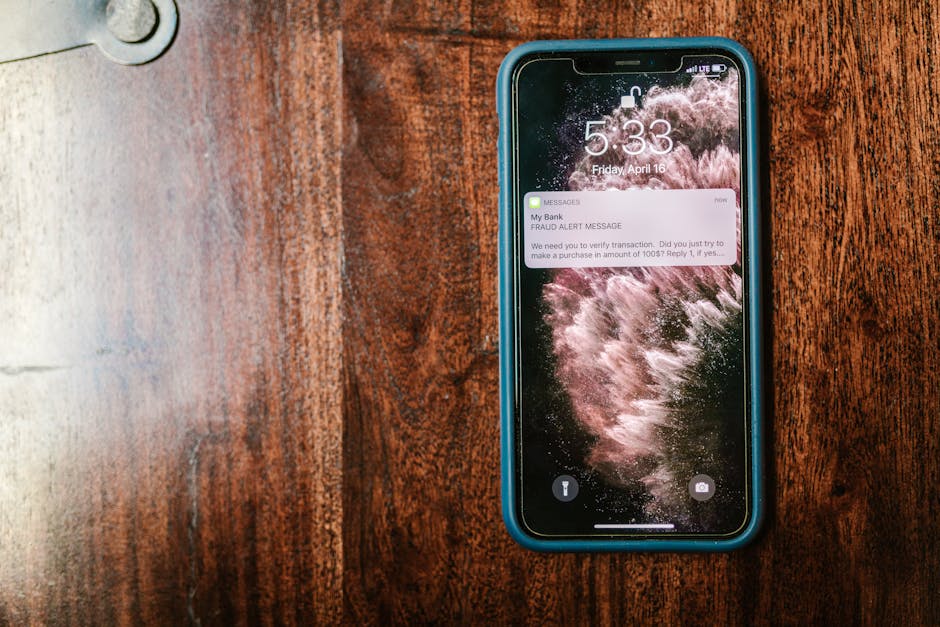

Why "Michael Rodriguez Court" Messages Are Setting Off Alarm Bells Across the U.S.
If you searched michael rodriguez court, here is what you need to know right away:
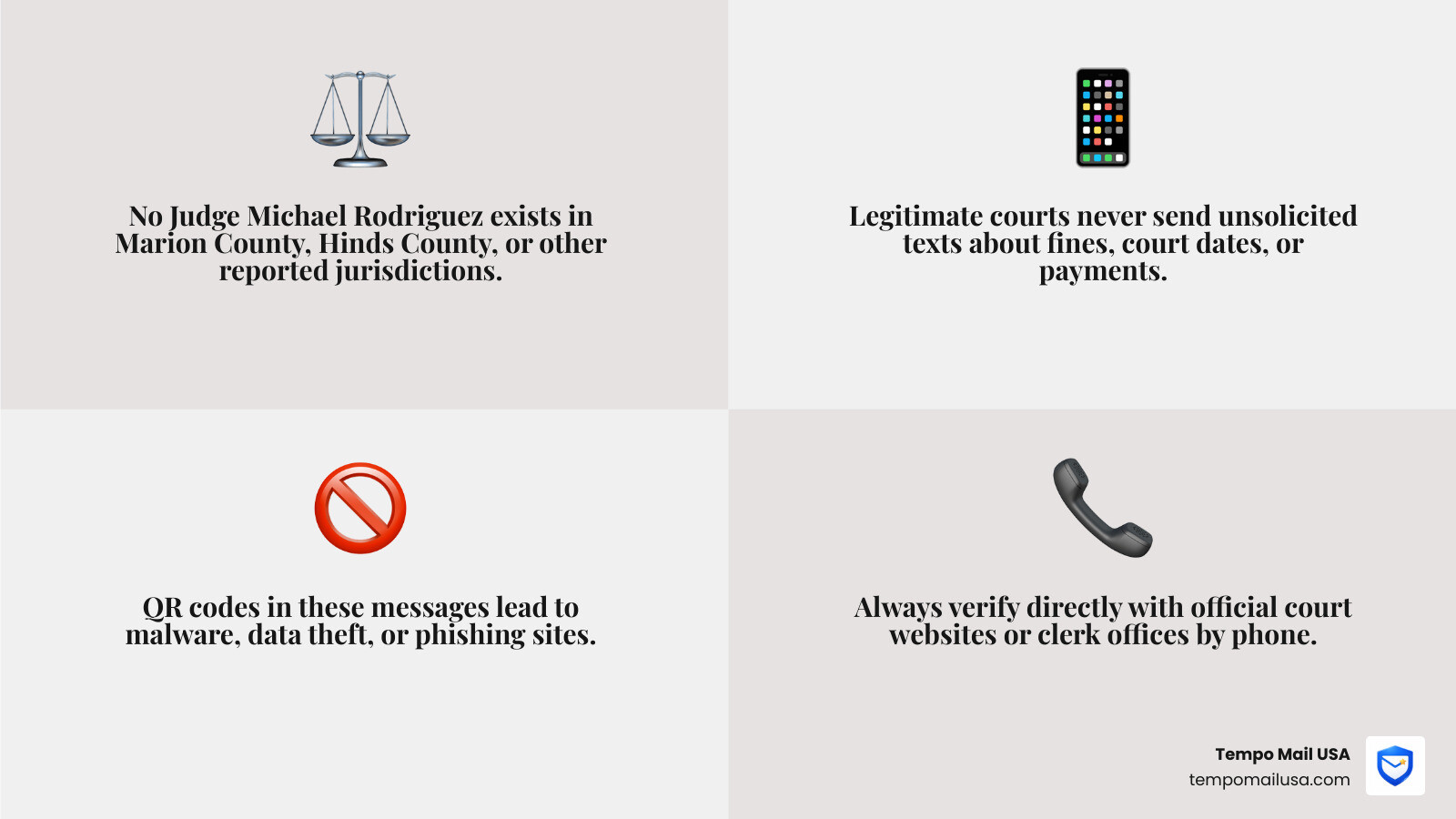
- The "Judge Michael Rodriguez" court notices are a scam. No judge by this name exists in Marion County (Indiana), Hinds County (Mississippi), Johnson County (Kansas), or other reported locations.
- Legitimate courts do not text you about unpaid fines, court dates, or payment demands — especially not with QR codes.
- Do not scan the QR code in these messages. It may expose your device to malware or lead to data theft.
- Report and block the message. Forward spam to spam@uce.gov or file a report at reportFraud.ftc.gov.
Thousands of people across multiple U.S. states have been receiving alarming text messages. The texts claim to be from a court's "Traffic Division." They reference unpaid tolls, parking fines, or speeding violations. And they are signed by someone called Judge Michael Rodriguez.
The problem? He doesn't exist.
When WRTV Investigates looked into the messages circulating in Indiana, the Marion County clerk's office confirmed there is no Judge Michael Rodriguez in their jurisdiction — and that the clerk's office never texts residents about payment requirements or court dates.
The scam has since been reported in Kansas, Mississippi, and beyond. Each version uses the same fictional judge name, the same urgent tone, and the same dangerous QR code.
It looks official. It isn't.
Many people who received these texts were genuinely confused — unsure whether they had a real legal problem or not. That fear and uncertainty is exactly what scammers are counting on. And in today's environment, where identity theft and data breaches are surging, falling for even one fake link can have serious consequences for your personal and financial security.
The Michael Rodriguez Court Scam: How to Spot a Fake Notice
As we move through April 2026, the sophistication of phishing attacks continues to evolve. The current "Michael Rodriguez" scam is a prime example of "smishing" (SMS phishing) that uses the authority of the judicial system to bypass our natural skepticism.
The scam typically starts with a text message claiming you have an outstanding violation. Whether it's a parking ticket or a speeding fine, the message demands immediate action. It often includes a QR code, directing you to a "payment portal" that is actually a front for harvesting credit card details or installing malware.
Official warnings have been issued across the country. In New Jersey and California, residents have been targeted by variations of this scheme. For more localized details on these specific warnings, you can read about the Judge Michael Rodriguez Nj Scam Warning and the Judge Michael Rodriguez Los Angeles Superior Court Scam.
Why Scammers Use the Michael Rodriguez Court Identity
You might wonder why scammers settled on this specific name. "Michael Rodriguez" is a common name, which makes it harder to debunk with a quick, casual search. By using a fictional judge, scammers avoid impersonating a specific living person who might quickly sue or alert the media, yet the name sounds "official" enough to carry weight.
In Hinds County, Mississippi, officials noted that the scam flyers misused the name to claim a position in the Circuit Court. However, the Circuit Court doesn't even handle traffic violations—those are municipal court matters. The psychological pressure of a "court order" signed by a "judge" triggers a panic response, making victims more likely to click before they think. This is a classic social engineering tactic designed to lead to identity theft.
Many users now rely on advanced security tools and VPN protection to prevent these attacks. Tools like NordVPN security solutions can help block malicious domains that these QR codes often point to.
Red Flags and Malware Risks in Fraudulent Messages
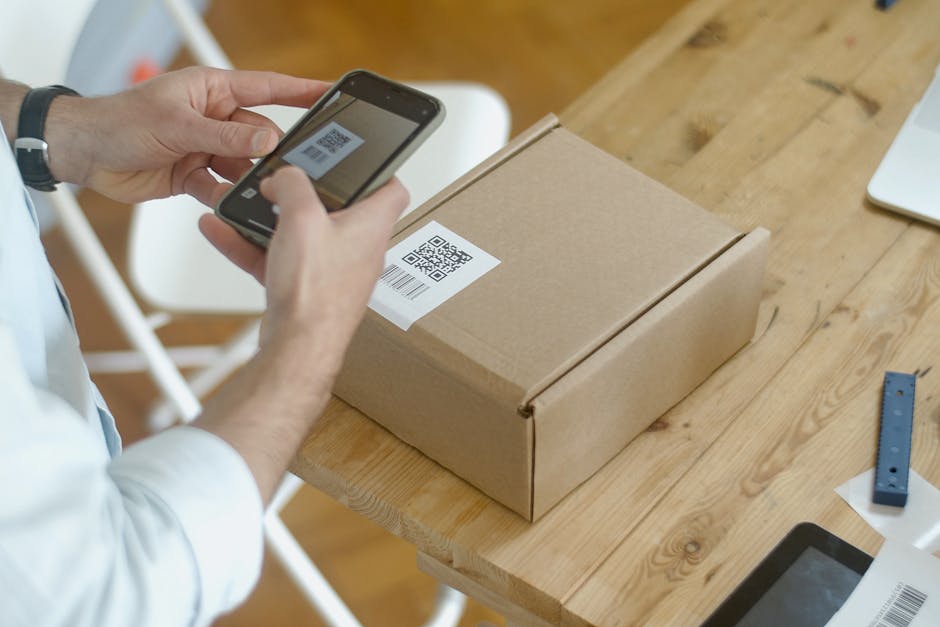
The "Michael Rodriguez" scam isn't just about stealing a $50 "fine." It's often a gateway for deeper device compromise. When you scan a QR code from an untrusted source, you risk:
- Malware Deployment: Automated downloads that track your keystrokes.
- Data Theft: Access to your contacts, photos, and saved passwords.
- Financial Fraud: Redirects to "cloned" banking sites.
Scam messages often originate from specific area codes, such as 730 or 682. If you see a message from these codes claiming to be a local court in a different state, that is an immediate red flag.
Common Red Flags to Watch For:
- Urgency: Threats of immediate arrest or license suspension.
- Timing: Messages sent on Sundays or federal holidays when courts are closed.
- Payment Method: Demands for payment via QR code, cryptocurrency, or prepaid gift cards.
- Generic Case Numbers: Many victims report receiving the exact same "case number," which doesn't follow the standard format of their local county.
Verifying Legitimate Michael Rodriguez Court Records
If you are genuinely concerned that you might have an outstanding ticket, never use the link provided in a text. Instead, go directly to the source.
- Search Official Databases: Visit the official Clerk of Court website for your county.
- Call the Court Directly: Use a verified number from a government ".gov" website. For example, in Marion County, you would call 317-327-4740.
- Check Federal Records: If the matter were federal, it would appear in systems like PACER. For instance, you can find legitimate records for a Michael Rodriguez v. Commissioner of Social Security Administration (2:15-cv-01476), California Central District Court. Notice how the legitimate record has a specific, verifiable docket number and a real magistrate judge (John E. McDermott), unlike the scam texts.
Real Cases vs. Fictional Judges: Setting the Record Straight
While the "Judge Michael Rodriguez" in your text inbox is a ghost, there are many real individuals named Michael Rodriguez who have appeared in court records. Scammers rely on this "search noise" to confuse you. If you search michael rodriguez court, you will find actual legal documents that have nothing to do with traffic scams.
For example, a high-profile federal case involved a Michael Rodriguez (also known as Angel Rodriguez) who was sentenced to 84 months in prison for possession with intent to distribute fentanyl. This case, United States v. Rodriguez, highlights the severity of real legal proceedings.
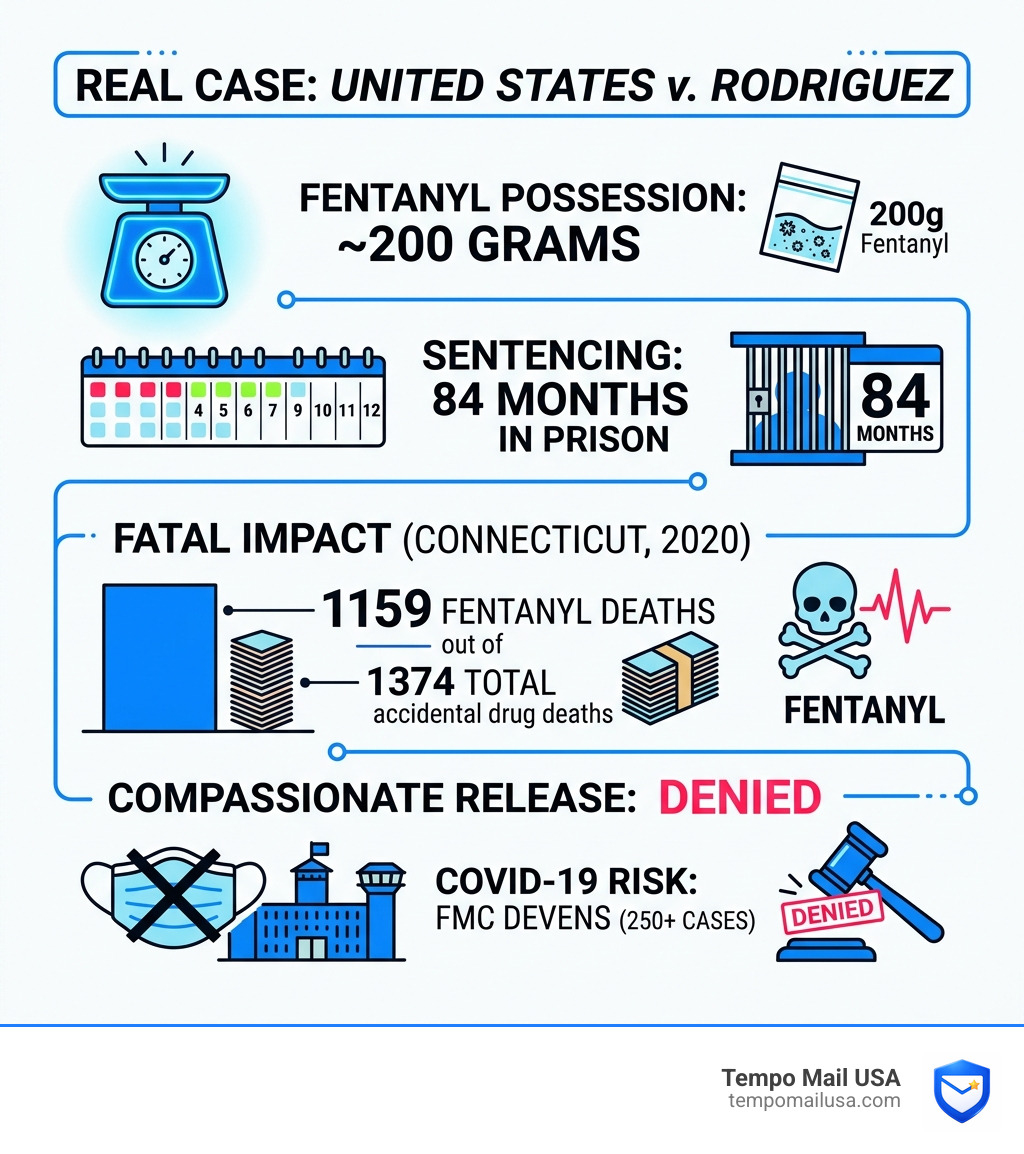
In that real case, Rodriguez possessed nearly 200 grams of fentanyl. The court noted the devastating impact of this drug, citing that in 2020 alone, 1159 out of 1374 accidental drug deaths in Connecticut involved fentanyl. This Michael Rodriguez sought "compassionate release" due to COVID-19 risks at FMC Devens (which saw over 250 cases and 10 deaths), but the court denied the request, emphasizing the need for deterrence.
Distinguishing the Michael Rodriguez Court History
When researching, you must distinguish between these real criminal or civil cases and the scam. Here are some real "Michael Rodriguez" cases currently in the public record:
- Habeas Corpus: MICHAEL RODRIGUEZ v. DAVID PIERCE, Warden, and ATTORNEY GENERAL OF THE STATE OF DELAWARE | District of Delaware | United States District Court.
- Criminal Appeals: MICHAEL RODRIGUEZ, vs THE STATE OF FLORIDA, involving an Anders review where the court affirmed the lower court's judgment.
- New York Proceedings: People v. Rodriguez, Michael I. | N.Y. App. Div. | Judgment | Law | CaseMine, which details procedural orders for assigning counsel and filing transcripts.
- Social Security Appeals: FJC IDB Information for Michael Rodriguez v. Commissioner of Social Security Administration, 2:15-cv-01476 – CourtListener.com.
None of these cases involve a "Judge Michael Rodriguez" texting people about parking tickets. They involve real defendants or plaintiffs in legitimate judicial halls.
Official Verification and Reporting Procedures
If you receive a suspicious message, the Indiana Attorney General and various Sheriff's offices suggest a "verify then ignore" policy. Legitimate government agencies will almost always contact you via U.S. Mail for initial notices of violations.
Legitimate Court Notice vs. Scam Text
| Feature | Legitimate Court Notice | Michael Rodriguez Scam Text |
|---|---|---|
| Delivery Method | U.S. Postal Service (First Class Mail) | SMS / Text Message |
| Payment Method | Official portal, check, or in-person | QR Code, Crypto, or Link |
| Judge Name | Verifiable on county website | "Judge Michael Rodriguez" |
| Urgency | Provides a deadline (usually 14-30 days) | Demands "Immediate" action |
| Jurisdiction | Municipal or Traffic Court | Often claims "Circuit Court" |
To protect yourself and others:
- Block the Number: Use your phone's built-in "Report Junk" feature.
- Contact Your Provider: Many carriers have specific tools to block spam.
- Report to the FTC: File a report at reportFraud.ftc.gov.
- Inform Local Law Enforcement: If the scam is localized, call your Sheriff's non-emergency line.
Best Tools to Protect Your Identity from Court Scams
In 2026, the best defense is a proactive offense. Protecting your Personal Identifiable Information (PII) is essential because scammers often get your phone number from data breaches or "people search" sites.
Top Internet Security Tools in 2026:
- Antivirus Software: Essential for scanning your device if you've accidentally clicked a link.
- VPN Protection: A service like NordVPN encrypts your traffic and can block known malicious sites.
- Identity Theft Protection: Services that monitor your credit report for unauthorized inquiries.
- PII Firewalls: Using tools to mask your real data.
One of the smartest digital hygiene habits you can adopt is the use of a "PII Firewall." When you sign up for services online, your email and phone number are often sold to third parties, eventually landing in the hands of scammers. By using Tempo Mail USA, you can generate secure email aliases that proxy your identity. This shields your real email address from being harvested, ensuring that if a service's database is leaked, your primary contact info remains safe from the next "Michael Rodriguez" who comes knocking.
Frequently Asked Questions about Michael Rodriguez Court
Is there a real Judge Michael Rodriguez in Marion County?
No. Official sources from the Marion County Superior Court and the Clerk’s office have confirmed that no judge by this name exists in their jurisdiction. Similar confirmations have been made by Hinds County (Mississippi) and Johnson County (Kansas) officials. It is a completely fictional identity created for the purpose of fraud.
Do courts ever send payment demands via text message?
Generally, no. Legitimate courts and clerk offices do not communicate payment requirements, warrants, or specific court dates via unsolicited text messages. They definitely do not demand payments through QR codes or third-party links. Any such communication should be treated as a scam.
What should I do if I scanned a QR code from a scam text?
If you scanned the code, you should immediately:
- Disconnect: Turn off your Wi-Fi and cellular data to stop any active malware from "calling home."
- Run a Security Scan: Use a reputable antivirus tool to check for hidden files or trackers.
- Update Passwords: Change passwords for your banking and primary email accounts using a different, clean device.
- Monitor Accounts: Check your bank statements and credit reports for the next several months for any suspicious activity.
Conclusion
The michael rodriguez court scam is a reminder that our digital identities are constantly under fire. Whether it's a fake traffic fine or a fraudulent court summons, the goal is always the same: to exploit your trust and steal your data.
By staying informed, verifying all legal communications through official channels, and using tools like NordVPN for secure browsing, you can stay one step ahead of the scammers. A "PII Firewall" strategy is your best long-term defense. Using Tempo Mail USA to mask your real identity during online signups prevents your information from reaching the databases that these scammers use to find their next victim.
Stay vigilant, report fraud when you see it, and never let a text message pressure you into a hasty financial decision.