
Cloud Storage Scam Emails: Three Real Ones, Dissected Line by Line
Cloud Storage Scam Emails: Three Real Ones, Dissected Line by Line
It arrives on an ordinary evening, when you are not thinking about storage at all. The subject line says your photos will be deleted. The body says your cloud storage is full, or your payment method expired, or your files are scheduled for removal on a specific date. There is a button, and the button is the whole point.
Here is the sentence this guide exists to prove: the email cannot delete your files. Nothing in your inbox has the power to touch your photos, your documents, or your backups. The only thing that can hurt you is the link, and the link only works if you click it and then hand something over — a password, a card number, a login.
Everything below is evidence for that sentence. I pulled three cloud storage scam emails that are actually circulating in November 2026, documented by security researchers, and took each one apart line by line. Then the numbers that settle any storage email in ten seconds, the 60-second check, the Dropbox version, and the inbox setup that keeps the next one from ever reaching your real address. The most-shared guide on this topic was last updated in August; the specimens here are from this month.
Specimen one: "Your iCloud account may be at risk" — 24 threats and the wrong logo
The first specimen is the most common cloud storage scam email in circulation right now, and it is the easiest to take apart because it contradicts itself in the first screen. Security researchers at PCRisk documented it in November 2026 under the name "Your Cloud Storage Is Full." The subject line, which varies, reads "Your iCloud account may be at risk."
The body claims that 24 security threats have been detected in your account, and that your cloud storage is full. Your photos, videos, contacts, files, and private data will be lost, it says, because the storage limit has been reached. Then comes the offer: as part of a loyalty program, you can receive an additional 50 GB of storage for $1.95.
Three things give it away, and you only need one. First, the branding does not match itself: the subject line names iCloud, but the message carries the logo of the Google Cloud Platform. A real Apple email does not arrive wearing Google's logo, and a real Google email does not warn you about your iCloud account.
Second, the number is invented. Twenty-four threats, detected where, by whom, and when? The email never says. Real security alerts name the device, the time, and the sign-in location, because a real security team knows them. A round, alarming number with no detail attached is a prop, not a finding.
Third, the price is a tell in the other direction. Fifty gigabytes for a one-time $1.95 sounds like a bargain until you compare it with what the real services charge, in their own settings, on their own billing pages: iCloud+ starts at 50 GB for $0.99 a month, billed by Apple inside your Apple ID. A one-time charge, on a page an email sent you to, from a company that sells storage by the month, is not a discount. It is a card-number harvest with a friendly price tag.
What happens if you click: at the time researchers examined this campaign, the link redirected victims to a rotating set of deceptive sites, including affiliate-scam pages that pay the scammers a commission, and pages used for phishing and malware. The redirect domains researchers recorded include scanner-activities-software-protection[.]top and verifiedimproperrealtimemobile[.]top. If either string shows up near a storage warning you received, that is the whole verdict.
Specimen two: "Cloud Storage Alert: Upgrade Before Your Files Are Deleted" — the expired card
The second specimen drops the fake threat count and goes straight for the wallet. Its subject line is "Cloud Storage Alert: Upgrade Before Your Files Are Deleted," and the body says your payment method has expired. Please update your payment details. If your storage is full, it adds, consider upgrading your plan. Without storage, you risk losing all the files and data stored in the Cloud Service.
Then it gets specific, which is exactly what makes it dangerous. It prints an order summary: Subscription Plan 250GB, Product Cloud Storage, Expiration Date June 19. It says your cloud service has been disabled and that renewal failed. None of it is true, and none of it is associated with any legitimate provider — researchers at PCRisk confirmed that when they inspected this campaign in November 2026, and noted that the phishing site it linked to was down at the time, which is normal for these campaigns. The sites go up, get taken down, and come back under a new name within days.
The tell here is the vagueness hiding inside the specifics. A subscription plan of "250GB" and a product called "Cloud Storage" is not how any real provider describes its own plan. Google sells Google One, Apple sells iCloud+, Microsoft sells Microsoft 365, Dropbox sells Dropbox Plus. Nobody's billing page says "Product: Cloud Storage" — that is the label you get when the scammer does not know which company you actually use. And a real storage provider will never ask you to update payment details from inside a warning email: Apple, Google, and Microsoft all handle billing inside your account settings, and all three will show the same problem when you open the app. If the problem is real, it is visible in the app. If it is only visible in the email, it is not real.
Specimen three: "Final Notice: Files Scheduled for Deletion" — the one that sells real products
The third specimen is the most polished, and the one most likely to fool a careful reader, because it does something the other two do not: it sells you something real. Its subject line is "Final Notice: Files Scheduled for Deletion – Upgrade Required | ID:248126-57280." The body says your payment could not be processed, your stored files may be removed if no action is taken, and your files — photos, videos, documents — could be permanently removed from the servers. It prints an account summary: Subscription ID IC-1241679640, Service Cloud Storage, Status Payment Failed, Removal Date March 27, 2026.
Researchers at PCRisk, who documented this campaign as "Cloud Storage Renewal Failed" in November 2026, found that the pages it links to present the same story — storage full, subscription expired, payment failed, syncing disrupted — and then push visitors toward real, well-known products, including McAfee and XSHIELD, through tracking links carrying the scammers' affiliate IDs. Legitimate companies do not advertise this way. The products are real; the email is not; the commission is the point.
That is what makes this specimen worth studying. The first two ask for your password or card number directly, and most people can feel that something is off. This one asks you to buy a genuine product from a page that looks helpful, and the harm is quieter: a commission stolen from a real company, a tracking cookie on your machine, and a door opened to the next scam, which will arrive knowing you clicked the last one.
The tell is the removal date. March 27, 2026 is a specific, confident deadline — attached to a service that is never named, a subscription ID that belongs to no system you can check, and a "final notice" for a subscription you may never have had. A real deletion deadline is the last step in a long sequence you would have seen: warnings in the app, emails from the provider's real domain, a grace period measured in weeks. A first notice that is also a final notice, with a deletion date days away, is not how any storage company talks to a paying customer.
This is the same pressure script as the fake Geek Squad renewal, where a $499 charge and a 24-hour deadline push you toward a phone call. The product changes; the clock does not. I wrote about that version in detail in Geek Squad scam email: the fake $499 renewal, the refund trap, and the inbox rule that stops the next one — if the storage version fooled you for a second, the Geek Squad version will feel familiar, and that familiarity is the defense.
The company that doesn't exist: CloudSync, ECloud, and the generic-brand trick
Not every cloud storage scam email impersonates a company you know. Some of them impersonate a company that does not exist at all, and that is a deliberate choice. A campaign documented in September 2025 sends messages claiming your "CloudSync" or "ECloud" storage is full, complete with a business address and a handy link to update billing or confirm your subscription. There is no CloudSync storage service to check against. There is no ECloud account to log into. The vagueness is the feature: if you cannot remember whether you signed up for CloudSync, you cannot be sure the email is fake, and that half-second of doubt is all the link needs.
This is the same trick as the plain "Cloud" and "Cloud+" branding in the specimens above, and it is why the generic names matter. A scammer impersonating Dropbox has to fool a Dropbox user, and most Dropbox users know what Dropbox looks like. A scammer impersonating "Cloud Storage" can send the same email to a hundred thousand people and hit every one of them, because everybody has some cloud storage somewhere, and nobody can say with total confidence that they have never heard of CloudSync. The defense is simple: if you cannot name the service, there is nothing to check, and nothing to click.
Real versus fake: the numbers that settle it in ten seconds
Every cloud storage scam email depends on one thing: you do not know, off the top of your head, how much free storage you actually have, or what a real upgrade costs. So here are the numbers, checked against the providers' own pages in November 2026, for the five services these scams impersonate most.
| Service | Free storage | First paid step |
|---|---|---|
| Google account (Drive, Gmail, Photos share one pool) | Up to 15 GB | Google One 100 GB, $19.99 a year |
| Apple iCloud | 5 GB | iCloud+ 50 GB, $0.99 a month |
| Dropbox Basic | 2 GB | Dropbox Plus, from $9.99 a month |
| Microsoft OneDrive | 5 GB | Microsoft 365 Basic 100 GB, $1.99 a month |
| MEGA | 20 GB | Paid plans from a few dollars a month |
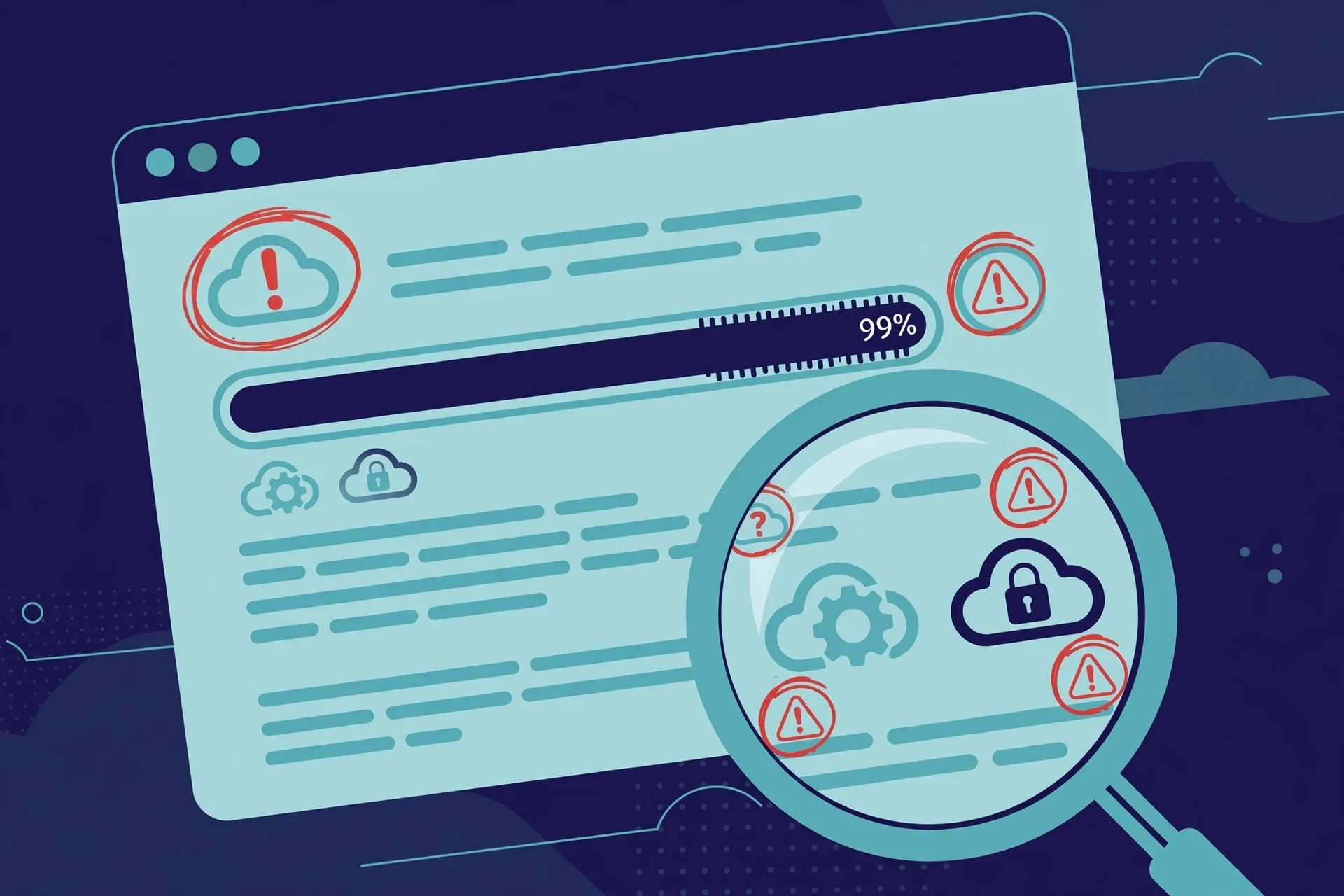
Two details in that table do more work than any red-flag list. First, the free tiers are small and specific: iCloud has been 5 GB since 2011, Dropbox Basic has been 2 GB for a decade, and Google's 15 GB is one pool shared by Gmail, Drive, and Photos — so your email alone can eat most of it without you ever uploading a file. If an email tells you that you have 250 GB, or that your free plan includes 50 GB, it is describing a plan that does not exist. Second, every real upgrade is a subscription, billed monthly or yearly, managed inside the account. A one-time $1.95 or $1.99 payment, offered by email, for a chunk of storage, is not a price any of these companies charges. The $1.99 figure shows up in real scam emails — researchers at Gmork documented it in a "storage full" specimen reviewed in November 2026, alongside a fake storage bar stuck at 99 percent — and it works because it is small enough to feel harmless. A small charge is still a card-number harvest.
And one more number, because it is the one that decides whether any of this applies to you: open your storage settings right now and look. If the app says you have space, the email is lying. If the app says you are full, the app will also offer you the upgrade, on the provider's own billing page, with no email involved. Either way, the email has nothing to add.
The 60-second check that settles any storage email
You do not need to memorize the specimens. You need one procedure, and it takes a minute.
- Do not click anything in the email. Not the button, not the "manage storage" link, not the unsubscribe link. A storage provider does not need you to click an email link to manage storage.
- Open the storage app yourself — the app on your phone, or the provider's site typed into the address bar by you. Check storage, billing, and security settings there. If there is a real problem, it will be waiting for you inside the account.
- Read the sender address, the whole thing, not the display name. A message from Apple does not come from a random domain. The famous lookalike domains are dead ends now — scammers register fresh ones faster than any list can track — so do not rely on recognizing the domain. Rely on the fact that the real provider's domain is the one you already know. I wrote about why the lookalike lists stopped working in How can I stop phishing emails?.
- Compare the numbers in the email with the table above. A plan size, a free tier, or a price that does not match the provider's real offering is a verdict, not a clue.
- Report it as phishing in your mail app, then delete it. Reporting trains the filter; deleting keeps you from clicking it later by accident. Do not reply — even to say stop — because a reply confirms your address is live and monitored.
- If you already clicked and typed a password, change that password now, from the provider's real site, and turn on two-factor authentication. If you entered card details, call your card issuer and freeze the card. Then check the account's recent activity, connected devices, and recovery email for anything you do not recognize.
If you are in the United States and money changed hands, report it at ReportFraud.ftc.gov. Reporting does not get your money back, but it is how these campaigns get counted, and counted campaigns get taken down.
Dropbox scam emails: the shared-folder version
Dropbox deserves its own paragraph because its version of the scam looks different from the storage-full template. The Dropbox scam email usually arrives as a shared file or folder notification: someone has shared a document with you, or a file you were expecting is ready to download. The link opens a page that looks like Dropbox and asks you to sign in before you can see the file. The sign-in is the theft.
The reason this version works is that real Dropbox sharing emails look almost exactly like it. The difference is the destination: a real share link goes to dropbox.com, and a real Dropbox account opens the file without asking you to log in again if you are already signed in. A fake one takes you to a lookalike domain and presents a login screen even though you are already logged into Dropbox in the same browser. If Dropbox is asking you to log in on a page you reached from an email, close the tab and open Dropbox yourself.
The numbers help here too. Dropbox Basic gives you 2 GB free — the smallest free tier of any major service — and a shared folder counts against it, which is why storage warnings feel plausible to Dropbox users. A real Dropbox storage email tells you the same thing the Dropbox app tells you, and the app is where you check.
Why the next one is already on its way — and the inbox that stops it
Reporting and blocking help, but they do not stop the next one. First, your address is on lists: it leaked in a breach, appeared on a public page, was sold by a data broker, or was typed into a signup form for a service you used once in 2021. Once scammers have it, they keep using it, because sending a million emails costs them almost nothing.
Second, clicking, opening, or replying tells them the address is live. Some scam emails load an invisible tracking image when you open them; if your mail app loads images automatically, the sender learns that somebody reads mail at your address. Turn off automatic image loading in your mail settings. It is a small change that removes a signal you did not know you were sending.
Third, blocking one sender does nothing, because the next message comes from a different address on a different domain. Reporting as phishing is better, because it teaches the filter the pattern instead of the sender — but the filter is always learning, and the scammers are always changing the pattern. A spam email blocker is three tools sharing one name, and only one of the three — the filter — is doing the work here.
So the fix is not a better filter. The fix is an address the scammers never get. That is what a burner email is for: a disposable address you hand to signups you do not trust, so that when — not if — that address ends up on a spam list, the list points at an inbox you can abandon, and your real address stays clean.
I tested the setup live this morning before writing this, on TempMailUSA, and the numbers are worth quoting because they are the whole argument. The tool settled on the address pcxog57@rover.info, with a free inbox that lasts 30 days — the countdown read "Expires in 28d 19h 33m" and was ticking down live — and a domain picker offering 468 domains, of which exactly one, rover.info, is free and the other 467 are Pro. The page counters read 487,955 emails created and 609,973 messages received. One honest nit from the same test: the banner at the top of the page says "427 domains" while the picker says 468, so the marketing copy is behind the product by 41 domains. The product itself did exactly what it promised: a working address in seconds, no signup, no personal data, and nothing to clean up afterward. That is the correct tool for every signup where you would otherwise hand over the address your cloud storage warnings are sent to.
If you already clicked, paid, or typed your password
Do not panic, and do not blame yourself. These emails are built by professionals and tested on millions of people. Act quickly, one step at a time, in this order.
If you clicked a link but typed nothing, close the tab and run a malware scan. Clicking alone rarely installs anything on a modern phone or browser, but a scan costs nothing and settles it.
If you typed a password, change it immediately — from the provider's real site or app, not from any link in any email — and change it everywhere else you used the same one. Then turn on two-factor authentication, and check the account's sessions and connected devices for anything you do not recognize.
If you paid, call your card issuer now, dispute the charge, and ask for the card to be replaced. A $1.95 or $1.99 charge is small enough to ignore, and that is precisely why it works: the scammers are not after the two dollars, they are after the card number, and the recurring charges come later.
If you downloaded and ran an attachment, disconnect from the network, run a full scan, and if anything is found, assume the machine is compromised until a professional tells you otherwise.
Then report the email as phishing, delete it, and move on.
FAQ
What is a cloud storage scam email?
A phishing email that pretends to be from a cloud storage provider — Google Drive, iCloud, Dropbox, OneDrive — or from a generic "Cloud Storage" service, and claims your storage is full, your payment failed, or your files will be deleted. The link leads to a fake login page that steals your password, a fake payment page that steals your card, or an affiliate page that earns the scammer a commission.
Can a cloud storage scam email delete my files?
No. An email cannot delete anything. Only the link can hurt you, and only if you click it and then hand over a password, a card number, or a login. If you did not click anything, the email is harmless, and you can delete it and forget it.
What happens if I just open a cloud storage scam email?
Usually nothing, with one exception: some of these emails contain an invisible tracking image that tells the sender your address is active when your mail app loads it. That gives them no access to anything, but it can put your address on a list that gets more scam mail. Turn off automatic image loading in your mail settings, and you remove even that signal.
Is CloudSync a real cloud storage company?
No. CloudSync and ECloud are names used by a scam campaign, not real storage services. If you get a storage warning from a company you cannot name an account with, there is nothing to check and nothing to click. A warning from a company you do not recognize is not a warning.
Does Dropbox send storage-full emails?
Yes, Dropbox does send storage notifications, and so do Google, Apple, and Microsoft. The difference is where you verify them: open the Dropbox app or type dropbox.com into your browser yourself. If the app agrees you are nearly full, the email was real. If the app says you have space, the email was fake. Never verify a storage warning by clicking the link inside the warning.
Why do I keep getting cloud storage scam emails after I report them?
Three reasons. Your address is on spam lists that get resold, so new campaigns keep finding it. Scammers rotate sender addresses and domains, so blocking one sender never touches the next message. And spam filters learn from reports, but the campaigns change their wording faster than the filters adapt. Reporting still matters — it is what trains the filter — but the durable fix is to stop giving your real address to signups you do not trust, and use a disposable address instead.
Cloud storage scam emails work because they aim at the one thing you cannot afford to lose: the photos, the documents, the backups. The defense is not complicated. Never click a storage link in an email. Check the app. Know the real numbers — 15 GB for Google, 5 GB for iCloud and OneDrive, 2 GB for Dropbox — and treat any email that disagrees with them as fake. And keep your real address out of the hands of the lists that feed these campaigns, because the email you never receive is the one that can never fool you.
Need a disposable temporary email?
Protect your real inbox from spam and promotional clutter instantly and free.
Received a suspicious email, text, or charge alert?
Verify whether the sender domain is disposable, spoofed, or unverified before clicking links.