
Binance Lost $6.3 Billion. The Second Theft Is in Your Inbox: Inside the Fake 'SAFU Reconciliation' Emails
On October 29, 2026, Binance disclosed a security incident involving an estimated $6.3 billion in crypto assets. The FBI publicly attributed the attack to North Korea-linked actors tracked as TraderTraitor. Binance said it would cover the losses itself, with more than $6.34 billion in company funds allocated to replenish affected assets.
That should have been the end of the story for ordinary users. It was not. Three days later, on November 1, Bitdefender's Antispam Lab found the emails. They were already written, already formatted, already landing in inboxes in Ireland, Japan, the United States, Germany, and Finland. The breach took Binance's money. The emails are after yours.
This is the part of a major hack that rarely makes the headlines: the second theft. The exchange gets attacked once. Its users get attacked for weeks afterward, by strangers who did not touch the exchange at all — they just read the news faster than you did.
The Breach Was October 29. The Emails Started November 1
The speed is the first thing to understand. Bitdefender Antispam Lab researcher Viorel Zavoiu identified the two campaigns on November 1, three days after Binance's disclosure. Whoever wrote them did not need to steal anything. They needed a real event, a real fund name, and a deadline.
Binance reopened withdrawals in phases from November 1, resuming them across 15 networks. By November 2, the exchange had completed a zero-knowledge proof of reserves for ten assets — BTC, ETH, BNB, XRP, SOL, and four stablecoins among them — and said roughly 95 percent of affected assets were covered, with about $315 million in less-liquid tokens still awaiting replenishment. Blockchain companies and other participants had frozen approximately $2.85 billion in assets linked to the hack.
Every one of those facts is real. That is precisely why the emails work. A phishing email that invents everything is easy to dismiss. A phishing email that quotes the real news back at you feels like a follow-up.
Anatomy of the 'SAFU Reconciliation Desk' Email
The first campaign is the more elaborate of the two. It arrives as a formal compensation process from something called the "SAFU Reconciliation Desk." SAFU is the real name of Binance's emergency fund — the Secure Asset Fund for Users — which makes the sender sound official before you have read a single sentence.
The email tells the recipient their Bitcoin address has been returned as "UNCLAIMED" in a "reconciliation index" built from the October 29 breach. It claims Binance has already replaced "90 percent of the stolen book" and that the remaining portion is being bought back. Then it promises a fixed Bitcoin allocation, tiered by how much the recipient supposedly held: 0.50 to 1.99 BTC held means 1.10 BTC reissued, and so on down the invented tiers.
Then comes the condition. To receive the allocation, the recipient must first send a "wallet-verification fee" of 0.0042 BTC — worth roughly $327 when the email went out — to a settlement address controlled by the scammers. The message says the fee confirms the address "is live and controlled" and will be returned with the release. Bitdefender's analysis found no indication it would be.
The email dresses the demand up with the props of a real bureaucracy: a case number, a deadline, and a queue of 11,400 cases. It even reassures the reader that no seed phrase, no exchange login, and no KYC documents are needed — as if the absence of those requests proves it is safe.
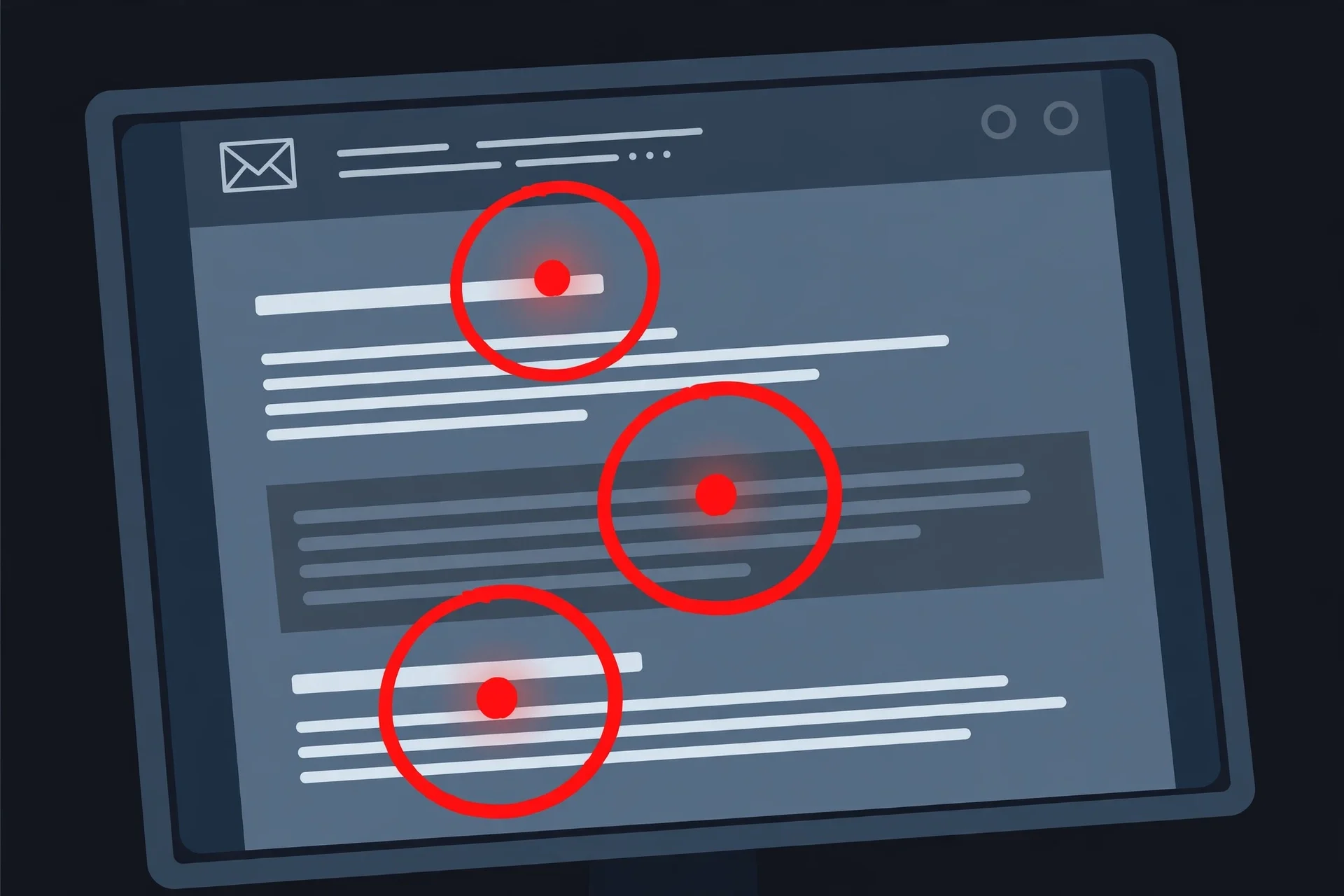
That last line is the cleverest part of the whole message, and the most dangerous. Most people have been taught that a scam email asks for your password or your seed phrase. This one pointedly does not. It asks for something smaller and more plausible: a small fee to unlock a larger payout. The victim's guard is down because the email passed the test they were trained to apply — and then the email stole $327 instead of a password.
There is no payout. Once the Bitcoin leaves the wallet, it is usually gone for good. And as of October 30, McAfee reported that Binance had announced no claims process at all. There is nothing to claim, and nobody to claim it from.
The Second Email Is Scarier: Trust Wallet's Fake Deadline
The second campaign does not promise anything. It threatens. Impersonating Trust Wallet, it claims the Binance incident forces all users to complete an urgent verification procedure or face account suspension after November 7. The button leads to a fake wallet-verification page where login details, recovery phrases, or a wallet approval can be harvested.
It targeted recipients in the United States, the United Kingdom, Australia, Ireland, and South Africa. And here is the detail that tells you how this industry actually operates: Bitdefender found an almost identical Trust Wallet email from just before the hack, carrying the same suspension threat and an October 26 deadline — with no mention of Binance at all. The template existed. The breach just gave it a better reason to exist. When the next big crypto story breaks, the same email will return with the new name pasted in.
The deadline is doing the work in both campaigns. November 7 is close enough to feel urgent and far enough to feel survivable. Urgency is the oldest trick in phishing because it still works: a person who would normally check a sender address, hover over a link, or open the real app instead clicks first and thinks second. The scammers do not need you to be careless. They need you to be busy.
Why This One Works When Most Phishing Doesn't
Most phishing fails on the details. This campaign gets the details right, and that is worth sitting with for a moment, because the lesson applies to every breach email you will ever receive.
First, it uses a real name. SAFU is not invented jargon; it is Binance's actual emergency fund, and anyone who has followed crypto for more than a year has seen the acronym. A fake department with a real name is harder to dismiss than a fake department with a made-up one.
Second, it uses real numbers. The $6.3 billion figure, the October 29 date, the phased withdrawal reopening — all of it was in the news. The email does not ask you to believe something new. It asks you to act on something you already believe.
Third, it asks for something small. A 0.0042 BTC fee is not a life-changing amount, and it is framed as refundable. The victim's internal math — risk $327 to recover more than a whole Bitcoin — feels rational. It is only rational if the payout is real. It is not.
Fourth, it flatters your caution. "No seed phrase. No exchange login. No KYC documents." That line exists to disarm the exact person who knows enough to be suspicious. If you are the kind of user who would never hand over a seed phrase, the email is written for you: it agrees with your rule, then robs you through a different door.
The same pattern showed up earlier this week in the fake OpenAI and SpaceX event invites, where the sign-in page was real and that was the trap. The fake OpenAI and SpaceX event invites used a genuine Microsoft login flow to steal accounts. The Binance emails use a genuine breach to steal money. The mechanism changes; the principle does not: the most dangerous email in your inbox is the one that is mostly true.
What Binance Actually Said — and What It Will Never Do
On November 2, Binance issued a security advisory, reported by CryptoSlate, warning that fraudsters could exploit the phased withdrawal reopening by impersonating Binance representatives. The advisory listed the tricks to expect: promising to speed up pending withdrawals, selling priority access to withdrawal queues, telling users to move funds into a supposedly safe wallet, and pushing users to approve wallet permissions that let attackers take assets later.
Co-CEO Richard Teng said the same thing in plainer language on X: impersonators were approaching users with offers of priority processing, compensation claims, and secure vault services. Binance will never contact users first, never charge a fee to speed up a withdrawal, and never ask customers to sign transactions or move funds to unlock a withdrawal. Anyone who promises to expedite a withdrawal for a fee is scamming you.
That is the whole test, and it fits in one sentence: if someone asks you to pay to get your own money back, it is not Binance. The exchange told customers with pending withdrawals to check their status directly inside the Binance app and to verify suspicious messages through its official verification service. Not through a link in an email. Not through a reply. In the app.
Binance founder Changpeng Zhao warned on November 2 that scammers were targeting people caught up in the breach. The exchange's own staff know what is coming, because they have seen it after every major incident. The hack is the event. The phishing is the aftershock, and aftershocks last longer than the quake.
The 30-Second Check That Kills the Email
You do not need security software to beat this email. You need a habit, and it takes about thirty seconds.
Close the email. Open the Binance app yourself — not through any link, button, or QR code in the message. Check your withdrawal status there. If there is a real problem, the app will show it. If there is a real claims process, the app will announce it. The email is a rumor; the app is the source.
Then check the sender the way you would check a stranger at your door: the display name means nothing, the domain means everything. Binance does not send compensation offers from a free mailbox or a lookalike domain. If the address is not one you recognize from Binance's own site, the email is not from Binance.
Then ask the one question that ends every version of this scam: does it want money, a signature, or a wallet approval before it gives me anything? A real exchange never charges you to unlock your own funds. A real support team never asks you to sign a transaction to prove you own an account. If the answer to that question is yes, delete the email. You have your answer.
The same discipline applies beyond crypto. The gold price scam emails that followed gold crossing $4,100 this week used the same playbook — real news, urgent tone, a link you were supposed to click before thinking. And the Japan disaster alert hack showed what happens when the sender address itself is one people trust: 1.42 million phishing emails sent from a compromised alert service. The sender is never the proof. The channel is never the proof. The only proof is checking the claim where the real service lives.
Why Your Crypto Signups Belong on a Throwaway Inbox
There is a second, quieter lesson in the Binance campaigns, and it is about your email address itself. These emails reached people because their addresses were known — from exchange signups, from mailing lists, from breaches long before this one. Every crypto account you create with your primary email ties that address to a high-value target list. When the next breach happens, and there will be a next one, the phishing does not start from zero. It starts from the list you are already on.
That is the practical case for keeping crypto signups on a disposable inbox. Use a temporary email address when you create an account on an exchange, a wallet app, or a new trading tool you are only testing. The signup code still arrives. The account still works. But the address that gets sold, leaked, or scraped in the next breach is one you can abandon in ten seconds, not the address your bank, your employer, and your family use.
The rule has one hard edge, and it matters more for crypto than anywhere else: never let a throwaway inbox hold an account you cannot afford to lose. A temporary address is for trying things out and for accounts where you control recovery another way. The moment an account holds real funds, real identity documents, or two-factor recovery, it needs a permanent, secured inbox you control — because a second factor that dies with the inbox is worse than no second factor at all. Use the throwaway to audition the service. Move the keepers to a real address.
The Claude Code email leak earlier this week was the same lesson from the other direction: an AI tool was sending users' email addresses to websites without them noticing. Your email address is a credential now, not just a mailbox. Every service that holds it is a service that can leak it, and every leak is a mailing list for the next phishing campaign. Hand it out like it costs something, because it does.
Frequently Asked Questions
Is there really a Binance SAFU reconciliation or compensation process?
No. As of October 30, Binance had announced no claims process, and Binance said it would cover the losses from the October 29 incident itself. Any email offering a Bitcoin payout, a reconciliation allocation, or compensation for the breach is fake. Check the Binance app for the real status of your account.
What is the 0.0042 BTC "wallet-verification fee" in the fake email?
It is the theft. The email promises a fixed Bitcoin allocation and demands 0.0042 BTC — about $327 when the campaign was found — before releasing it. The fee is never returned and the payout does not exist. Binance never charges a fee to unlock a withdrawal or to verify a wallet.
I clicked a link in a Trust Wallet email about the Binance breach. What do I do?
Stop. Do not enter a seed phrase, password, or recovery detail, and do not approve any wallet transaction or permission the page requests. Close the page, open the real Trust Wallet or Binance app yourself, and check your account there. If you entered credentials or approved anything, move your funds to a fresh wallet from a clean device and revoke the approval. Report the email to your provider as phishing.
How do I tell a real Binance email from a fake one?
Check the sender domain against Binance's official site, not the display name. Then check the claim inside the Binance app, never through a link in the email. Real Binance messages never ask you to pay a fee, sign a transaction, move funds to a safe wallet, or buy a place in a withdrawal queue. Any message that does is fake, no matter how real the news it quotes.
Should I use a temporary email for crypto exchange signups?
For testing a new exchange or wallet, yes — a disposable inbox keeps your primary address off another target list. But never use a throwaway address for an account holding real funds or two-factor recovery. Audition on the throwaway, then move the keepers to a permanent, secured inbox you control.
Why do these phishing emails appear so fast after a breach?
The templates already exist. Bitdefender found an almost identical Trust Wallet suspension email from before the Binance hack, with an October 26 deadline and no mention of Binance. Scammers keep working templates on file and paste in the latest breach, price spike, or headline. The news is new; the email is not.
The Breach Cost Binance $6.3 Billion. The Email Costs You $327
Binance will recover. It allocated $6.34 billion of its own funds, completed proof of reserves for ten assets, and reopened withdrawals in phases. About $2.85 billion in linked assets was frozen by the wider industry. The exchange's problem is large, expensive, and — for its customers — mostly handled.
Your problem is smaller and entirely avoidable. It is one email, with a real fund name, a real breach date, and a $327 fee standing between you and a payout that does not exist. The defense is not complicated and it is not technical: close the email, open the app, and never pay to get your own money back. The scammers are counting on the breach doing their convincing for them. Do not let it.
Need a disposable temporary email?
Protect your real inbox from spam and promotional clutter instantly and free.
Received a suspicious email, text, or charge alert?
Verify whether the sender domain is disposable, spoofed, or unverified before clicking links.