

ARTEX: The AI Pentesting Tool Hackers Are Weaponizing — and What It Means for Your Inbox
ARTEX: The AI Pentesting Tool Hackers Are Weaponizing — and What It Means for Your Inbox
Three hours. That is the number the FBI put in writing on November 13, 2026, and it is the number that turned an obscure open-source security tool into one of the most searched terms in the United States this week.
"ARTEX significantly reduces the time required to chain attack techniques, with some intrusions progressing from initial targeting to privileged access in under three hours," the bureau's FLASH advisory states. Not three days. Not three weeks. An attacker can go from picking a target to holding the keys to its network in the time it takes to watch a long movie — and the tool doing the work is one anyone can download for free.
ARTEX is not a virus. It is not a piece of malware written in a basement. It was built as a legitimate penetration-testing framework — the kind of tool security teams use, with permission, to find holes before criminals do. The problem is that the same automation that makes it useful to defenders makes it devastating in the wrong hands, and the FBI says it is already in the wrong hands. Since at least August 2026, threat actors have used it against banks, hospitals, manufacturers, telecoms, and government agencies. More than 1,600 ARTEX consoles are sitting exposed on the public internet right now.
This article does what the enterprise security coverage does not: it explains ARTEX in plain English, names the three attacks the FBI ties to it, and then answers the question that matters to you — what does an AI that breaks into companies in three hours mean for the email address you hand out to every website you sign up for?
Under Three Hours: The Number That Made the FBI Issue a Flash Alert
The FBI does not issue FLASH advisories for theoretical risks. A FLASH is the bureau's way of telling every hospital, bank, and power company in the country: this is happening now, here is what to look for, here is what to do. The ARTEX advisory, dated November 13, 2026, runs thirteen pages and includes indicators of compromise — IP addresses, command-and-control infrastructure, the fingerprints of known campaigns.
The advisory's core claim is a speed claim. Traditional intrusions take days or weeks: a human attacker probes a network, finds a weak point, escalates privileges, moves sideways, and eventually reaches the data. ARTEX compresses that chain — it does the probing, the chaining, and the escalation itself, at machine speed, while the human operator mostly watches. The FBI's wording is careful — "some intrusions" reached privileged access in under three hours, not all of them — but the direction is unmistakable. The bottleneck in cyberattacks used to be human skill and human patience. ARTEX removes both.
The timing explains why the term is spiking now. The advisory landed on a Friday. By Monday, November 16, the story was everywhere: Inc., Healthcare IT News, Industrial Cyber, and the cybersecurity press all carried it. Google Trends picked it up the same day, and by the morning of November 18 it was the 35th most searched term in the United States, up 400 percent, with 20,000-plus searches.
What ARTEX Actually Is — in Plain English
Strip away the jargon and ARTEX is a simple idea executed with unusual thoroughness. It is an autonomous, multi-agent penetration-testing platform written in Go, an open-source programming language. You give it a high-level objective in plain English — "test the security of this network" — and it breaks that objective into tasks, hands them to specialized AI agents, and carries them out: reconnaissance, finding vulnerabilities, exploiting them, escalating privileges, and stealing data. The human's job is mostly to type the goal and wait.
Three design choices make it different from the hacking tools that came before it.
First, it does not ship with its own AI model. It plugs into outside large language models — Anthropic's Claude, OpenAI's GPT, and open-source or Chinese-origin models including DeepSeek, GLM, Grok, and Kimi. That means its intelligence improves every time someone else's model gets smarter, and it means there is no single model provider who can switch it off.
Second, it uses a planner-and-worker architecture. One agent plans the attack, others execute the steps, and they share what they learn in a common memory. That is the difference between a tool and a team: ARTEX behaves less like a lockpick and more like a small crew of specialists who never sleep, never get bored, and never forget what they found on the last target.
Third, it was built for authorized testing, which means it is thorough by design. A penetration-testing framework is supposed to find everything — the forgotten supplier portal, the legacy service nobody maintains, the cloud bucket someone misconfigured two years ago. The FBI's warning is explicit on this point: ARTEX-enabled intrusions exploit exactly those overlooked systems. Internet-exposed applications, self-service portals, cloud infrastructure, and partner and supplier systems are the entry points the advisory names.
None of this makes ARTEX evil, and that is the uncomfortable part. The same tool, used with permission, is how companies find their own weaknesses. The developer who built it, who goes by "Autumn-27," released it on GitHub in July 2026 and said it was meant for authorized security testing within defined scopes. Within about ten weeks it had 1,500 to 2,000 stars on GitHub. Then reports of malicious use started arriving, and on October 8, 2026, the developer took the repository down.
Taking it down did not take it away. The FBI notes that ARTEX remains available through community forks, archived copies, localized versions, and even a commercial offering.
If that pattern sounds familiar, it should. We have seen the same arc before: a powerful open-source tool escapes its author's control and becomes infrastructure for criminals. The difference this time is the speed. A previous generation of tools needed a skilled operator. ARTEX, in the FBI's own words, "enables threat actors with minimal technical expertise to conduct complex, multi-target operations simultaneously." The skill floor has dropped to the floor.
July to November: How a Legitimate Tool Became an FBI Flash Alert
The timeline is short, which is itself the story. Four months from release to federal warning:
July 2026 — Developer "Autumn-27" releases ARTEX on GitHub. It is an open-source, LLM-driven autonomous penetration-testing framework. Early adopters in the security community pick it up fast; it gathers an estimated 1,500 to 2,000 stars in about ten weeks.
August 2026 — The FBI says malicious actors begin using ARTEX in live campaigns. This is the earliest confirmed weaponized use in the advisory. The tool is barely a month old.
September 2026 — A supply-chain attack hits ConnectWise Cloud Backup customers. Microsoft later attributes the ARTEX-assisted activity to Storm-0940, a China-linked threat actor. More than 2,250 downstream tenants are exposed.
Early October 2026 — Attacks on several South Korean financial institutions come to light. Personal information belonging to approximately 67,000 individuals is stolen. The Wall Street Journal's reporting puts the figure at about 68,000 customers. On October 8, the ARTEX developer removes the GitHub repository after reports of abuse.
October 17, 2026 — SentinelOne reports that the China-nexus espionage actor VAPOR PANDA begins an ARTEX-enabled campaign lasting 11 days, hitting more than 200 organizations across at least 14 countries.
Early November 2026 — Researchers count more than 1,600 publicly exposed ARTEX consoles. The cybersecurity researcher MalwareMustDie releases an open-source ARTEX detection signature pack to help defenders spot attacks using the framework.
November 13, 2026 — The FBI issues its FLASH advisory, warning that ARTEX has been weaponized in intrusions across financial services, government, technology, defense, semiconductors, energy, healthcare, manufacturing, telecommunications, and legal sectors. There is nothing to patch, because ARTEX is not a vulnerability — it is a tool, and tools do not get un-invented. That is why the advisory is about defense and detection rather than eradication.
The Three Attacks the FBI Names
The advisory does not deal in hypotheticals. It names real campaigns, and each one teaches a different lesson about how ARTEX is actually used.
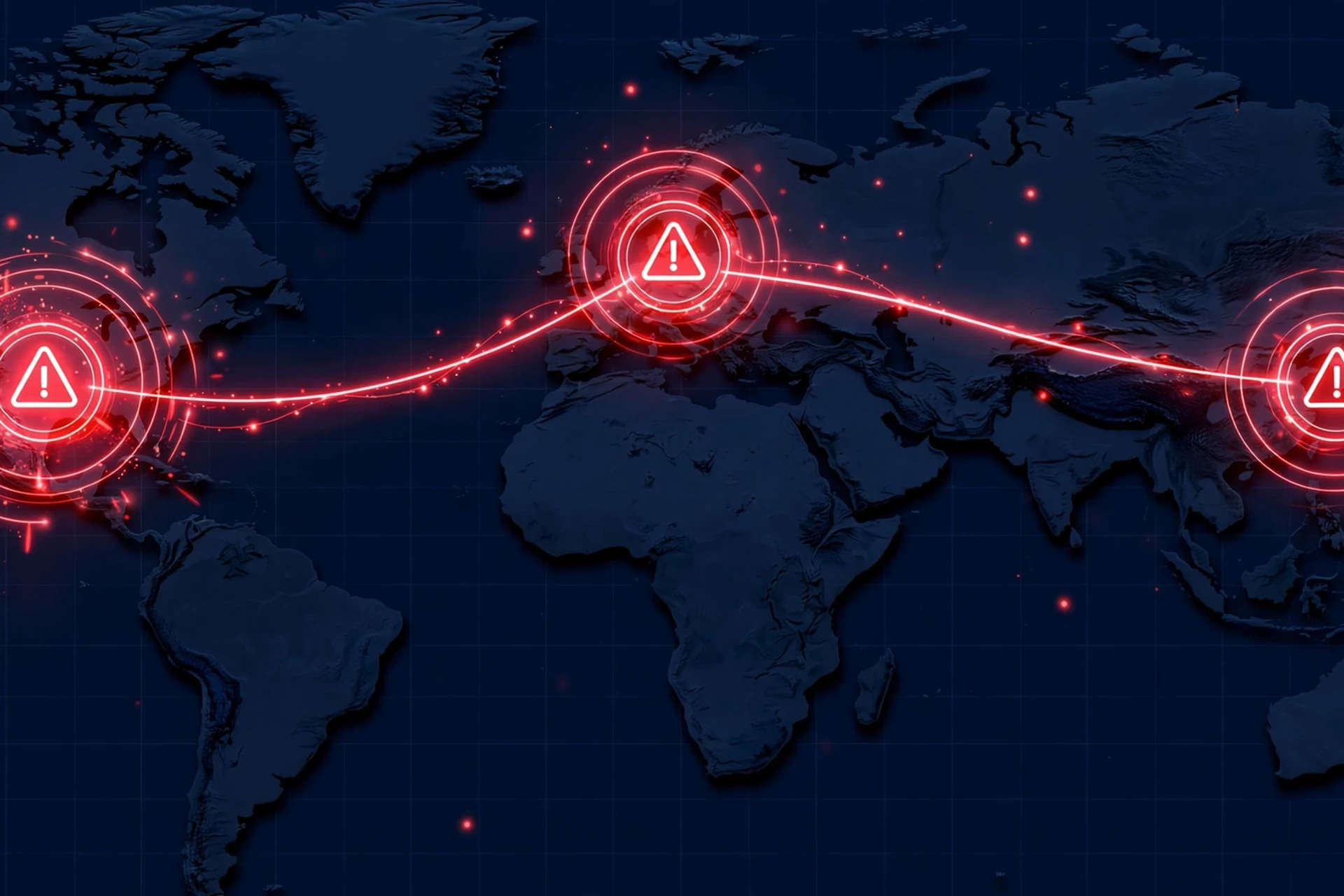
1. The South Korean banks: 67,000 people, one exposed surface
In a series of attacks discovered in early October, several South Korean financial institutions were hit. The result was the theft of personal information belonging to approximately 67,000 individuals. The FBI's advisory ties the campaign to ARTEX-enabled activity. The lesson here is scale: one framework, pointed at one sector, harvested tens of thousands of people's data in a single campaign. Banks are among the best-defended organizations on earth, and the attack still worked — not by breaking the vault, but by finding the side doors. ARTEX specializes in side doors.
2. ConnectWise: the supply chain is the target
The September attack on ConnectWise Cloud Backup is the one security professionals keep coming back to, because it shows how ARTEX changes the math of supply-chain attacks. Compromising one provider gave attackers access to more than 2,250 downstream tenants — small and mid-sized businesses that did nothing wrong except trust a vendor. Microsoft attributed the ARTEX-assisted activity to Storm-0940, a China-linked threat actor that used the framework to accelerate reconnaissance, password spraying, and abuse of cloud application permissions.
This is the same pattern we saw a day earlier in a different attack: the Optimizely compromise that hit 178 websites through a single third-party script. One weak link, hundreds of victims. ARTEX makes finding that weak link faster, which makes supply-chain attacks cheaper to run and harder to predict. If your business depends on a vendor, your security depends on that vendor too — and you do not get to choose how seriously they take it.
3. VAPOR PANDA: 200 organizations in 11 days
SentinelOne's report on VAPOR PANDA is the clearest picture of ARTEX at full speed. Over an 11-day period beginning October 17, 2026, the China-nexus espionage actor conducted ARTEX-enabled intrusions against more than 200 organizations in at least 14 countries. Two hundred targets in eleven days is not a hacking campaign. It is an assembly line.
There is also a detail that should worry everyone who uses AI tools: Amazon Threat Intelligence documented ARTEX agent records describing campaigns that searched for exposed AI provider credentials — API keys for services like Claude and GPT — and used the stolen keys to finance further AI-assisted operations. A Barracuda case shows an attacker using one compromised cloud key to move through roughly ten cloud accounts in 44 hours, hunting for secrets, credentials, and crypto wallet material. The attacks are stealing the fuel for more attacks.
Put the three together and the picture is complete. ARTEX is not one attack. It is a force multiplier for every attack: faster reconnaissance, faster privilege escalation, faster movement between targets.
Why Your Email Is the First Thing an Agent Like This Steals
Here is where the enterprise coverage stops and this article starts, because none of the reporting so far answers the question an ordinary person asks: what does this have to do with me?
The answer is your email address, and specifically the one you have given to a hundred websites.
An autonomous agent like ARTEX does not start by guessing your password. It starts by mapping the target, and the map of a person is mostly their email address. Your email is the username for your bank, your cloud storage, your social accounts, and your shopping. It is where password resets go. It is where "verify it's you" codes go. It is the single key that opens every door, and most people have handed that key to dozens of services they no longer remember — a newsletter from 2019, a free trial from 2022, a forum account from a phone they no longer own.
Every one of those signups is a record in a database somewhere, and databases leak. When they do, the email address is the first field stolen and the most useful one, because it is the same across all of them. A password can be changed. An email address you have used for a decade cannot be changed without rebuilding your digital life.
That is the threat model ARTEX makes worse: a human attacker works through a handful of leaked lists, while an agent tests thousands of addresses against dozens of services at once. The FBI's three-hour figure is about corporate networks, but the same automation applies to individuals — the agent does not care whether the target is a bank or a person, only whether the surface is exposed.
The practical defense is the same one we have been recommending for years, and it is suddenly more urgent: stop giving your real email address to services that do not need it. A disposable address for a signup is not paranoia. It is compartmentalization. If the service leaks, the address that leaks is one you can throw away. If the service turns out to be a phishing front, the address it harvests leads nowhere. If an agent scrapes a breach dump and finds your throwaway, it finds a dead end instead of the key to your bank.
This is not a theoretical argument. The same week ARTEX was trending, the FBI's advisory listed the exact systems ARTEX targets: internet-exposed applications, self-service portals, cloud infrastructure, and partner systems. Every signup form you have ever filled in is a self-service portal. Every free trial is an internet-exposed application. Your real inbox is the one thing all of them share.
I Tested the Burner Myself This Morning
Claims about disposable email are cheap, so I tested the actual thing this morning, live, on November 18, 2026, at about 10:48 IST.
I opened TempMailUSA and the site generated an address instantly, with no signup and no personal information: testvisitor42@rover.info. The inbox was empty — zero messages, "Waiting for new messages…" — and it showed an expiry countdown of 29 days, 15 hours, 53 minutes. The tooltip was explicit: free inboxes last 30 days; Pro inboxes last 365.
Then I tested the feature that matters most against the ARTEX threat model: a custom alias. I typed "artextest42" into the custom address field, left the domain as rover.info, and clicked "Create Custom." The site showed the toast "The Email has been successfully updated," and the address changed to artextest42@rover.info. No payment, no Pro gate, no friction. The expiry reset to a fresh 29 days, 23 hours, 59 minutes.
The homepage counters at the time of the test: 483,326 emails created and 609,973 messages received — the site's own running totals.
Two honest catches, because a test that hides the catches is not a test. First, the free tier gives you one active inbox, on the free rover.info domain. Clicking "New Inbox" opens a Pro upsell — "Unlock Multi-Inbox Switcher" — not a second free inbox. Second, the first message is free to read, but reading every message requires Pro, which costs $4.19 a month, $34.99 a year, or $41.30 once for a lifetime plan. For a signup you only need once, the free tier is genuinely enough: one address, one code, throw it away. For ongoing use, the paid tier is the real product. Both facts belong in the same paragraph, because that is how the service actually works.
The 60-Second Check: Is Your Real Email Already in the Line of Fire?
You do not need a security team to find out whether your real address is exposed. You need sixty seconds and an honest look at your own habits.
First, count your exposure. Open your real inbox and search for "welcome," "verify your email," and "confirm your account." The number of results is roughly the number of services holding your address. Most people find dozens. Each one is a database that can leak, and each leak is a record an agent can test.
Second, check the password-reset path. Pick your three most important accounts — email, bank, cloud storage — and confirm that each one has a recovery method you actually control, and that none of them uses the same address you hand to random signups. If your bank's password reset goes to the same inbox you used for a free trial in 2021, that is the link an agent will pull.
Third, look at the messages you did not expect. The week of a big outage or a big breach, phishing texts and emails spike — fake "account locked" messages, fake rebooking emails, fake outage updates. We have written about this pattern before: when Apple went down, fake "Apple ID locked" texts were already circulating the same afternoon. The same thing happens after every ARTEX-linked story. If a message creates urgency and asks you to click, treat it as hostile until proven otherwise. The real check is simple: open the app yourself, never click the link in the message.
Fourth, and this is the one people skip: use a disposable address for the next signup. Not the next ten. Just the next one. The habit starts with a single decision, and the next signup is always coming.
What ARTEX Can't Do — the Honest Limits
A good security article says what the threat cannot do, because panic is as useless as complacency. ARTEX has real limits, and they matter.
It cannot break into a well-defended system by magic. It finds and exploits weaknesses that already exist — unpatched software, misconfigured cloud storage, weak passwords, exposed consoles. A patched system with multi-factor authentication and no exposed admin panels is a much harder target, and the FBI's own advisory is full of mitigations for exactly that reason. The "under three hours" figure is the fast tail of intrusions against exposed targets, not a guarantee against every target.
It cannot invent vulnerabilities. It chains known techniques faster than a human. That is terrifying against the thousands of systems that have never been patched, and much less frightening against the ones that have.
What to Do This Week
Not this year. This week. Four things, in order:
- Turn on multi-factor authentication on your email, your bank, and your cloud storage. Do it today, on the three accounts that would hurt most if they were taken. ARTEX is fast, but it still has to get past MFA, and that is a wall it cannot climb on its own.
- Stop using your real address for signups. Use a disposable address for trials, newsletters, downloads, and any service you would not miss if it vanished. The test above shows it takes seconds and costs nothing. If a service leaks, the address that leaks is one you can burn.
- Check whether your address is already in a breach. If it is, change the passwords on every account that shares it, starting with the ones that hold money or identity documents. Assume the address is already in someone's list, because it probably is.
- Treat urgency as a red flag. The next wave of ARTEX phishing will not announce itself as ARTEX. It will be a text saying your account is locked, an email saying your package is held, a message saying your payment failed. Slow down. Open the app yourself. Never click through.
None of this requires buying anything. A free disposable inbox, MFA on three accounts, and a habit of pausing before you click — that is the whole list. The threat is automated and tireless. The defense is boring and human. Boring wins, if you actually do it.
Frequently Asked Questions
What is ARTEX?
ARTEX is an open-source, LLM-driven autonomous penetration-testing framework written in Go. It uses multiple specialized AI agents to automate the phases of a security test — reconnaissance, vulnerability discovery, exploitation, privilege escalation, and data theft — from a high-level objective written in plain language. It was released on GitHub in July 2026 by a developer known as "Autumn-27" and was intended for authorized security testing.
Why did the FBI issue a warning about ARTEX?
The FBI issued a FLASH advisory on November 13, 2026, because threat actors have been weaponizing ARTEX since at least August 2026 to automate cyber intrusions across financial services, government, healthcare, energy, manufacturing, telecommunications, and other sectors. The advisory warns that ARTEX lets attackers with minimal technical expertise run complex, multi-target operations, with some intrusions reaching privileged access in under three hours.
Is ARTEX illegal?
ARTEX itself is a tool, and penetration-testing frameworks are legal when used with authorization. Using it to break into systems without permission is illegal, as is any unauthorized access. The developer removed the original GitHub repository on October 8, 2026, after reports of abuse, but copies, forks, and a commercial version continue to circulate.
How does ARTEX affect ordinary people?
ARTEX targets organizations, not individuals directly — but the data it steals belongs to individuals. The South Korean bank attacks exposed personal information of about 67,000 people, and the ConnectWise supply-chain attack exposed more than 2,250 downstream tenants. For individuals, the practical risk is that breached databases feed automated credential testing against your email address, which is the key to your password resets and account recovery.
Can ARTEX hack my email?
ARTEX does not "hack your email" as a single action. It automates the steps an attacker would take: finding exposed systems, testing leaked credentials, and chaining small weaknesses into full access. If your email account has a strong, unique password and multi-factor authentication, and you do not reuse the address for risky signups, you have closed the easiest paths it would use.
Should I stop using my real email for signups?
Yes, for anything that does not need it. Use a disposable address for trials, newsletters, downloads, and one-off accounts, and keep your real address for your bank, your government accounts, and the services where losing access would actually hurt. If a disposable address leaks in a breach, you lose nothing — you throw the address away and make a new one.
The Bottom Line
ARTEX is not the end of cybersecurity. It is the next step in a pattern we have watched for years: powerful tools get cheaper, faster, and easier to use, and the people who misuse them get the same upgrade as the people who defend with them. The FBI's warning matters because of the speed — under three hours from targeting to privileged access — and because of the skill floor — minimal technical expertise required.
You cannot uninstall ARTEX. You cannot patch it away. What you can do is shrink the surface it can reach, and for most people that surface is an email address they have handed to a hundred strangers. A disposable address costs nothing, takes seconds to create, and turns a breach from a crisis into an inconvenience. That is not a complete defense. It is a real one, and it is available right now, before the next advisory lands.
Need a disposable temporary email?
Protect your real inbox from spam and promotional clutter instantly and free.
Received a suspicious email, text, or charge alert?
Verify whether the sender domain is disposable, spoofed, or unverified before clicking links.