

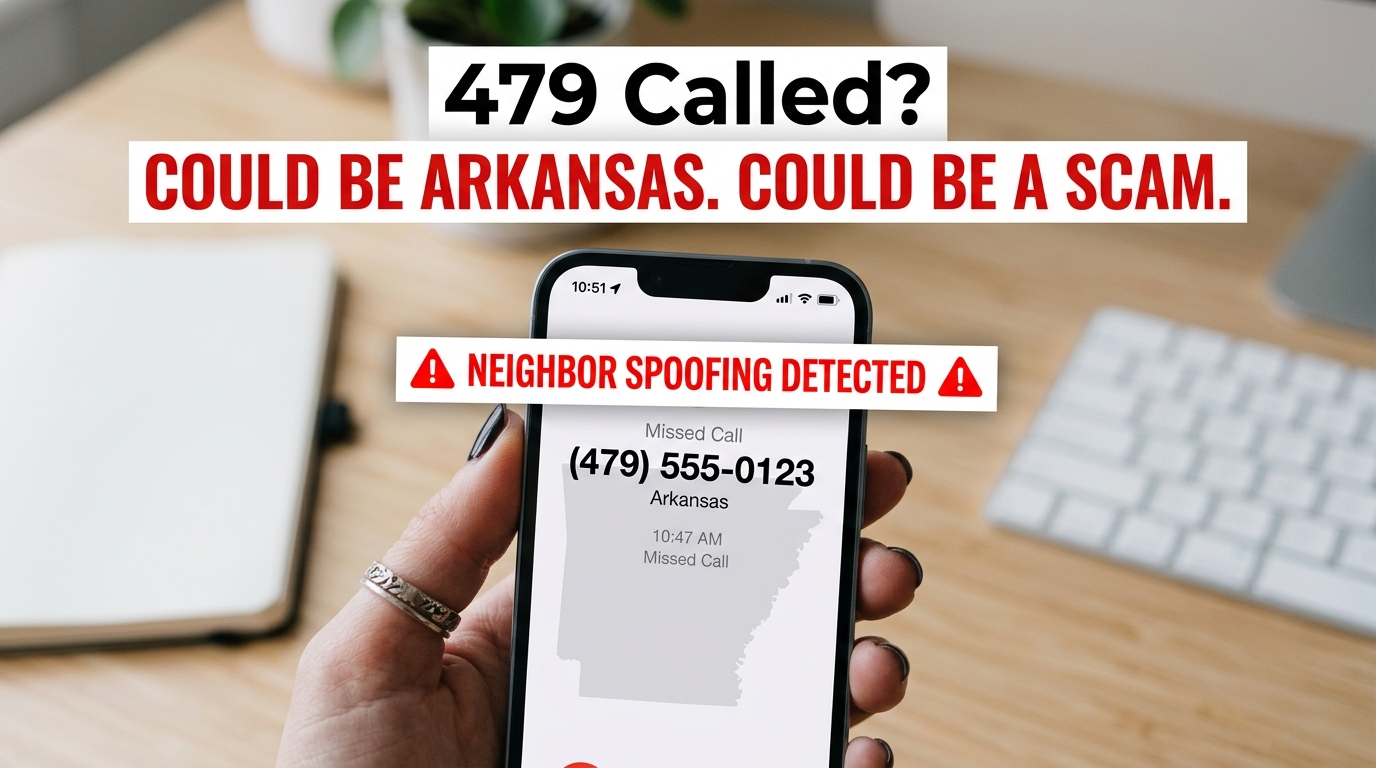

What You Need to Know About the 479 Area Code Scam Right Now
The 479 area code scam is a serious and growing problem affecting thousands of Americans — but not every call from a 479 number is fraudulent.
Here's the quick answer:
- 479 is a real area code serving northwestern Arkansas (Bentonville, Fayetteville, Fort Smith, Springdale)
- Scammers spoof 479 numbers to make their calls look local and trustworthy
- Most common scam types: Social Security impersonation, Medicare fraud, auto warranty robocalls, and health insurance scams
- What to do: Don't answer unknown 479 calls, don't call back, and report suspicious numbers to the FTC
- If you shared personal info: Secure your accounts and monitor your credit immediately
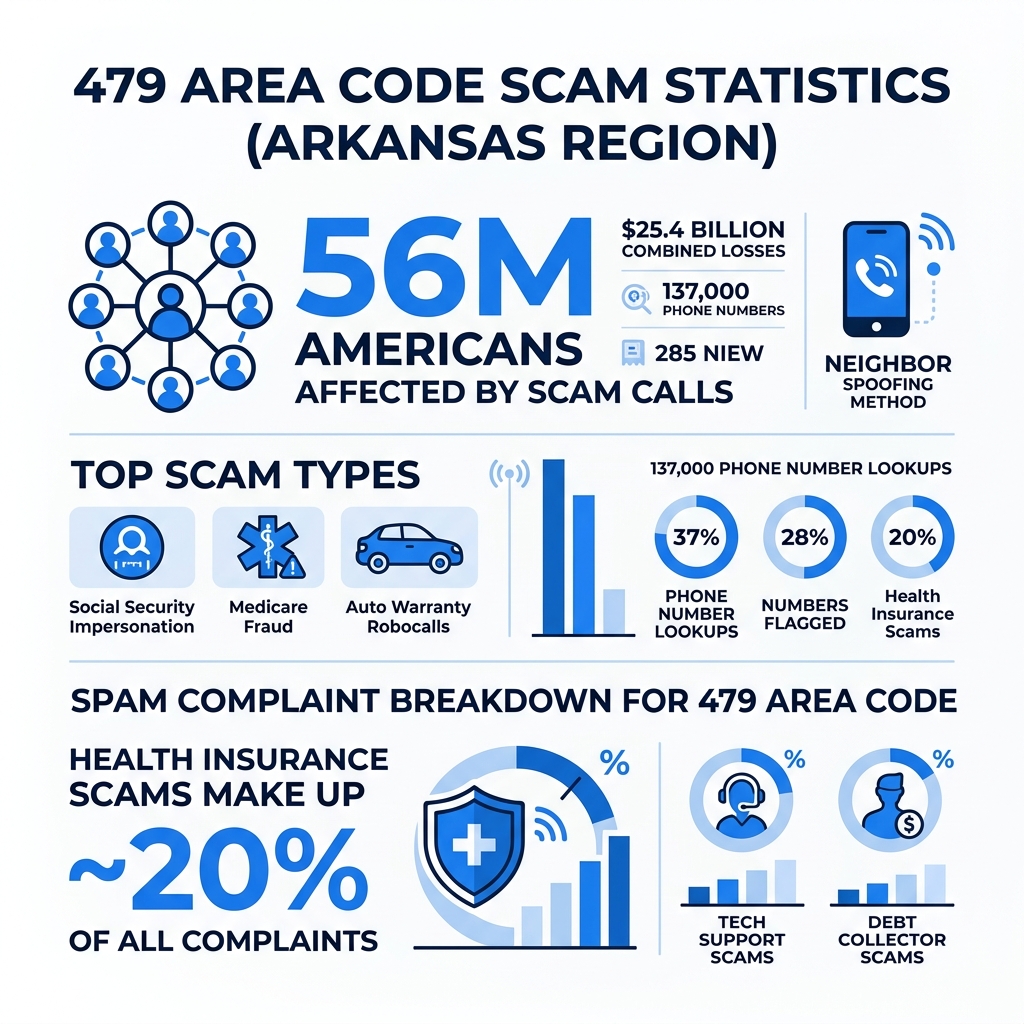
The scale of the problem is hard to ignore. In 2024 alone, more than 56 million Americans were hit by scam calls, losing a combined $25.4 billion. Area code 479 is a small but active piece of that picture — with nearly 137,000 phone number lookups, 285 numbers flagged in a "Hall of Shame," and health insurance scams making up almost 20% of all spam complaints tied to this area code.
What makes 479 scams especially tricky is neighbor spoofing — where fraudsters fake a local Arkansas number on your caller ID to make you more likely to pick up. The call may look like it's coming from your own city, but the person on the other end could be anywhere in the world.
This guide breaks down exactly how these scams work, which numbers to watch out for, and how to protect yourself.
What is the 479 Area Code and Is It a Scam?
First things first: the 479 area code itself is not a scam. It is a legitimate North American numbering plan code that has been serving the people of Northwestern Arkansas since January 19, 2002. If you have friends or family in Bentonville (the home of Walmart!), Fayetteville, Fort Smith, Rogers, or Springdale, they likely have a 479 number.
The region operates in the Central Time Zone, and because it is home to several major corporate headquarters and a large university, millions of legitimate calls originate from this area every day. You can find more technical details about the region in this 479 Area Code - Location, Time Zone. Toll Free? Scam? Who's Calling? resource.
However, the reason we are talking about a 479 area code scam is due to a technique called "spoofing." Scammers use software to mask their real phone number and display a 479 number instead. They do this because people are much more likely to answer a call that looks like it’s coming from a neighbor or a familiar domestic location than an international or "Unknown" number.
To help you distinguish between the two, we've put together a quick comparison:
Legitimate vs. Fraudulent 479 Calls
| Feature | Legitimate 479 Call | Fraudulent 479 Scam Call |
|---|---|---|
| Caller ID | Often displays a known name or business. | May display a generic city name or a spoofed government agency. |
| Reason for Call | Clear, specific, and expected (e.g., your doctor's office). | Vague, urgent, or threatening (e.g., "Your SSN is suspended"). |
| Request for Info | They already have your basic details. | They ask you to "verify" your SSN, DOB, or bank info. |
| Payment Method | Standard billing, credit cards, or check. | Demands payment via gift cards, wire transfer, or crypto. |
| Pressure Tactics | Professional and allows you time to think. | High-pressure, "act now or go to jail" threats. |
Common 479 Area Code Scam Tactics and Examples
We’ve seen a massive surge in specific types of fraud originating from spoofed 479 numbers. According to the Truecaller: “U.S. 2024 Spam & Scam Report”, the financial impact of these calls is devastating, and scammers are becoming more sophisticated in their scripts.
In the 479 area, several specific "themes" dominate the spam landscape:
- Health Insurance Scams (19.86% of complaints): These callers often claim to be from a "National Health Enrollment Center" and try to sell you low-quality or non-existent insurance plans.
- Auto Warranty Robocalls (13.7% of complaints): We’ve all heard these. A prerecorded voice tells you your car's warranty is about to expire. Interestingly, some of these have even spoofed the Arkansas Forestry Commission's numbers to appear official!
- Medicare/Medicaid Fraud (10.27% of complaints): Scammers target seniors, offering "free" DNA screenings or new Medicare cards in exchange for sensitive policy numbers.
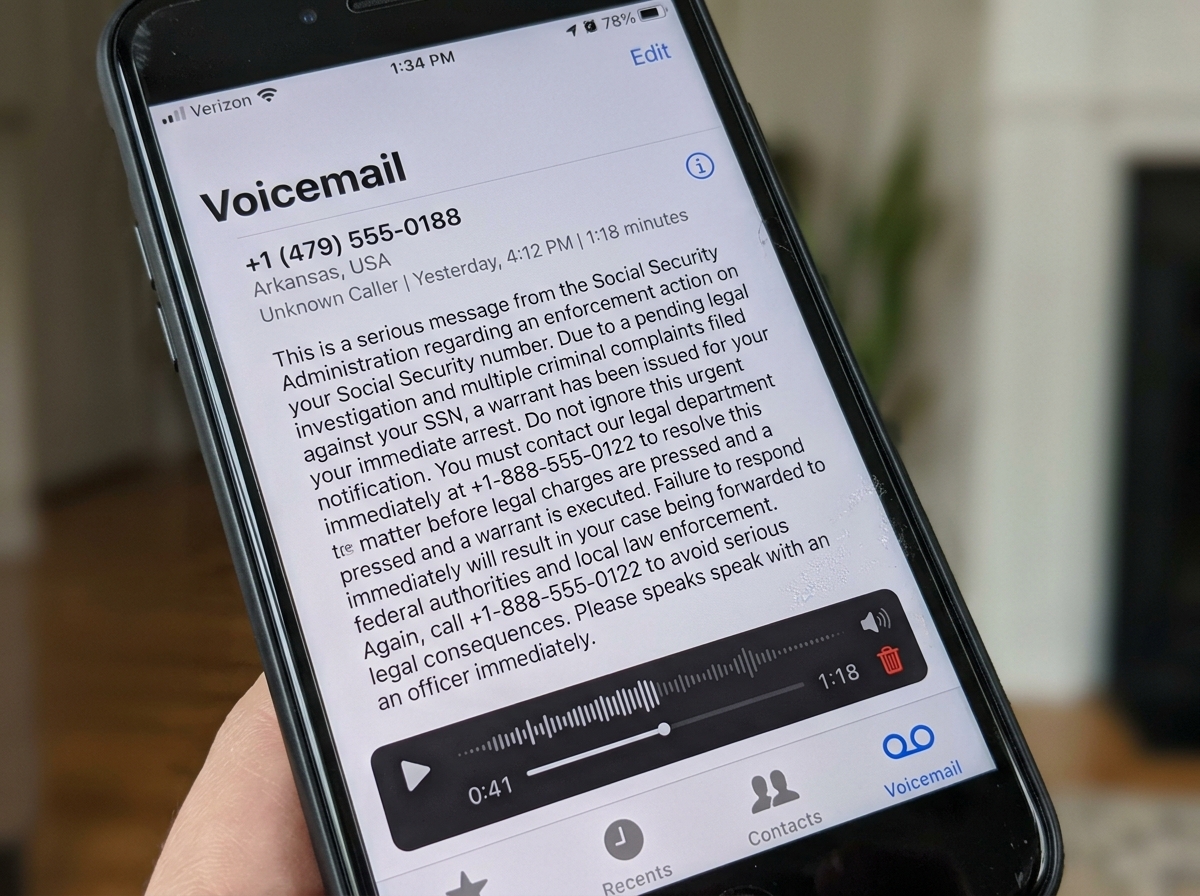
- Government Impersonation: This is perhaps the most dangerous. Scammers pretend to be from the Social Security Administration (SSA) or the IRS. They may even use local police numbers. For instance, there was a major alert regarding a Search location by ZIP code scam where fraudsters spoofed the Farmington Police Department to demand payment for fake tickets.
The Federal Trade Commission: “Scammers Use Fake Emergencies To Steal Your Money” report highlights that these criminals rely on fear to bypass your logical thinking.
The Mechanics of the 479 Area Code Scam
One of the most persistent versions of this fraud is the "One-Ring Scam." As explained by AT&T: “One-ring call scams”, this tactic is designed to pique your curiosity.
The scammer calls your phone and lets it ring exactly once before hanging up. When you see the missed call from a domestic-looking 479 number, you might think, "Oh, I missed an important local call," and dial back. This is exactly what they want.
By calling back, you may be connected to a premium-rate international line that has been masked to look like a US number. These "Wangiri" (Japanese for "one ring and cut") tactics can result in massive charges on your phone bill—sometimes upwards of $20 for the first minute. While 479 is a US area code, scammers often use it as a "hook" to get you to engage with their automated systems or to verify that your number is "active" so they can sell your data to other fraudsters.
Specific 479 Numbers Recently Reported as Spam
Based on recent FTC reports and community feedback, several specific numbers have been flagged for high-volume spam activity. If you see these on your caller ID, be extremely cautious:
- (479) 533-0560: Frequently reported for government and business impersonation.
- (479) 435-6739: Identified as an "imposter scam" number often used for robocalls pretending to be family or friends in distress.
- (479) 279-8190: Associated with student loan forgiveness scams, often sending texts to people who don't even have student debt!
How to Identify and Block 479 Area Code Scam Calls
Identifying a 479 area code scam before you pick up is your best line of defense. We recommend a "Trust, but Verify" approach—actually, let's make that "Don't Trust, Just Verify."
If you receive a suspicious call:
- Use Reverse Lookup: Websites like CallerSmart or Whitepages can tell you if a number has been reported for spam.
- Google the Number: Often, typing the phone number into a search engine will reveal forums where other victims have posted warnings.
- Listen to the Voicemail: Scammers often use "robocall" technology that leaves cut-off messages or starts mid-sentence. If it sounds like a robot, it probably is.
- Check for "Neighbor Spoofing": If the number is 479-555-XXXX and your own number is 479-555-YYYY, there is a very high chance it is a spoofed call.
The Federal Communications Commission: “Consumer Inquiries and Complaints Center: Unwanted calls/texts” provides excellent resources for identifying these patterns. We’ve also covered similar tactics in our guide to the 212 area code scam that manhattan call stole, which shows that scammers use the same playbook regardless of the city they are mimicking.
To stop the calls at the source, you should Learn more information about available apps from CTIA regarding third-party call blockers. These apps use massive databases to identify and kill spam calls before your phone even rings.
Protecting Your Privacy from the 479 Area Code Scam
Prevention is always better than a cure. We strongly encourage everyone to register their numbers on the National Do Not Call Registry at www.donotcall.gov. While this won't stop illegal scammers (who don't care about the law), it will reduce the amount of "legitimate" telemarketing you receive, making the scam calls stand out more clearly.
You can also use the built-in features of your smartphone:
- iPhone: Go to Settings > Phone > Silence Unknown Callers. This sends any number not in your contacts straight to voicemail.
- Android: Open the Phone app > Settings > Spam and Call Screen > Turn on "Filter spam calls."
At Tempo Mail USA, we believe in a "privacy-first" lifestyle. Scammers often get your phone number because you've entered it into a sketchy website or a "loyalty program" that sold your data. By using a "firewall" for your identity—such as using temporary email aliases for signups—you can reduce the footprint of your personal information online, making it harder for scammers to find you in the first place.
What to Do If You Fall Victim to a 479 Scam
If you've already answered a call, called back a one-ring number, or—worst-case scenario—shared financial information, do not panic. Take these steps immediately:
- Secure Your Accounts: If you gave out a password, change it on every site where you use it. Enable Two-Factor Authentication (2FA) immediately.
- Monitor Your Credit: Keep a close eye on your bank statements. You may want to place a "Fraud Alert" or a "Credit Freeze" on your files with Equifax, Experian, and TransUnion.
- Report the Fraud: This is crucial. Reporting helps authorities track patterns and shut down scam infrastructure.
- File a report at Federal Trade Commission: “Report Fraud”.
- Use the Better Business Bureau: “Scam Tracker” to warn others in your community.
- If you lost money, contact the FBI’s Internet Crime Complaint Center (IC3).
- If you are in Texas or Arkansas, you can also contact the Public Utility Commission or the Arkansas Senior Medicare Patrol (SMP).
Frequently Asked Questions about 479 Area Code Scams
Is the 479 area code inherently a scam?
Absolutely not. As we mentioned, 479 is the legitimate area code for Northwest Arkansas. It is home to hundreds of thousands of honest residents and major businesses. The "scam" refers to the misuse of this area code by fraudsters who spoof the number to trick people into answering.
Why am I receiving so many spam calls from Springdale and West Fork?
Data shows that Springdale accounts for nearly 20% of all spam complaints in the 479 area code, followed by West Fork at 10%. Scammers likely use these specific city tags because they are recognizable hubs in the region. If you live in or near these cities, "neighbor spoofing" software will automatically pick these locations to make the call seem more relevant to you.
What should I do if I accidentally called back a 479 number?
If you called back and realized it was a scam, hang up immediately. Check your next phone bill for any unusual "premium" charges. If you see any, contact your service provider and explain that you were a victim of a "one-ring" scam. Many carriers will waive these charges if it's your first time reporting the issue.
Conclusion
The 479 area code scam is a reminder that our digital identities are constantly under fire. Whether it's a robocall about your car's warranty or a high-pressure threat from a fake Social Security agent, these criminals rely on one thing: your willingness to engage.
By staying informed, using call-blocking technology, and reporting suspicious activity, we can collectively make it harder for these scams to succeed. At Tempo Mail USA, we are dedicated to providing you with the tools to protect your privacy. Our temporary email services act as a secure identity proxy, ensuring that your real personal information stays out of the hands of data brokers and scammers.
If you want to take the next step in securing your digital life, check out More info about privacy services and learn how we can help you build a stronger firewall around your private data. Stay safe, stay skeptical, and remember: if a call feels wrong, it probably is.