
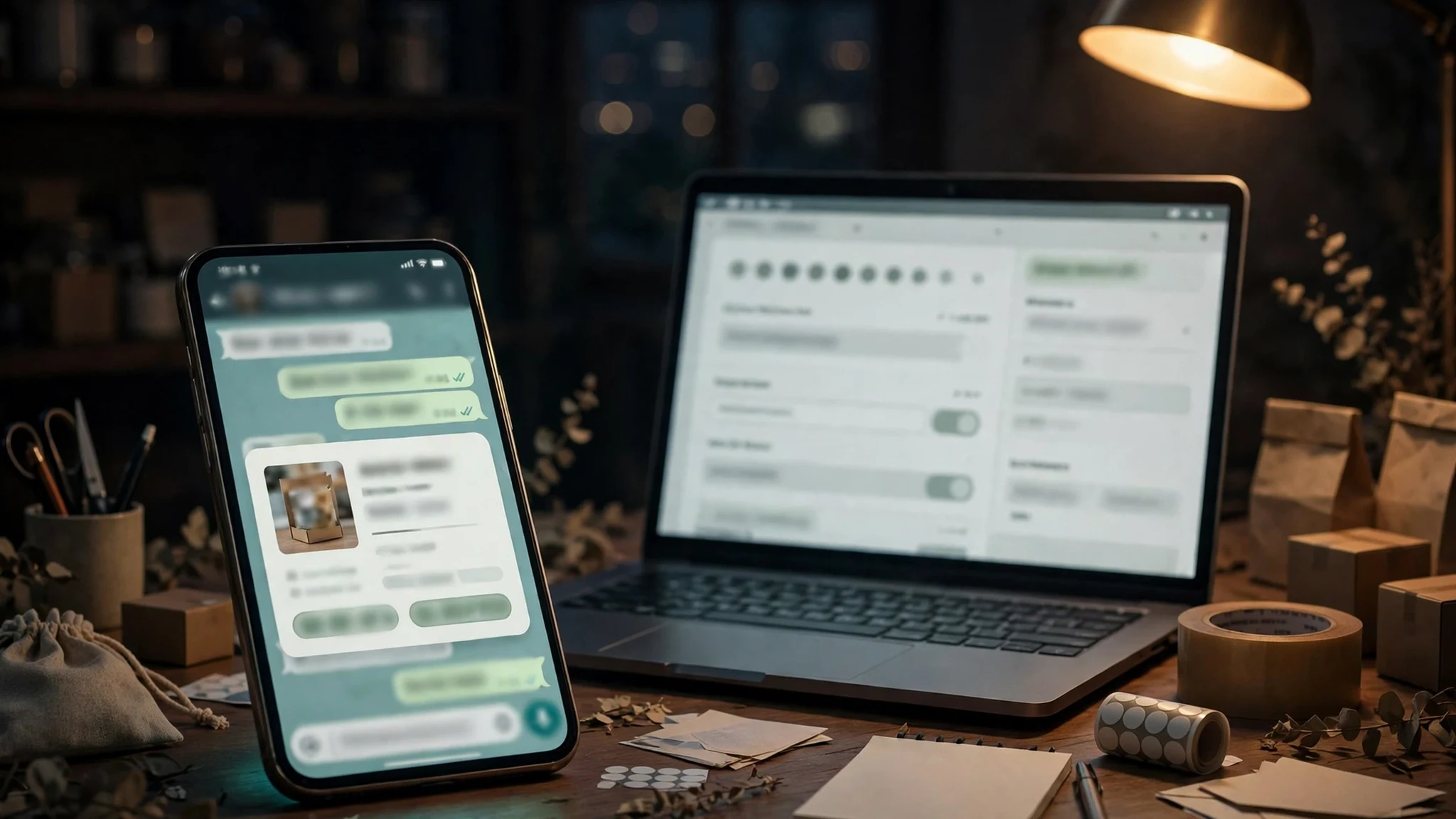
One Abandoned Cart, One WhatsApp Nudge: Testing WhatsMax Cart Recovery End to End

Tuesday, 9:41 pm. A customer — call her Meera, because every shop owner has a Meera — has been chatting with a small home-and-living store on WhatsApp since the afternoon. She asked whether the ceramic planter comes in sage green. The shop said yes, sent the product card, and she tapped through to the store. She added the planter, $38, to her cart. She got as far as the checkout page. Then her phone rang, the tab stayed open, and she never came back.
Wednesday morning, the shop owner opens the console and sees the same thing every small store sees: a sale that got to the last step and stopped. The email recovery flow the store used to run sent its reminder into a promotions tab, where it sat unread next to twenty other reminders. The WhatsApp thread with Meera is still there, though — same number, same chat, the product card already sent once. The question is whether that thread is a recovery channel or just a conversation that happened to include a product once.
That is the test this post runs. One cart, one customer, one shop, followed through the WhatsApp machinery in the order it would actually happen: what the shop knows, what the first nudge looks like, when it goes out, the reply that closes the sale, and the three places the whole thing breaks. The machinery is WhatsMax, the multi-vendor WhatsApp marketing script whose landing page sells it for $44 one-time — and whose demo pages describe, in unusual detail, exactly how its catalog, drip and inbox pieces are supposed to fit together. I read those pages the way a shop owner would: not to admire the feature list, but to find the step where the recovery quietly fails.
One thing to say before the walkthrough starts, because it changes how you should read everything after it. I did not run a live recovery in the demo, buy a planter, or measure a recovery rate. What I did was read the live landing page and the live demo pages, then follow one cart through the flows those pages document. Where the text says what would happen next, that is the documented machinery speaking, not a measured result. That distinction matters, because cart recovery is a field full of confident percentages, and this post is not going to add another one it cannot defend.
What the shop actually lost
An abandoned cart is not a lost customer. That sounds like a consolation, and it partly is, but it is also the whole reason recovery works at all. Meera did not reject the planter. She did not compare prices and pick a rival. She got interrupted. The distance between her cart and a completed order is one message at the right moment, not a discount ladder or a re-targeting campaign. Shops forget this and treat every abandoned cart like a pricing objection, which is how you end up offering 20% off to someone who would have paid full price if you had just reminded them before bedtime.
What the shop lost, precisely, is $38 of revenue it had already earned in every sense except the last click, plus the small cost of the attention it spent getting Meera that far: the afternoon's chat, the product card, the delivery question answered. Recovery is cheap precisely because the expensive work — discovery, trust, selection — is already done. The only job left is to be present, in the channel the customer already uses, at a moment when she can act.
That is why WhatsApp is the interesting channel here and not email. It is not because WhatsApp is magic. It is because the thread already exists, the customer already replies there, and a message there arrives on the same screen she was shopping on. Email recovery asks the customer to switch apps, find the message, and click back into the store. WhatsApp recovery asks her to tap a product card in a chat she is already in. The difference is friction, not persuasion — and friction is the thing that killed the sale in the first place.
The cart, as WhatsMax sees it
Before any nudge goes out, something has to know the cart exists. This is the step most recovery advice skips, because it is boring and because it is where most small shops quietly fail. A cart abandonment is not a WhatsApp event. It happens on the store — a website, an Instagram shop, a link in a chat. WhatsMax only knows about it if the store's side of the system tells it, and the way that happens here is the catalog.
The landing page describes the catalog piece plainly: sync your Meta catalogs and products, then send single-product, product-list or full-catalog messages straight from the chat composer and from campaigns, and inbound orders surface in the inbox. The demo says the same thing with one useful addition — orders customers place from those messages arrive in an orders inbox inside the console, next to the conversations that started them. Read those two sentences together and you get the shape of the system: the product lives in Meta's catalog, the conversation lives in WhatsMax, and the order lands back in the same console as the chat that produced it.
That matters for recovery because it decides what the nudge can contain. If the catalog is synced, the nudge is not a text message saying "you left something in your cart" — it is the actual product card, with the name, the price and the image, sent from the composer or as a campaign. The customer does not have to remember what she was looking at. It is in front of her again, tappable, in the same chat where she asked about sage green six hours earlier. And the shop owner, on the other side, can see the thread and the order in one place, which is a small thing until you have run a shop for a month and realised how much time goes to matching a payment to a conversation across three different apps.
There is a limit here worth naming early. The system knows the product and the customer only if the customer is already a contact with an opted-in number and a catalog that is actually synced. A stranger who abandoned a guest checkout on a website the shop does not control is not recoverable through this machinery at all. Recovery starts from a relationship — a chat that already happened — and everything after this section assumes that relationship exists. That is not a flaw in the product. It is the boundary of what WhatsApp recovery is, and pretending otherwise is how shops end up messaging strangers and getting their number flagged.
The first nudge: a product card, not a paragraph
So the shop decides to nudge. The worst version of this message is a paragraph: "Hi Meera, we noticed you left an item in your cart, complete your purchase now, limited stock, hurry." It reads like every other abandoned-cart email, just shorter and more intrusive, and it wastes the one advantage WhatsApp has — that the product itself can be the message.
The better version, and the one the catalog machinery exists for, is the product card. One message, one product: the sage green planter, $38, with a button that takes her back to checkout. The landing page lists the template formats that make this possible — marketing, utility and authentication templates with media headers, carousel and limited-time-offer formats, copy-code buttons, variables with samples — and the demo adds the operational detail that variables like {{1}} map to contact fields, so the message can carry her name and the product's price without anyone typing them by hand. A template with a variable is a small thing, but it is the difference between a message that looks written for Meera and a message that looks written for a list.
The temptation at this point is to add a discount. Resist it, at least for the first nudge. A discount on the first message trains customers to abandon carts on purpose, and it spends margin on a customer who was interrupted, not price-sensitive. The product card plus a plain question — "Still want this one? I can hold the sage green for you till tonight" — costs nothing, sounds like the shopkeeper she already talked to, and gives her a reason to reply that is not a coupon. The reply is the valuable part, as the next sections show, because a reply reopens the free-reply window and turns a broadcast into a conversation.
There is also a compliance point hiding in this paragraph that the product is unusually honest about. The landing page lists STOP and HELP opt-out handling as a built-in feature, and the demo's FAQ says that when a contact opts out, it is recorded automatically and that number is excluded from future campaigns. That is the machinery doing the right thing without being asked. But it only helps if the shop respects it — an opt-out is a wall, not a suggestion, and a recovery nudge sent to someone who opted out is not a recovery attempt, it is a policy violation that risks the number.
When the nudge goes out matters more than what it says
Timing is where recovery is won or lost, and it is also where most shops guess. Too early and the nudge arrives while the customer is still deciding — annoying. Too late and she has bought the planter somewhere else, or forgotten why she wanted it. The honest answer is that the right delay depends on the product: an hour for a $38 planter is reasonable; an hour for a $900 sofa is pushy. But the machinery has to support whatever delay the shop picks, and this is where WhatsMax's drip and follow-up modules earn their place in the story.
The landing page lists two separate pieces: drip campaigns, described as day-offset message sequences, and auto follow-up, described as no-reply triggers with smart steps. The demo explains the combination: day-by-day drip sequences, automatic follow-ups when a chat goes quiet, and birthday greetings from contact dates — window-aware, so messages go free-form inside 24 hours and as templates after. Put together, a shop can build a recovery sequence rather than a single shot: a gentle nudge an hour after abandonment, a second message the next day if there was no reply, and then silence. The sequence matters because the first nudge does not have to do all the work. It only has to restart the conversation. The follow-up does the closing.
Two guardrails in the same pages deserve attention, because they are the difference between a recovery system and a spam cannon. First, bulk campaigns carry scheduling, quiet hours, pacing and auto-retry, with live sent, delivered, read and failed stats — the demo repeats this, adding per-number pacing and atomic sending. Quiet hours mean the 2 am nudge never goes out. Pacing means a hundred nudges do not leave in the same second. Second, the follow-up triggers are no-reply triggers: they fire when the chat goes quiet, not on a timer that ignores the customer's answers. A customer who replied "not now" should not get the day-two nudge. The machinery, as documented, understands that. Whether a given shop configures it that way is a different question, and it is the shop's responsibility, not the script's.
My own judgement, for what it is worth: one nudge an hour after abandonment, one follow-up the next morning, and then stop. Three messages to a person who has not replied is not persistence, it is pestering, and pestering is what gets numbers reported. The product gives you the tools to send ten. The product also gives you the tools to stop at two. The second choice is the one that keeps the number alive for the next sale.
The reply that closes it
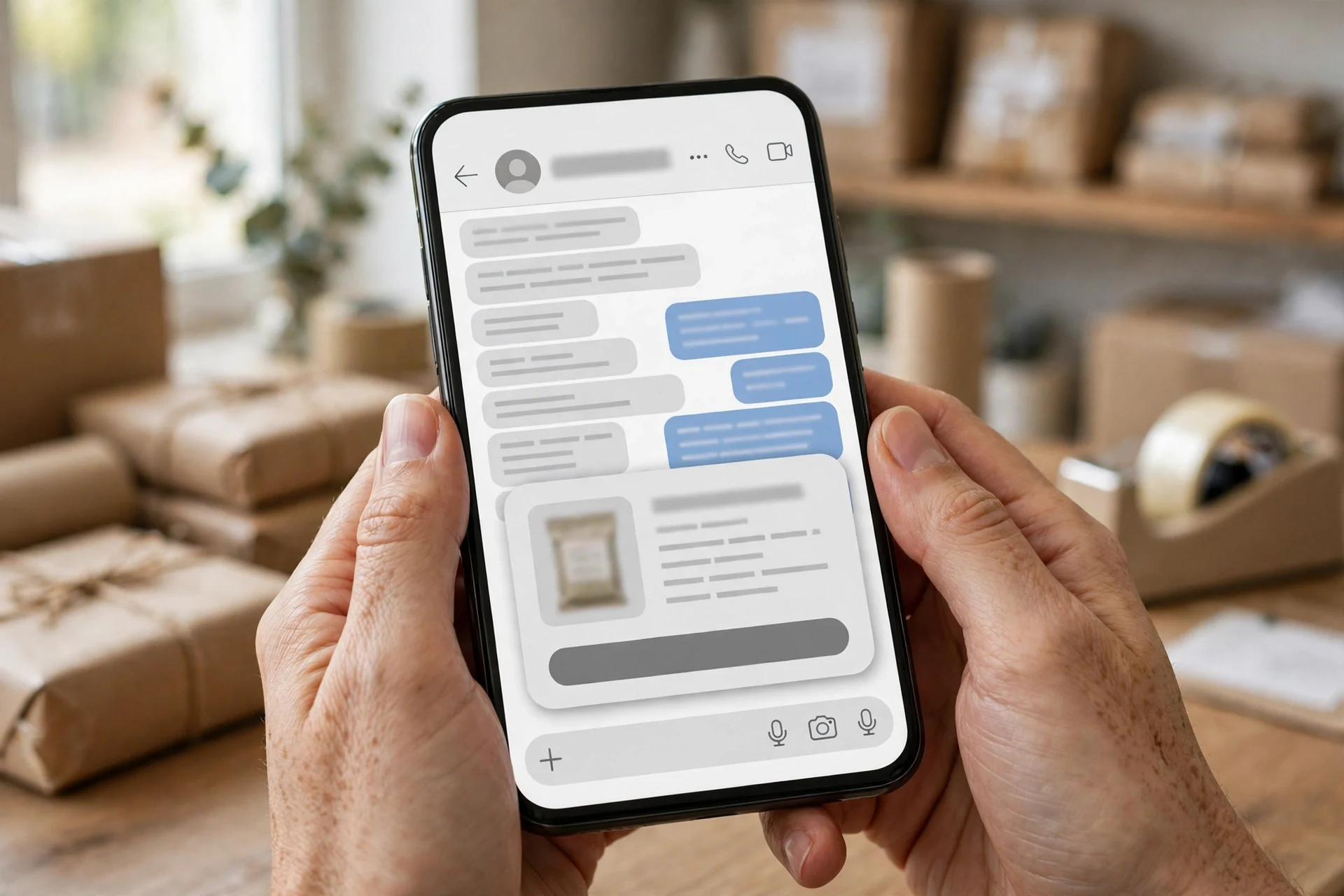
Meera replies. "Yes — can you hold it till tonight? And is delivery still free over $35?" That reply is the moment the whole recovery turns, and it is the moment the inbox design either helps or gets in the way.
Inside the 24-hour window — the free-reply service window that starts from the customer's last message — the shop can answer in free-form text. No template, no approval wait, just an answer: yes, held till tonight, and yes, delivery is free over $35, so the planter qualifies. The demo is explicit that the window state is shown on every conversation, so nobody on the team replies late by accident, and that labels, assignment and contact details sit right beside the chat. That sounds like furniture until you picture the alternative: two staff members, one phone, no record of who promised what to whom. The shared inbox exists for exactly this moment — a customer with a question and a card, and a team that needs to answer once, consistently.
The closing move happens in the same chat. The landing page says catalog sending is built into the composer: single-product, product-list or full-catalog messages sent without leaving the conversation. So the shop sends the planter card again — this time as the answer to her question, with the checkout link attached — and Meera taps it, pays, and the order surfaces in the orders inbox next to the conversation that started it. That last detail is the one I keep coming back to. The order and the chat live in the same console. There is no end-of-day reconciliation between a payment notification and a WhatsApp thread. The recovery is complete, and the record of it is the thread itself.
Notice what did not happen. Nobody offered a discount. Nobody sent a second nudge. Nobody left the chat to open another app. The recovery cost the shop one message, one answer and one product card — and the only money that changed hands beyond the $38 was whatever Meta charges for the conversation, which the demo's FAQ states plainly is billed by Meta, not by WhatsMax, at a rate depending on the conversation category and the customer's country. That is a cost worth knowing before you build a recovery flow around a hundred carts a day, and it is a cost the product does not hide.
The three places recovery breaks
A recovery test that only shows the happy path is a brochure. Here are the three breaks, in the order a shop owner will meet them.
The first is opt-in. The demo's campaign description says it plainly: approved template broadcasts go to opted-in contacts. Meera is reachable because she chatted with the shop first and never opted out. A cart attached to a phone number the shop bought, scraped or guessed is not a recovery opportunity — it is a message the shop has no right to send, and the opt-out machinery will not save a shop that starts from a list it should not have. If your recovery list is smaller than your abandoned-cart list, that is the system working. Build the opt-in into the checkout itself — a checkbox, a QR code, a clear sentence — and the recovery list grows honestly.
The second is the 24-hour window. WhatsApp closes the free-reply window 24 hours after the customer's last message, and the demo's FAQ states the consequence directly: when the window is closed, you reopen the conversation by sending an approved template message. That means a cart abandoned on Friday and nudged on Monday is a template send, not a chat — and templates need Meta approval, which the demo says is tracked live per template but still takes time. A shop that writes its recovery templates after the cart is abandoned is already late. Write them when you set the shop up, get them approved while you have no carts to recover, and the window stops being a failure point. This is the single most practical piece of advice in this post, and it costs nothing except doing the boring setup work before you need it.
The third is the money. Two costs sit underneath every recovery, and both are easy to underestimate. The first is Meta's per-conversation charge, billed by Meta, which means recovery is not free even when the tool is — a hundred recovered carts is a hundred conversations, and the rate depends on category and country. The second is the vendor plan the shop itself pays for: the demo seeds Free at $0 a month (100 contacts, 10 campaigns a month, 500 messages a month), Growth at $29 a month (5,000 contacts, 100 campaigns, 10,000 messages), and Scale at $99 a month (unlimited). Those are the plans a store running WhatsMax sells to its own vendors, and they are separate from the $44 one-time price of the script itself, which the landing page and the shop listing agree on. A shop doing recovery at any volume will outgrow the Free plan's 500 messages in a week. That is not a hidden cost — both prices are printed on the pages — but it is a cost that belongs in the recovery maths, next to the revenue the nudges bring back. The earlier cost audit of WhatsApp Business API pricing on this site works the same maths from the other direction, and it is worth reading before you price a recovery flow.
What the numbers would have to say

Suppose the shop runs this recovery for a month. Twenty carts, twenty nudges, and the question the owner asks at the end of it: did it work? The product's answer to that question is the campaign reporting: live sent, delivered, read and failed stats, with a per-recipient log behind them. The landing page promises exactly that, and the demo repeats it — every campaign tracked from queued to read, with the per-recipient log available when a number looks wrong.
Here is where I have to be blunt about what this post is and is not. I did not run that month. I did not send twenty nudges, count the reads, or divide the recovered revenue by the Meta charges. There is no recovery rate in this post because I did not measure one, and a recovery rate I invented would be worse than useless — it would be a number a shop owner might budget against. What I can say, honestly, is what the numbers would have to show for recovery to be worth doing: delivered close to sent (the numbers are real and the templates approved), read meaningfully above delivered (the customer actually saw the card), and recovered orders covering the Meta charges and the plan cost with room to spare. If delivered is far below sent, the problem is the list or the templates. If read is far below delivered, the problem is the timing or the first line. If orders are far below reads, the problem is the checkout, not the nudge — and no amount of WhatsApp machinery will fix a checkout that asks for an account before it asks for payment.
That is the diagnostic value of the per-recipient log, and it is the part of the product I would actually pay attention to as a shop owner. A recovery system that only reports totals is a black box. A system that shows which recipient failed, and why, is a tool you can fix things with. The landing page claims the log exists. The test a buyer should run, in the demo, is to open it after a campaign and see whether the failure reasons are specific enough to act on. If they are, the product earns its keep. If they are vague, no dashboard will save the recovery.
The verdict for a one-shop owner
So: one cart, one nudge, one reply, one order. Does WhatsMax earn its place in a small shop's recovery flow?
For a shop that already sells on WhatsApp — the home-and-living store, the boutique bakery, the electronics retailer the demo quotes — yes, with conditions. The conditions are the whole post, so here they are in one place. Get opt-in at checkout, or you have no list. Write and approve your recovery templates before you need them, or the 24-hour window will close on your best carts. Send the product card, not a paragraph, and send it once, then once more the next morning, then stop. Price the Meta conversation charges and the vendor plan into the maths, and remember the $44 script price is the platform, not the running cost. And read the per-recipient log after every campaign, because the log is where the next fix lives.
For a shop that does not sell on WhatsApp yet, the answer is different: do not buy a recovery system before you have a conversation worth recovering. A chat thread is the asset here, not the script. If your customers reach you by phone and email and have never messaged you on WhatsApp, a recovery nudge will arrive as a message from a stranger, and the opt-out machinery will quite properly eat it. Start with the inbox — answer customers where they already are — and the recovery flow becomes the second thing you build, not the first. The one-shop, one-number walkthrough on this site shows what that first step looks like, and the shared-inbox triage test shows what happens when the inbox has to carry eight channels at once.
And for the shop owner weighing whether the script itself is worth $44 once, against the monthly platforms that charge for the same job every month: the maths is not close, but it is also not the whole story. $44 one-time for the full script, with 94 features and 28 modules the landing page counts, is cheap against any monthly platform — the cost audit on this site priced that comparison properly. But a one-time script also means you run it, you maintain it, and you connect your own Meta account. The demo's three steps — connect your number, create templates, send and chat — are honest about the work involved. It is an afternoon's setup, not a five-minute signup. For a shop that will send recovery nudges every day for a year, that afternoon pays for itself in the first month. For a shop that will send three campaigns and forget the console exists, no price is cheap enough.
Meera's planter, for the record, is a $38 sale that a paragraph in a promotions tab would probably have lost. The recovery did not need a discount, a sequence, or a dashboard. It needed a product card, in a chat that already existed, at 10:40 on a Wednesday morning, with a human on the other end when she replied. That is a small thing. It is also, most days, the whole job.
Frequently asked questions
Does WhatsMax recover abandoned carts automatically?
Not on its own. It gives you the pieces — a synced Meta catalog, catalog messages in the chat and in campaigns, day-offset drip sequences, and no-reply auto follow-ups — and you assemble them into a recovery sequence. The cart itself has to come from your store, and the customer has to be an opted-in contact. There is no button labelled "recover carts" that works without that setup.
What does a recovery nudge cost?
Two things. Meta charges per conversation on the WhatsApp Business Platform, at a rate that depends on the conversation category and the customer's country, and Meta bills it — not WhatsMax. On top of that, the store running WhatsMax pays for its vendor plan: the demo seeds Free at $0 a month, Growth at $29 and Scale at $99. The script itself is $44 one-time, which both the landing page and the shop listing confirm.
Can I send a recovery message to any cart I know about?
No. Template broadcasts go to opted-in contacts only, and when a contact opts out it is recorded automatically and excluded from future campaigns. A cart tied to a number that never chatted with you, or that opted out, is not reachable through this machinery — and trying is how numbers get flagged.
What happens if the customer replies after the 24-hour window closes?
A reply from the customer reopens the window — the clock runs from their last message. The problem is the reverse: if you message first after 24 hours of silence, you must send an approved template, not free-form text. That is why the recovery templates should be written and approved before you need them, not after a cart goes cold.
How do I know if recovery is working?
Campaigns report sent, delivered, read and failed stats with a per-recipient log behind them. Judge it in that order: delivered against sent, read against delivered, orders against reads. If deliveries fail, fix the list and templates. If reads are low, fix the timing. If reads are high and orders are low, fix the checkout — the nudge is not the problem.
Do I need the catalog synced for cart recovery?
Practically, yes. Without a synced Meta catalog, the nudge is a text message describing a product the customer has to remember. With it, the nudge is the product card itself — name, price, image, checkout link — sent from the chat composer or as a campaign, and the order lands back in the orders inbox. The catalog is what makes the message worth opening.
Where this leaves the cart
The planter arrived on Friday, sage green, as promised. Meera left a five-star review in the same chat thread, which the shop owner read on Saturday morning between orders. None of that was the script's doing. The script sent a card, waited an hour, and got out of the way when a human replied. That is a modest claim for a product page to make, and it is the reason I would trust this one more than a page promising to recover every cart you ever lose. Recovery is not a feature. It is a conversation, resumed at the right moment, in the channel the customer already chose. The machinery's job is to make that moment easy to hit — and to stay quiet for the rest of the day.
See it for yourself in the live demo at mavora.tempomailusa.com, or read the full feature list on the landing page at trymavora.tempomailusa.com. The broadcast opt-in audit on this site is the right companion piece before you send anything to a list — it sorts every number into opted-in, opted-out or never-asked, which is the list your recovery depends on.
Need a disposable temporary email?
Protect your real inbox from spam and promotional clutter instantly and free.
Received a suspicious email, text, or charge alert?
Verify whether the sender domain is disposable, spoofed, or unverified before clicking links.