


Is the Vinclarity Scam Real? Here's What You Need to Know
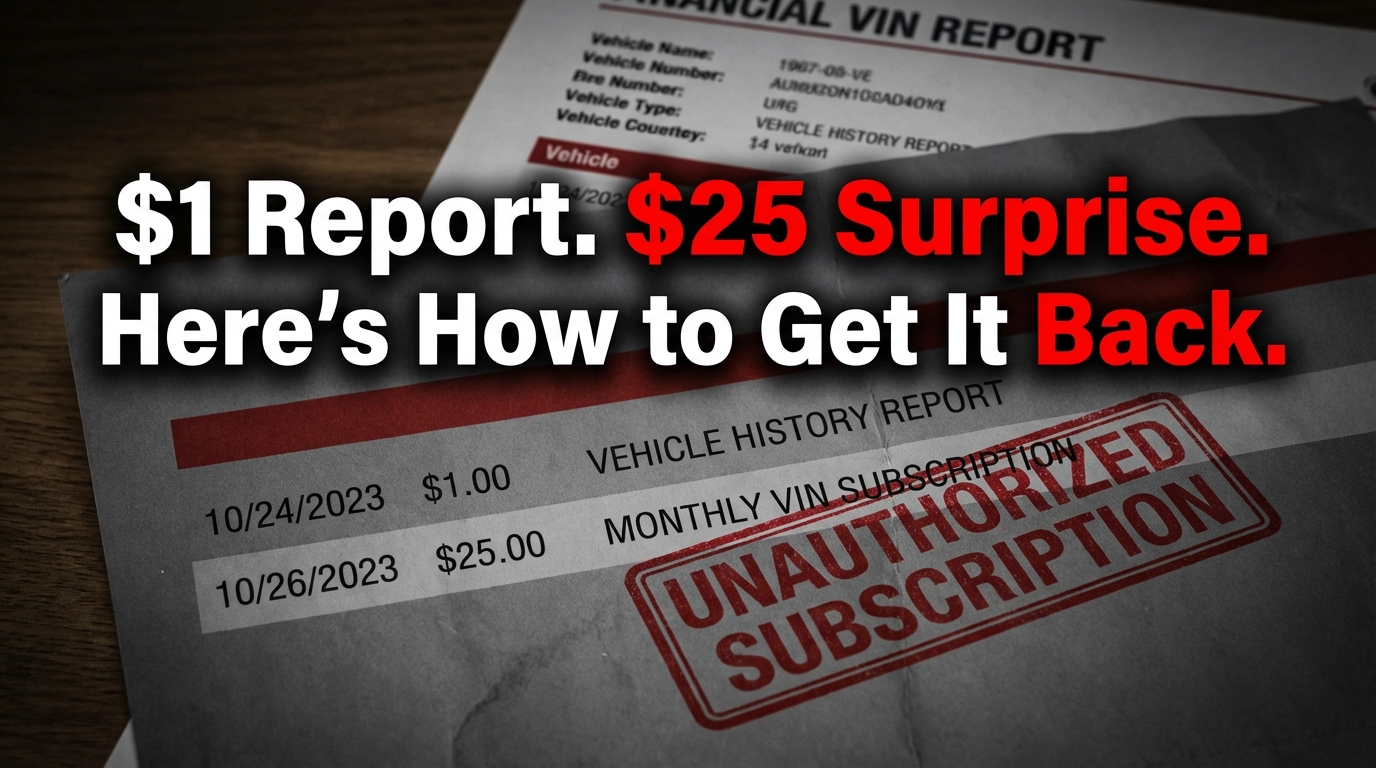
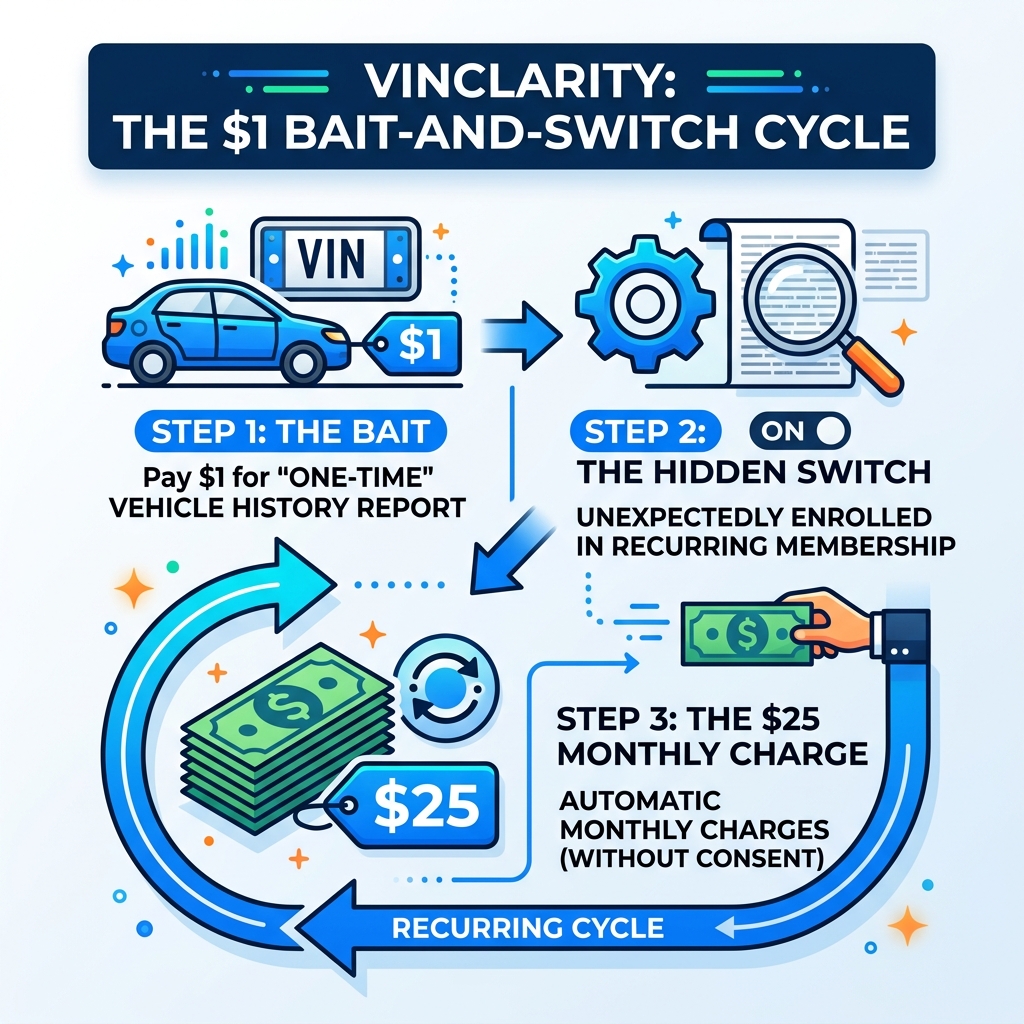
The Vinclarity scam is real, and it follows a clear pattern: users pay $1 for a vehicle history report, then get hit with unexpected $25 monthly charges they never agreed to.
Here's the quick verdict:
- What it is: Vinclarity.com sells vehicle history reports, starting with a $1 "one-time" fee
- The trap: That $1 purchase quietly enrolls you in a $25/month membership
- Who's affected: Dozens of users on Reddit, BBB Scam Tracker, and Scamadviser report unauthorized recurring charges
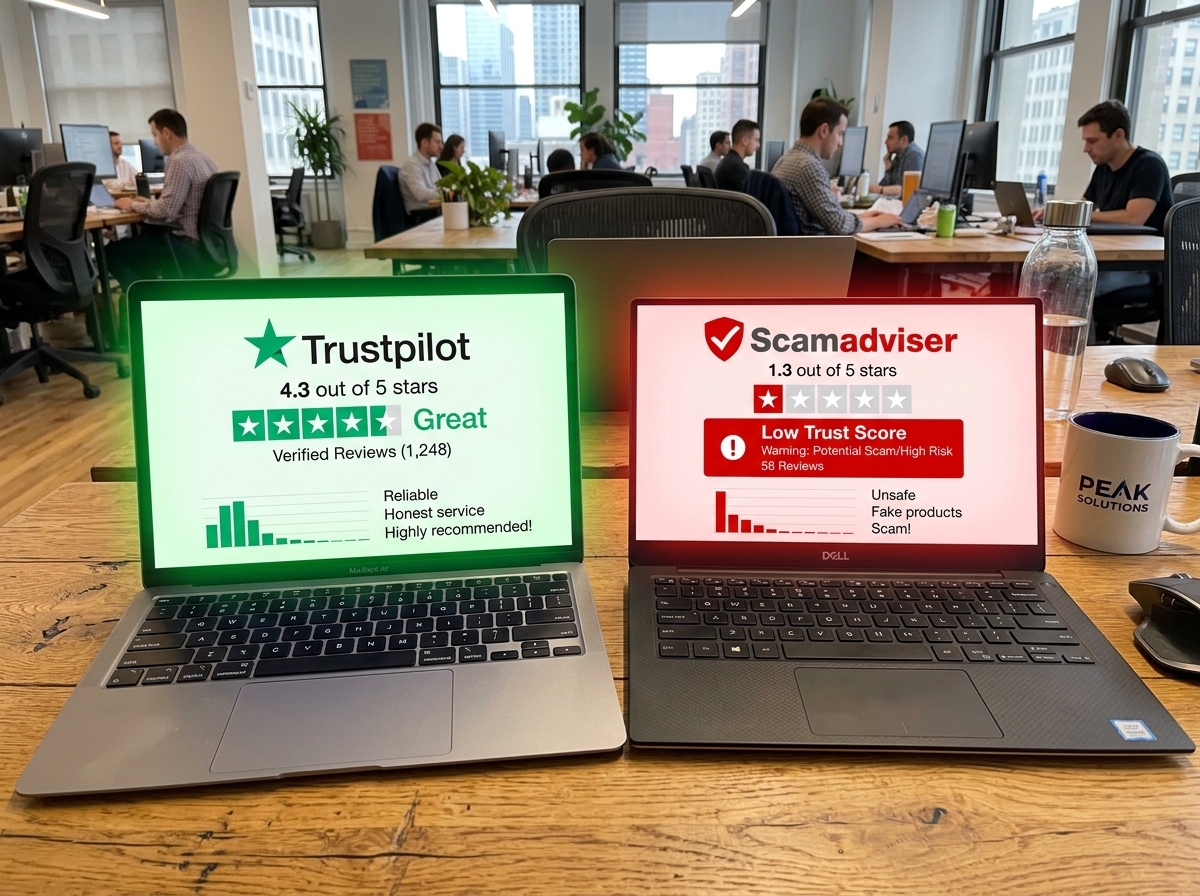
- Trust score: Scamadviser rates it 56/100 ("Suspicious website") with a 1.3/5 average from 63 consumer reviews
- Trustpilot score: 4.3/5 from 18,064 reviews — but this is likely inflated by review-gating tactics (more on that below)
- Bottom line: Proceed with extreme caution before entering any payment details
One BBB Scam Tracker report from July 2025 sums it up well: a user paid $1 for a car report, then found a $25 charge on their account two days later — a membership they never requested. The promised refund never arrived, even after 8 business days.
If you've already been charged, don't panic — there are steps you can take. Read on for the full breakdown.
What is Vinclarity.com and How Does the Service Work?
Vinclarity.com presents itself as a comprehensive vehicle history and ownership insights platform. At first glance, the website looks professional, promising to pull data from authoritative sources like the DMV, NHTSA, insurance companies, and dealership networks. They claim to provide everything from accident records and odometer readings to title status and market value tracking.
The technical setup of the site is a bit of a mixed bag. While the WHOIS details for vinclarity.com show the domain was registered on June 16, 2023, the ownership information is hidden behind a privacy service in Iceland. Using a registrar like NameCheap and hiding ownership isn't always a sign of a scam, but it is a common tactic used by sites that want to avoid direct accountability.
On the surface, the site uses standard SSL encryption to protect your data during transmission. However, as we’ve seen in our is-testerup-a-scam-survival-guide, technical legitimacy like an "https" prefix doesn't guarantee that a company's billing practices are ethical. Vinclarity uses "time-wasting" animations—those little loading bars that make it look like they are searching deep databases—to build anticipation before asking for your dollar. In reality, modern data queries happen almost instantly; these animations are often just psychological "hooks" to make the $1 fee feel like a bargain for the "work" being done.
The Reality Behind the Vinclarity Scam Allegations
The core of the Vinclarity scam allegations lies in what happens after you pay that initial $1. Most users arrive at the site looking for a quick, one-time VIN check. They see a promotional price—usually $0.99 or $1—and assume they are making a single purchase.
However, many Reddit user experiences tell a different story. Users report that within days of paying for their $1 report, a recurring charge of $24.99 or $25.00 appears on their bank statement. This is the "Membership Trap." According to BBB Scam Tracker reports, these charges often happen without the user ever explicitly clicking a "Subscribe" button. Instead, the enrollment is buried in the fine print or a pre-checked box that is easy to miss on a mobile screen.
Why Some Users Call Vinclarity Scam a Subscription Trap
A subscription trap is a business model that relies on "negative option billing." This means the company assumes you want to keep paying unless you specifically tell them to stop. The Vinclarity scam is frequently labeled this way because:
- Transparency is Low: The $1 fee is highlighted in large, bold fonts, while the $25 monthly recurring fee is tucked away in the Terms of Service.
- Delayed Billing: The secondary charge often hits 2 to 7 days after the initial purchase, catching users off guard.
- Difficult Cancellation: Users on Scamadviser and Reddit have noted that finding a "cancel" button on the dashboard is like finding a needle in a haystack.
The Scamadviser technical analysis flags the site as suspicious specifically because of these billing patterns. While the site technically delivers a report, the "value" of that report is often questioned by users who claim the information is no better than a free Google search.
Analyzing the Discrepancy in Online Reviews
If you search for Vinclarity reviews, you might get whiplash. On one hand, Trustpilot shows a glowing 4.3/5 stars with over 18,000 reviews. On the other hand, Scamadviser and Rating Facts show scores as low as 1.3/5. How can one site be both "Excellent" and "Very Poor"?
The answer lies in a tactic called "review gating." Many users report that Vinclarity requires them to leave a Trustpilot review before they can download or print the report they just paid for. This leads to thousands of 5-star reviews from people who are just trying to get their document and haven't even seen the content yet—or realized they've been signed up for a $25 monthly fee.
Trustpilot does use Trustpilot review labels to help identify verified interactions, but these labels don't always catch the context of a "forced" review. When you look at the 1-star reviews that trickle in a week later, the story changes: users come back angry, reporting unauthorized charges and unresponsive customer support.
What to Do if You Have Been Charged Unexpectedly
If you see a $25 charge from Vinclarity on your statement, you need to act fast. Based on Rating Facts user complaints, the company’s internal refund process can be slow or non-existent.
| Action | Success Rate | Pros | Cons |
|---|---|---|---|
| Contact Support | Low/Medium | Might get a "goodwill" refund | Often ignored or told "no refunds" |
| Bank Dispute | High | Reclaims money directly | Can take 30-60 days to resolve |
| Card Cancellation | Highest | Stops all future charges | Pain of updating other bills |
We recommend a multi-step approach. First, email support@vinclarity.com to create a paper trail of your cancellation request. If they don't respond within 48 hours, call your bank. Many victims have found that even after "canceling," the charges continue, leading them to cancel their physical credit card entirely to stop the bleeding.
How to Protect Yourself from a Vinclarity Scam
The best way to handle a Vinclarity scam is to never get caught in the first place. Here are our top tips for staying safe:
- Use Virtual Cards: Services that provide one-time-use card numbers are perfect for sites like this. Set a spending limit of $2, and the $25 subscription charge will automatically fail.
- Credit Over Debit: Never use a debit card for "trial" offers. Credit cards offer much stronger legal protections for disputing unauthorized subscriptions.
- Read the Summary Page: Before you hit "Pay," look for any mention of a "Membership" or "Monthly" fee. If it’s there, walk away.
- Protect Your PII: Often, these sites are just fishing for data. As we discussed in our guide on joinfansclub-scam-or-legit-hidden-charges, once a company has your real email and card info, they can be very persistent.
Frequently Asked Questions about Vinclarity
Is Vinclarity a legitimate vehicle history provider?
Technically, yes, they provide a service. However, their business model relies heavily on deceptive "dark patterns" that trick users into monthly subscriptions. While they are not a "fake" site in the sense that they take your money and give nothing, many consumers consider the Vinclarity scam to be a bait-and-switch operation.
How do I cancel my Vinclarity subscription?
You can try logging into your account dashboard and looking for a "Cancel Membership" link, though users report this is often hidden. The most reliable way is to email their support team and simultaneously contact your bank to block any future transactions from their merchant ID.
Can I get a refund for unauthorized charges?
According to their own FAQ, they can issue refunds, but many users report being denied. If you were charged without clear consent, your best bet is a chargeback through your credit card provider. Be sure to mention that the subscription was not clearly disclosed at the time of the $1 purchase.
Conclusion
The Vinclarity scam serves as a modern reminder that "too good to be true" pricing usually comes with a hidden cost. A $1 car report sounds like a steal compared to the $40 charged by industry leaders, but that $39 "savings" quickly disappears when you're hit with a $25 monthly bill for a service you didn't want.
At Tempo Mail USA, we believe the first line of defense is privacy. When you use a temporary email alias, you prevent these companies from linking your data across the web and peppering your inbox with "offers" that lead back to these subscription traps. Always stay skeptical, read the fine print, and protect your digital identity.