



The Vinclarity Scam: What's Actually Happening to Your Card
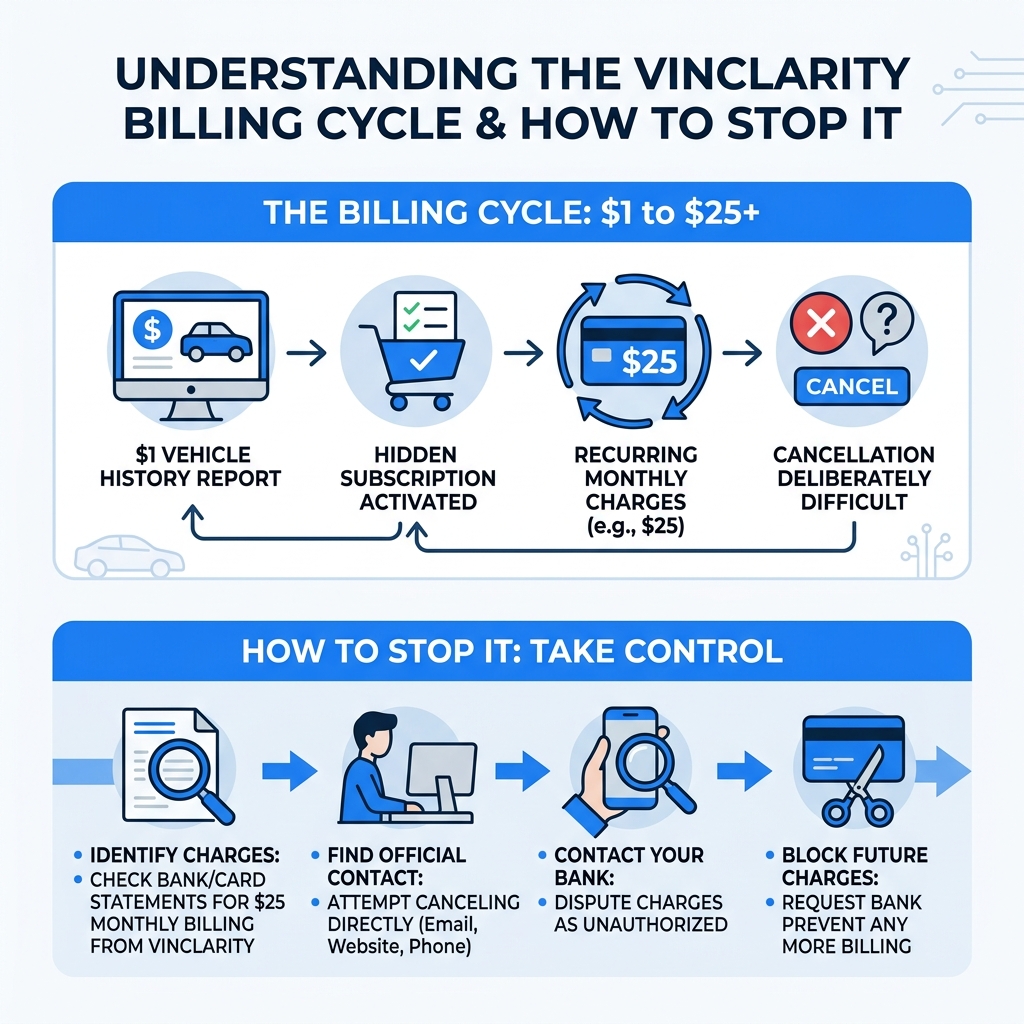
The vinclarity scam follows a simple but effective pattern: you pay $1 for a vehicle history report, and days later your card gets hit with a $25 monthly charge you never knowingly agreed to.
Here's the quick answer if you need it fast:
| What Happened | What It Means |
|---|---|
| Paid $1 for a VIN report | One-time fee to access a vehicle history report |
| Charged $25-$30 days later | Hidden monthly membership activated in the fine print |
| Can't find a cancel button | Cancellation is deliberately hard to find |
| Refund promised but not delivered | Multiple users report waiting weeks with no resolution |
| Bank dispute required | Most victims only stop charges by contacting their bank |
This isn't an isolated complaint. Reports on Reddit, the BBB Scam Tracker, and review platforms show dozens of users hitting the same wall — a $1 charge that quietly opens the door to recurring monthly billing they never asked for.
One BBB Scam Tracker report from July 2025 describes it plainly: the user paid $1 for a car report, then two days later Vinclarity charged $25 for a membership they never requested. After eight business days, the promised refund still hadn't arrived.
If that sounds familiar, you're not alone — and there are clear steps you can take.
What is Vinclarity.com and How Does the Service Work?
At first glance, Vinclarity.com appears to be a standard vehicle history provider. The site claims to offer comprehensive insights into any used vehicle registered in the United States. If you are in the market for a used car, a service like this sounds essential. They promise to pull data from various reputable sources, including:
- NMVTIS (National Motor Vehicle Title Information System): To check for "junk" or "salvage" titles.
- NHTSA (National Highway Traffic Safety Administration): For safety ratings and open recall alerts.
- Insurance Records: To find evidence of total loss or major accidents.
- Theft Records: Checking against police databases to ensure the car isn't stolen.
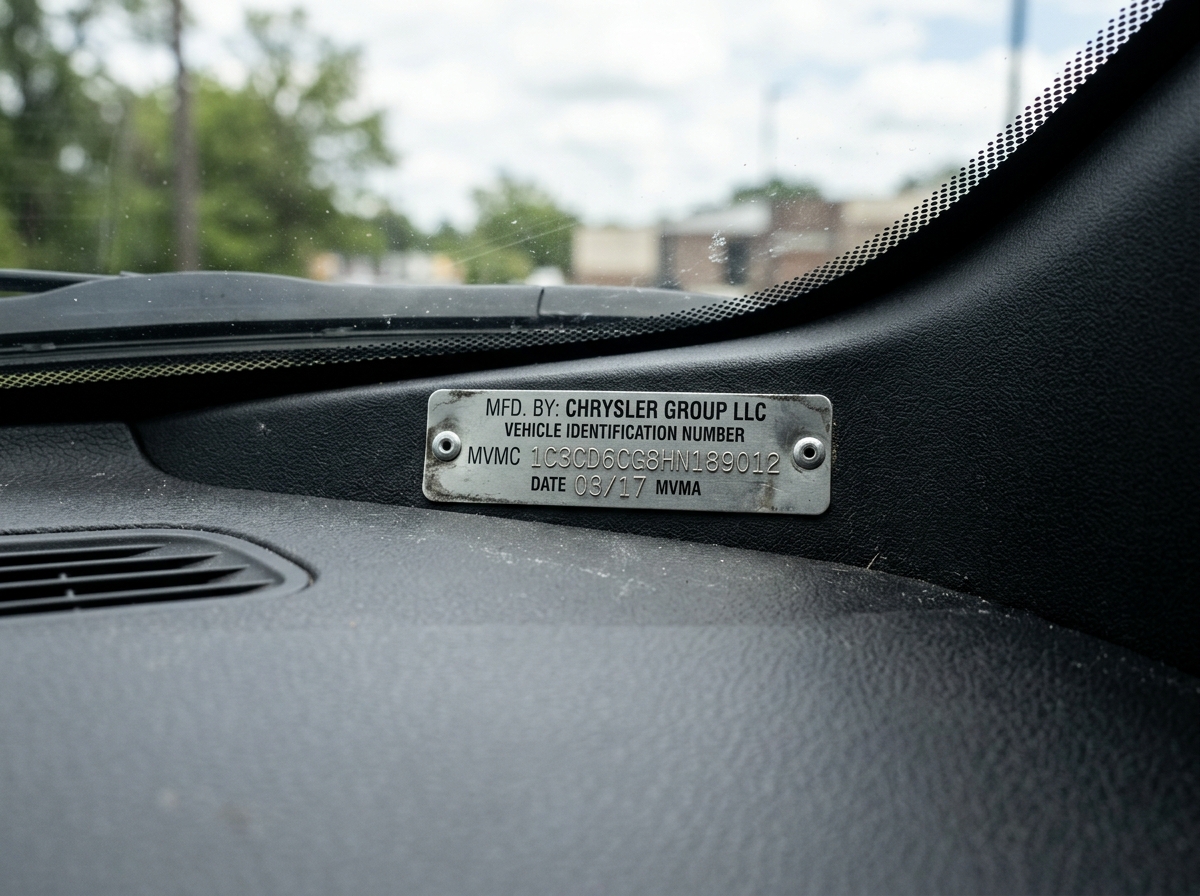
The service works by having the user enter a Vehicle Identification Number (VIN) or a license plate. After a series of dramatic "loading" animations—which some experts suggest are purely psychological to make the $1 fee feel earned—the site generates a report. These reports typically include odometer readings, title history, and market value estimates.
Technically, the site has some markers of legitimacy. It was registered in June 2023 and uses a valid SSL certificate to encrypt your data. However, technical setup doesn't always equal ethical business practices. While the site does provide a report, many users on Reddit and Scamadviser argue that the information provided is often no more detailed than a basic Google search. You can Check a website at Scamadviser.com for a trust score to see how these technical factors weigh against consumer complaints.
The Core of the Vinclarity Scam: The $1 Subscription Trap
The primary reason people search for the term vinclarity scam isn't because the website doesn't exist, but because of its deceptive billing practices. This is what consumer advocates call a "subscription trap" or "negative option billing."
The bait is a $1 (or sometimes $0.99) trial for a single vehicle report. To a buyer looking at a $20,000 car, $1 feels like a steal compared to the $40+ charged by premium competitors. However, by entering your card details for that $1 charge, you are often unknowingly agreeing to a monthly membership.
How the Trap Works:
- The Low-Cost Hook: You see an ad or a search result promising a "free" or "$1" report.
- The "Dark Pattern": The notice that you are signing up for a recurring $25 to $30 monthly membership is usually buried in fine print, hidden behind a "Terms and Conditions" link, or placed in a light grey font that is easy to miss on a mobile screen.
- The Delayed Charge: Vinclarity typically waits 2 to 7 days after the initial $1 payment before hitting your account with the full membership fee. This delay makes it harder for users to immediately connect the $25 charge to the VIN report they ran days earlier.
- The Ghost Subscription: Many users report that even if they abandon the transaction halfway through—after entering their card but before "confirming"—they still get charged.
According to a BBB Scam Tracker report, victims often find that the promised "easy cancellation" is anything but. The table below illustrates the massive gap between what users expect to pay and what they actually lose.
| Advertised Cost | Hidden Membership | Total 3-Month Cost |
|---|---|---|
| $1.00 (One-time) | $0.00 | $1.00 |
| Vinclarity Reality | $24.99 - $29.99/mo | $75.97+ |
Analyzing the Discrepancy in Online Reviews
If you look up Vinclarity on Trustpilot, you might be confused. As of our research, they hold a 4.3/5 rating from over 18,000 reviews. How can a "scam" have such a high score?
The answer lies in a tactic called review gating. Many users report that the Vinclarity website requires them to leave a review before they can download or view the report they just paid for. In the moment, a user is happy to click 5 stars just to get the data they need. It is only a week later, when the unauthorized $25 charge appears, that the "scam" realization sets in.
By the time the user realizes they've been tricked, their 5-star review is already boosting Vinclarity's average. This is why you should look at the Trustpilot review labels and specifically filter for 1-star reviews.
On other platforms, the story is much darker:
- Rating Facts: Holds a 1.00/5 rating with 100% of reviewers reporting unauthorized monthly charges.
- Reddit (r/Scams): Dozens of threads detail the exact same pattern of $1 trials turning into $25 monthly drains.
- Scamadviser: While the technical score is average, the consumer review section is filled with warnings about the "membership trap."
How to Cancel Your Subscription and Get a Refund
If you've discovered a "VINCLARITY.COM" charge on your bank statement, you need to act immediately. These charges will continue every month until the connection is severed.
1. Attempt to Cancel Directly
First, try to cancel through their system to create a "paper trail." Email their support at support@vinclarity.com or call their listed number at 1-844-669-2949. State clearly: "I did not authorize a recurring subscription. Cancel my membership immediately and refund the unauthorized $25 charge."
2. Contact Your Bank for a Chargeback
Don't wait for Vinclarity to reply. Many users report that the company promises refunds that never arrive. Contact your credit card issuer or bank and tell them you want to dispute the charge as "unauthorized" or "fraudulent billing." Explain that you agreed to a one-time $1 fee and did not consent to a subscription.
3. Block the Merchant
Ask your bank to "block" any future charges from this merchant. In some cases, especially with debit cards, the only way to be 100% sure the charges stop is to cancel the card and request a new one with a different number. For more tips on handling these types of traps, see our Is Finelo Legit or a Scam? The Ultimate Checklist.
Protecting Yourself from VIN Check Subscription Traps
The vinclarity scam works because it exploits our need for quick, cheap information. To avoid falling into similar traps in the future, we recommend these privacy-first habits:
- Use Virtual Credit Cards: Services like Privacy.com allow you to create "burner" cards with a $2 limit. If a site tries to charge you $25 later, the transaction will simply fail.
- Read the Payment Summary: Before clicking "Pay," look for any mention of "Membership," "Subscription," or "Monthly." If the page says "$1.00 today, then $24.99/mo," close the tab.
- Avoid Debit Cards: Credit cards offer much stronger legal protections for disputing unauthorized recurring charges.
- Use Temporary Emails: Scammers often sell your email address to other "data brokers." By using a temporary email alias, you keep your primary inbox clean and prevent your real identity from being linked to these shady databases. Learn more about how hidden traps work in our guide on the Slide Jewelry Scam Explained: The Hidden Subscription Trap or check out The Complete Guide to AI.com: Is It a Scam?.
Frequently Asked Questions about the Vinclarity Scam
Is Vinclarity a legitimate vehicle history provider?
Technically, yes. Vinclarity is a registered business that provides actual vehicle data. It isn't a "fake" site in the sense that it takes your money and gives you nothing. However, its business model is widely considered unethical because it relies on "dark patterns" to enroll users in high-cost subscriptions without clear consent. While the data is real, the billing practices are what lead to the vinclarity scam allegations.
Why was I charged $25 after paying $1 for a report?
This happened because you inadvertently signed up for a "membership." When you paid the $1 for the report, the fine print on the page likely stated that you were beginning a 7-day trial of their premium service. Once that trial expired, the system automatically billed you for the first full month. This is a classic "negative option" billing tactic used to catch hurried consumers off guard.
Can I get a refund for unauthorized charges?
It is possible, but difficult. While Vinclarity's FAQ claims they offer refunds for "good faith" requests, many users report being ignored or told that they "agreed to the terms" upon checkout. Your best chance for a refund is to skip the company's customer service and go directly to your bank to file a formal dispute (chargeback). Banks are very familiar with these types of subscription traps and often side with the consumer.
Conclusion
At Tempo Mail USA, we believe that your personal information—including your credit card and email address—should be treated with the highest level of security. The vinclarity scam is a perfect example of why "privacy firewalls" are necessary in the modern age. When you provide your real PII (Personally Identifiable Information) to a site that uses deceptive billing, you lose control of your finances and your data.
By using temporary email aliases and virtual payment methods, you create a barrier that protects your real identity. Don't let a $1 car report turn into a $300-a-year headache. Stay informed, read the fine print, and always protect your digital footprint at tempomailusa.com.