



Why the Conduent Data Breach Matters for Your Privacy
The conduent data breach represents one of the largest healthcare-related security incidents in recent history, potentially affecting more than 25 million Americans. Conduent Business Services, a major government contractor that handles sensitive personal information for state agencies and healthcare organizations, finded unauthorized access to its network in January 2025—though hackers had infiltrated the system since October 2024.
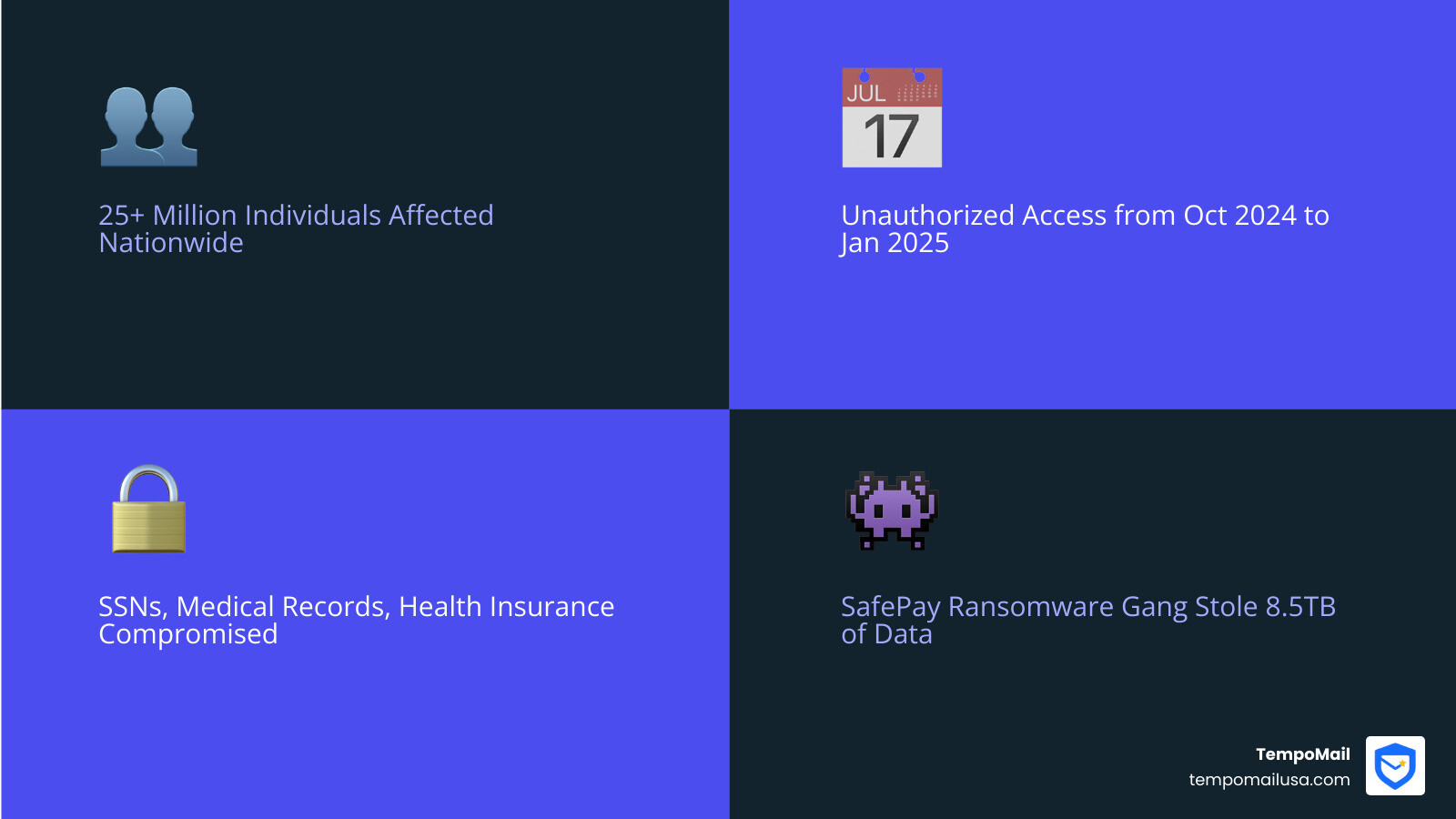
Key Facts About the Conduent Data Breach:
- Affected Individuals: At least 25 million people nationwide, including 14.8 million in Texas alone
- Timeline: Unauthorized access from October 21, 2024 to January 13, 2025
- Data Compromised: Social Security numbers, medical records, health insurance details, names, and dates of birth
- Responsible Party: SafePay ransomware gang claimed responsibility, alleging theft of 8.5 terabytes of data
- Ranking: Eighth-largest healthcare data breach ever recorded
- Response Costs: Conduent incurred approximately $25 million in direct response expenses
- Notification Timeline: The company plans to complete individual notifications by early 2026
Conduent provides back-office services including medical billing, payment processing, and document management for government healthcare programs, Medicaid agencies, and major insurers like Blue Cross Blue Shield, Humana, and Premera. The company's systems support approximately 100 million U.S. residents across various government health programs, making this breach particularly significant for anyone who has interacted with state benefit programs or certain insurance providers.
I'm Mohammad Waseem, and I've spent years building secure web platforms and studying how data breaches impact everyday users, including analyzing incidents like the conduent data breach to help people understand their privacy risks. In this guide, I'll walk you through exactly what happened, how to determine if you're affected, and what steps you can take to protect yourself.
Understanding the Conduent Data Breach Timeline and Scope
The conduent data breach unfolded over several months, beginning with unauthorized access that went undetected for a significant period. This wasn't a smash-and-grab; it was a more prolonged infiltration, allowing the attackers ample time to exfiltrate a massive amount of sensitive data.
According to Conduent's own disclosures, the illicit access to their network began as early as October 21, 2024. However, it wasn't until January 13, 2025, that Conduent finded the cyber incident. This means an unauthorized third party had access to a limited portion of Conduent's IT environment for nearly three months before the breach was identified. Imagine a guest overstaying their welcome by several weeks – but instead of eating all your snacks, they're copying all your personal information!
The aftermath of this findy was equally telling. The SafePay ransomware gang, a relatively new player on the scene, having emerged in October 2024, claimed responsibility for the attack in February 2025. They boasted of stealing over 8.5 terabytes of data. For context, 8.5 terabytes is an enormous amount of information – enough to fill thousands of external hard drives. This claim, if true, underscores the sheer scale of the data exfiltration.
Conduent, a prominent government contractor, handles a vast array of sensitive information for large corporations, government departments, and several U.S. states. They say their technology and operational support services reach more than 100 million U.S. residents across various government healthcare programs. This wide reach meant that when their systems were compromised, the ripple effect was enormous. We are talking about services ranging from medical billing and Medicaid screening to toll collection and government payment disbursements.
The delay between the initial breach (October 2024) and its findy (January 2025), followed by the public disclosure in April 2025, highlights a common challenge in cybersecurity: identifying sophisticated intrusions can take time. This prolonged timeline is a stark reminder of why continuous monitoring and robust incident response plans are crucial for any organization handling sensitive data. For a deeper dive into the technical aspects of such incidents, you might find our article on conduent-data-breach-101 insightful.
How many people were affected by the conduent data breach?
The number of individuals impacted by the conduent data breach has been a moving target, evolving significantly as the investigation progressed. This is a common pattern in large-scale breaches involving third-party vendors, as pinpointing the exact scope can be a complex, data-mining intensive process.
Initially, reports, such as those to the Oregon Department of Justice, indicated that 10,515,849 individuals affiliated with Conduent's clients were affected. This figure alone was staggering, positioning the incident as potentially the eighth-largest healthcare data breach ever recorded, according to The HIPAA Journal.
However, as Conduent continued its detailed analysis, the numbers grew. By early 2026, the overall victim count soared. Texas regulators received an updated disclosure from Conduent, revealing that nearly 14.8 million Texans alone were affected. To put that into perspective, that's almost half of Texas's entire population! This new figure significantly boosted the nationwide total by nearly 50% from the initial 10.5 million reported.
While exact consolidated national numbers are still being finalized, the breach appears to affect far more people than initially disclosed, potentially stretching to dozens of millions across the United States. Conduent supports approximately 100 million U.S. residents across various government health programs, so the potential for a truly massive impact is always there. Notifications have been sent to hundreds of thousands of people in various states, including Delaware, Indiana, Maine, Massachusetts, New Hampshire, Oregon, and Vermont. For instance, the Oregon Department of Justice still lists 10.5 million affected individuals for their state, which is a number significantly higher than Oregon's total population, suggesting potential data duplication or a broader definition of "affected individuals" tied to Conduent's services in that region.
This escalating victim count underscores the inherent difficulty in accurately assessing and reporting data breach impacts, especially when a third-party vendor serves a multitude of clients, each with their own customer base. It's like trying to count all the sprinkles on a thousand different donuts – each one is unique, and some might even have fallen off!
What information was stolen in the conduent data breach?
The real sting of the conduent data breach lies in the highly sensitive nature of the information compromised. This wasn't just about email addresses or usernames; the attackers got their hands on data that could lead to significant personal harm.
The stolen data includes:
- Names: The most basic identifier, but foundational for other malicious activities.
- Social Security Numbers (SSNs): This is the crown jewel for identity thieves, opening doors to credit fraud, tax fraud, and more.
- Dates of Birth: Another critical piece for identity verification.
- Medical Data: This can include treatment information, diagnoses, and medical history. This type of data is invaluable on the black market and can be used for medical identity theft, where criminals seek medical services under your name.
- Health Insurance Information: Policy numbers, group numbers, and other details that can be exploited for fraudulent claims or accessing medical services.
- Patient Records: Comprehensive health information that can be used for various forms of fraud or even blackmail.
Not every piece of data was present for every individual, but the sheer volume and sensitivity of what was compromised are deeply concerning. As one expert noted, such data exposure puts victims at a heightened risk of identity theft and other serious privacy violations. It's a goldmine for cybercriminals looking to cause chaos and financial damage.
Checklist: Was Your Personal Information Compromised?
Given the vast scope of the conduent data breach, many individuals might be wondering if their personal information was among the compromised data. Conduent is in the process of sending out notifications, but understanding who might be impacted is the first step in protecting yourself.
Conduent provides back-office services to a wide array of clients, including government agencies and healthcare organizations. This means if you've interacted with certain state benefit programs or are a policyholder with specific insurers that contract with Conduent, your data might be at risk.
Here's a breakdown of some of the known impacted entities and the number of individuals affected in various states, according to various regulatory filings:
| State / Client | Affected Individuals (Approx.) | Type of Information |
|---|---|---|
| Texas | 14.8 million | Names, SSNs, medical data, health insurance |
| Oregon | 10.5 million | Names, SSNs, DOBs, health & insurance info |
| Montana | 200,000 | Unknown specifics, likely similar |
| Washington | 76,000 | Unknown specifics, likely similar |
| South Carolina | 48,000 | Unknown specifics, likely similar |
| New Hampshire | 10,000 | Names, SSNs |
| Maine | 378 | Unknown specifics, likely similar |
| Delaware | Hundreds of thousands | Unknown specifics, likely similar |
| Massachusetts | Hundreds of thousands | Unknown specifics, likely similar |
| Vermont | Hundreds of thousands | Unknown specifics, likely similar |
| Indiana | Hundreds of thousands | Unknown specifics, likely similar |
Note: Some state numbers reflect initial reports and may be subject to change as investigations continue. The Oregon number, in particular, is significantly higher than the state's population, suggesting it might represent the total number of records processed by Conduent for Oregon clients, rather than unique individuals.
Specific clients of Conduent that have been publicly linked to the breach include:
- Blue Cross Blue Shield of Montana
- Blue Cross and Blue Shield of Texas
- Humana
- Premera Blue Cross (Washington)
- Wisconsin Department of Children and Families (DCF)
- Oklahoma Human Services
If you received a notification from Conduent, or from one of the above organizations, indicating that your data was compromised, then you are directly affected. Even if you haven't received a notice yet, but you reside in one of the heavily impacted states or use services from the listed clients, it's wise to assume your data might be at risk. As a notice to Maine residents stated, "Presently, we have no evidence or indication of actual or attempted misuse of your personal information," but that's little comfort when your data is out there.
Immediate Actions and Legal Recourse
Finding your personal information has been compromised in a major incident like the conduent data breach can feel overwhelming. But don't despair! We have a clear path for you to follow to minimize potential harm and understand your legal rights.
What to Do Immediately: Your Personal Data Security Checklist
- Review Notifications Carefully: If you received a letter from Conduent or one of its client organizations, read it thoroughly. It should detail what information was compromised and what services (like credit monitoring) they are offering. Take advantage of any free services they provide.
- Credit Monitoring: Enroll in credit monitoring services immediately. Many companies, including Conduent, often offer these for free for a period after a breach. This helps you detect suspicious activity on your credit report.
- Fraud Alerts: Place a fraud alert on your credit files with the three major credit bureaus (Equifax, Experian, and TransUnion). This makes it harder for identity thieves to open new accounts in your name, as lenders will need to verify your identity before extending credit.
- Security Freezes: Consider placing a credit freeze (also known as a security freeze) on your credit reports. This prevents anyone from accessing your credit report without your explicit permission, effectively stopping new credit accounts from being opened. It's a stronger protection than a fraud alert, but it can be a bit more inconvenient if you need to apply for credit yourself.
- Monitor Financial Accounts: Regularly check your bank and credit card statements for any unauthorized transactions. Report anything suspicious to your financial institution immediately.
- Be Wary of Phishing: Data breaches often lead to an increase in phishing attempts. Be extremely cautious of unsolicited emails, texts, or calls, especially those claiming to be from Conduent or related entities, asking for personal information. Legitimate organizations will rarely ask for sensitive information via email or text.
- Change Passwords: If any of the compromised data (like names or dates of birth) were used in conjunction with passwords for other accounts, change those passwords immediately. Use strong, unique passwords for every account, or consider a reputable password manager.
- Consider Identity Theft Protection: If the breach exposed highly sensitive data like your SSN, investing in comprehensive identity theft protection services might be a wise long-term strategy.
Legal Recourse and Investigations
The scale of the conduent data breach has naturally drawn the attention of legal firms specializing in consumer protection. Law firms like Schubert Jonckheer & Kolbe are actively investigating the incident on behalf of affected individuals.
These investigations typically aim to determine if Conduent, or its clients, violated state and federal laws regarding data security and notification timelines. If you were affected, you might have legal rights, including:
- Money Damages: Compensation for any losses incurred due to the breach, such as identity theft expenses or time spent resolving issues.
- Injunctive Relief: This could compel Conduent to implement specific changes to its cybersecurity practices to prevent future breaches.
If you received notification of this data breach or are affiliated with Conduent and wish to obtain additional information about your legal rights, we encourage you to contact legal counsel specializing in data breaches. They can help you understand your options and potentially join a class-action lawsuit.
At TempoMail, we understand the frustration and fear that comes with a data breach. That's why we advocate for proactive privacy measures. Using tools like temporary emails can create a valuable buffer against such incidents, protecting your primary inbox and personal data from being exposed in the first place. Learn more about how-temporary-emails-protect-you-from-data-breaches.
Common Questions Regarding the Incident
The conduent data breach has raised many questions among affected individuals and the public. We've gathered some of the most common inquiries and provided answers based on the available information and our expertise.
The sheer volume of compromised data and the extended timeline of the breach have made this a complex situation. Conduent's SEC filings have shed some light on the financial impact, with the company incurring approximately $25 million in direct response costs related to investigating, remediating, and responding to the cyber event. This includes expenses for third-party forensic experts, legal counsel, and notification requirements.
Regarding notification timelines, Conduent disclosed the cyberattack in April 2025, months after the initial outage and findy. While many states require timely notification, the process of identifying all affected individuals and the specific data compromised can be lengthy for a breach of this magnitude. Conduent has stated that it plans to conclude alerting all affected individuals by early 2026. This extended timeline, potentially stretching over a year from the breach's findy, highlights the challenges of large-scale breach response.
Who is responsible for the attack?
The responsibility for the conduent data breach has been claimed by the SafePay ransomware gang. This group, which emerged in October 2024, listed Conduent on its dark web site in February 2025, taking credit for the attack and threatening to publish the stolen data. They claimed to have exfiltrated an astonishing 8.5 terabytes of data.
Ransomware groups like SafePay operate by infiltrating a network, encrypting data, and often exfiltrating copies of that data. They then demand a ransom payment in exchange for decrypting the data and, increasingly, for not publishing the stolen information on the dark web. In Conduent's case, while systems were restored, the data exfiltration aspect is the most damaging for individuals. The involvement of such a group underscores the growing threat posed by sophisticated cybercriminal collectives targeting large organizations, especially those handling sensitive government and healthcare data.
What are the potential risks for individuals?
The types of information compromised in the conduent data breach — including Social Security numbers, medical data, and health insurance details — present significant and long-lasting risks for affected individuals. We can't stress enough how serious these risks are:
- Identity Theft: With SSNs, names, and dates of birth, criminals can open new credit accounts, apply for loans, file fraudulent tax returns, or even commit crimes in your name. This can severely damage your credit score and financial standing.
- Medical Fraud: Stolen medical and health insurance information can be used to obtain prescription drugs, file false claims, or receive medical services under your identity. This can lead to incorrect medical records, insurance claim denials, and significant financial burdens.
- Phishing Attacks: Your compromised personal information makes you a prime target for highly personalized and convincing phishing scams. Attackers might use details about your healthcare providers or insurance plans to trick you into revealing more sensitive data or installing malware.
- Financial Loss: Direct financial losses can occur through fraudulent transactions on existing accounts, or indirect losses from the time and effort required to resolve identity theft issues.
- Privacy Violations: Beyond financial harm, the exposure of sensitive medical data is a profound invasion of privacy, potentially leading to emotional distress and discrimination.
While Conduent has stated that, to their knowledge, the exfiltrated data has not been released on the dark web or otherwise publicly, the risk remains. Once data is stolen, it can be traded, sold, or used by cybercriminals in various ways, often surfacing years after the initial breach.
What actions has Conduent taken in response?
Conduent's response to the conduent data breach involved a series of actions aimed at remediation, investigation, and notification. Here's what we know they have done:
- Network Security: Upon finding the incident on January 13, 2025, Conduent immediately secured its networks to contain the breach and prevent further unauthorized access.
- Forensic Investigation: The company initiated a thorough investigation with the assistance of third-party forensic experts to understand the scope of the breach, the entry points, and the data exfiltrated.
- Law Enforcement Involvement: Conduent reported the incident to federal law enforcement authorities, including the FBI, and is cooperating with their investigations.
- Client and Regulatory Notifications: They have been working with affected clients and making disclosures to state regulators and the SEC through filings like FORM-8K. This process is complex due to the multitude of clients and the varying state notification laws.
- Breach Notices: Conduent has begun sending breach notification letters to affected individuals. They have also set up a call center to address questions and provide support to those impacted.
- Identity Protection Services: In many cases, Conduent and its affected clients are offering free credit monitoring and identity theft protection services to individuals whose data was compromised.
- Operational Restoration: Conduent reported that it restored normal operations within days of the January 13, 2025 disruption, minimizing the impact on the critical government services they provide.
It's clear that Conduent has taken significant steps to address the breach. However, the lengthy notification timeline and the sheer volume of affected individuals mean that the full impact and resolution of this incident will continue to unfold over many months, if not years.
Conclusion
The conduent data breach serves as a powerful reminder of the relentless and evolving threats in our digital world. When a major government contractor like Conduent, entrusted with the sensitive information of millions, falls victim to cybercrime, it underscores the vulnerability we all share. The sheer scale, the sensitive nature of the compromised data, and the extended timeline of this incident highlight the critical need for both robust organizational cybersecurity and proactive personal data protection.
While Conduent is working to mitigate the damage and notify affected individuals, the onus ultimately falls on each of us to safeguard our privacy. We've outlined immediate steps you can take, from credit monitoring and fraud alerts to understanding your legal recourse.
At TempoMail USA, we believe that protecting your Personally Identifiable Information (PII) shouldn't be a constant battle. Our identity proxying services are designed to give you peace of mind. By generating secure aliases, we create a cybersecurity firewall between your real identity and the online services you use. This means even if a service you've used suffers a data breach, your core PII remains shielded, significantly reducing your risk of identity theft and unwanted solicitations.
Don't wait for the next breach to impact you directly. Take control of your digital footprint today.
Visit us at https://tempomailusa.com to explore how TempoMail can become your essential partner in digital privacy.