



10.5 Million Affected in Massive Government Contractor Hack
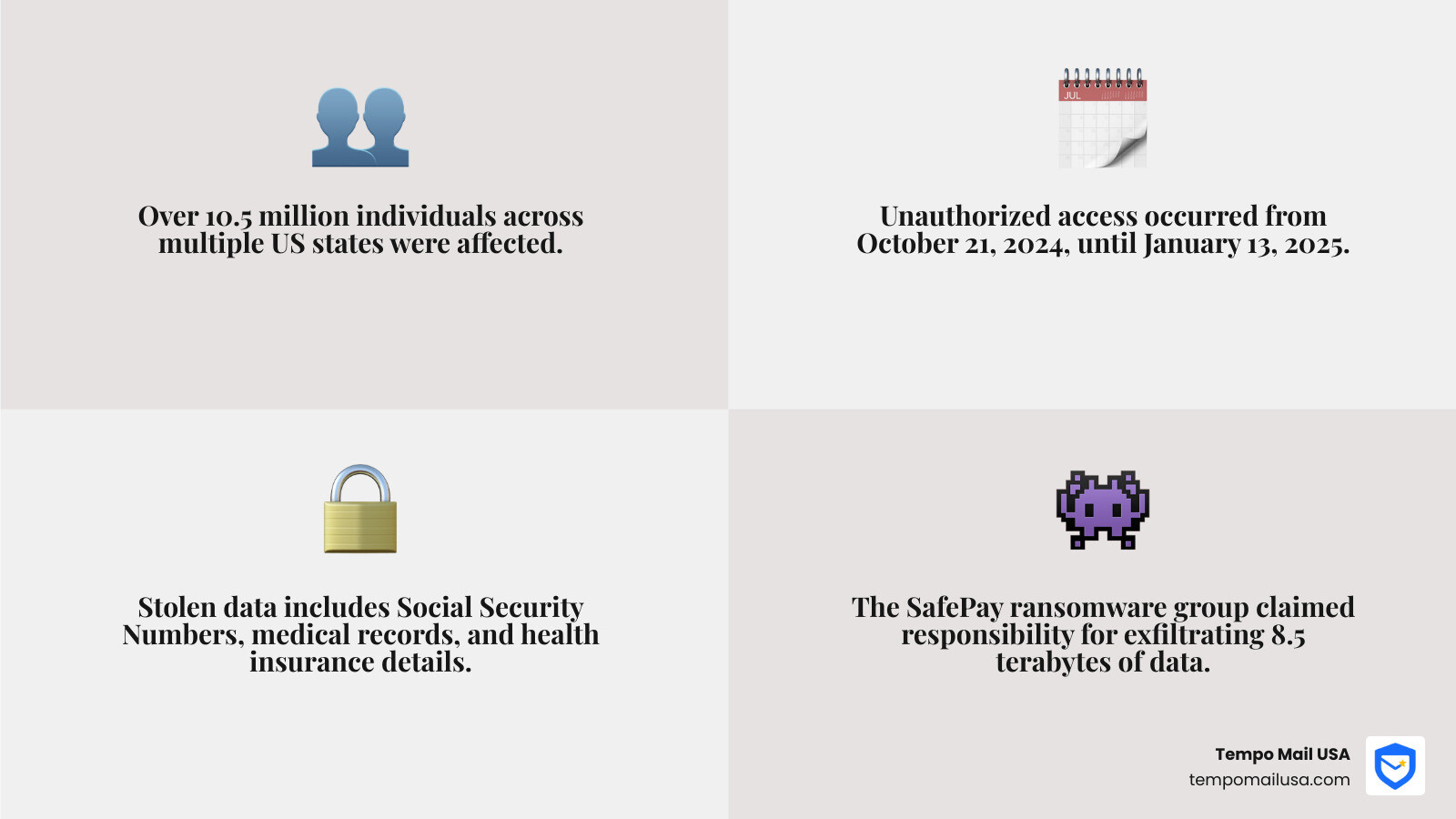
The Conduent data breach exposed the personal information of over 10.5 million Americans in what has become one of the largest healthcare-related data breaches ever recorded. If you're wondering whether you're affected or what happened, here's what you need to know:
Quick Facts:
- Who was affected: 10.5+ million individuals across multiple states
- When it happened: Hackers had access from October 21, 2024 to January 13, 2025
- What was stolen: Social Security numbers, medical records, health insurance details, names, and dates of birth
- Who's responsible: SafePay ransomware group claimed responsibility
- Most affected states: Texas (400,000+), Oregon (1 million+), Washington (76,000)
Conduent is a major business services contractor that provides critical technology systems for government programs like Medicaid, child support payments, and food assistance across dozens of U.S. states. When their systems were compromised, it wasn't just corporate data at risk—it was sensitive personal information belonging to millions of people who rely on essential government services.
The breach went undetected for nearly three months. During that time, an unauthorized third party had access to Conduent's network, quietly exfiltrating massive amounts of data. When the company finally finded the intrusion on January 13, 2025, they immediately began investigating and notifying affected individuals. But by then, the damage was done.
The real concern? Social Security numbers combined with medical information create a perfect storm for identity theft. This type of data can be used to open fraudulent accounts, file fake tax returns, or commit medical identity theft—and the impacts can last for years.
Unpacking the Conduent Data Breach: Scope, Timeline, and Impact
The Conduent data breach is a stark reminder of how interconnected our digital lives are and how a single point of failure can impact millions. Conduent, a prominent business services company, acts as a crucial intermediary for various government and healthcare services. This means they handle a tremendous volume of sensitive personal data for their clients' end-users. When their systems were breached, the domino effect was widespread and deeply concerning for the privacy of countless individuals.
Who Was Affected and Where?
The sheer scale of the Conduent data breach is staggering. According to the Oregon Department of Justice, a remarkable 10,515,849 individuals were affected. This makes it one of the largest data breaches of its kind, particularly within the healthcare sector.
While the breach was national in scope, some states bore a heavier brunt of the impact. The numbers reported by state attorneys general paint a clear picture of the geographic spread:
- More than 400,000 people in Texas had their information exposed.
- Approximately 76,000 people in Washington were affected.
- Around 48,000 individuals in South Carolina faced exposure.
- In New Hampshire, roughly 10,000 people were impacted.
- Even smaller states like Maine saw approximately 378 residents affected.
These figures highlight that whether you live in a populous state or a smaller community, if you interact with government services or healthcare providers that partner with Conduent, your data could have been compromised. The ripple effect of such a large-scale event underscores the pervasive reach of data breaches in our modern society.
Timeline of the Cyberattack and Service Disruptions
The timeline of the Conduent data breach reveals a concerning period of unauthorized access. It began on October 21, 2024, and continued until January 13, 2025, when Conduent finally finded the intrusion. That's nearly three months where an unauthorized third party had free rein within a "limited portion" of Conduent's IT environment.
The immediate consequences of this breach were not just about data theft; they also led to tangible service disruptions. For instance, in Wisconsin, parents and beneficiaries who rely on child support payments found themselves in a difficult situation. System outages prevented the processing of payments received by mail, causing significant hardship and frustration. Local news outlets, like WBAY, reported on these payment delays, with parents and beneficiaries complaining about struggling to make ends meet. Wisconsin authorities also noted that at least three other states experienced similar outages, impacting payments sent via electronic transfer or EBT cards. This highlights how critical third-party vendors like Conduent are to the smooth functioning of essential public services, and how a cyberattack can quickly cascade into real-world problems for ordinary citizens. It's a stark reminder that the digital infrastructure supporting our government systems needs robust protection. We've explored more about these vulnerabilities and how to mitigate them in our article on Learn about risks to government systems.
What Personal Information Was Compromised?
The types of personal information compromised in the Conduent data breach are particularly sensitive, raising significant concerns for affected individuals. The stolen data sets included:
- Names
- Social Security numbers (SSNs)
- Medical information
- Health insurance details
- Dates of birth
- Addresses
This comprehensive collection of data was confirmed by various sources, including the Texas Attorney General's Office disclosure, which specifically mentioned names, Social Security numbers, medical information, and health insurance details for over 400,000 Texans. For some individuals, the exposure of their Social Security number alone is enough to cause years of identity theft headaches. When combined with medical and health insurance information, the potential for fraud becomes even more sophisticated and damaging.
The potential risks for individuals whose data was exposed are substantial. We're talking about heightened vulnerability to:
- Identity theft: Cybercriminals can use this information to open new credit accounts, apply for loans, or even file fraudulent tax returns in your name.
- Medical identity theft: This could lead to fraudulent medical claims, incorrect information in your health records, or even denial of future medical care.
- Targeted phishing and social engineering attacks: With so much personal detail, scammers can craft highly convincing emails or calls designed to trick you into revealing more information or granting access to accounts.
It's a serious situation, and understanding what was compromised is the first step in protecting ourselves. Being aware of the tactics used by scammers, such as those involved in phishing, is crucial. If you want to dive deeper into protecting yourself from such threats, you can Understand what a phishing scam is.
The Aftermath: Conduent's Response and SafePay Ransomware's Role
In the wake of such a massive incident, the company's response is always under intense scrutiny. Conduent, being a major government contractor, faced significant pressure to address the breach transparently and effectively. Meanwhile, a familiar player in the cybercrime world emerged to claim responsibility, adding another layer of complexity to the situation.
Conduent's Official Acknowledgment and Response
Conduent officially confirmed the Conduent data breach in an April 2025 Securities and Exchange Commission (SEC) filing. In this filing, they stated that a "threat actor was able to access a 'limited portion' of the company’s IT environment" and exfiltrated "a set of files associated with a limited number of the Company’s clients." While acknowledging the data theft, Conduent also indicated that they had "no evidence or indication of actual or attempted misuse of your personal information," as noted in a notice to Maine residents.
Upon finding the incident on January 13, 2025, Conduent took several remediation steps:
- Secured Networks: They immediately took action to secure their affected systems and prevent further unauthorized access.
- Investigation: An investigation was launched with the assistance of third-party forensic experts to understand the scope and nature of the breach.
- Restored Operations: Conduent reported that they quickly restored operations, minimizing service disruptions where possible.
- Law Enforcement Notification: Federal authorities and other relevant law enforcement agencies were notified about the cyberattack.
- Individual Notifications: Conduent began sending breach notification letters to affected individuals and state attorneys general offices, detailing what personal information was exposed. They also set up a dedicated assistance line for inquiries.
Despite their swift response to secure systems and investigate, the sheer volume of data involved and the sensitive nature of the information mean that the consequences for individuals could be long-lasting.
The SafePay Ransomware Connection
Adding a layer of intrigue and concern to the Conduent data breach is the alleged involvement of the SafePay ransomware group. This cybercriminal entity reportedly claimed responsibility for the attack, listing Conduent on their leak site. According to a BleepingComputer report, SafePay didn't just claim credit; they also boasted about exfiltrating a staggering 8.5 terabytes of files.
SafePay is not just any ransomware group; they have a reputation for large-scale extortion, often targeting high-profile clients and using aggressive tactics. Their modus operandi typically involves stealing vast amounts of data before encrypting systems, then threatening to publish or sell the stolen information if their ransom demands are not met. While Conduent stated they had no evidence of the data being published on the dark web at the time of their reports, the threat of 8.5 terabytes of sensitive information falling into the wrong hands remains a significant concern.
The connection to a ransomware group like SafePay underscores the malicious intent behind the attack and the sophisticated nature of modern cyber threats. It's a reminder that even large organizations with significant resources can fall victim to these persistent and evolving dangers. Understanding ransomware and how to respond to such threats is more important than ever. If you're curious about what steps to take, we have a guide on What to do if you receive a ransomware email.
Financial and Reputational Fallout
The Conduent data breach didn't just carry a human cost; it also hit Conduent's bottom line. The company incurred approximately $25 million in direct response costs related to investigating, remediating, and responding to the cyber event. This figure includes expenses for forensic experts, system recovery, and the extensive process of notifying affected individuals and regulatory bodies. While a significant sum, Conduent's cyber insurance policy is expected to help cover some of these costs, but it certainly isn't a small change.
In terms of scale, this breach is truly remarkable. With over 10.5 million individuals affected, the Conduent data breach would be the eighth-largest healthcare data breach ever recorded, according to The HIPAA Journal. This places it among the most impactful cybersecurity incidents in recent memory, surpassing many other high-profile breaches.
The long-term implications for Conduent and its government partners are profound. For Conduent, its reputation as a trusted provider of critical public services is undoubtedly under scrutiny. Government agencies, which rely on contractors like Conduent to handle sensitive citizen data, will be forced to re-evaluate their cybersecurity oversight and vendor management practices. This incident serves as a critical wake-up call for the entire ecosystem of government contractors and their clients, emphasizing the urgent need for improved cybersecurity measures, regular audits, and robust incident response plans to protect the personal information of millions of Americans.
How to Protect Yourself After a Major Data Breach
When your personal information is exposed in a massive event like the Conduent data breach, it's natural to feel vulnerable and overwhelmed. However, there are concrete steps we can all take to significantly reduce the risk of identity theft and fraud. Think of it as building your own digital fortress, brick by brick.
Immediate Steps to Secure Your Identity
Acting quickly after a data breach is paramount. Here are six essential protection steps you should take immediately:
- Monitor Your Accounts Religiously: Keep a very close eye on your bank and credit card statements for any unusual activity. Even small, unfamiliar charges could be a sign of fraud. Also, check any benefit accounts (like Medicaid or child support) and tax filings for irregular activity.
- Review Your Credit Reports: You're entitled to a free credit report annually from each of the three major credit bureaus (Equifax, Experian, and TransUnion). Stagger your requests so you can review one every four months. Look for accounts you don't recognize or inquiries you didn't authorize.
- Set Up Fraud Alerts: Place a fraud alert on your credit file with one of the credit bureaus (that bureau will notify the other two). This alert requires businesses to verify your identity before extending credit, making it harder for fraudsters to open new accounts in your name. These alerts typically last 90 days and can be renewed.
- Consider Security Freezes: For even stronger protection, consider placing a security freeze on your credit reports. This prevents anyone (including you) from accessing your credit file to open new accounts. You'll need to "thaw" or temporarily lift the freeze if you want to apply for new credit. Federal law makes this service free.
- Practice Strong Password Hygiene: If any of your accounts use passwords that might be similar to information exposed in the breach (or if you've reused passwords), change them immediately. Use strong, unique passwords for every account. A password manager can be a lifesaver here.
- Enable Two-Factor Authentication (2FA): Wherever possible, enable 2FA on your online accounts. This adds an extra layer of security, usually requiring a code from your phone or a hardware key in addition to your password. This makes it much harder for unauthorized users to access your accounts, even if they have your password.
By proactively taking these steps, we can significantly reduce our vulnerability. For more comprehensive guidance, check out our article on how to Improve your account security.
How to protect yourself from post-Conduent data breach scams
Following a major event like the Conduent data breach, cybercriminals often capitalize on the widespread concern by launching targeted scams. They know people are worried and looking for information, making them more susceptible to phishing attempts. Here’s how to protect yourself:
- Be Wary of Suspicious Emails and Urgent Requests: Scammers might send emails or texts pretending to be from Conduent, a government agency, your bank, or even a credit bureau. These messages often contain alarming subject lines or urgent calls to action, like "Verify your account immediately!" or "Claim your compensation now!" Always be suspicious of unsolicited communications asking for personal information or directing you to click on links.
- Verify Communications Directly: If you receive a message that seems legitimate but also suspicious, do not click on any links or call any numbers provided in the message. Instead, independently find the official contact information for the organization (e.g., Conduent's dedicated assistance line, your bank's official number) and contact them directly to verify the communication.
- Avoid Fake Vendor Contacts: Be especially careful if someone contacts you claiming to be from a "fraud protection service" or offering to "fix" your identity issues for a fee. Legitimate services won't cold-call or email you asking for sensitive information.
- Trust Your Gut: If something feels off, it probably is. Take a moment to pause and critically evaluate any request for personal information or urgent action.
Learning to identify and avoid these deceptive tactics is crucial. We encourage you to Master how to spot phishing emails to safeguard your information. And for an extra layer of defense, you can always Use our AI Phishing Detector tool to analyze suspicious emails without opening them.
Long-Term Digital Privacy Strategies
Beyond the immediate aftermath of the Conduent data breach, adopting long-term digital privacy strategies is essential for continuous protection. In today's interconnected world, breaches are an unfortunate reality, so building resilient habits is key.
One of the most effective long-term strategies involves using email aliases for your online accounts. Instead of giving out your primary email address to every website and service, using unique aliases acts as a "firewall" for your Personally Identifiable Information (PII). If one alias is exposed in a breach, it doesn't compromise your main inbox or other accounts. This significantly reduces the risk of spam, phishing, and the data correlation that makes identity theft easier for criminals.
Privacy-focused email solutions, like those offered by Tempo Mail USA, are designed precisely for this purpose. We provide identity proxying services, generating secure email aliases that shield your true identity from potential threats. This allows you to sign up for newsletters, online services, or even government portals without exposing your core PII.
Additionally, we should commit to a regular review of our online accounts. Periodically checking privacy settings, deleting old accounts we no longer use, and understanding what data various services hold on us can help minimize our digital footprint. The less information out there about us, the less damage a data breach can cause.
By implementing these long-term strategies, we move from a reactive stance to a proactive one, building a more secure and private digital future for ourselves. To understand more about this concept, explore Learn how temporary emails protect you from data breaches.
Frequently Asked Questions about the Conduent Data Breach
The Conduent data breach has left millions with questions and concerns. Here, we address some of the most common inquiries to help you steer this complex situation.
How do I know if my data was exposed in the breach?
Conduent is in the process of sending official notification letters to affected individuals. These letters will typically arrive via postal mail and will detail that your information was involved in the breach. If you receive such a letter, it means your data was likely exposed.
However, given the scale of the breach and potential delays, it's also wise to be proactive. If you have interacted with government services or healthcare providers that partner with Conduent (such as Medicaid, child support, or toll systems), you may be affected. Conduent has also set up a dedicated assistance line for inquiries. You can call their toll-free number, which is usually provided in their official breach notifications or can be found on their corporate website. Additionally, monitoring your personal accounts for any suspicious activity, as outlined in the protection steps above, can serve as an early warning system.
What are the biggest risks from the Conduent data breach?
The biggest risks stemming from the Conduent data breach revolve around the highly sensitive nature of the compromised data, especially Social Security numbers, medical information, and health insurance details. These include:
- Identity Theft: This is the primary concern. Criminals can use your SSN to open new lines of credit, apply for loans, make fraudulent purchases, or even file taxes in your name to claim refunds.
- Fraudulent Financial Accounts: Your stolen data could be used to open new bank accounts, credit card accounts, or other financial services, leaving you responsible for the debt.
- Tax Fraud: With your SSN and other identifying information, fraudsters can file a false tax return and claim your refund before you even have a chance to file your own.
- Fraudulent Benefit Claims: Given Conduent's role in government programs, there's a risk of criminals attempting to make fraudulent claims for unemployment, healthcare benefits, or other social services in your name.
- Medical Identity Theft: This can lead to false medical records being created in your name, which could complicate your future healthcare, or generate fraudulent billing for services you never received.
- Targeted Phishing Attacks: As mentioned earlier, the detailed personal information makes it easier for scammers to craft highly convincing phishing emails or phone calls, tricking you into revealing even more sensitive data.
These risks can have long-lasting financial and personal consequences, making proactive protection measures absolutely critical.
What is Conduent doing for the victims?
In response to the Conduent data breach, Conduent has outlined several actions to assist affected individuals:
- Sending Notification Letters: The company is issuing formal breach notification letters to all identified affected individuals, informing them that their data was compromised and providing details about the incident.
- Providing Protective Steps: These notification letters also include guidance and recommended steps that individuals can take to protect themselves from potential identity theft and fraud, such as monitoring credit reports and placing fraud alerts.
- Offering Assistance via a Dedicated Call Center: Conduent has established a dedicated, toll-free assistance line. This call center is staffed to answer questions from affected individuals and provide further support regarding the breach and identity protection measures.
- Identity Protection Services: In many cases of large breaches involving sensitive data like SSNs, companies will offer complimentary credit monitoring or identity protection services for a period. While not explicitly detailed for all individuals in our research, this is a common practice for breaches of this magnitude.
These measures aim to inform victims and provide resources to mitigate the potential fallout from the data exposure.
Conclusion: Key Takeaways and Securing Your Digital Future
The Conduent data breach is more than just another headline; it's a profound incident that highlights the pervasive risks in our digital landscape. Affecting over 10.5 million individuals and exposing highly sensitive information like Social Security numbers and medical records, it stands as a stark reminder of the vulnerabilities inherent in systems that manage our most personal data. This breach underscores the critical importance of third-party risk management, particularly for government contractors and business associates handling essential public services.
The involvement of a ransomware group like SafePay, coupled with the nearly three-month period of undetected access, paints a clear picture: cyber threats are sophisticated, persistent, and can have far-reaching consequences, extending from service disruptions to years of potential identity theft for victims.
For us, the individuals whose data is constantly being collected and processed, this breach serves as a powerful call to action. We cannot solely rely on organizations to protect our information. Proactive security measures and robust digital hygiene are no longer optional—they are essential. This means:
- Vigilant Monitoring: Regularly checking financial statements and credit reports.
- Strong Authentication: Using unique, complex passwords and enabling two-factor authentication everywhere possible.
- Phishing Awareness: Staying informed about the latest scam tactics to avoid falling victim to targeted attacks.
- Leveraging Privacy Tools: Adopting solutions that create layers of protection around our Personally Identifiable Information (PII).
This is where services like Tempo Mail USA come into play. We understand the constant threat of data breaches and the need for a personal "firewall" to protect your PII. By generating secure email aliases, we help you safeguard your online identity, making it significantly harder for malicious actors to connect the dots and compromise your valuable personal data.
In an era where data breaches are an unfortunate reality, taking control of our online privacy is paramount. Let's learn from the Conduent data breach and empower ourselves with the knowledge and tools to secure our digital future.