
Temp Email for Prescription Discount Cards: The Coupon That Reads Your Medicine Cabinet
The pharmacist already knows. The question is who else finds out
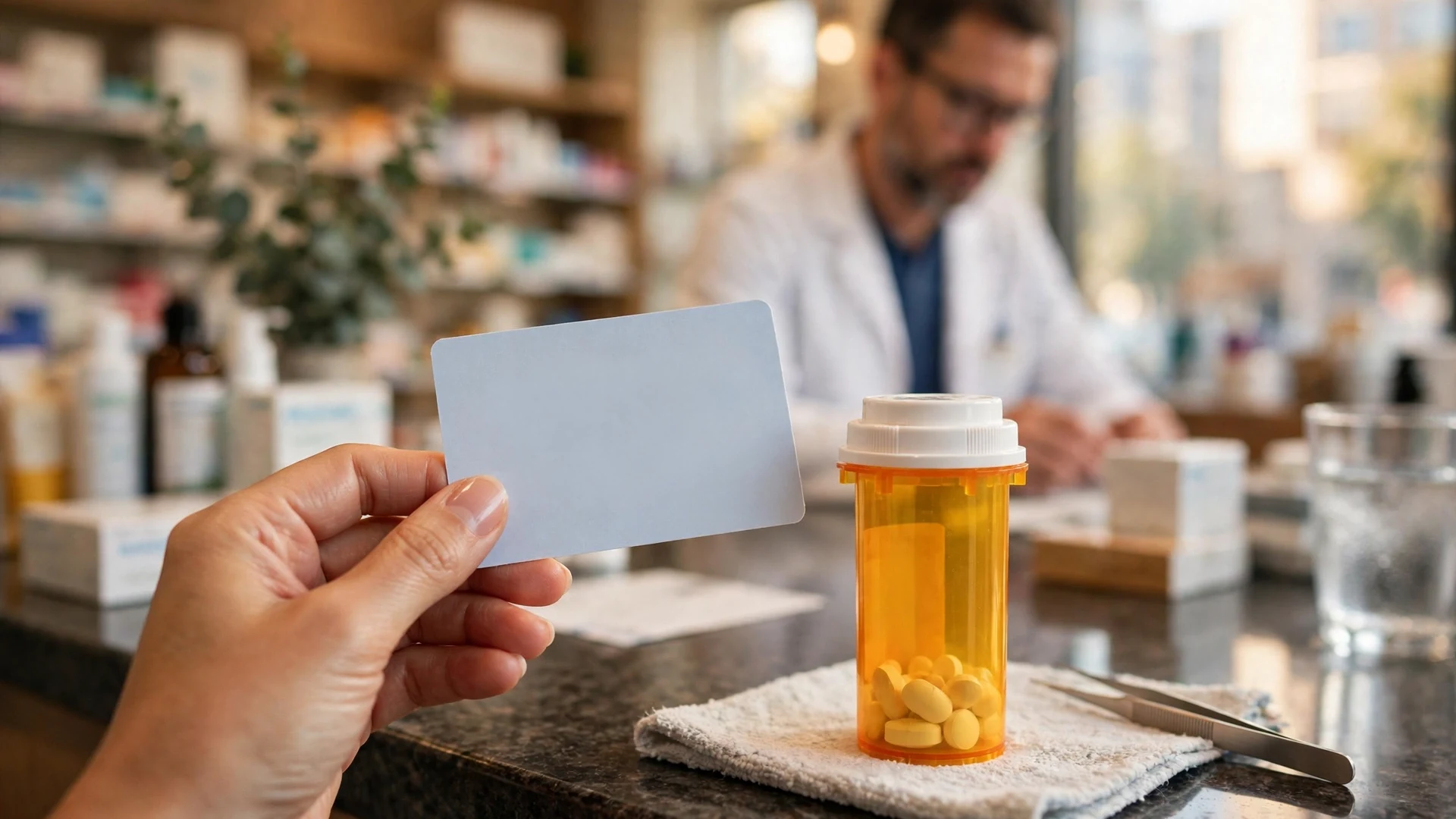
The scene is ordinary, which is why it is worth slowing down. You hand a pharmacist a prescription, the pharmacist types in your name and date of birth, and the screen shows a price that makes you wince. Somebody in line, or the pharmacist, or a search you run in the car park, points you at a discount card: a free coupon, a website, an app, a card you show at the counter instead of your insurance. The price drops, sometimes dramatically, and you walk out feeling clever. You have saved real money in under five minutes, and nothing about the transaction felt like a privacy decision.
That feeling is the trap in this whole category. A prescription discount card is not a pharmacy benefit. It is a coupon business, and coupon businesses are paid by the data they collect along the way. The card company learns, at minimum, which drug you take, which pharmacy you use, and roughly where you live. In many cases it learns more: your email address, your phone number, and a trail of refills that sketches out a health history over months. The pharmacy already knew all of that, and the pharmacy is bound by rules about what it can do with it. The coupon company, in most cases, is not bound by the same rules. My position, stated plainly at the top because the rest of this post depends on it: use the discount, by all means, but do not hand the coupon company your real email address, and never build your refill routine on an inbox you cannot still open in a year.
A discount card is a data broker with a coupon attached
Start with the business model, because it explains everything that follows. Discount card companies do not make money by charging you for the card; the card is free. They make money from pharmacies, from pharmacy benefit managers, and from the marketing value of aggregated prescription data. When you present the card, the pharmacy runs it through its system, the card company takes a cut of the transaction or a fee for steering you to that pharmacy, and a record of the claim exists in the card company's systems.
That record is the product, in the secondary sense. Individual records are typically de-identified before they are sold or shared for analytics, but the account you created to get the card is not de-identified at all. It has your name, your email, and often your phone number, sitting next to a list of drugs. The companies are usually candid about this in their privacy policies, in the way privacy policies are candid: long paragraphs about sharing with service providers, business partners, and for marketing purposes. Nobody reads those paragraphs at a pharmacy counter, and the design of the signup flow counts on that.
The sharpest public proof that this is not theoretical came in February 2023, when the Federal Trade Commission settled with GoodRx, the best-known name in this space, for $1.5 million. The FTC's complaint said GoodRx had shared users' health information, including prescription details, with advertising companies such as Facebook and Google, despite promising users it would not. GoodRx did not admit wrongdoing as part of the settlement, and it said it had changed its practices, but the order also barred the company from sharing health data for advertising. I cite that case not to single out one company, because the pattern is industry-wide, but because it punctures the comforting story that a free coupon is a neutral tool. When a regulator has to order a discount-card company to stop sending health data to advertisers, the coupon was never just a coupon.
What you actually hand over, line by line
People underestimate discount cards because the signup feels light. No insurance card, no medical history form, no waiting room clipboard. So let us be precise about what a typical signup and first use collects, because the list is longer than the form suggests.
First, the obvious: your name and email address, usually required to create the account or to send you the card. Second, the drug itself: the name, often the dosage, and sometimes the quantity, because the coupon is priced against a specific drug at a specific pharmacy. Third, the pharmacy: which location you chose, which tells the company where you live or work within a few miles. Fourth, your phone number, if you ask for the card by text, which most flows encourage. Fifth, the refill rhythm: every time you reuse the card, the company sees another fill, and over a year that rhythm becomes a health timeline — a maintenance drug taken monthly, a short course that stops, a drug that changes dose.
None of this is secret from the pharmacy, and none of it would shock a doctor. The shock is the audience. Your pharmacist is not allowed to sell your prescription history to a data broker. A discount card company that is not a covered health care entity operates under a different rulebook, and its privacy policy, not HIPAA, is the document that governs your data. That distinction is the single most misunderstood fact in this market, so it deserves its own section.
The HIPAA gap most people get wrong
Ask ten people at a pharmacy counter whether their prescription information is protected by HIPAA and nine will say yes, confidently. They are half right, and the half they miss is the one that matters here. HIPAA binds covered entities: health plans, health care clearinghouses, and health care providers that transmit health information electronically. Your pharmacy is one. Your doctor is one. A discount card company generally is not, because it is not providing your health care; it is providing a coupon that you take to your health care provider.
That means the protections people assume are in place — the limits on disclosure, the right to an accounting of disclosures, the breach notification rules — do not automatically travel with your data once it leaves the pharmacy counter and enters the card company's system. It is the same category of problem as banks blocking temp email addresses outright: institutions that handle sensitive accounts treat the email address as part of the security chain, not as a throwaway detail. What governs it instead is the company's privacy policy and the general consumer-protection law of the FTC, which is exactly why the GoodRx case mattered: the FTC had to step in precisely because HIPAA did not.
I am not a lawyer and this is not legal advice, but the practical rule is simple and safe: treat anything you type into a discount card signup as information you have published to a marketing company, not as information you have confided in a doctor. If that sentence makes you uncomfortable about a particular drug, that discomfort is information too. It tells you which signups deserve a throwaway address and which deserve a second thought entirely.
Where a throwaway address genuinely helps
This is the part where a disposable email earns its keep, and it is narrower and more useful than the usual advice suggests. A throwaway address is excellent for the research phase of discount cards, which is where most of the spam is generated. You are comparing prices for a drug across three card sites, you want to see the coupon without committing, and every one of those sites wants an email address before it shows you the real price. Give each one a different disposable address. You get the prices, they get an inbox that will never hear from you again, and the marketing drip that follows — the weekly savings reminders, the partner offers, the refill nudges — dies quietly on its own.
A throwaway is also the right tool for a one-off coupon: a short course of antibiotics, a single fill while you are between insurance plans, a drug you will take once and never again. The card gets you the price, the pharmacy gets paid, and there is no ongoing relationship for the card company to monetize. You are, in effect, renting the discount for one transaction and leaving no forwarding address.
And a throwaway is the right tool for checking whether a card is even legitimate before you commit real details to it. The discount card space has its share of lookalike sites and lead-generation pages dressed up as savings tools, and the price they quote is not always the price the pharmacy charges. A disposable address lets you test the flow, see the coupon, and call the pharmacy to confirm the price, all before your real inbox is involved. If the site turns out to be a lead farm, the cost of finding out was an inbox you were going to delete anyway.
Where a throwaway breaks: the refill trap
Now the other side, and it is the side that costs people real money. A prescription you take every month is not a one-off transaction; it is a relationship, and relationships need a working address. Discount cards know this, which is why the refill reminder is their most effective feature and their most effective hook. The reminder email tells you a refill is due, links you to a new coupon, and sometimes warns you that a price has changed. If that email goes to an inbox that expired after thirty days, you miss the reminder, you miss the price change, and you may show up at the counter to find the coupon you used last month no longer works.
Worse, the recovery chain for a discount card account often runs through the original email. Change your phone number, lose access to the account, or need to transfer a coupon history to a new card, and support will ask you to verify from the address you signed up with. A disposable address cannot do that. You are not locked out of your medicine — the pharmacy still has your prescription — but you are locked out of the discount history, the saved cards, and any account-level benefit you built up. For a drug you take daily, that friction repeats every month.
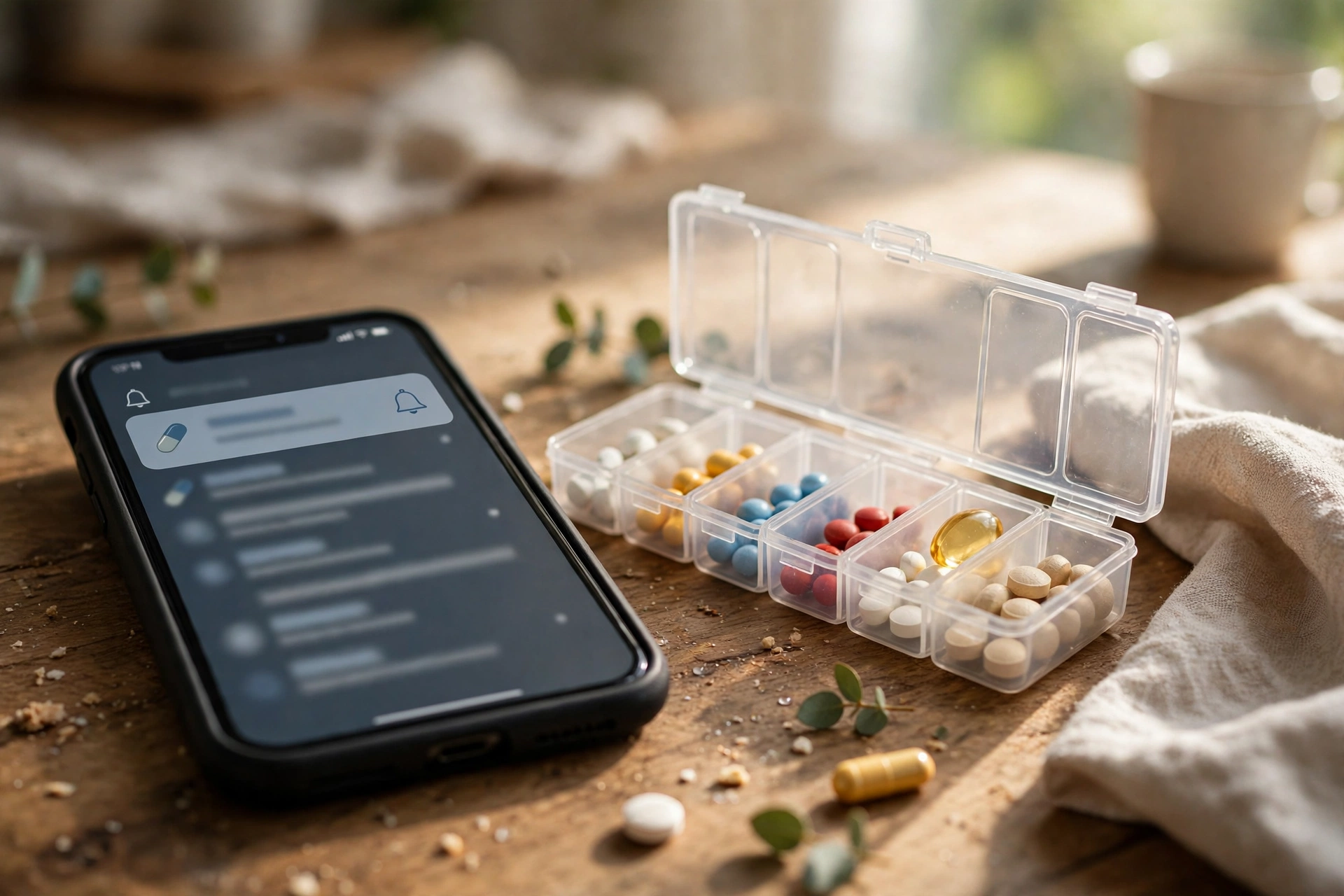
There is a second, quieter break. Some pharmacies and card programs tie a coupon to a phone number or an account rather than to a printed card, and reissuing the coupon under a new address can mean a new price, because the discount is negotiated per claim, not fixed forever. People assume a coupon is a fixed voucher. It is not; it is a price quote at a moment in time, and the moment changes. Losing the account that holds your quote history means starting the comparison over, often at a worse price.
The rule I use, and the one this whole post comes back to, is the same one that governs every load-bearing inbox: if you will still need the account in ninety days, it does not belong on a disposable address. A daily maintenance drug clears that bar easily. A one-off antibiotic does not. Most people's medicine cabinets contain one of each, which is why a single rule for all prescriptions fails.
The split-inbox setup that actually works
So what does a good setup look like in practice? Not one inbox for everything, and not a throwaway for everything either. A split, with a bright line between them.
Keep one permanent, private address for the pharmacy relationship itself: the pharmacy's own account, the refill reminders from the pharmacy, the doctor's portal, and any discount card you use for a maintenance drug you take every month. This address should be one you control, with a strong password and two-factor authentication, and it should not be the address you hand to every website that asks. Think of it as the address your pharmacist knows.

Use disposable addresses for everything around that core: comparing card prices, testing a new card site, grabbing a one-off coupon, signing up for a card company's newsletter to watch for a better price, and any partner offer a card site pushes at you. When the comparison is done and you have picked a card for a maintenance drug, move that one card to the permanent address deliberately, and delete the throwaways you used to research it. The research inboxes did their job; they do not need to follow you.
One more practical point, because it is where people slip: do not use the same disposable address for the card and for the pharmacy. If the card company's marketing list is ever breached or sold, and that address is also your pharmacy login, the breach reaches further than it should. Separate addresses are not paranoia here; they are the cheapest form of damage control available, and they cost nothing.
A five-minute test before you hand over anything
Before you type your real email into any discount card site, run this short test. It takes five minutes and it has saved me from more lead farms than any review site.
First, check whether the site shows you a price before it demands an email. Legitimate card companies will usually show a drug price by zip code with no account at all; a site that hides every price behind a signup form is selling leads, not discounts. Second, read the privacy policy's sharing section, not the whole document, just the part that lists who receives your information. If it names advertising partners, assume your data will reach them. Third, search the company name alongside the words FTC or settlement or data sharing, and see what comes up; a clean record is not proof of virtue, but a dirty one is a decision-maker. Fourth, call the pharmacy with the coupon before you commit, and ask what price the card actually produces for your drug and quantity; the number on the website and the number at the counter are not always the same. Fifth, decide in advance whether this drug is a one-off or a maintenance drug, and let that answer choose the inbox, not the signup form.
If a site fails the first two tests, walk away. There are enough legitimate discount cards that you never need to settle for a lead farm, and the price difference between the best and the second-best card is rarely worth your health data. The same discipline applies to health insurance quotes, where comparison sites also trade a lower price for your contact details: compare on a throwaway, commit only on an address you control.
The uncomfortable opinion
Here is the opinion I promised at the top, and it is the one people in this industry least like hearing: the discount card market exists because American drug pricing is broken, and the cards are a symptom, not a fix. A system in which the same pill costs $12 with one coupon, $47 with another, and $180 without either is not a market; it is a lottery with a search box. Discount cards help individuals win that lottery more often, and I use them myself for that reason, but every coupon claimed through a data-harvesting signup also teaches the system that patients will trade their prescription histories for a lower price. That trade should be a conscious one, made with a throwaway address and open eyes, not a default you sleepwalk into at a pharmacy counter because a form asked for your email and you gave it the real one out of habit.
Knowing when not to use a temp email is the other half of the skill: a throwaway is a research tool, not a home address. If you take one habit from this post, make it this: pause at the email field. That field is the only part of the signup where you decide what kind of relationship you are entering. A real address says, in effect, you may contact me about my medicine forever. A disposable address says, show me the price, and then we are done. Most discount card signups deserve the second answer.
FAQ
Can I use a temp email for a prescription discount card?
Yes, for comparing prices and for one-off coupons, a temp email works well and keeps the card company's marketing out of your real inbox. For a maintenance drug you refill monthly, use a permanent private address instead, because refill reminders, price changes, and account recovery all run through the original email.
Does HIPAA protect my information on a discount card site?
Not in the way most people assume. HIPAA binds your pharmacy and your doctor, but a discount card company is generally not a covered entity, so your data on its site is governed by its privacy policy and by consumer-protection law, not by HIPAA. Treat what you enter there as information shared with a marketing company.
Why did my discount card price change at the pharmacy?
A discount card price is a negotiated quote at a moment in time, not a fixed voucher. Prices vary by pharmacy, by drug and quantity, and over time as the card company's agreements change. Always confirm the price with the pharmacy before you commit, and expect the number on the website to differ from the number at the counter sometimes.
Is GoodRx safe to use after the FTC settlement?
GoodRx remains one of the most widely used discount cards, and the 2023 FTC order barred it from sharing health data for advertising. Whether you trust any card company is a judgment call; read its current privacy policy, check what it shares and with whom, and consider using a disposable address for price research either way.
What should I never put on a discount card signup?
Never use your main personal email, the one tied to your bank, your doctor's portal, or your pharmacy account, for discount card research. Keep the pharmacy relationship on a separate permanent address, and use disposable addresses for comparing cards and grabbing one-off coupons. Do not reuse one disposable address across both the card site and the pharmacy.
Need a disposable temporary email?
Protect your real inbox from spam and promotional clutter instantly and free.
Received a suspicious email, text, or charge alert?
Verify whether the sender domain is disposable, spoofed, or unverified before clicking links.