


What Is the John Green Scam? (Quick Answer)
The john green scam is not one single fraud — it's a cluster of unrelated scams that all use the name "John Green" to deceive victims.
Here's a quick breakdown so you know exactly what you're dealing with:
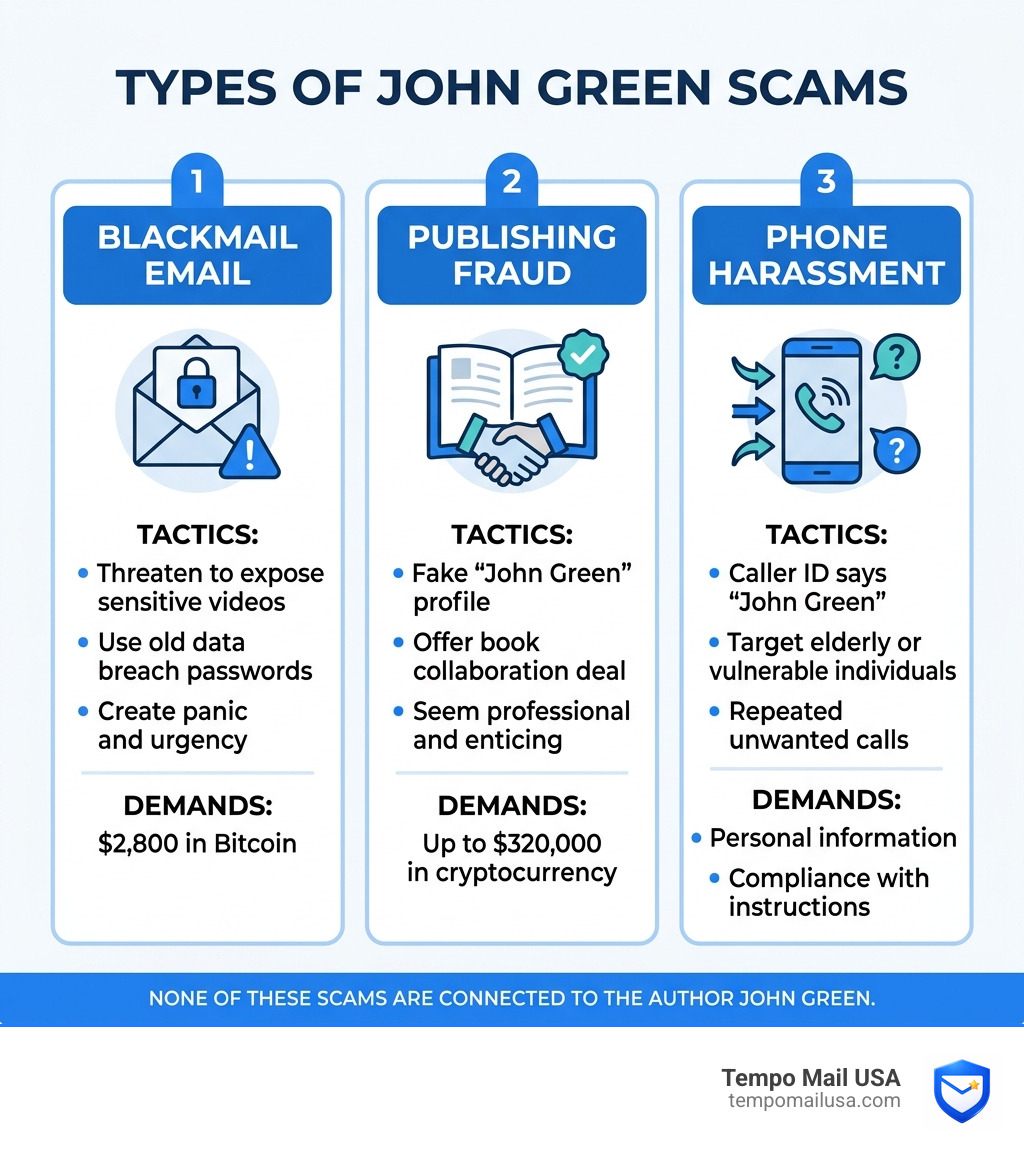
| Scam Type | How It Works | What They Want |
|---|---|---|
| Blackmail email | Claims to have recorded you watching adult content, threatens to expose you | $2,800 in Bitcoin |
| Publishing fraud | Fake "John Green" profile offers a book collaboration deal | Up to $320,000 in cryptocurrency |
| Phone harassment | Caller named "John Green" targets victims (often elderly) with repeated calls | Personal info or compliance |
None of these involve the real John Green — the bestselling author of The Fault in Our Stars. His name and fame are simply being hijacked.
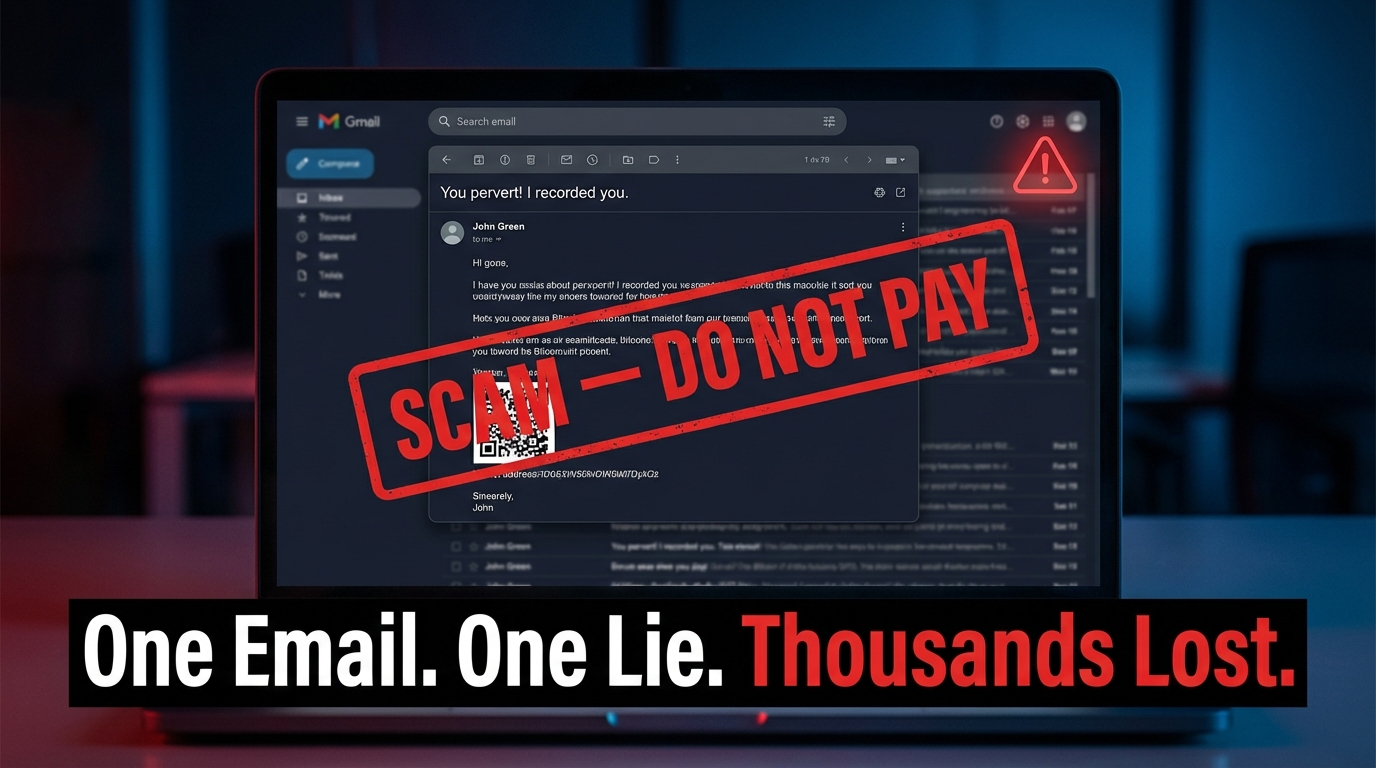
Imagine opening your inbox to find an email with the subject line "You pervert! I recorded you" — signed by someone calling themselves "John Green." That's exactly what thousands of people have reported on Reddit and cybersecurity forums. Some panicked. Some paid. Most, thankfully, found out in time that it was a bluff.
These scams work because the name "John Green" sounds ordinary and trustworthy. It could be anyone. And that's exactly the point.
Scammers often include a real password leaked in an old data breach to make the threat feel personal and legitimate — even though they have no actual access to your device or accounts.
Whether you got a scary email, a suspicious publishing offer, or a harassing phone call, this guide breaks down every version of the John Green scam, how to spot it, and what to do next.
The Anatomy of the John Green Scam: Blackmail and Extortion
The most widespread version of the john green scam is a classic "sextortion" or ransomware-style email. Thousands of users on platforms like Reddit's r/cybersecurity_help and r/Scams have reported receiving nearly identical messages. The sender name is often "john Green," though variations like "jessica green" have also been spotted.
How the Blackmail Works
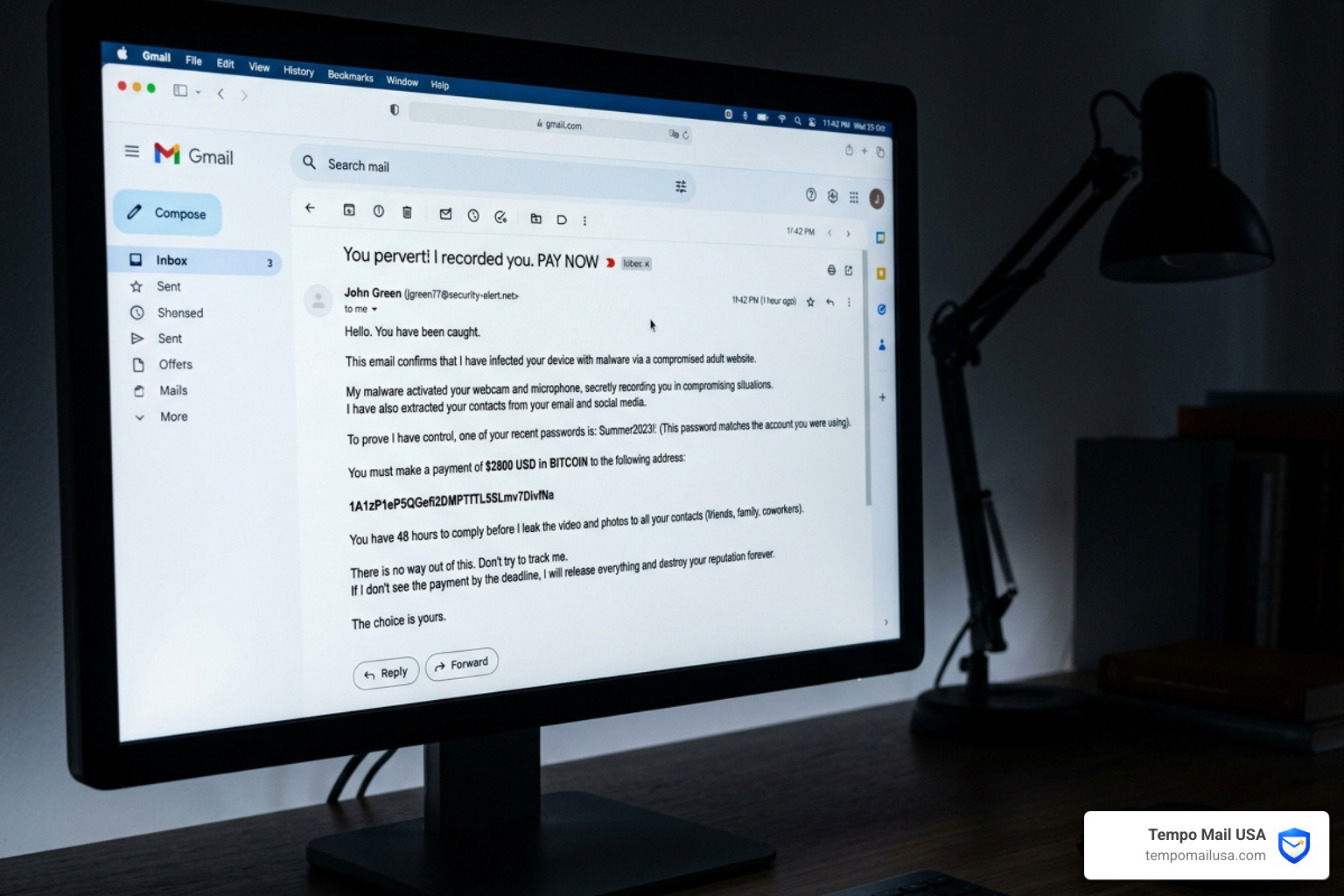
The email usually starts with a jarring, aggressive subject line like "You pervert!" or "I recorded you." The content follows a predictable script:
- The Claim: The scammer asserts they have installed malware on your device (often specifically mentioning a Mac or PC) via a "drive-by exploit."
- The Threat: They claim to have recorded you through your webcam while you were watching adult content.
- The Proof: To make the threat feel real, they often include a password you actually use or used in the past. This information isn't from a hack of your computer; it's harvested from massive historical data breaches sold on the dark web.
- The Demand: They demand a payment—typically around $2,800 USD—to be paid in Bitcoin within a short window (usually 24 to 48 hours).
Why People Fall for It
The inclusion of a real password is a powerful psychological tactic. It creates an immediate sense of vulnerability. However, the truth is that these are "spray and pray" attacks. Scammers send these to tens of thousands of people at once, hoping just a few will be scared enough to pay. If you receive one of these, it is vital to know what to do if you receive a ransomware email to avoid making the situation worse.
The Publishing Fraud: Fake Contracts and AI Impersonation
While the blackmail emails target the general public, a more sophisticated version of the john green scam targets writers and creators. This is a form of "advance-fee fraud" where scammers impersonate the famous author John Green to offer fake publishing opportunities.
The Substack and Social Media Trap
Scammers create fake profiles on platforms like Substack or X (formerly Twitter). These profiles often have no posts and zero followers, yet they reach out to aspiring authors with heavy flattery. They might claim to have read your work and want you to collaborate on a "limited edition" book project.
In one documented case, a scammer pretending to be John Green used a hybrid AI-human approach. They used AI to generate polished, complimentary emails to build rapport, then switched to a human handler once the victim was "hooked." The goal? To get the victim to sign a fake contract.
The $320,000 "Production Fee"
These fake contracts are often riddled with absurdities that a seasoned professional would catch, but an excited new author might miss. In a real-world example uncovered by a writer using ChatGPT as a "digital detective," the scammer demanded:
- $800,000 in supposed production and printing costs.
- An upfront payment of $320,000 in cryptocurrency.
- A claim that the "limited edition" would consist of 500,000 copies (which is a massive, standard-run number, not a limited edition).
To learn more about how this specific case was dismantled, you can read the full account of how I used ChatGPT to catch a publishing scammer pretending to be John Green.
How to Spot a Publishing-Related john green scam
Identifying these frauds requires a keen eye for detail. Here are the red flags:
- The "Too Good to Be True" Offer: A world-famous author like John Green does not cold-email random writers to offer six-figure collaborations.
- Vague Project Details: Scammers talk in circles. They use lots of flattery but give very few specifics about the book's title, plot, or the actual publishing house involved.
- Crypto Demands: Legitimate publishing houses do not conduct business via Bitcoin or Ethereum.
- Absurd Numbers: As mentioned, claiming a "limited edition" of 500,000 copies is a dead giveaway of industry ignorance.
For more tips, check out how to spot a publishing scam and remember that all those author services and book club emails are fake.
Why Scammers Target Victims Using a john green scam Persona
John Green is a perfect target for impersonation because of his unique standing in culture. As the most loved and hated person on the teen internet, he has massive name recognition.
Scammers leverage:
- Trust: His "nerdfighter" community is built on the idea of "decreasing world suck." Scammers weaponize this goodwill.
- Global Fame: With over 50 million books in print, his name carries weight in every corner of the globe.
- Accessibility: Because John and his brother Hank are very active online (YouTube, TikTok, etc.), a message from "John" feels slightly more plausible than a message from a reclusive author like Thomas Pynchon.
Identifying the Real John Green vs. Scammer Personas
To protect ourselves, we need to understand who the real John Green is. The real John Green is a philanthropist, an educator, and a businessman with a very public and verifiable track record.
The table below highlights the stark differences between the real author and the scammer tactics used in a john green scam:
| Feature | Real John Green | Scammer Persona |
|---|---|---|
| Primary Platforms | YouTube (Vlogbrothers), Complexly, verified social media | Substack (empty profiles), WhatsApp, Gmail |
| Communication Style | Open, educational, often focuses on global health | Aggressive, flattering, or secretive |
| Financial Requests | Charity fundraising (Project for Awesome) | Bitcoin, Crypto, "Advance fees" |
| Business Address | Verified Indianapolis-based companies | Spoofed addresses or "Private" numbers |
| Tone | Earnest and self-deprecating | Threatening ("You pervert!") or overly "slimy" PR speak |
The real John Green has raised millions for charities like Partners In Health and has spent years advocating for cheaper tuberculosis medication. He doesn't spend his time cold-calling people from Jamaica or demanding Bitcoin to hide "webcam footage."
How to Protect Your Data and Respond to Threats
If you find yourself targeted by a john green scam, the first rule is: Do not panic. Scammers rely on your "fight or flight" response to cloud your judgment.
Step-by-Step Response Plan
- Do Not Engage: Whether it’s an email or a phone call, stop communicating immediately. Do not click links or download attachments.
- Verify the "Proof": If they show you an old password, check sites like Have I Been Pwned to see which data breach it came from. Then, change that password on any accounts where it is still active and enable Two-Factor Authentication (2FA).
- Report the Fraud:
- In the US: File a report with the FTC and the FBI’s IC3.
- In the UK: Contact Action Fraud.
- Platforms: Report the profile to Substack, X, or whichever platform was used to contact you.
- Secure Your Identity: Use tools that mask your real information. We recommend using temporary email aliases to sign up for new services, as this acts as a PII (Personally Identifiable Information) firewall.
It's also helpful to read up on general safety, such as what is a phishing scam and how to beware of job scams that use similar impersonation tactics. Some victims have even taken to complaints boards to warn others about specific phone numbers used in these schemes.
Frequently Asked Questions about the John Green Scam
Is John Green actually sending me emails?
No. John Green is a high-profile public figure with professional representation. He does not send unsolicited blackmail emails or reach out to strangers via WhatsApp to sign $320,000 publishing contracts. Any such communication is a john green scam.
What should I do if I already paid a scammer?
If you paid via cryptocurrency, the funds are unfortunately very difficult to recover. However, you should still report the transaction to the FBI (IC3) or your local cybercrime unit. If you provided credit card information, contact your bank immediately to freeze your account and dispute the charges. Be wary of "recovery scammers" who claim they can get your money back for a fee—they are also fraudsters.
How do scammers get my personal email address?
Most scammers get your details from large-scale data breaches. When a major website is hacked, lists of emails and passwords are sold on the dark web. This is why using a unique, temporary email for different services is so effective—it prevents a breach at one company from exposing your entire digital identity.
Conclusion
The john green scam is a reminder that even the most trusted names can be used as tools for deception. Whether it's a terrifying blackmail attempt or a "dream" publishing offer, these schemes rely on one thing: your lack of information.
By staying informed and recognizing the red flags—like Bitcoin demands, absurd contract terms, and aggressive language—you can render these scams powerless. At Tempo Mail USA, we believe the best defense is a strong offense. Protecting your primary email address is the first step in stopping scammers before they even reach your inbox.
Using a secure alias acts as a PII firewall, keeping your real identity safe from the data breaches that fuel these extortion attempts. Stay vigilant, verify every "celebrity" encounter, and never let a scammer’s bluff ruin your peace of mind.
For more information on staying safe online, visit https://tempomailusa.com.