

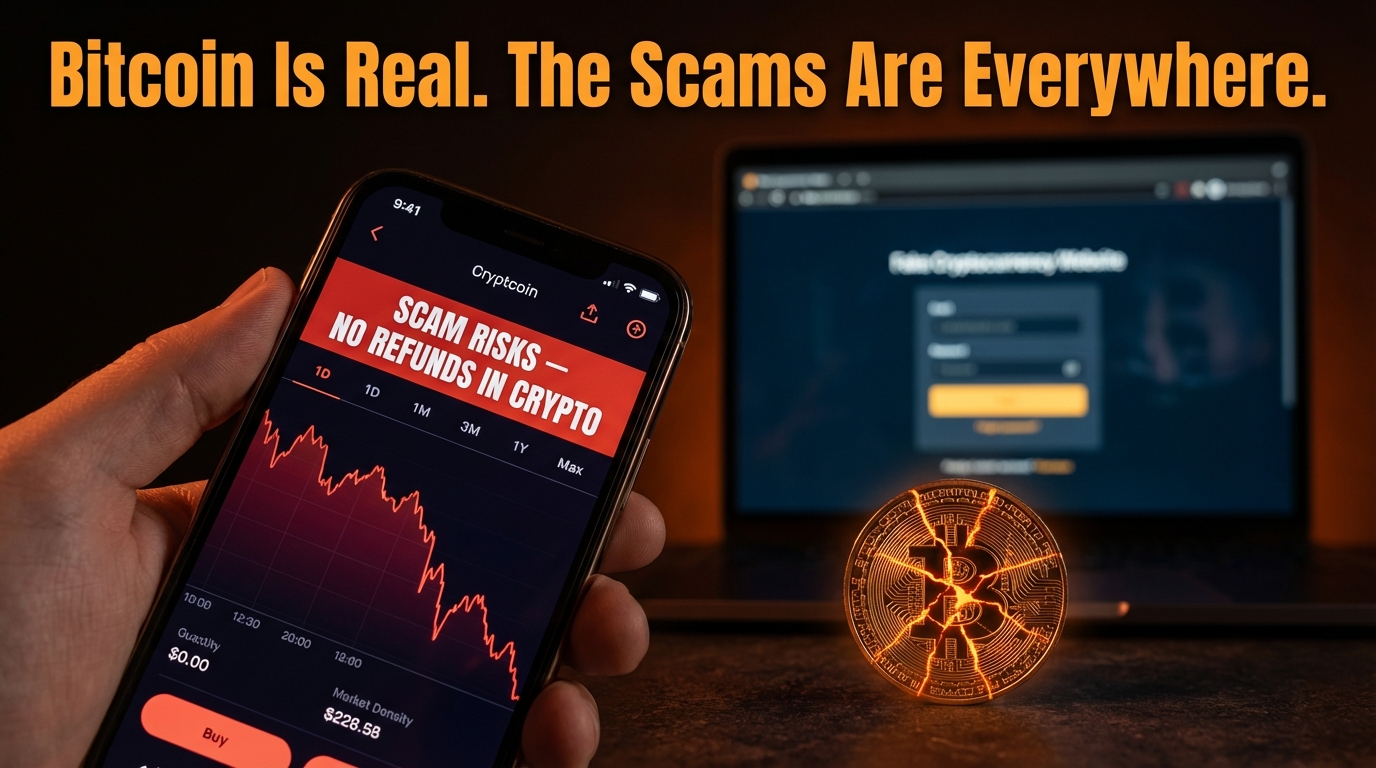

Is Bitcoin a Scam? Here's What You Need to Know First
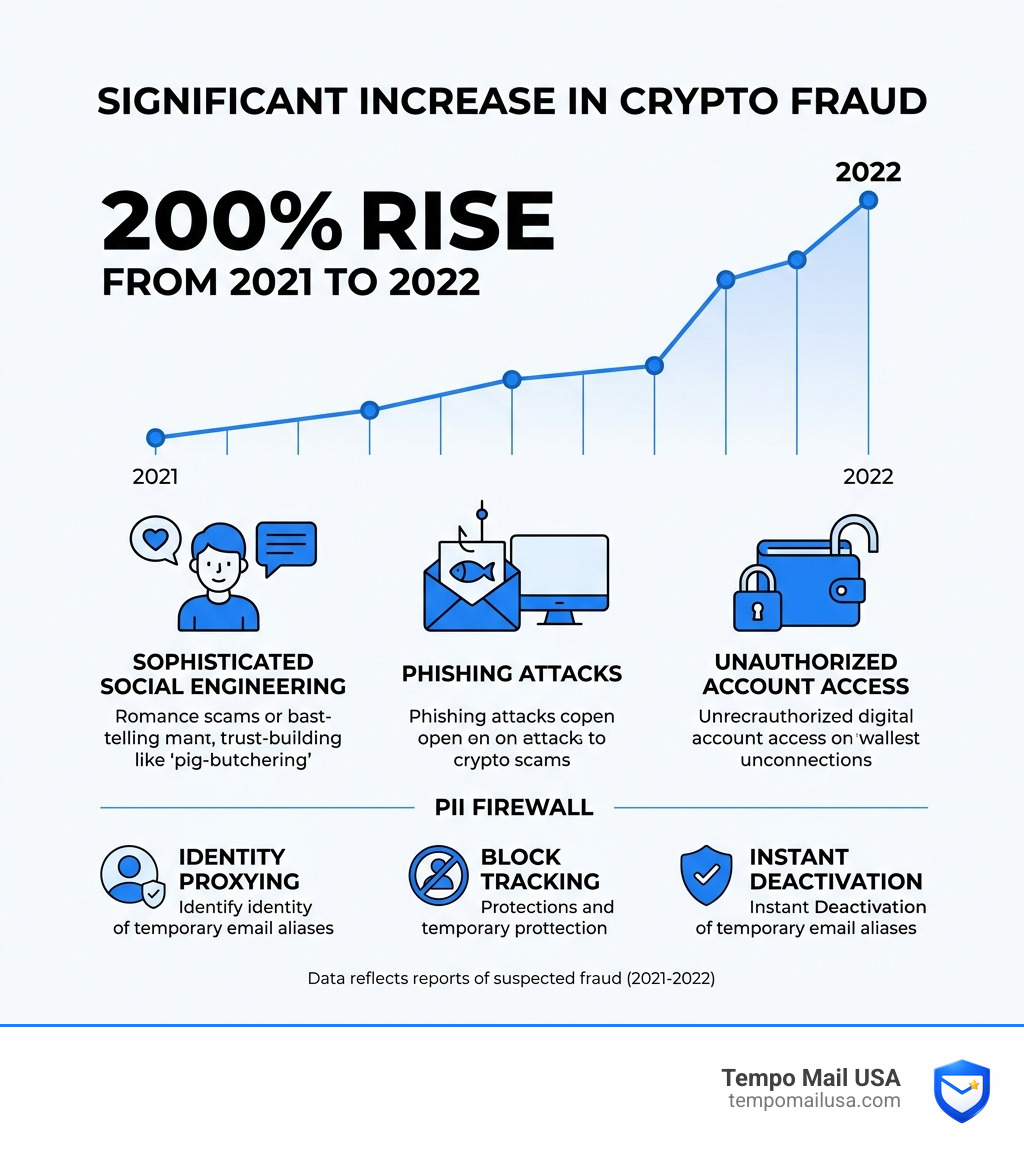
Is Bitcoin a scam is one of the most searched financial questions online — and for good reason. Cryptocurrency fraud cost Americans over $2.57 billion in 2022 alone, nearly double the $907 million lost just a year earlier.
Here's a quick answer before we dive deeper:
Is Bitcoin itself a scam?
- Bitcoin the technology is real. It is a decentralized digital currency built on blockchain — a public, transparent ledger.
- Bitcoin the investment is highly speculative, unregulated, and carries serious risks — but it is not a classic scam by definition.
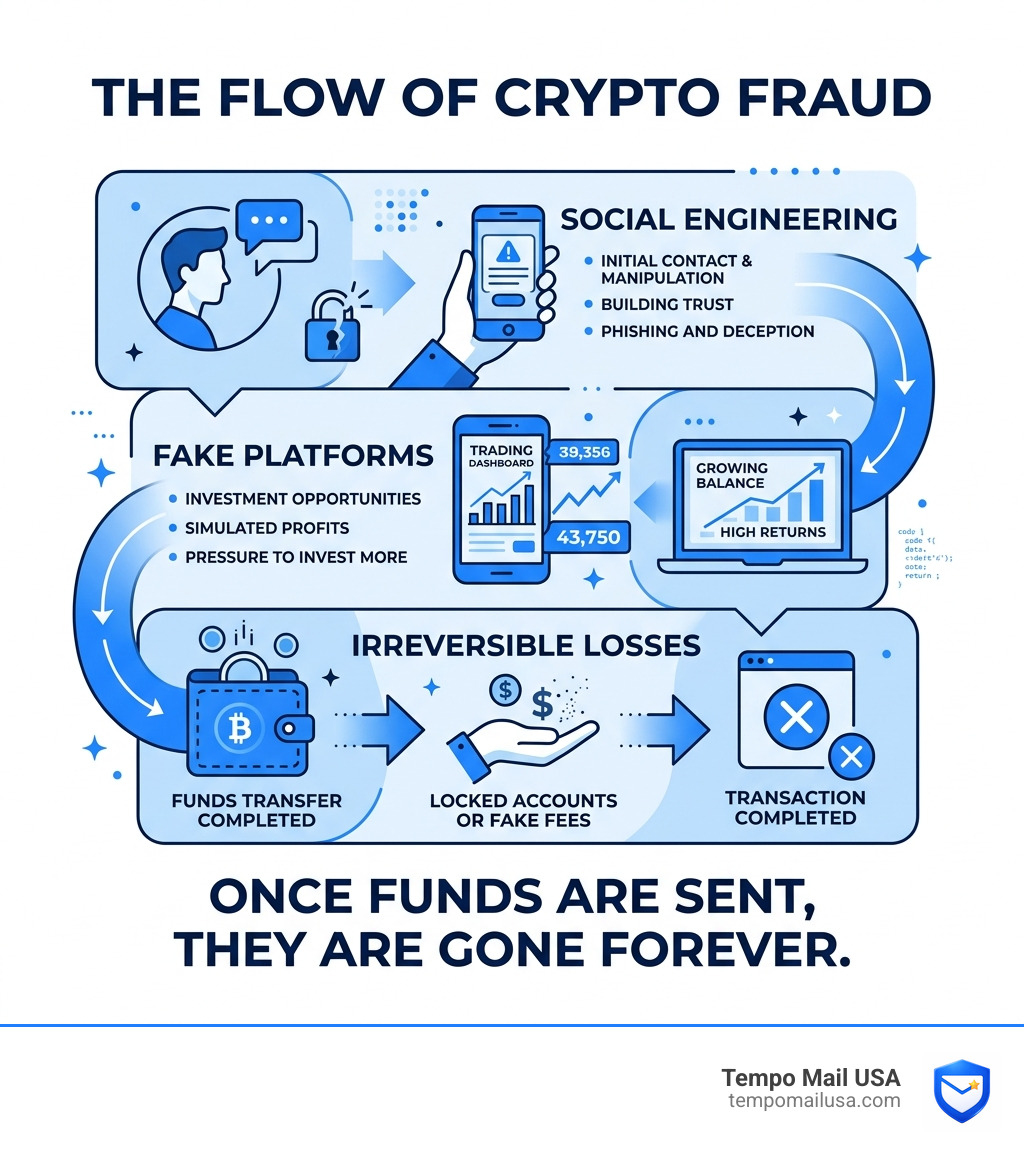
- Scams using Bitcoin are everywhere — romance scams, fake trading platforms, pig-butchering schemes, and impersonation fraud are rampant.
- No government insurance protects your crypto. Transactions are irreversible.
- Legitimate businesses do not demand payment exclusively in cryptocurrency.
The short version: Bitcoin itself is not a traditional Ponzi scheme, but it shares some troubling characteristics — and the ecosystem around it is flooded with outright fraud.
Critics like former PayPal CEO Bill Harris have called it "a colossal pump-and-dump scheme, the likes of which the world has never seen." Others argue it is simply a high-risk speculative asset, like a volatile commodity with no guaranteed return.
The truth, as usual, sits somewhere in the middle — and the details matter enormously, especially if your personal information or savings are at risk.
Is Bitcoin a Scam? Legitimacy and Financial Risk
When we ask is bitcoin a scam, we have to look at how it generates value. Unlike a stock, which represents ownership in a company that produces profit, or a bond that pays interest, Bitcoin has no "intrinsic value." It doesn't produce anything. Its price is driven by the Greater Fool Theory—the idea that you can profit from an asset as long as there is someone else (a "greater fool") willing to buy it from you at a higher price.
Many critics, including computer scientist Jorge Stolfi, argue that Bitcoin is a Ponzi because it is a negative-sum game. In a healthy stock market, the total pool of wealth grows as companies create products. In Bitcoin, the only money coming out of the system is the money new investors put in, minus the massive costs paid to "miners" for electricity and hardware.
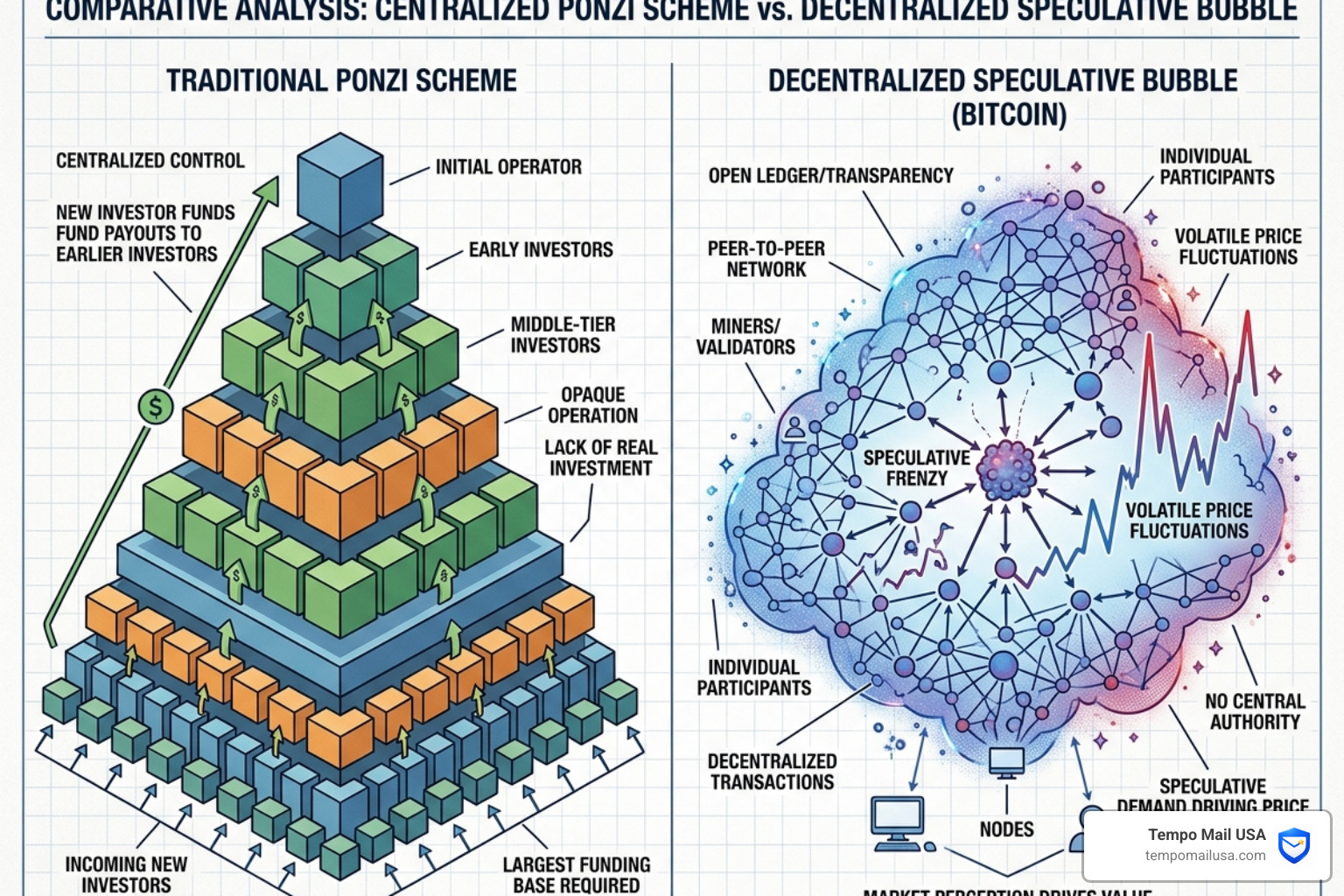
| Feature | Traditional Ponzi Scheme | Bitcoin Investment |
|---|---|---|
| Central Operator | Yes (e.g., Bernie Madoff) | No (Decentralized) |
| Guaranteed Returns | Usually promised | Rarely promised by the protocol |
| Source of Payouts | New investor capital | New investor capital (via market price) |
| Transparency | Hidden ledgers | Public Blockchain |
| External Revenue | None | None |
Analyzing the "Is Bitcoin a Scam" Argument via Ponzi Mechanics
While Bitcoin lacks a central "charismatic leader" like Charles Ponzi, its economic mechanics are strikingly similar. For early adopters to "cash out" and get rich, new investors must be recruited to buy their coins. This creates a constant need for hype and promotion.
Miners act as the "operators" of this system, extracting billions of dollars in value to cover their overhead. According to FraudBytes: Is Bitcoin a Scam?, the lack of proprietary technology means anyone can start a "coin," leading to thousands of failed projects. In fact, 418 of the 902 ICOs launched in 2017 have already failed, and 10% of the $3.7 billion raised in those offerings was simply stolen.
Why the "Is Bitcoin a Scam" Question Leads to Identity Theft Concerns
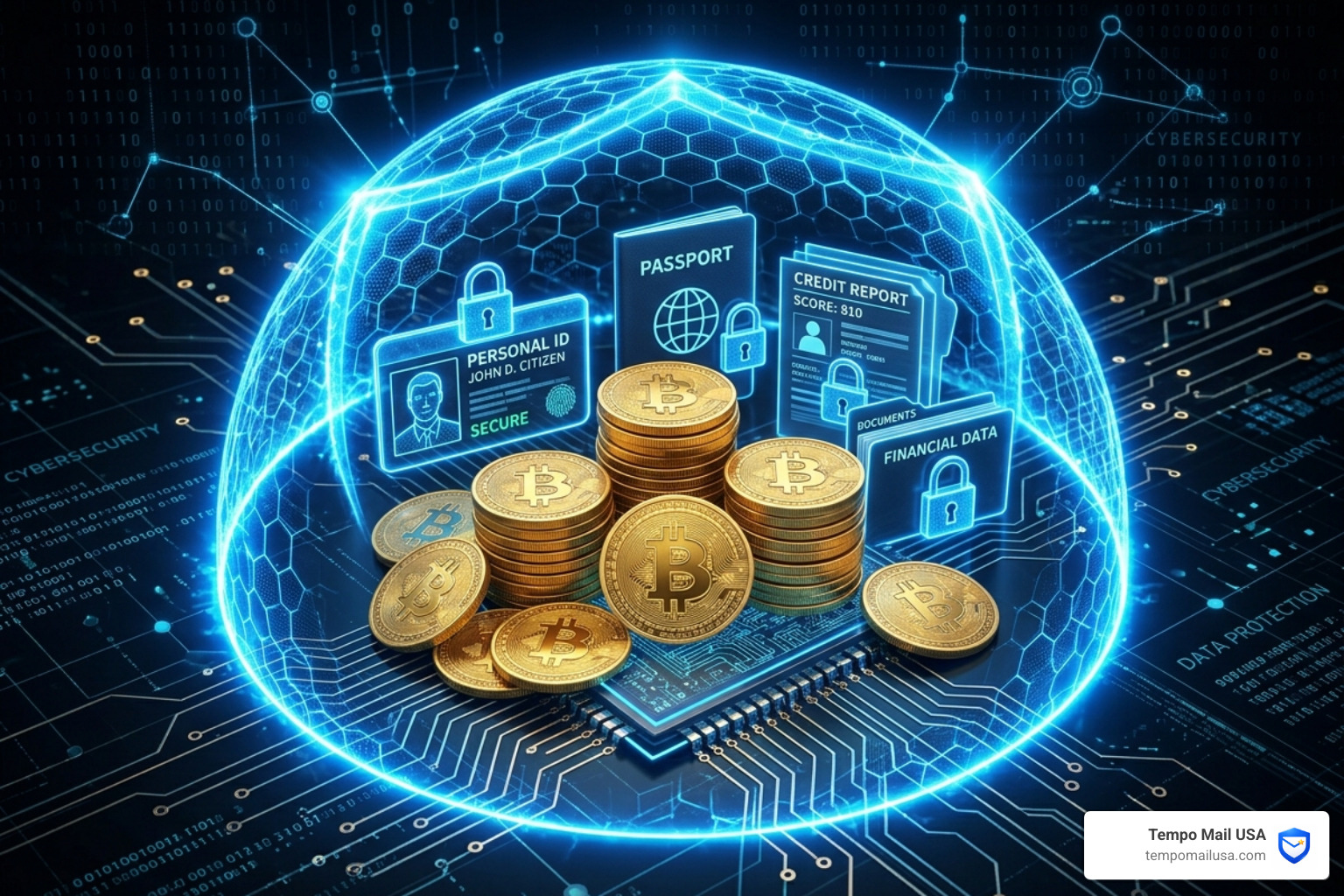
The danger of Bitcoin isn't just the price volatility; it’s the Personally Identifiable Information (PII) you expose when trying to buy it. To use most exchanges, you must provide your Social Security number, ID, and bank details. If these unregulated platforms are hacked—like the famous Mt. Gox or Coincheck breaches—your identity is served on a silver platter to cybercriminals.
As noted by the FTC in What To Know About Cryptocurrency and Scams, scammers use the "hype" around Bitcoin to lure people into fake trading platforms. Once you sign up, they have your email, your password (which many people reuse), and your financial data. This is why identity theft protection services have become a non-negotiable requirement for anyone touching the crypto space.
Protecting Assets with Identity Theft Protection Services and Credit Monitoring Software
If you decide to engage with digital assets, you are stepping into a "Wild West" where advanced malware protection and enterprise VPN solutions are your only sheriffs. Scammers use sophisticated social engineering, such as "pig-butchering" (building trust over months before stealing everything) or romance scams, to convince victims to send Bitcoin.
The Crypto Scam Tracker - DFPI catalogs hundreds of these stories. Victims often lose their entire life savings because they lacked credit monitoring software to alert them when new, fraudulent accounts were opened in their names using leaked PII.
Enterprise VPN Solutions for Secure Digital Trading
When you access a crypto exchange, you are transmitting sensitive financial data. Without enterprise VPN solutions, your IP address and location are visible to malicious actors, especially on public Wi-Fi. A high-end VPN creates an encrypted tunnel, ensuring that even if a hacker intercepts your connection, they cannot read your data. This is a foundational layer of enterprise cybersecurity software that every serious investor must use.
Credit Monitoring Software to Detect Fraudulent Accounts
Because crypto transactions are irreversible, scammers often try to "double dip." After stealing your Bitcoin, they use your stolen ID to take out loans. Credit monitoring software provides real-time alerts the moment a credit inquiry is made in your name. Pairing this with identity theft protection services ensures that if your data is leaked during a crypto exchange breach, you can freeze your credit before the damage is done.
Preventing Phishing with Disposable Email Infrastructure
The number one way people lose their Bitcoin is through phishing. You receive an email that looks like it’s from Coinbase or Binance, you click a link, enter your credentials, and your "wallet" is emptied.
This is where we at Tempo Mail USA provide a critical PII firewall. By using our temporary email aliases, you never have to give your real, primary email address to a crypto exchange or a "free" crypto news site.
Why you should use Tempo Mail USA for crypto activities:
- Identity Proxying: We act as a shield between you and the service.
- Block Tracking: Stop exchanges and advertisers from building a profile on your financial habits.
- Instant Deactivation: If an exchange is breached and your alias starts receiving phishing emails, you can delete that alias instantly, rendering the stolen data useless to the hacker.
For more information on how to protect yourself after a breach, see our guide on Report Bitcoin Scam 17 Billion Stolen Do This First. You can also find More info about secure email services on our main site.
Advanced Malware Protection Against Crypto-Jacking
Did you know that 90% of all remote hacking is now focused on "crypto-jacking"? This is where hackers commandeer your computer to mine Bitcoin for themselves. Advanced malware protection is required to detect these stealthy background processes that burn out your hardware and skyrocket your electricity bill.
Secure Cloud Storage for Business and Private Keys
Never store your "private keys" (your Bitcoin password) in a plain text file or a regular cloud drive. Use secure cloud storage for business that offers end-to-end encryption and data privacy compliance. For maximum security, use "cold storage"—keeping your keys on a physical device that is never connected to the internet.
Data Privacy Compliance and Cybersecurity Insurance for Digital Investors
As the market matures, data privacy compliance has become a major hurdle. Organizations like the IC3 warn that crypto is the preferred tool for money laundering and ransomware. You can read their official stance at Cryptocurrency - Internet Crime Complaint Center (IC3).
For high-net-worth individuals, standard bank protections don't apply here. This is why cybersecurity insurance is becoming a standard part of a modern portfolio.
Cybersecurity Insurance for High-Net-Worth Individuals
If you hold significant digital assets, cybersecurity insurance can provide a safety net against exchange hacks, ransomware, and even some forms of social engineering fraud. While it won't cover a "bad trade," it can cover the legal and recovery costs associated with a targeted cyberattack on your household or business.
Maintaining Data Privacy Compliance in Unregulated Markets
Even in an unregulated market, you should behave as if you are under strict data privacy compliance rules like GDPR. This means minimizing the data you share. Using a PII firewall like Tempo Mail USA ensures you aren't leaving a trail of "digital breadcrumbs" that lead straight to your bank account.

Frequently Asked Questions about Cryptocurrency Legitimacy
Is Bitcoin a scam or a legitimate investment?
Bitcoin is a legitimate, decentralized technology, but it is an extremely high-risk, speculative investment. It is often used as a vehicle for scams (like "pump-and-dumps"), and it lacks the intrinsic value found in traditional assets like stocks or real estate.
How do identity theft protection services prevent crypto fraud?
These services monitor the dark web for your leaked credentials. If your crypto exchange login or your SSN appears in a database of stolen info, you are alerted immediately so you can change your passwords and move your funds before a hacker strikes.
What are the red flags of a fraudulent trading platform?
Red flags include: promising "guaranteed" high returns (e.g., 2% daily), refusing to allow withdrawals without "tax" payments, lacking a physical U.S. address, and having a domain name that was only registered a few weeks ago.
Conclusion
So, is bitcoin a scam? Bitcoin the protocol is a breakthrough in computer science. But for the average person, the ecosystem is a minefield. To survive, you must treat your digital life with the same seriousness as a bank vault.
This means investing in cybersecurity insurance, running advanced malware protection, and using enterprise VPN solutions. Most importantly, it means protecting your PII. Don't give your real email to every "crypto guru" or exchange you find. Use a proxy. Protect your identity today with Tempo Mail USA and build a firewall between your savings and the scammers.
Security Checklist for Crypto Investors:
- [ ] Use Tempo Mail USA for all exchange registrations.
- [ ] Enable Identity theft protection services.
- [ ] Install Credit monitoring software.
- [ ] Use Secure cloud storage for business for encrypted backups.
- [ ] Never send crypto to someone you met on a dating app.