

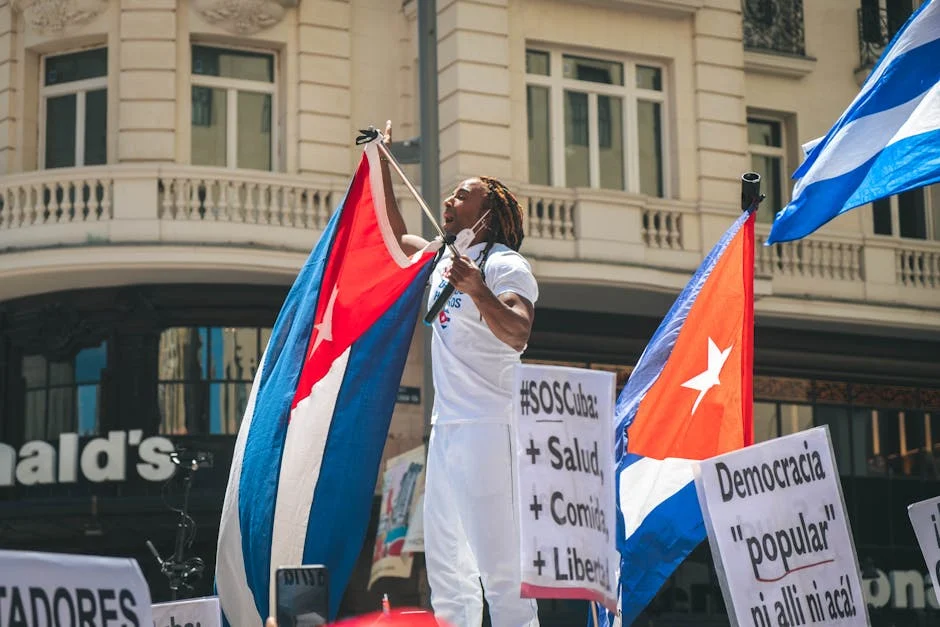

Why Florida Cuban Diaspora Politics Shape the Entire Nation
Florida Cuban diaspora politics sits at the intersection of Cold War history, immigration policy, and modern electoral power — and it influences outcomes far beyond Miami.
Here's what you need to know at a glance:
- Who: Cuban Americans make up 29% of Florida's Latino electorate, with over 70% living in Miami-Dade County
- What: They form one of the most organized and politically active diaspora communities in the United States
- Why it matters: Their votes helped Donald Trump become the first Republican presidential candidate to win Miami-Dade County since 1988
- Party lean: Recent Cuban arrivals (2010–2015) identify Republican at 76%, while U.S.-born Cuban Americans are nearly evenly split
- In Congress: Since 1989, 19 Cuban Americans have served in the U.S. Congress, with 6 serving as of January 2025
The story of Cuban political power in Florida didn't happen overnight. It was shaped by Cold War refugee policy, billions in federal investment, waves of migration, and deep anti-communist sentiment forged by lived experience under the Castro regime.
But the community is far from monolithic. Generational divides, competing immigration waves, and tensions over Trump-era deportation policies have created real fault lines — even among lifelong Republicans.
Understanding this community means setting aside simple narratives. As one political analysis put it, common understandings of Cuban American politics resemble Cuba's classic cars: frozen in time. The reality in 2026 is much more dynamic.
The Evolution of Florida Cuban Diaspora Politics
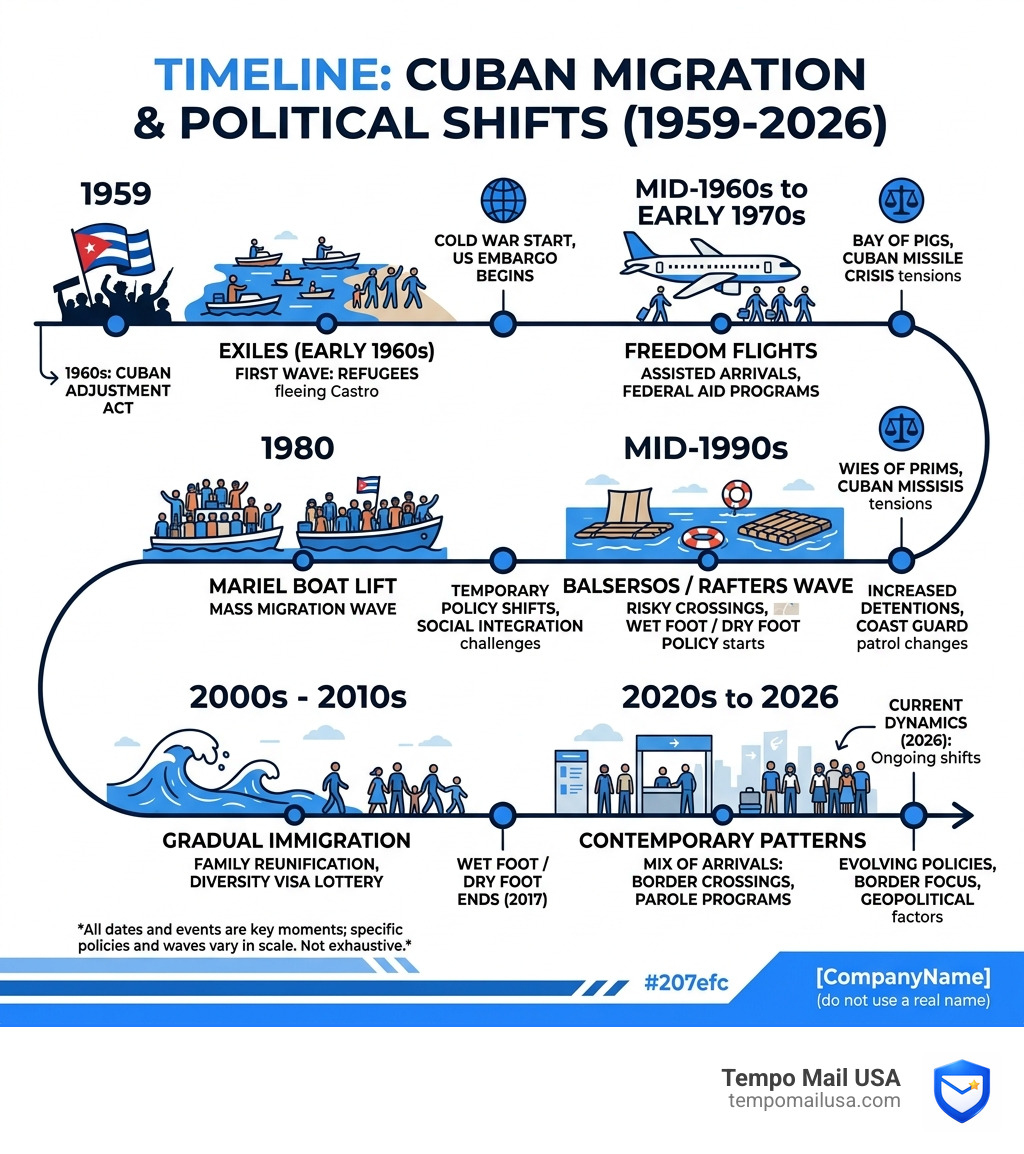
To understand florida cuban diaspora politics today, we have to look back at the 1959 Revolution. When Fidel Castro took power, it didn't just change Cuba; it fundamentally transformed the fabric of Florida. Unlike many other immigrant groups, the early Cuban exiles were viewed by the U.S. government as a strategic Cold War asset.
This unique status led to a scholarly analysis of Cold War refugee policy and Miami's transformation that highlights how federal funding turned a sleepy tourist town into a global metropolis. The U.S. government provided unprecedented federal largesse and freedom of transit to those fleeing the island. This wasn't just humanitarian aid; it was a geopolitical strategy to showcase the "success" of those fleeing communism.
The passing of the Cuban Adjustment Act in 1966 further solidified this status, allowing Cubans to apply for permanent residency just one year after arriving. This created a pathway to citizenship and, eventually, a massive, motivated voting bloc that could influence local and national elections.

The Economic Impact of Federal Support
The Eisenhower and Kennedy administrations didn't just open the doors; they opened the checkbook. Massive infrastructure spending and direct aid to refugees helped build the economic engine of Miami. This federal support allowed the diaspora to establish a "moral capital" in exile, creating businesses, schools, and media outlets that kept the community unified and politically focused on the "liberation" of their homeland.
Generational Shifts in Florida Cuban Diaspora Politics
We often hear that "Cubans vote Republican," but the data tells a more nuanced story. There is a visible "wave effect" where the year a person arrived in the U.S. dictates their political leanings.
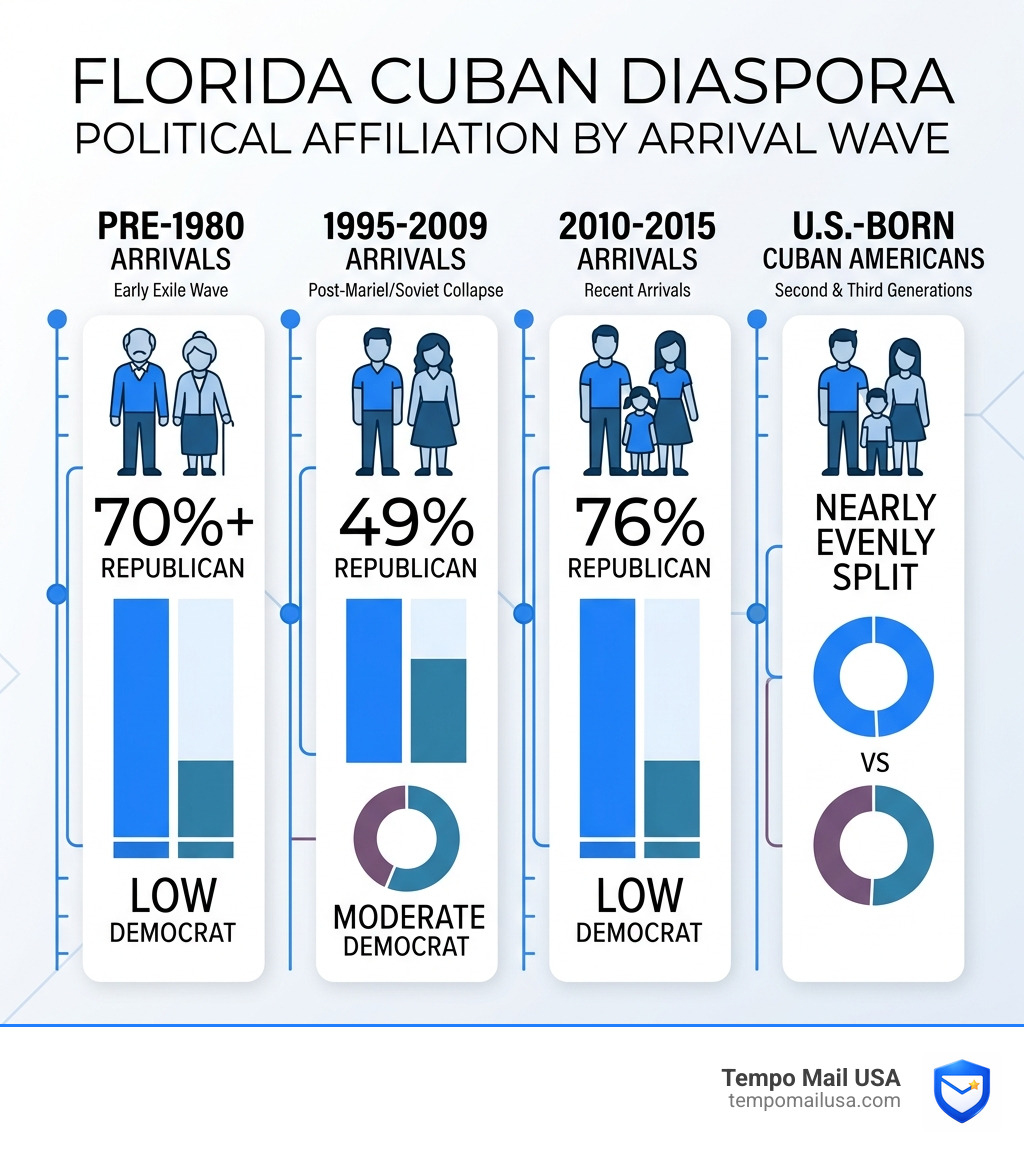
| Arrival Period | Republican Identification | Democrat Identification |
|---|---|---|
| Pre-1980 (Exiles) | High (70%+) | Low |
| 1995–2009 | 49% | Moderate |
| 2010–2015 | 76% | Low |
| U.S.-Born Cubans | 40% | 36% |
As the table shows, U.S.-born Cuban Americans are nearly evenly split. This younger generation is often more concerned with domestic issues like healthcare and climate change, though they remain mindful of their heritage.
Why the GOP Dominates the Cuban Vote
If you walk through Little Havana today, the Republican presence is palpable. But why? Many people point to the 1961 Bay of Pigs invasion as the moment Cubans "turned" Republican because they felt betrayed by JFK. However, research shows this is largely a myth. In reality, Democrats actually won many Cuban enclaves well into the late 1970s.
The real shift happened during the Reagan era. Ronald Reagan's fierce anti-communist rhetoric and his 1980s economic policies resonated deeply with a community that valued hard work and loathed state intervention. This solidified a party loyalty that has lasted for decades. Many users now rely on advanced security tools and VPN protection to prevent these attacks and protect their political privacy, especially when engaging in heated online political debates.
By the 2020 election, this alignment reached a fever pitch. Donald Trump’s messaging—labeling opponents as "socialists"—was incredibly effective. He gained over 15 points of support in Cuban American neighborhoods, leading to a historic victory in Miami-Dade County.
The Role of the Embargo in Florida Cuban Diaspora Politics
The U.S. embargo against Cuba is perhaps the most divisive issue within the diaspora. According to the 2020 FIU Cuba Poll, 66% of Cuban Americans believe the embargo hasn't worked. Yet, in a classic display of political identity over logic, 54% still support continuing it.
This "motivated reasoning" is a hallmark of florida cuban diaspora politics. Supporting the embargo isn't necessarily about its economic effectiveness; it’s a social identity and a signal of one's stance against the Cuban regime.
Miami-Dade: A Republican Stronghold in 2026
Fast forward to May 2026, and Miami-Dade has transitioned from a swing county to a Republican stronghold. This shift is driven by a high share of immigrants who see the GOP as the party of economic opportunity and security. The 1988 precedent—the last time a Republican won the county before Trump—has been firmly overturned, making Miami a key electoral powerhouse for the right.
Key Figures and Representation in Congress
The Cuban diaspora doesn't just vote; it leads. Since 1989, nineteen individuals of Cuban origin have been elected to the U.S. Congress. As of 2025, several key figures continue to shape national policy:
- Mario Díaz-Balart (R-FL): A veteran lawmaker and a staunch defender of hardline Cuba policies.
- María Elvira Salazar (R-FL): A former journalist who flipped her district and has become a vocal advocate for "rule of law" immigration.
- Carlos Giménez (R-FL): The former Miami-Dade Mayor who now pushes for total halts on remittances to the Cuban regime.
- Maxwell Alejandro Frost (D-FL): Representing the younger, more progressive side of the diaspora as the first Gen Z member of Congress.
- Ted Cruz (R-TX) and Nicole Malliotakis (R-NY): Showing that Cuban political influence extends well beyond Florida's borders.
Navigating the Trump-Era Immigration Tightrope
One of the most fascinating aspects of florida cuban diaspora politics right now is the "tightrope walk" performed by GOP representatives. This news report on Florida Republicans navigating immigration crackdowns highlights the tension.
How do you support a president who calls for mass deportations when your own constituents include hundreds of thousands of Venezuelans and Cubans on temporary protections? Lawmakers like Salazar and Díaz-Balart have had to balance party loyalty with constituent needs. They often distinguish between "criminal" immigrants and the hard-working members of their community, though they have faced backlash—including billboards in Miami-Dade labeling them "traitors" to the immigrant dream.
The Democratic Counter-Strategy
Democrats haven't given up on the Cuban vote. Figures like Maxwell Frost represent a new strategy focused on the youth vote and U.S.-born Cubans. By focusing on registration and outreach that moves beyond the "Cold War" lens, they hope to reclaim the ground lost over the last decade.
Protecting Your Identity in a Polarized Political Climate
In the high-stakes world of florida cuban diaspora politics, political activity often comes with risks. Whether you are donating to a campaign, signing a petition, or discussing foreign policy online, your personal data is a target. Political doxxing and surveillance are real threats in 2026.
We believe that your political beliefs should be your business, not a data point for a broker or a malicious actor. Many activists and voters are now turning to advanced privacy protection with NordVPN to ensure their digital footprints are encrypted and hidden from state or third-party surveillance.
Best Tools to Protect Your Digital Identity (Compared)
When navigating political spaces online, you need a multi-layered defense. Here is how we recommend protecting your PII (Personally Identifiable Information):
- VPN Protection: Tools like NordVPN encrypt your internet traffic. This is essential if you are communicating with family in Cuba or Venezuela, as it prevents local ISPs and governments from snooping on your data.
- Identity Theft Protection: These services monitor the dark web to see if your PII has been leaked in a data breach. In a polarized climate, your address or phone number being leaked can lead to harassment.
- PII Firewall (Tempo Mail USA): This is where we come in. When you sign up for political newsletters, petitions, or community forums, you shouldn't have to give away your primary email address. Tempo Mail USA provides temporary email aliases that act as a firewall, shielding your real identity from services that might sell your data or be vulnerable to hacks.
- Antivirus Software: Still a cornerstone of digital hygiene. It blocks spyware that might be used for political espionage or data theft.
Frequently Asked Questions about Florida Cuban Diaspora Politics
Why do Cuban Americans in Florida lean Republican?
While it's a common myth that the Bay of Pigs caused the shift, the alignment was actually solidified during the Reagan era. His strong anti-communist stance and economic "freedom" rhetoric appealed to the exile community's values and lived experiences.
How does the Cuban diaspora influence U.S. foreign policy?
Through a highly organized lobby and influential members in Congress, the diaspora has successfully maintained the U.S. embargo for decades. They shape policies regarding remittances, travel restrictions, and diplomatic pressure, ensuring that the "Cuban question" remains a top priority in Washington.
Are younger Cuban Americans as conservative as their parents?
Not necessarily. While recent arrivals (2010–2015) are very conservative (76% Republican), U.S.-born Cuban Americans are much more diverse in their views. They are nearly evenly split between the Republican and Democratic parties, often prioritizing domestic policy over Cuba-specific foreign policy.
Conclusion
As we look toward the 2026 midterms, the influence of the Cuban diaspora remains a cornerstone of Florida's political landscape. The community's diversity—from the hardline exiles of the 1960s to the tech-savvy Gen Z voters—ensures that florida cuban diaspora politics will never be boring.
However, with great political influence comes the need for great personal security. Whether you're a political junkie or a casual voter, protecting your digital privacy is more important than ever. By using tools like a VPN and a PII firewall, you can engage in the democratic process without compromising your safety.
For those looking to take their digital hygiene to the next level, check out more info about the best private email services to see how you can keep your real data off the grid while staying informed. In the end, the power of the diaspora lies in its voice—make sure yours is heard safely.