



Why FINRA Broker Check Investment Advisor Verification and Fraud Prevention Matters Before You Invest
FINRA Broker Check Investment Advisor Verification and Fraud Prevention is the single most important step you can take before handing your money to any financial professional.
Here's the quick answer if you need it now:
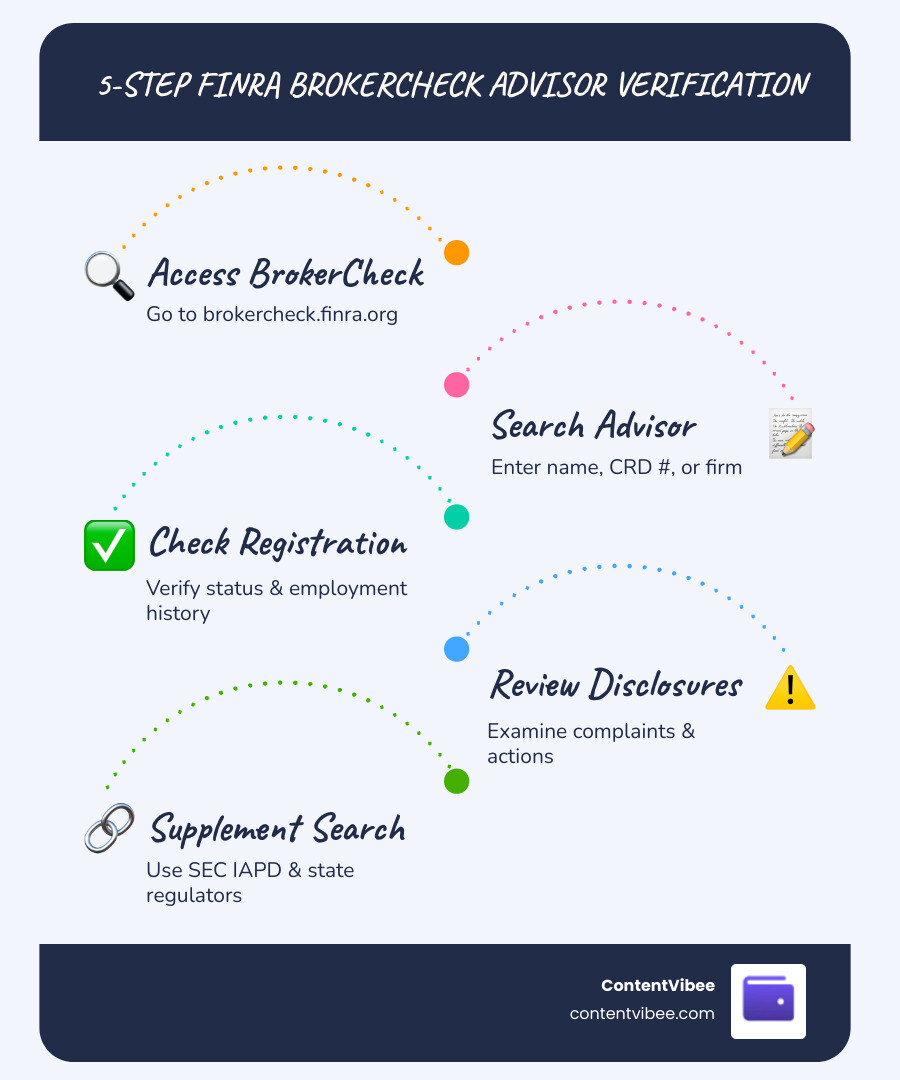
How to verify an investment advisor with FINRA BrokerCheck in 5 steps:
- Go to brokercheck.finra.org
- Search by advisor name, CRD number, or firm name
- Check registration status and employment history
- Review all disclosures, complaints, and disciplinary actions
- Supplement with SEC IAPD, Form ADV, and your state regulator
Many financial scams involve unregistered individuals selling unregistered investments. That's not a rare edge case — it's one of the most common patterns regulators see. And the scary part? A fraudster can look completely legitimate on the surface.
FINRA (the Financial Industry Regulatory Authority) is an independent, Congress-authorized regulator overseeing securities firms that do business with the public in the United States. Its free BrokerCheck tool gives you instant access to an advisor's registration status, employment history, licenses, and any red flags like customer complaints or disciplinary actions.
For self-directed investors — people who want control over their money and aren't ready to blindly trust an app or advisor — this tool is essential due diligence.
The stakes are real. An unverified advisor could mean:
- Unauthorized transactions draining your account
- Wire transfer fraud with little recovery options
- Identity theft tied to your investment accounts
- Losses from unlicensed or unregistered products
Before you commit a single dollar, spending five minutes on BrokerCheck could save you everything.
Understanding FINRA Broker Check Investment Advisor Verification and Fraud Prevention
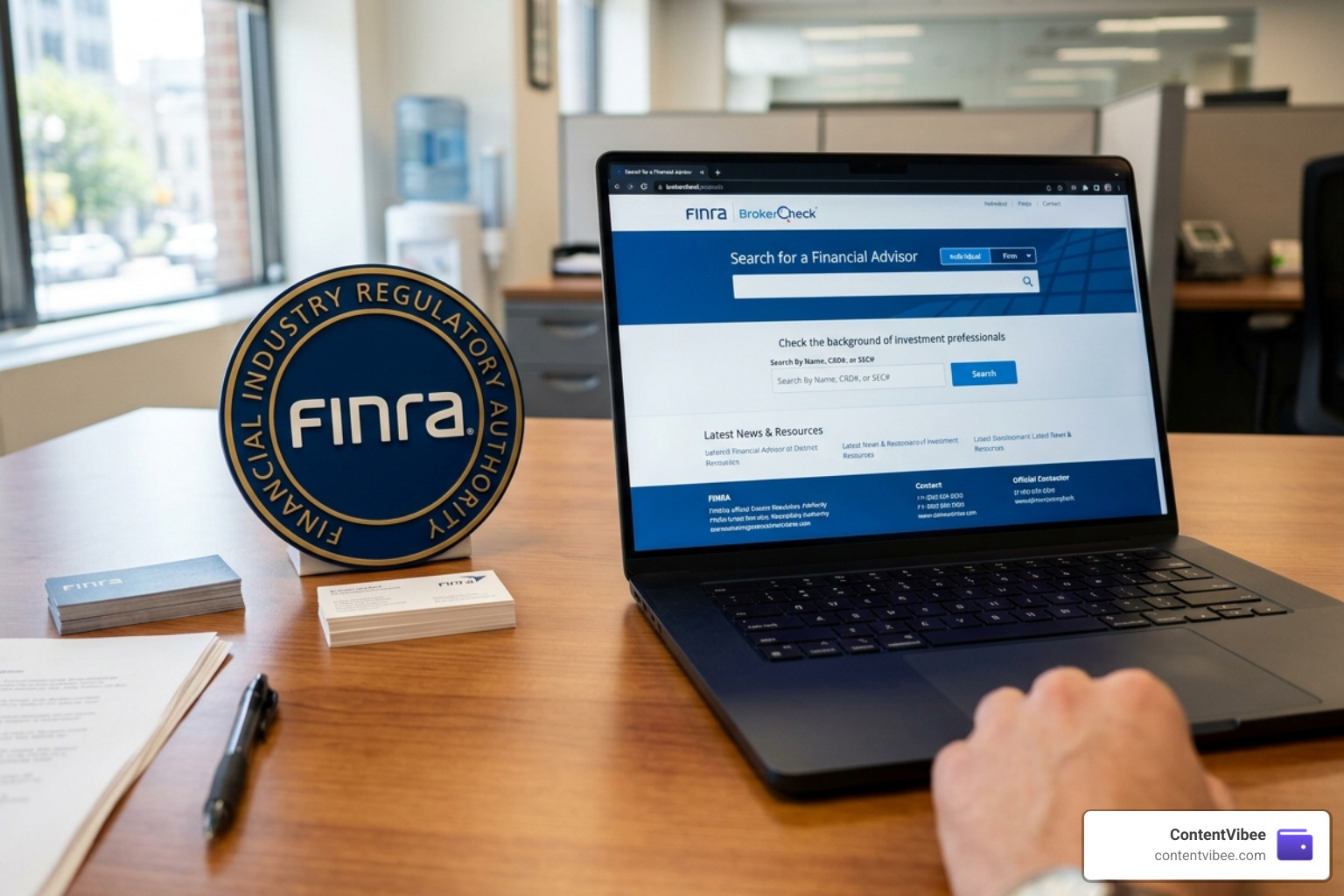
To protect your wealth in 2026, we first need to understand who is watching the watchmen. FINRA is a non-governmental, not-for-profit organization authorized by Congress to protect American investors. They ensure the securities industry operates fairly and honestly.
The backbone of FINRA Broker Check Investment Advisor Verification and Fraud Prevention is a massive database called the Central Registration Depository (CRD). This system contains the "permanent record" of every broker and brokerage firm in the U.S. When you search for an investment advisor, the tool also pulls data from the Investment Adviser Registration Depository (IARD), which is managed by the SEC.
As of April 2026, compliance standards are stricter than ever. Every legitimate professional trading stocks, bonds, or mutual funds must be registered. If someone claims to be a "financial guru" but doesn't appear in these databases, they are operating outside the law. This is the first and most vital line of defense against scams. You can learn more about the technical side of this tool at About BrokerCheck | FINRA.org.
How to Verify Your Advisor in 5 Easy Steps

Vetting an advisor shouldn't feel like a chore. We like to think of it as a "job interview" where you are the boss. After all, it's your hard-earned money on the line. To get the most accurate results, it helps to have specific search criteria like a name, a CRD number, or an SEC registration number. If you run into trouble finding someone, check out the BrokerCheck Search Help - FINRA.org page for tips on narrowing down results.
Step 1: Accessing the FINRA Broker Check Investment Advisor Verification and Fraud Prevention Tool
Start by visiting the official portal at BrokerCheck - Find a broker, investment or financial advisor. You have two main options: searching for an "Individual" or a "Firm."
If you’re looking for a local advisor, you can search by zip code and set a radius (like 25 miles). However, keep in mind that many modern advisors work remotely. If a name search returns too many results, try adding the firm name or using their CRD number—a unique identifier that every registered professional possesses.
Step 2: Reviewing Employment and Qualification History
Once you pull up a report, look at the employment history. BrokerCheck provides a snapshot of the last 10 years of an advisor's career. This includes full-time work, part-time jobs, military service, and even periods of unemployment.
Why does this matter? You want to see stability. Frequent job changes can sometimes indicate that an advisor is "firm hopping" to stay ahead of internal investigations. You should also verify their qualification exams, such as the Series 7 (General Securities Representative Exam). Before you put your faith in a professional, it is worth reading about What You Need To Know Before Trusting/ any financial entity.
Analyzing the Report: Red Flags vs. Positive Indicators
Reading a BrokerCheck report is a bit like reading a medical chart—you’re looking for signs of health and symptoms of "sickness."
| Indicator Type | What to Look For | Why it Matters |
|---|---|---|
| Positive | Stable 10-year employment | Suggests reliability and a clean record at previous firms. |
| Positive | Matching Licenses | Ensures they are actually qualified for the advice they give. |
| Red Flag | Multiple Customer Complaints | Indicates a pattern of "sales practice violations" or poor service. |
| Red Flag | Regulatory Disclosures | Shows the advisor has been fined or sanctioned by the government. |
| Red Flag | Employment Gaps | Unexplained gaps could hide a "barred" status or disciplinary leave. |
Understanding these nuances is key to evaluating Tazopha Investment Group Legitimacy And Risk/ or any other investment firm you might encounter.
Identifying Red Flags in FINRA Broker Check Investment Advisor Verification and Fraud Prevention Reports
The "Disclosures" section is the most critical part of the report. This is where FINRA lists "bad acts." Look specifically for:
- Final Regulatory Actions: These are punishments handed down by regulators like the SEC or state boards.
- Customer Arbitrations: If an advisor has several lost arbitrations resulting in "awards" to customers, that’s a massive warning sign.
- Criminal Convictions: BrokerCheck lists all felonies and investment-related misdemeanors (like theft or fraud).
- Barred Status: If an advisor is "barred," they are legally prohibited from working in the industry.
We’ve seen cases where individuals use high-profile names to lure people into shady deals. Always verify the person behind the pitch, as discussed in our look at Why Rep Sheri Biggs Bitcoin Investment Legitimacy/.
Positive Indicators of a Trustworthy Advisor
A "clean" BrokerCheck report doesn't have a section for "Good Deeds," but the absence of disclosures is a strong signal. A trustworthy advisor will have an active registration status in your state, a consistent employment history with reputable firms, and professional designations that align with your financial goals.
Supplementing Your Search with IAPD and State Regulators
BrokerCheck is powerful, but it isn't the only tool in our shed. For investment advisors (who often charge a percentage of assets under management rather than commissions), you should use the SEC’s Investment Adviser Public Disclosure (IAPD) database.
On the IAPD, you can find Form ADV. This is a document every registered investment advisor must file. it discloses their fee structure, any conflicts of interest, and their business practices. You can cross-reference this data at Using BrokerCheck | Investor.gov.
We also recommend contacting your State Securities Regulator. State regulators often have information about smaller, "boutique" advisors who might not be large enough to register with the SEC but still must follow state laws.
Limitations of the BrokerCheck System
It is important to know what BrokerCheck doesn't show. It generally does not include:
- Personal civil litigation (like a divorce or a neighbor dispute).
- Non-investment related misdemeanors (like a DUI).
- Civil protective orders.
- Ongoing education or specific portfolio performance.
Because of these gaps, we always suggest a simple Google search for the advisor's name followed by "lawsuit" or "litigation." This can reveal issues that haven't made it into the official regulatory databases yet. This is especially important when evaluating complex plans, such as What You Need To Know About Frs Investment Plan/.
What to Do If You Are a Victim of Investment Fraud in 2026
If you discover that your advisor has been dishonest, or if you've fallen victim to a scam, you must act immediately. In 2026, the speed of digital transactions means that every hour counts.
- Document Everything: Save emails, account statements, and any marketing materials.
- Contact the Firm's Compliance Department: If the advisor works for a legitimate firm, the company is responsible for supervising them.
- File a FINRA Complaint: You can do this online through the FINRA Investor Complaint Center.
- Seek Legal Help: For significant losses, you may need a FINRA arbitration attorney. You can find guidance on this at Law And Orderly Conduct Finding Free Legal Help Online/.
- Report to Federal Authorities: If it's a wire transfer fraud or identity theft case, report it to the FBI’s IC3 (Internet Crime Complaint Center).
Recovery is possible, but it requires a proactive approach. Using FINRA Broker Check Investment Advisor Verification and Fraud Prevention before you invest is the best way to ensure you never need these recovery steps.
Frequently Asked Questions about Advisor Verification
What is the difference between a broker and an investment advisor on BrokerCheck?
While the terms are often used interchangeably, they have different legal meanings. Brokers (registered with FINRA) typically buy and sell securities for customers and are paid via commissions. Investment Advisors (registered with the SEC or states) provide ongoing advice and are generally held to a "fiduciary standard," meaning they must put your interests above their own. BrokerCheck pulls data for both, using CRD for brokers and IARD for advisors. You can find a deeper dive into these roles at About BrokerCheck | FINRA.org.
How do I dispute an unauthorized bank transaction or investment loss in 2026?
Unauthorized transactions are a major red flag for fraud. In 2026, most banks and brokerages have digital dispute portals. Start by freezing your account to prevent further losses. Then, file a formal dispute with the institution. If the loss is due to advisor misconduct, you may need to enter the FINRA arbitration process. For more on navigating these legal waters, see Law And Orderly Conduct Finding Free Legal Help Online/.
Why is an advisor not appearing in the BrokerCheck search results?
There are three common reasons:
- The 10-Year Rule: FINRA generally keeps records for 10 years after a person leaves the industry, unless they were barred or convicted of a crime.
- Name Variations: Some advisors use nicknames or middle names. Try searching by their last name and state only.
- Impersonation Scams: The most dangerous reason is that the person is simply not registered. Scammers often "borrow" the names of real advisors. Always verify that the contact information provided by the advisor matches the official firm information listed on BrokerCheck.
Conclusion
At ContentVibee, we believe that every investor deserves transparency and security. While tools like FINRA Broker Check Investment Advisor Verification and Fraud Prevention provide the "background check," modern technology can help you with the "ongoing check."
If you prefer a hands-on approach without the high fees and potential conflicts of traditional advisors, consider Autopilot. Autopilot is our investment app designed for the fintech era, offering automated portfolio management specifically for self-directed investors. We go beyond basic trades by providing comprehensive fee, risk, and management reviews. This allows you to evaluate the cost-worthiness of your holdings in real-time, ensuring your money is working as hard as you are.
Protecting your financial future starts with a single search. Take the five steps we've outlined today, and then visit us at https://contentvibee.com/ to see how we can help you manage your wealth with confidence and clarity.