



Understanding BEC vs. Phishing
Our white label link building services are the best option for agencies looking for quality, scalability, and convenience. We create SEO optimized, fresh content that performs well in search rankings and boosts your clients’ site authority. All of our backlinks come from authoritative publishers. We’ll secure the quantity you need and in the right time frame. Protect yourself from spam with temporary email addresses from TempoMailUSA.
What Is Business Email Compromise and How Does It Work?
Business Email Compromise (BEC) is a targeted fraud where attackers pose as a trusted colleague, vendor, or executive to trick people into sending money or sensitive data. BEC relies heavily on social engineering tactics, using details pulled from public profiles and company sites to appear legitimate. Finance teams and anyone with access to payments or confidential records are frequent targets, which is why BEC poses a serious business risk.
What Are Common BEC Attack Scenarios Like CEO and Invoice Fraud?

Typical BEC schemes include CEO fraud—where attackers impersonate an executive to request an urgent wire transfer—and invoice fraud, where fake invoices are sent to accounts payable. These scams often come after careful research, so the messages reference real names, projects, or account numbers. Attackers may spoof an address that looks nearly identical to a real one or take over an account to make the request seem authentic.
What Are the Key Characteristics of BEC Emails?
BEC messages usually don’t contain malware. Instead, they rely on psychological tricks: personalization, a professional tone, and pressure to act quickly. Because they mimic normal business language and often include specific details, BEC emails can slip past automated filters and catch people off guard—making awareness and process checks essential defenses.
What Is Phishing and What Are Its Common Attack Types?
Phishing is a broader set of scams that aim to steal credentials or financial information by pretending to be a trusted source. Phishing shows up in email, text (smishing), and phone calls (vishing). While some phishing is highly targeted, much of it casts a wide net with malicious links or attachments designed to compromise devices or accounts.
What Are Different Phishing Attack Types Such as Spear Phishing and Whaling?
Spear phishing targets a specific person or organization using personalized details to increase credibility. Whaling is a form of spear phishing focused on high-value targets—executives, board members, and other decision-makers—because compromising those accounts can yield larger payouts or more sensitive data.
What Are Typical Characteristics of Phishing Emails?
Phishing emails often show warning signs: vague greetings, grammar mistakes, and urgent calls to click a link or open an attachment. They usually include a malicious link or file intended to harvest credentials or install malware. The goal is to rush recipients into making a poor decision before they stop to verify the message.
What Are the Main Differences Between BEC and Phishing Attacks?
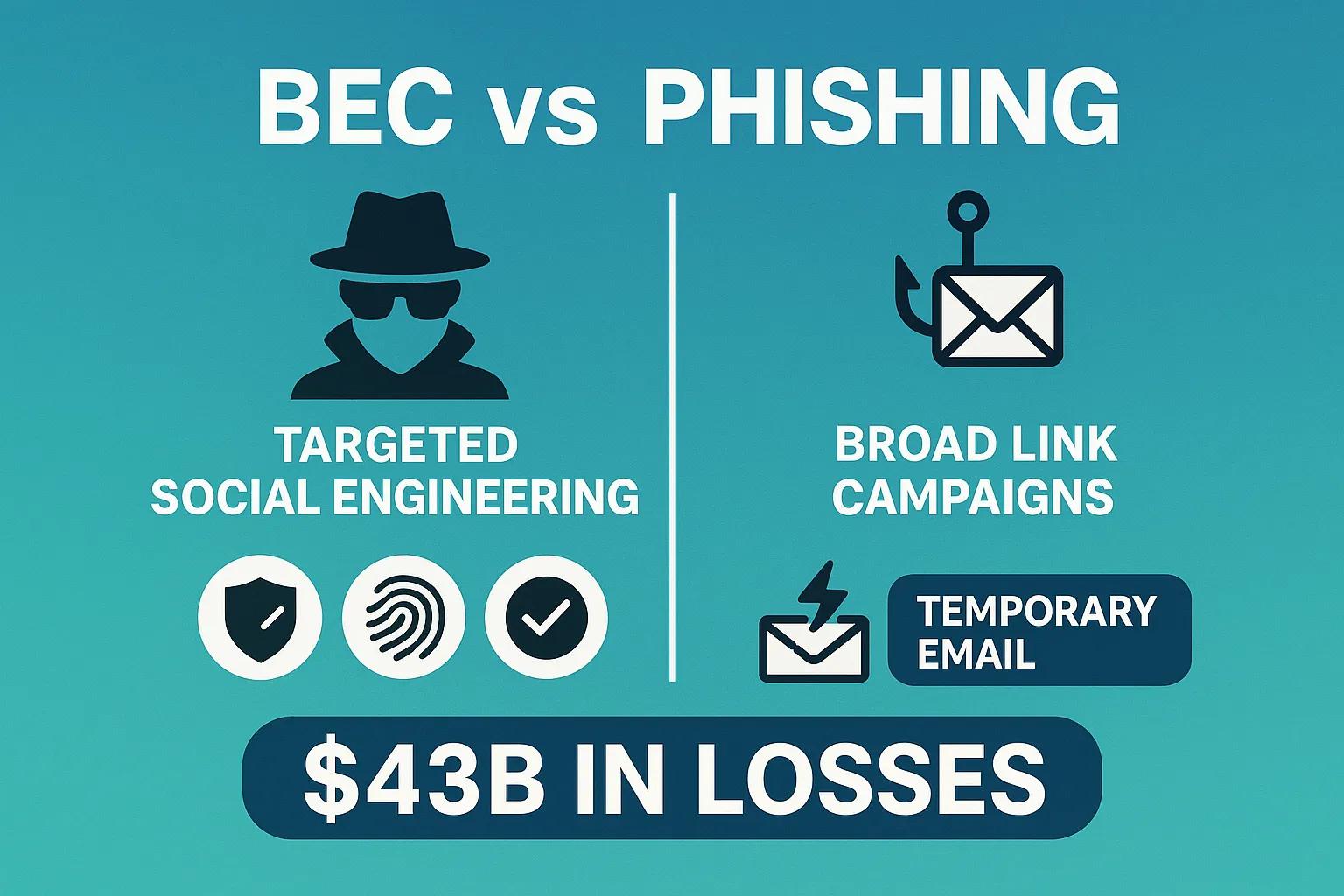
Both types of attacks aim to deceive, but BEC is typically targeted, researched, and focused on a specific financial outcome—often without any malware. Phishing can be broad or targeted and often uses links or attachments to capture credentials or deliver malware. Recognizing the distinction helps you choose the right defenses.
How Do Targeting and Personalization Differ Between BEC and Phishing?
BEC messages are highly personalized, referencing internal projects, names, or invoice numbers to build trust. Phishing may use some personalization (spear phishing) but often relies on generic content sent to many recipients. The more specific the message, the harder it is to spot without verification protocols.
What Are the Differences in Tactics and Attack Vectors?
BEC leans on social engineering and trusted relationships, while phishing frequently uses technical hooks like malicious links or attachments. Because their tactics differ, you need layered defenses: process and verification for BEC, and technical controls like filtering and anti-malware for phishing.
How Does Social Engineering Play a Role in Both BEC and Phishing Attacks?
Social engineering is central to both threats: attackers exploit human behavior—trust, urgency, fear, and authority—to bypass logic and security controls. Training and clear procedures reduce the chance people react to manipulation instead of verifying requests.
How Do Attackers Use Psychological Manipulation in Email Attacks?
Attackers create pressure—deadlines, threats of loss, or executive authority—to force quick responses. For example, a BEC message may insist a wire transfer is needed immediately to avoid penalties, prompting someone to act without checking. Slowing down and verifying is often the best defense.
How Does Reducing Digital Footprint Limit Social Engineering Reconnaissance?
Limiting public information makes it harder for attackers to build believable stories. Tighten privacy settings, avoid sharing internal details publicly, and use throwaway or temporary emails—like TempoMailUSA—when signing up for services. Less exposed data means fewer building blocks for convincing scams.
What Are Effective Prevention Strategies Against BEC and Phishing Attacks?
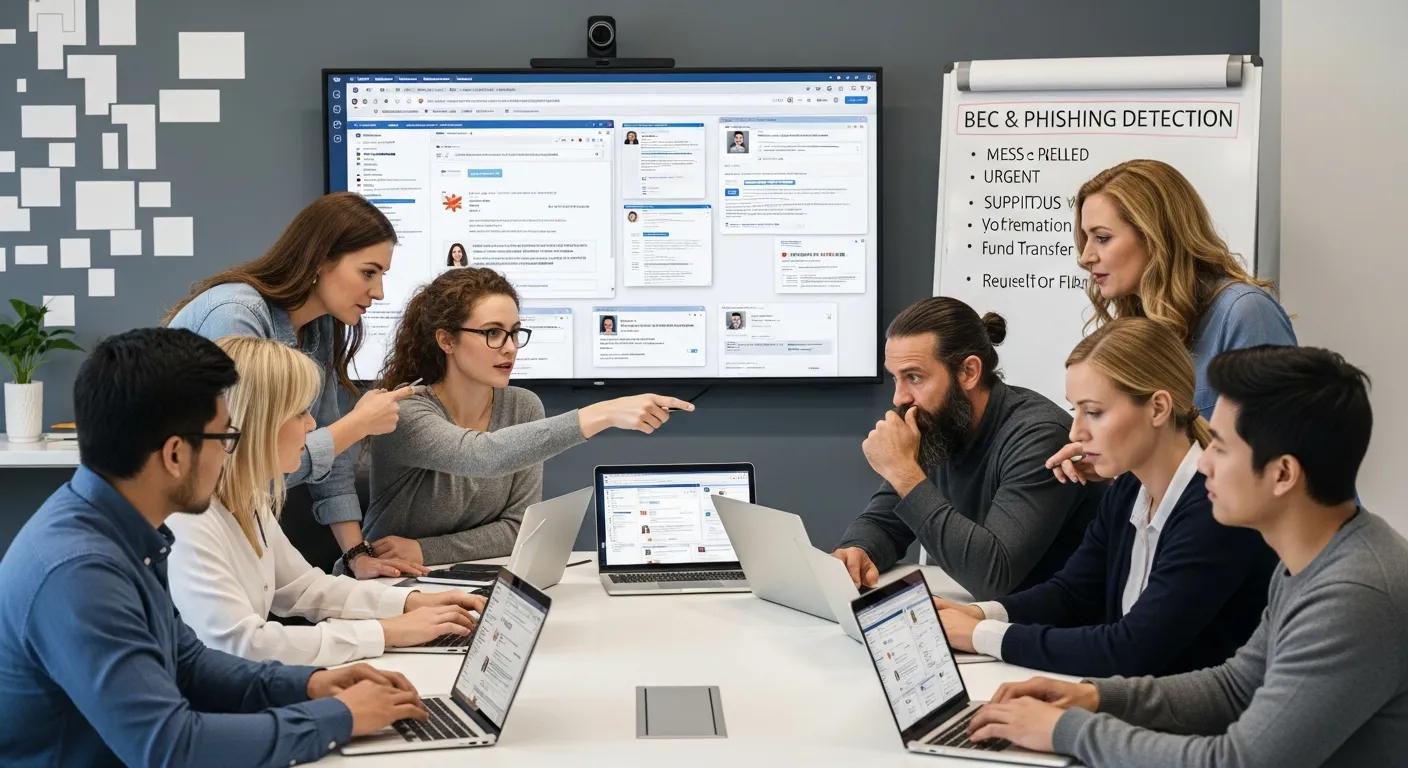
Defense is multi-layered: policies, people, and technology. Strong verification processes, regular staff training, and technical controls like email filtering and MFA work together to reduce risk. Consistent routines for payments and approvals make social-engineering attempts much harder to pull off.
What Organizational Measures Help Prevent BEC and Phishing?
Use mandatory verification steps for any payment changes, require multi-factor authentication on key accounts, and run ongoing employee training with real-world simulations. Keep email filters and security patches up to date, and schedule audits to ensure procedures are followed.
How Can Individuals Use Temporary Email Services Like TempoMailUSA to Protect Themselves?
Temporary email addresses from services like TempoMailUSA help keep your real inbox private and reduce spam. Use them for registrations, trials, and one-off sign-ups to limit exposure. That small step can cut down on phishing attempts aimed at your primary account.
What Are Recent Statistics and Trends Highlighting the Impact of BEC and Phishing?
Both BEC and phishing continue to grow in scale and sophistication, producing larger financial and reputational losses for organizations. Staying current with trends and updating defenses accordingly is essential.
What Are the Financial Losses and Frequency of BEC Attacks from 2023 to 2026?
Between 2016 and 2023, the FBI’s Internet Crime Complaint Center (IC3) reported BEC-related losses exceeding $43 billion worldwide. While exact figures for 2023–2026 are still emerging, trends show attackers are increasing in number and sophistication—so organizations should remain proactive and vigilant.
How Has AI Increased the Sophistication of BEC and Phishing Attacks?
AI has made it easier for attackers to generate convincing, personalized messages at scale. Automated tools can pull contextual details and craft realistic language, which raises the bar for detection. That’s why combining human verification, strict processes, and technical controls is more important than ever.
Frequently Asked Questions
What steps can organizations take to train employees against BEC and phishing attacks?
Provide regular, practical training that includes real-world examples and interactive simulations. Encourage reporting by creating a non-punitive incident process, and reinforce learning with periodic refreshers and short assessments to keep awareness high.
How can businesses verify the authenticity of email requests for fund transfers?
Require secondary verification for any unusual or high-value requests—call a known number, use a separate messaging channel, or follow a predefined approval workflow. Make this verification mandatory, and log approvals so there’s an audit trail.
What role does technology play in preventing BEC and phishing attacks?
Technology reduces exposure: email filters block many malicious messages, MFA protects accounts, and endpoint protection detects threats. But tech works best when paired with clear processes and trained staff who know when to escalate suspicious activity.
How can individuals recognize signs of a BEC attack?
Watch for unusual requests, urgent or secretive language, and subtle changes in sender addresses. If a message asks for a payment or sensitive data out of the ordinary, pause and verify using a separate, trusted channel before acting.
What are the potential long-term impacts of falling victim to a BEC attack?
Losses can include direct financial damage, harm to reputation, legal exposure, and reduced customer trust. Internally, incidents can hurt morale and require significant time and resources to recover. Prevention is far less costly than remediation.
How can reducing one's digital footprint help in preventing BEC attacks?
Limiting public personal or company information reduces what attackers can use to impersonate you. Adjust social media privacy, avoid oversharing corporate details, and use temporary emails for nonessential sign-ups to make targeted scams harder to build.
Conclusion
BEC and phishing are both real threats, but they require different defenses. BEC focuses on trust and targeted manipulation, while phishing often relies on technical exploits. Combine clear approval processes, ongoing staff training, and smart tools—like TempoMailUSA’s temporary emails—to lower your risk. Stay cautious, verify requests, and keep your security practices up to date to protect people and assets.