



Tailgating is one of the simplest — and most overlooked — ways attackers get past security. As a form of social engineering, it relies on human behavior to gain entry to restricted areas. This article explains the core definition of tailgating, the real risks it creates, and practical steps organizations can take to reduce exposure. You’ll learn how tailgating happens, the potential impacts on people and assets, and actions that work — including how limiting your digital footprint can make social-engineering attempts harder to pull off. The sections below cover definitions, risks, prevention tactics, and real-world examples.
What Is a Tailgating Attack in Cyber Security? Definition and Key Concepts
A tailgating attack happens when someone without authorization follows an employee or visitor into a secured area — often simply by slipping through an open door or asking someone to hold it. Instead of exploiting software, tailgaters exploit social norms like politeness or assumptions of legitimacy. That makes tailgating a serious physical-security weakness because it bypasses controls that are meant to restrict access to sensitive spaces. For more information, visit what is tailgating in cyber security.
How Does Tailgating Exploit Human Behavior and Courtesy?
Tailgating depends on predictable human reactions: holding doors open, helping someone who appears lost, or assuming a person has permission because they’re carrying a badge or wearing a uniform. Attackers copy those cues to appear legitimate. Because the tactic targets instincts rather than technology, it’s a common and persistent security problem.
What Is the Difference Between Tailgating and Piggybacking?
The distinction is about consent. Tailgating is when an unauthorized person follows an authorized person in without that person’s knowledge. Piggybacking is when an authorized person knowingly allows someone else to enter — whether out of courtesy or misunderstanding. Both create risk, but the response and prevention steps can differ, so it’s important to treat them separately when designing controls and training.
What Are the Risks and Consequences of Tailgating in Physical Security?

Tailgating opens the door to a range of harms: theft of devices, access to confidential files, sabotage, and even installation of malware on on-premises systems. When attackers enter secure areas, they can directly reach servers, workstations, or file cabinets that hold sensitive data. The downstream effects can be costly and damaging to reputation.
How Can Tailgating Lead to Data Breaches and Security Incidents?
If an intruder reaches a server room, office, or workstation, they can copy data, plant malicious hardware or software, or tamper with systems. Physical access often short-circuits many digital protections, and industry reports show a meaningful share of breaches trace back to physical-security lapses — highlighting why tailgating deserves attention alongside network defenses.
What Financial and Reputational Damages Result from Tailgating?
The costs after a successful tailgating incident can include incident response, forensic investigations, legal fees, regulatory fines, and customer remediation. Equally damaging is loss of trust: clients and partners may reconsider relationships after a breach. For many organizations, reputational fallout lasts far longer than the direct financial hit.
How Do Insider Threats Relate to Tailgating Vulnerabilities?
Insider threats and tailgating overlap when staff unknowingly enable access or when negligent behavior creates openings for attackers. Employees who aren’t trained to challenge unfamiliar people, or who share credentials, increase exposure. That makes workforce education and clear, enforced policies critical parts of any mitigation plan.
How Can Organizations Prevent Tailgating Attacks? Practical Physical and Digital Strategies
Stopping tailgating requires layered defenses: physical controls to block unauthorized entry, digital checks to limit what an intruder can do if they get inside, and a workforce that understands its role in keeping spaces secure. The right mix depends on facility layout, staff patterns, and risk tolerance.
What Physical Access Control Measures Effectively Stop Tailgating?
Barriers like turnstiles, mantraps, and single-person entry systems force one person through at a time. Electronic badge readers, interlocks, and stationed security personnel add friction for would-be tailgaters. Where possible, combine passive barriers with human oversight so systems and people back each other up.
Which Digital Security Practices Mitigate Tailgating Risks?
Digital measures can limit the damage if someone does gain physical access. Enforce two-factor authentication for sensitive systems, segment networks so on-site access doesn’t grant blanket privileges, and regularly review access logs from physical control systems to spot anomalies. Routine audits keep both physical and logical controls aligned.
What Role Does Employee Training Play in Tailgating Prevention?
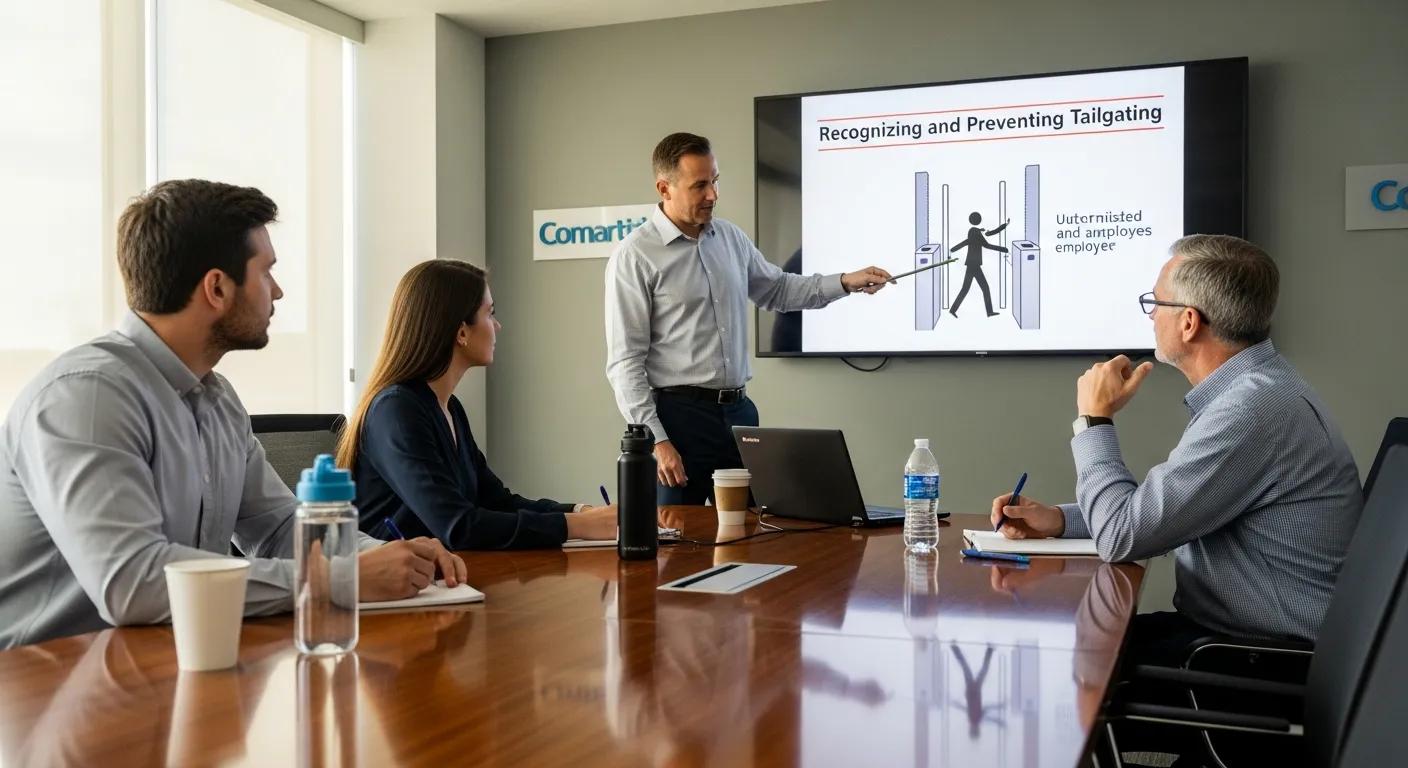
Training turns employees from weak points into active defenders. Regular, scenario-based sessions that teach staff to politely verify identity, report suspicious behavior, and follow entry procedures make a measurable difference. Reinforcement — through posters, reminders, and leadership modeling — keeps good habits consistent.
How Does Reducing Your Digital Footprint with Temporary Email Help Prevent Social Engineering Tailgating?
Reducing online exposure limits the information attackers use to appear convincing. Temporary email services and tighter privacy practices make it harder for social engineers to learn schedules, roles, or contact details they might use to time a tailgating attempt or pose as a trusted person.
How Do Attackers Use Social Engineering to Facilitate Tailgating Attacks?
Attackers gather public information — social profiles, corporate announcements, and shared calendars — to plan an approach that looks legitimate. They may impersonate vendors, maintenance staff, or colleagues at times when checking is lax. Cutting down available personal and corporate data reduces the tools attackers rely on.
Why Is Minimizing Data Exposure Critical in Preventing Tailgating?
Every piece of public information can be a clue. Minimizing what employees and the organization publish — and using disposable contact methods where appropriate — makes social-engineering setups harder to build. This is a low-cost, proactive layer that complements technical and physical controls.
What Are Real-World Examples and Case Studies of Tailgating Incidents and Their Impact?
Case studies show how simple lapses lead to serious incidents. Reviewing these events reveals common failure points — such as unmonitored entrances or unclear visitor policies — and illustrates what effective remediation looks like.
Which Notable Tailgating Incidents Illustrate Security Failures?
Across sectors, incidents often follow the same pattern: an unauthorized person follows staff into a secure area and then accesses systems or assets. Financial firms, healthcare providers, and tech companies have all reported breaches initiated through physical entry, underscoring the universal nature of the threat.
What Lessons Can Organizations Learn from Tailgating Case Studies?
Common takeaways include: enforce single-person entry where feasible, combine physical barriers with monitoring, run realistic drills, and keep policies simple and enforceable. Learning from others helps organizations prioritize fixes that deliver measurable risk reduction.

Frequently Asked Questions
What are the best practices for training employees to prevent tailgating?
Use short, regular training sessions that include role-play and real-world examples. Teach staff to politely challenge unfamiliar people, check badges, and report incidents. Reinforce training with signage, quick refreshers, and leadership support so employees feel empowered to act.
How can organizations assess their vulnerability to tailgating attacks?
Conduct physical security audits and unannounced penetration tests that simulate tailgating. Review entry points, visitor flows, and past incidents. Combining technical assessments with staff surveys and third-party testing reveals practical gaps to fix.
What role does technology play in preventing tailgating?
Technology reduces reliance on human intervention: turnstiles, biometric readers, interlocks, and cameras all help. Integrating access logs with monitoring tools can flag suspicious patterns. But technology should complement — not replace — clear policies and trained staff.
How can organizations create a culture of security awareness among employees?
Make security part of the daily routine: briefings, visible leadership support, clear reporting channels, and recognition for good behavior build a positive security culture. Share concise updates about threats and keep guidance practical so employees can follow it easily.
What should employees do if they suspect a tailgating attempt?
Stay calm, do not confront aggressively, and notify security or a supervisor immediately. Note identifying details (appearance, time, location) and, if safe, politely verify the person’s authorization. Prompt reporting lets security respond quickly and limits risk.
Are there specific industries more vulnerable to tailgating attacks?
Sectors that store sensitive data or valuable assets — finance, healthcare, research, and high-tech — are especially attractive targets. High-traffic or mixed-use facilities also face greater risk. Industry-specific controls should reflect the sensitivity of what’s inside.
What Are the Signs That a Tailgating Attack Is Occurring?
Look for people closely following someone through secure doors without presenting credentials, individuals loitering near entry points, or unfamiliar faces in restricted zones. Encourage staff to report these observations promptly.
Can Tailgating Attacks Be Prevented Entirely?
Eliminating tailgating completely is difficult, but organizations can greatly reduce the risk. A layered approach — physical controls, tech safeguards, and sustained employee awareness — makes successful attacks far less likely.
How Does Tailgating Differ from Piggybacking?
Tailgating occurs without the authorized person’s knowledge; piggybacking happens with their consent. Training and enforcement need to address both: teach staff to verify others and discourage knowingly admitting unauthorized individuals.
What Technologies Enhance Physical Security Against Tailgating?
Effective technologies include biometric scanners, single-person turnstiles, electronic badge systems, and surveillance with integrated analytics. When combined with access policies and monitoring, these tools strengthen defenses and provide audit trails for investigations.
Conclusion
Addressing tailgating is a practical, high-impact step toward stronger overall security. Combine thoughtful physical controls, sensible digital safeguards, and continuous training to reduce exposure. A security-aware workforce, supported by appropriate technology and policies, makes unauthorized entry — and the damage that follows — far less likely. Start with a risk review today and prioritize the changes that will close your most obvious gaps.