

Temp Email for Home Service Quotes: Get the Plumber's Price Without Selling Your Inbox to Ten Contractors
My water heater died on a Tuesday night, which is the worst possible night for a water heater to die, because every plumber you call on Wednesday morning is already booked, and the one who can come today knows it. I did what most homeowners do: I filled out one of those "get quotes from local pros" forms, typed in my real email address without thinking, and waited. By lunch, three different companies had called. By dinner, two more had emailed. By the end of the week, I had a new water heater, a fair price, and an inbox that still, months later, gets "seasonal maintenance reminders" from companies I never hired, for a water heater they never touched.
That is the deal nobody explains on the quote form. You think you are writing to a plumber. You are actually feeding a lead machine, and your email address is the product it sells. A temporary email address does not get you a cheaper water heater. It gets you something almost as valuable: a quote process that ends when the job ends.
The request you submit is a lead, and leads are sold in batches
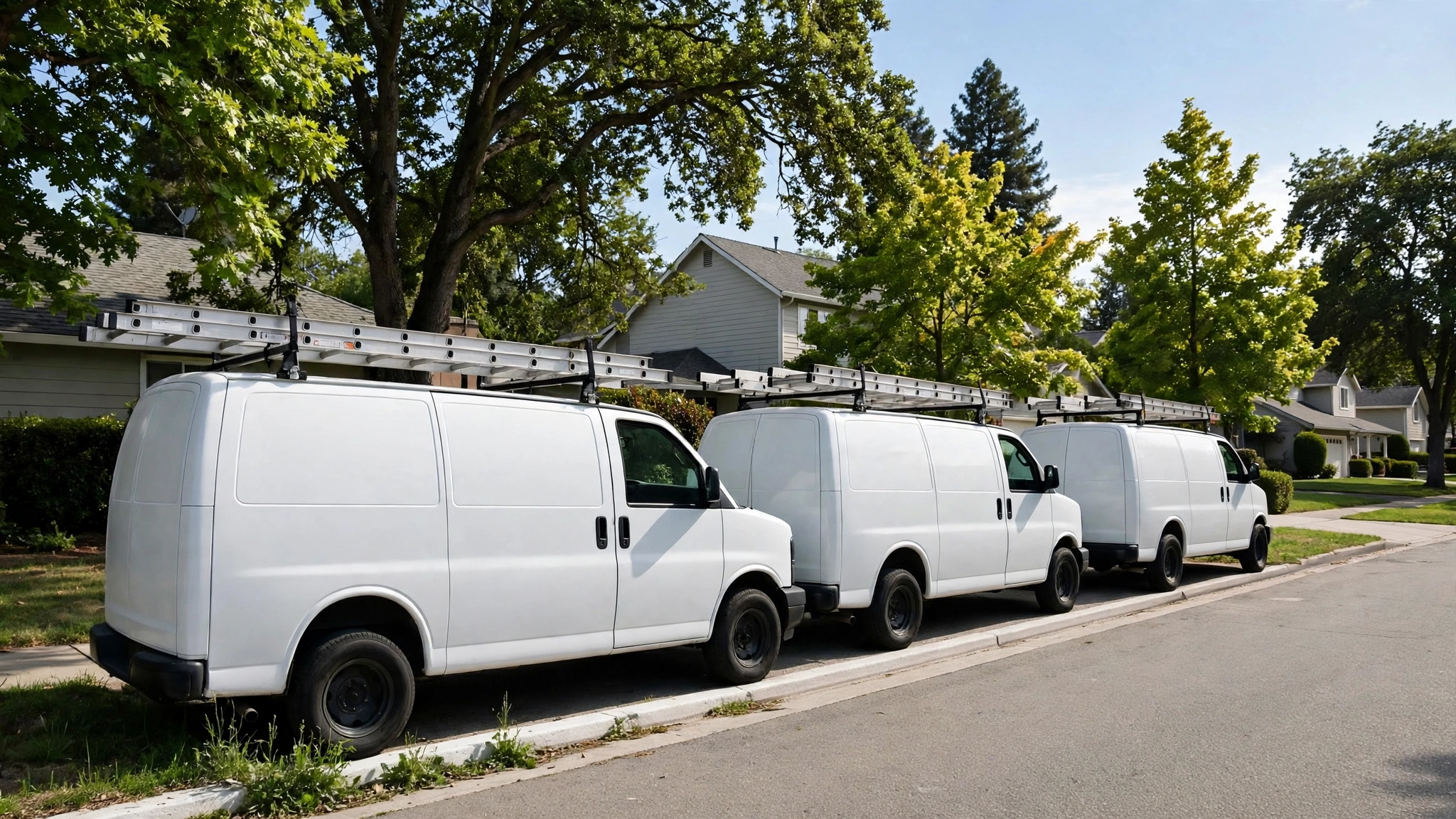
Here is the part of the home services economy that homeowners rarely see, because it happens on the contractor side of the screen. When you submit a request on a large lead platform, your request is not sent to one business. Contractor guides checked in October 2026 consistently describe the same model: an Angi request goes to three to five contractors at once, and a Thumbtack request can put you in front of up to five pros. One comparison guide cites Angi's own help center as saying no more than five pros per project request. The exact number varies by market and trade, but the shape of it does not: one form, several inboxes, all at the same time.
Those contractors pay for the privilege. The same contractor guides put typical Angi lead prices at roughly $15 to $120 or more per lead, depending on the trade and the market, with roofing and HVAC at the expensive end. A plumbing SEO guide citing FTC material puts an Angi annual membership figure at $287.99 a year, on top of per-lead fees. I am quoting contractor-side guides here, not Angi's homeowner marketing, because Angi's homeowner pages describe matching, not pricing, and the pricing is what explains the behavior. When a contractor has paid real money for your contact details, that contractor is going to use them. Nobody buys a lead and then politely waits to be asked twice.
This reframes the whole interaction. You are not a customer browsing. You are inventory, sold the moment you hit submit, and every company that bought you has a financial reason to call fast, email often, and follow up long after you have chosen someone else. The often-cited lead-response study from MIT and InsideSales, summarized by contractor marketing sites, says answering within five minutes qualifies dramatically more leads than calling back in thirty. That is why your phone rings while the form's confirmation page is still loading. Speed is not customer service here. Speed is the business model.
What one form actually triggers, hour by hour
It helps to see the sequence plainly, because the quote form shows you none of it.
In the first five minutes, the matched contractors get your request. The fastest ones call. If you do not answer, they email, and the email usually contains a booking link, a "we can come today" pitch, and a request for photos of the problem. Within the first day, the platform itself emails you: matched pros, reminders to respond, nudges to pick someone, and a review request for a job that has not happened yet. Within the first week, the contractors you did not choose start their follow-up sequences. Some of these are manual. Many are automated drip campaigns that will run for weeks whether or not anyone at the company remembers your name.
Then comes the long tail, and the long tail is the part that actually costs you attention. Months after the water heater is fixed, the seasonal emails arrive: drain cleaning specials, water heater flush reminders, HVAC tune-up offers, gutter cleaning before the rain. Some of these come from companies you genuinely contacted. Some come from partners, affiliates, and "related services" that bought, rented, or otherwise acquired a list your address ended up on. You cannot audit this chain from your inbox. You can only see its output, which is a slow drip of mail from businesses you never chose, for a problem you already solved.
None of this is illegal, and most of it is disclosed somewhere in a privacy policy you did not read at 11 p.m. with water pooling under your water heater. That is precisely why a technical fix beats a legal complaint here. You cannot negotiate a lead platform's data-sharing practices from your kitchen table. You can decide which address it gets.
The burner-per-job system
The system I use now is boring, and boring is the point. One project, one temporary email address. Not one address for all home repairs, and not your real address for the first round. One job, one burner, and the burner dies with the job.
It works like this. The water heater dies, or the roof leaks, or the fence falls over. Before you touch any quote form, generate a fresh temporary address and label it in your head, or in a note, with the job: water heater, October. Use that address on every quote form, lead platform, and contractor contact form for that job, and nowhere else. Every quote, every follow-up, every "just checking in" lands in that one inbox, which means you can check it on your schedule instead of letting five companies set the tempo of your day. When you have picked a contractor and the work is scheduled, you stop checking the burner. The follow-up drip keeps dripping into an inbox you no longer open, which is exactly where it belongs.
There are two details that make this work instead of just feeling clever. First, keep the burner open until the job is actually done, not until you pick a winner. Quotes change. The first contractor ghosts you. The second finds a bigger problem behind the wall. If you burn the address the day you choose, you lose the thread with the runner-up you may need next week. Second, save the quotes that matter before you walk away: screenshot or forward the winning estimate, the warranty terms, and the final invoice to your real inbox. The burner is for the shopping phase. The paperwork lives somewhere permanent.
This is the same discipline that makes a burner address work for any free trial: sample with the disposable tool, keep with the permanent one. The only difference is that a home repair quote is not a free sample. It is a purchase you will live with for years, which is why the handoff at the end matters more, not less.
Where the burner breaks: emergencies, permits, and warranties
A temporary email address is a shopping tool, not a project management tool, and there are four moments when you should stop using it.
The first is the emergency call. If water is actively flooding your house, do not fill out a form at all. Call a plumber directly, give them your real number, and let them come. A lead platform's five-minute race is not faster than a direct call to a company with a truck in your area, and a burner inbox adds a step to a situation that has no steps to spare.
The second is the permit and inspection trail. Work that needs a permit, an inspection, or an HOA approval generates paperwork that lives for years, and that paperwork travels by email. The inspector's report, the permit approval, the warranty registration: all of it should go to an address you will still control in three years. A burner inbox that expires in days or weeks is the wrong home for documents you may need when you sell the house.
The third is the deposit. The moment you pay a deposit, the contractor has your name, your address, your phone number, and your money. Pretending your email is still private at that point is theater. Give the contractor you hired your real email, because you will need it for scheduling changes, warranty claims, and the inevitable "we found something else behind the wall" conversation.
The fourth is the contractor you already trust. If you have a plumber you have used for five years, emailing them from a burner address does not protect you from anything. They already have your real address from the last job. The burner is for strangers, not for relationships.
The rule underneath all four is the same one that governs every signup category where an account accumulates value, and it is worth reading in full in our guide to when not to use temp email. Sample with the disposable address. Keep with the permanent one. The line between the two is the deposit, not the quote.
Telling a lead farm from a real contractor
Not every quote form is a shared-lead machine, and learning to tell the difference saves you more than any burner address will. A real contractor's own website has a business name, a local phone number, a service area, and usually photos of actual work. Its form asks for your address and a description of the problem, and it sends your request to that one business. A lead farm's form asks for your ZIP code first, your project type second, and your contact details third, and it promises to "match" you, "connect" you, or "find pros near you" without naming any of them. The verbs are the tell. Matching is what a marketplace does. A plumber does not match you with a plumber.
There are softer tells too. If the form demands your phone number before it will show you anything, it is selling speed, not service. If the confirmation page instantly lists five companies you have never heard of, your request has already been distributed. If the first email you receive comes from a company whose name never appeared on the form you filled out, you are looking at a resale, not a referral. None of these are reasons to panic. They are reasons to use the burner address you already generated, because the form has just told you, in its own language, what it plans to do with your details.
My opinion, stated plainly: the shared-lead model is not a scam, but it is a bad deal for the homeowner's attention. It optimizes for contractor speed and platform revenue, and it charges the homeowner in follow-up emails, phone calls, and months of seasonal marketing. You cannot opt out of the model from the homeowner side. You can opt out of paying for it with your real inbox.
The handoff: when the winner earns your real address

Picking a contractor is the moment the system flips. Up to that point, every company in the race is a stranger, and strangers get the burner. The winner gets the real address, the real phone number, and a short, specific handoff email that does three things.
First, it confirms the scope in writing: what work, what materials, what price, what timeline. If the quote was verbal, this email is where it becomes written, and written matters when the job goes sideways. Second, it asks for the warranty terms and the license or insurance details in the same thread, while the contractor still wants your business. Third, it moves all future communication to your real address, explicitly: "Please use this address for scheduling, invoices, and warranty documents going forward." That sentence is the whole handoff. It tells the contractor which inbox is alive, and it gives you a thread you can search in two years when the water heater acts up again.
Then go back to the burner inbox one last time and do two things: forward anything worth keeping, and stop opening it. Do not unsubscribe from the losers one by one. That is a chore with no payoff, because unsubscribing confirms your address is live and monitored, and the seasonal drip will find a new sender anyway. The burner inbox is the unsubscribe button. Walking away from it unsubscribes you from all of them at once, which is the only unsubscribe that actually scales.
If you want the full picture of why some sites reject disposable addresses at signup in the first place, our guide to why websites reject temp email explains the blocklist machinery. Some lead platforms check disposable domains, and a rejected address is the platform telling you its rules. In that case, the honest fallback is a dedicated alias on your real domain, or a secondary real inbox you check weekly, used only for quotes. The principle survives the fallback: the quote phase gets an address you can abandon, and the hired contractor gets the one you cannot.
Frequently asked questions
Can I use a temp email for Angi or Thumbtack quote requests?
Sometimes. Some lead platforms accept disposable addresses without comment, and some reject them through domain blocklists. A rejection is the platform's signup policy, not a problem to work around by hunting for a domain that slips past the filter. If a platform rejects your burner, use a dedicated secondary inbox for quotes instead, and keep the same rule: the quote phase gets an address you can abandon.
Will contractors take me less seriously if I use a temp email?
The contractors who call fastest will not notice or care what domain your address uses, because they are responding to a paid lead, not vetting your character. The contractor who does notice is usually the one who emails rather than calls, and that contractor will judge you on the description of the job, not the address. What actually signals seriousness is a clear scope, photos of the problem, and a fast reply when they do reach you.
Should I give contractors my real phone number on the first form?
Only if you want the five-minute race to reach you by phone. For a non-emergency quote, an email-first approach is calmer and leaves a written trail. Give your real number to the shortlist, the two or three contractors you are actually considering, and to the winner without hesitation. Your phone number is harder to abandon than an email address, so spend it later in the process than the email.
What happens to the quotes in the burner inbox when it expires?
They disappear with the inbox, which is why the system has one non-negotiable step: forward the winning estimate, the warranty terms, and the final invoice to your real inbox before you walk away. Everything else in the burner, the losing quotes, the follow-up drips, the seasonal offers, is meant to disappear. That is not a bug. That is the feature you signed up for.
Is it dishonest to use a temp email with contractors?
No, as long as the job details are honest. A temporary address does not misrepresent who you are, where you live, or what work you need. It limits what happens to your contact details after the job is done. Dishonesty would be a fake name, a fake address, or a quote request for work you never intend to buy. A burner address used for a real project is a privacy choice, not a deception, and any contractor who treats it as one is telling you how they think about your data.
Can a temp email help with the phone calls too?
No, and this is the honest limit of the whole approach. A burner email stops the email drip. It does nothing about the phone calls, because contractors call the number on the form, and most forms require one. If the calls bother you, the fix is to give your number later in the process, to fewer companies, and to let unknown numbers go to voicemail during the quote phase. The email and the phone are two different problems, and only one of them has a burner solution.
What is the single biggest mistake homeowners make with quote forms?
Using their real email on the first form they find, before they know whether it belongs to a contractor or a marketplace. That one decision, made in thirty seconds, is what buys you months of seasonal marketing from companies you never hired. Generate the burner first, fill out the form second, and the whole quote process gets quieter without getting any slower. The same sampling discipline works for the marketing flood that follows any signup, which is why a dedicated routine for newsletter and promotion signups is worth setting up alongside it.
Need a disposable temporary email?
Protect your real inbox from spam and promotional clutter instantly and free.
Received a suspicious email, text, or charge alert?
Verify whether the sender domain is disposable, spoofed, or unverified before clicking links.