

Temp Email for Pharmacy Discount Cards: Compare the Price Before the Coupon Knows Your Name
You do not expect the pharmacy counter to be a negotiation. The doctor sends the prescription, you walk up, you hand over your insurance card, and you pay whatever number appears on the screen. Then one day the number is absurd — a generic you assumed cost a few dollars rings up at forty, or a maintenance prescription jumps because your plan changed its tier — and the pharmacist, quietly, says the sentence that changes the whole transaction: "Want me to check the coupon price?"
That sentence is worth stopping for, because it exposes how prescription pricing actually works in the United States. The price on the screen is not the price of the drug. It is the price of your plan's arrangement for that drug, at that pharmacy, this month. A discount card can surface a different price for the same pills at the same counter, sometimes dramatically lower, because it routes the claim through a different middleman. And to get that card, most discount sites ask for one thing first: your email address.
My position is blunt. Compare the price before you hand over the address that identifies you. Search the drug, collect the coupon, and check it against your insurance at the counter, all on a disposable address. Your real address belongs to the pharmacy you actually fill with, not to every coupon site, price-alert list, and refill-reminder program you sampled on the way to the cheapest number. The savings are real. The mailing list that comes with them does not have to be.
The coupon is not the price
A prescription discount card is not insurance, and understanding that one fact prevents most of the disappointment people report with these cards. The card does not pay for your drug. It hands the pharmacist a set of codes — a BIN, a PCN, a group number, a member ID — that tell the pharmacy to process the fill at a price a pharmacy benefit manager already negotiated, instead of at your plan's price or the pharmacy's cash price. The discount sites advertise their biggest numbers, and those numbers deserve a careful reading: cards commonly claim savings of up to 80 percent, but that figure describes select generics at participating pharmacies, not your prescription at your pharmacy. Brand-name drugs save far less, often in the 10 to 15 percent range on the same cards, and some expensive drugs barely move at all.
The price also moves by pharmacy, which is the part that surprises people most. The same drug, the same coupon, the same town can price differently at two chains on the same street, because each pharmacy's negotiated rate differs. That is why the comparison step matters more than loyalty to one card brand: one site's coupon might win at the grocery pharmacy and lose at the chain across the parking lot. Prices also change over time, so a coupon that saved you twenty dollars in March can be an ordinary price by September. Treat every coupon as a quote with an expiry date, not a permanent discount.
Then there is the trade nobody mentions at the counter. A fill paid with a discount card does not count toward your insurance deductible or your out-of-pocket maximum, because your insurer never saw the claim. If you are on a high-deductible plan and expect to hit the deductible later in the year, paying cash through a coupon for every fill can quietly delay that. The same rule cuts the other way for people who will never hit a deductible: if your copay is twenty-five dollars and the coupon price is nine, the coupon wins every time, deductible or not. And one hard legal line: discount cards cannot be combined with Medicare, Medicaid, or other government-funded programs for the same fill. If you are on one of those programs, the coupon is a comparison tool for other people's prices, not a payment method for yours.
Why the signup wants your email first
If the coupon is just a set of codes, why does the site want your email before showing it? Sometimes it does not. The better discount sites let you search a drug, pick a pharmacy, and view or print a coupon with no account at all, and that no-account path is the one I recommend starting with. But the moment you want the coupon sent to your phone, a price alert when the drug gets cheaper, or a refill reminder, the site needs an address to send it to, and that address becomes the start of a relationship you did not necessarily ask for.
The relationship pays for the free card. Discount companies earn a fee from the pharmacy benefit manager when a coupon is redeemed — a cut of the transaction fee the pharmacy pays to process the claim — which is why the coupon itself costs you nothing at the register. That model is legitimate, and it is also why volume matters to them: more searches, more redemptions, more fees. Email is how they keep the volume coming back. Price alerts bring you back when a drug drops. Refill reminders bring you back every thirty days. Newsletters about savings programs, partner offers, and related health products keep the brand in front of you between fills. None of this is hidden, exactly, but it is rarely explained on the page where you typed your address to get a coupon for one antibiotic.
There is also the data question, and it deserves honesty rather than panic. The large discount companies state in their privacy policies that they do not sell personal information to third parties for marketing purposes, while also collecting and analyzing prescription and search data in aggregated, de-identified form. Aggregated data is not your name on a list, but health-adjacent data is the category where "de-identified" deserves skepticism, because a rare drug, a small town, and a fill date can narrow a person down faster than the policy suggests. I am not claiming any specific company re-identifies anyone. I am saying the cautious move is to give these systems as little to aggregate as possible: a disposable address, no account, no drug history stored under your real name, and no refill profile that maps your prescriptions to your identity across months.
The counter routine: compare three numbers before you fill
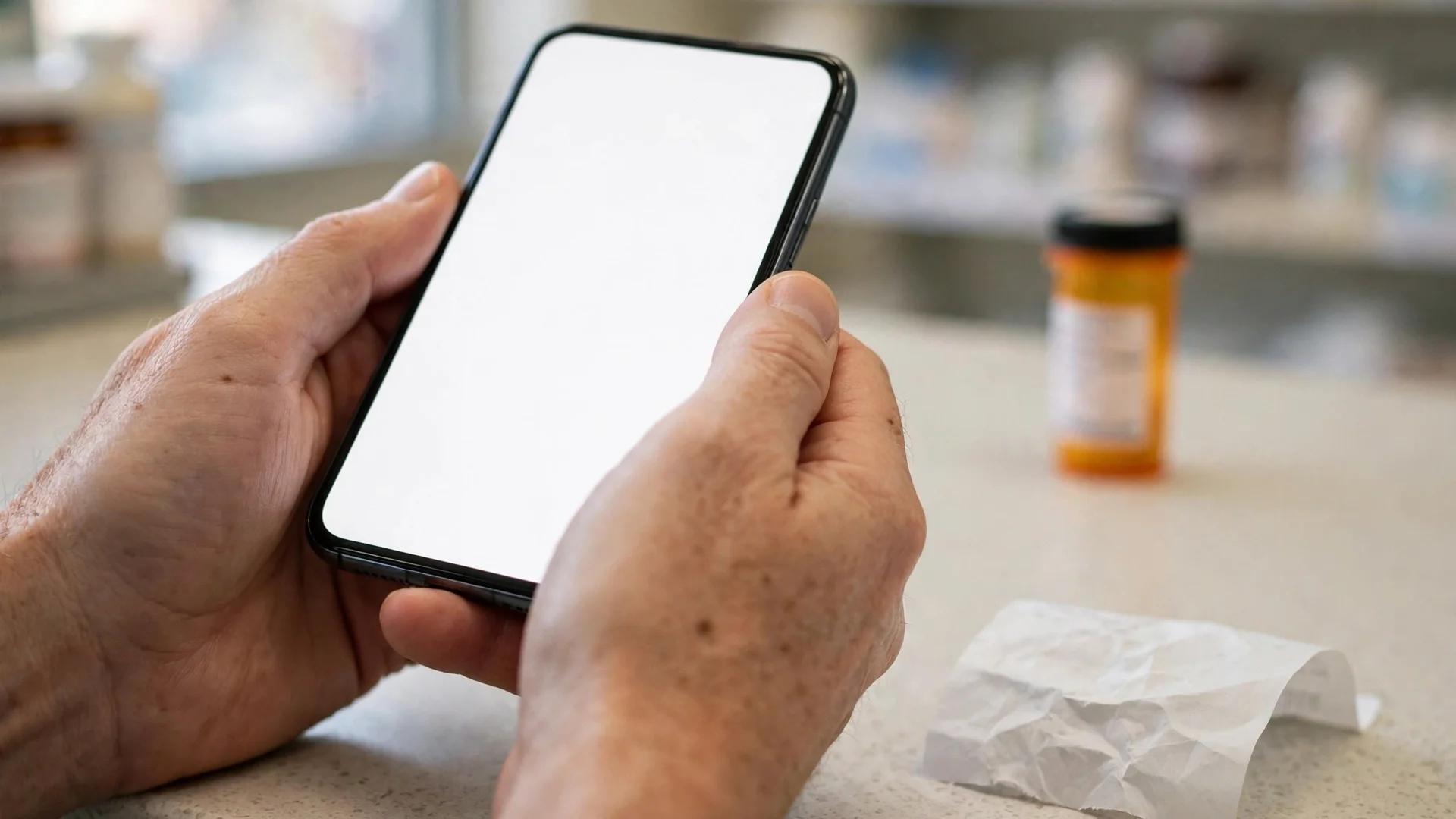
The routine that makes the coupon useful takes about three minutes, and it has to happen before the pharmacist processes the fill, not after. Once the transaction runs through your insurance, you cannot re-run it through a coupon for the same fill and expect the pharmacy to unwind it cheerfully.
First, get your insurance number. That is your copay or, if you are in a deductible phase, the price your plan charges before the deductible is met. You can get it from your plan's app, a call to the pharmacy, or the last receipt for the same drug. Write it down; memory is unreliable at a counter with a line behind you.
Second, get the coupon number. Search the drug on a discount site, enter your ZIP code, and compare at least two pharmacies near you, because the spread between them is often larger than the spread between the coupon and your copay. Screenshot the coupon or print it. The screenshot is the durable version: a coupon emailed to an inbox you abandon is a coupon you lose, and the counter does not wait while you search for a login.
Third, ask the pharmacist to run both. This is the step people skip out of embarrassment, and it is the step the pharmacist expects. Hand over the coupon before the fill is processed and say you want whichever price is lower, insurance or coupon. Pharmacists do this all day. They will also tell you when neither number is the real answer: for expensive brand drugs and weight-loss injectables, the manufacturer's own self-pay program frequently beats every coupon, and for drugs with an active manufacturer copay card, that card usually beats the discount site too. The honest hierarchy is copay versus coupon versus manufacturer program versus cash, and the winner changes by drug, so check all four when the number is large.
One more counter fact that saves real money: a 90-day supply often prices better per pill than three 30-day fills, and some discount prices only make sense at the 90-day quantity. Ask about it when the prescription is a maintenance drug you will take all year. And if the pharmacy says the coupon price changed since you checked it online, believe the counter, not the website. Online prices are quotes. The register is the price.
Where a temp email works, and where it stops
The disposable address works for everything in the comparison phase. Use it to receive coupons, to sign up for price alerts while you are shopping a drug, and to test a discount site's membership offer before committing. Paid memberships like GoodRx Gold are exactly the kind of trial that belongs on a disposable address first: a subscription that promises deeper discounts is worth testing only if you can walk away from its renewal emails without unsubscribing from your real inbox for a month. The same trial discipline applies to any savings club that asks for an email before showing its member price, and the free-trial rules that work for streaming and software work here too: try it, set a calendar reminder before renewal, and cancel from strength, not from spam fatigue.
The line appears the moment the address has to prove who you are. A pharmacy account that holds your prescription history, your insurance card, your payment method, and your refill schedule is an identity account, and it belongs on your real address. So does any patient portal, any mail-order pharmacy account, and any program that ships medication to your house. Controlled substances are a hard stop for a different reason: pharmacies and prescribers verify identity tightly for those fills, and a disposable address on that file is a red flag, not a privacy win. Manufacturer copay cards that require enrollment, income attestation, or identity verification also sit on the far side of the line. And the places where temp email fails in general — money, identity, and anything you must recover months later — apply with extra force here, because a lost password on a pharmacy account can mean a delayed refill.
The health-signup boundary is the same one that governs doctor appointments: shopping around is disposable, receiving care is not. The telehealth signup rule draws it the same way, with browsing and price comparison on a throwaway address and the actual appointment, intake forms, and medical history on a durable one. A discount card is a shopping tool. The pharmacy that fills your prescription is a healthcare provider. Keep the two roles in different inboxes and both work better.
If a discount site rejects your disposable address outright, that is information, not a defeat. Coupon and lead sites maintain blocklists of disposable domains to cut fraud, and a rejection usually means the site insists on an account rather than a one-time coupon. In that case, use the no-account path on a different discount site, or print the coupon instead of emailing it, or make a deliberate exception with a stable alias you control that forwards to your real inbox and can be cut off for that one sender. Do not hand your real address to every coupon site just because one of them bounced a disposable one.
The refill drip is the real cost
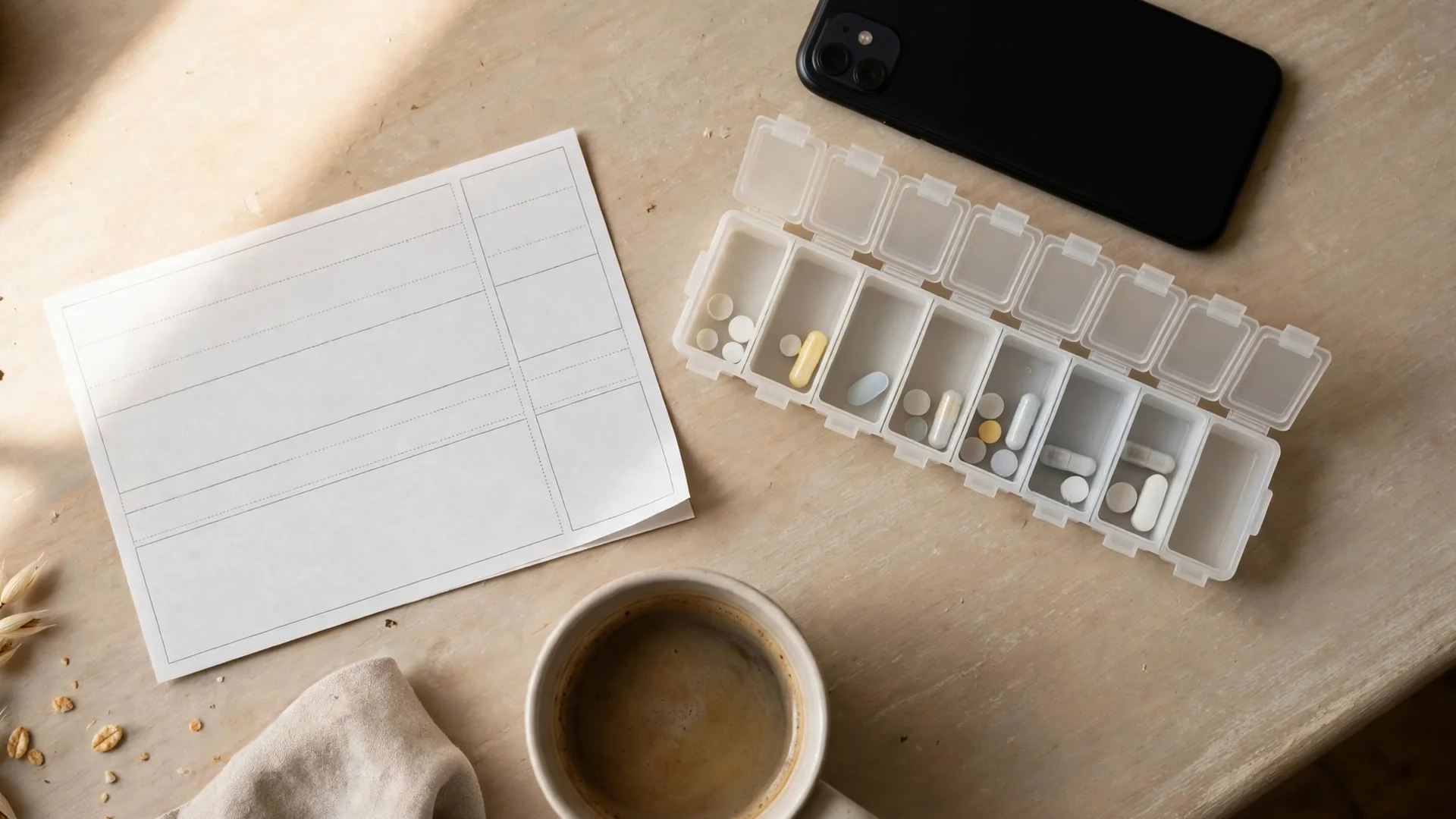
The first coupon email is useful. The fiftieth is a profile. Refill reminders are genuinely helpful — people miss doses, and a nudge on day twenty-eight prevents a gap — but a reminder program that knows your drug, your dose, your pharmacy, and your refill date knows your treatment schedule. Over a year, that is a health timeline delivered to an inbox, and when it lives on your real address, it follows you into every other context that address touches: the same inbox your employer, your bank, and your family use.
The drip also expands. A reminder program that starts with your blood pressure medication will eventually mention the savings program for a related drug, the vitamin bundle, the telehealth visit, the lab test discount. Each message is individually reasonable. Together they turn a price comparison into a health-marketing relationship, and the unsubscribe link only stops that sender, not the partners the address was already shared with under the site's privacy policy. The disposable address contains all of this by design: the reminders arrive where you expect them, for as long as you are comparison-shopping, and when you settle on a pharmacy and a price, you stop checking that inbox and the drip dies with it.
Keep the actual refill system where it belongs. Your pharmacy's own refill reminders, on your real address or by text, are part of your care, and they are tied to the pharmacist who can answer a question about an interaction. The discount site's reminders are marketing with a helpful shape. Both can exist. Only one should know your real address, and it is the one that actually fills the bottle.
A ten-minute price check that keeps your name out of it
Put it together and the whole exercise takes ten minutes the first time, and about three minutes on every refill after that.
Open a disposable inbox. Search the drug on two discount sites, not one, and compare at least two pharmacies. Note the lowest coupon price, your insurance copay, and whether the manufacturer offers a self-pay or copay program for this drug — the manufacturer check takes two minutes and wins outright for many brand drugs. Screenshot the winning coupon; do not rely on an emailed copy landing in an inbox you plan to abandon. At the counter, ask the pharmacist to run both prices before processing, and ask about the 90-day quantity if this is a maintenance prescription. Pay the lowest number. Write the result — drug, pharmacy, price, date — in a note outside every inbox, so the next refill starts from a number instead of a fresh search.
Then decide what survives. If the winning price came from a discount site, keep its price alerts on the disposable address only while you are still shopping, and kill them the week you settle. If the winning price came from your insurance, the discount site did its job and can be forgotten. If the winning price came from a manufacturer program, enroll on your real address deliberately, because that program is now part of your treatment, not a coupon you sampled. The discipline is the same every time: compare widely, commit narrowly, and let the disposable address absorb the sampling phase so your real address only carries the relationships you actually chose.
Frequently asked questions
Can I use a temp email to get a GoodRx coupon?
Yes, for the comparison and coupon-delivery step. Many discount sites let you view or print a coupon with no account at all, which is even better. When a site insists on an email to send the coupon, a disposable address works fine, because the coupon itself is just codes the pharmacist enters. Keep the screenshot, not just the email, so losing the inbox never loses the coupon.
Will a discount card work with my insurance?
No, and this is the most common misunderstanding. A discount card is used instead of insurance for that fill, not alongside it. You choose one price at the counter: the copay or the coupon. A coupon fill also does not count toward your deductible or out-of-pocket maximum, so if you are close to hitting a deductible, the insurance price may be the better long-term choice even when the coupon is cheaper today.
Can I use discount cards with Medicare or Medicaid?
No. Federal rules prohibit combining discount cards with government-funded programs for the same prescription. You can still compare prices for information, but you cannot pay with a coupon on a Medicare or Medicaid fill. If someone offers you a card that claims to work on top of Medicare, that is a red flag, not a deal.
Do discount cards sell my health information?
The large companies state that they do not sell personal information for marketing, while collecting aggregated, de-identified prescription and search data. That distinction is real but not comforting enough to hand over your real address casually, because health data narrows down quickly. The cautious setup is a disposable address, no stored drug history under your name, and no refill profile on a coupon site.
What if the coupon price is higher than my copay?
Then use your insurance and be glad you checked. This happens often for drugs with a low copay tier, for generics your plan covers well, and for fills late in the year after a deductible is met. The coupon is a comparison, not a loyalty oath. The check costs three minutes and the times it loses still tell you your plan is doing its job.
Should I put my pharmacy account on a temp email?
No. A pharmacy account holds prescription history, insurance details, payment methods, and refill schedules, and losing access to it can delay a refill. Use the disposable address for coupon sites and price alerts, and keep the pharmacy you actually fill with on your real address, where recovery works and the pharmacist can reach you.
Pay the lowest price, leave the fewest copies
Prescription pricing is a mess, but it is a mess with a workaround, and the workaround is a comparison, not a loyalty program. The coupon price, the copay, the manufacturer program, and the cash price are four different numbers for the same pills, and the only person with an incentive to find the lowest one is you. Check all four, pay the lowest, and write the result down somewhere that survives the inbox.
Do it on an address you can abandon, because the sampling phase is where the copies multiply: every coupon site, price alert, and refill reminder you try is another system holding a piece of your health profile. Let the disposable address absorb that phase. Then commit narrowly, to one pharmacy and one price, on the real address that belongs to your actual care. The cheapest prescription is the one you paid the lowest price for. The best privacy is the one where only the pharmacy that filled it knows you take it.
Need a disposable temporary email?
Protect your real inbox from spam and promotional clutter instantly and free.
Received a suspicious email, text, or charge alert?
Verify whether the sender domain is disposable, spoofed, or unverified before clicking links.