
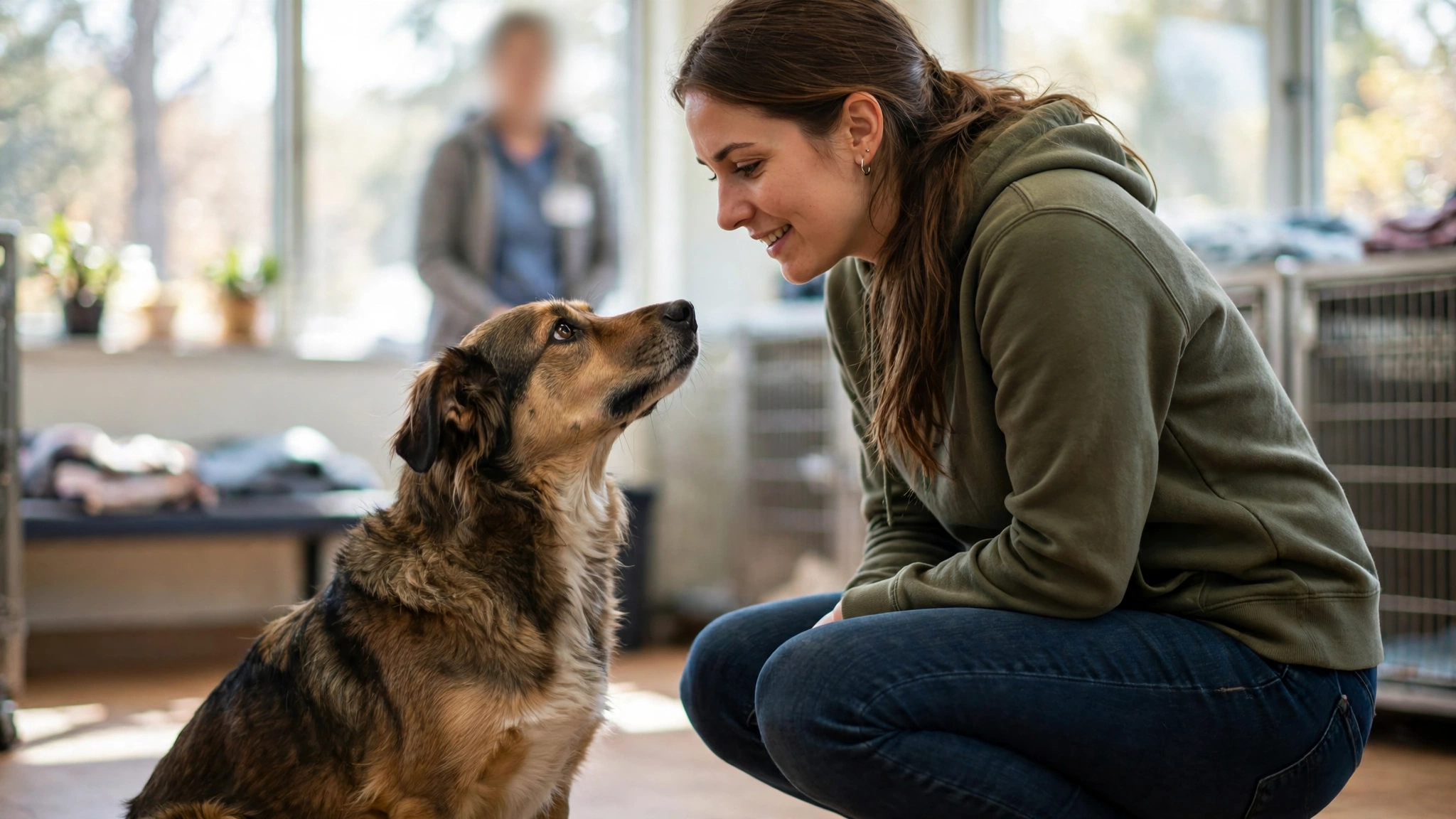
Temp Email for Pet Adoption Inquiries: Meet the Dog First, Give Shelters Your Real Inbox Last
Nobody plans to give their email address to forty strangers when they start looking for a dog. They plan to look at one photo, fall a little bit in love, and send one polite message. Then the search does what searches do. The first shelter replies that the dog was adopted yesterday but a littermate is available. A rescue volunteer forwards the inquiry to a foster home. A listing site suggests six similar dogs, each with its own contact form. A breeder with a suspiciously perfect puppy answers within four minutes. By the end of the week, the inbox that was supposed to hold one adoption conversation holds a small animal kingdom of newsletters, event invitations, fundraising appeals, and "just checking in" follow-ups from people the adopter has never met.
That is the part of pet adoption nobody warns you about, and it is the part a temporary email address handles best. Not because adoption is something to hide from, and not because shelters are untrustworthy. Because an adoption search is a wide, messy, early-stage trawl through dozens of inboxes you do not control, and your permanent email address is the one thing in that trawl that follows you home afterward.
The ASPCA estimates that about 6.3 million companion animals enter shelters and rescues in the United States every year. That number matters here for a boring, practical reason: it means the system on the other side of the contact form is enormous, fragmented, and largely volunteer-run. There is no single adoption desk. There are municipal shelters, private rescues, foster networks, breed-specific groups, transport coordinators, and listing aggregators such as Petfinder and Adopt-a-Pet sitting on top of all of them. When you submit an inquiry, your email can pass through several of those layers before a human being who knows the animal ever reads it. Each layer keeps a copy, in a different system, under a different retention habit.
My opinion, stated plainly: the adoption search and the adoption itself are two different relationships, and they deserve two different email addresses. The search gets a disposable one. The adoption — the signed contract, the microchip registration, the vet file — gets your real one. Everything painful about adoption inboxes comes from using the same address for both phases.
Who actually gets your email when you hit "Ask about this pet"
The button looks like a message to one shelter. It rarely is. On a listing aggregator, your inquiry typically goes to the listing organization and to the platform's own lead system at the same time. The shelter's reply may come from a shared shelter inbox, a volunteer coordinator's personal email, or a shelter-management tool such as Shelterluv or PetPoint, each of which stores your address under its own rules. If the animal is in foster care, a volunteer may forward your message from their own phone, which puts your address in yet another personal inbox you will never see.
None of this is sinister. Shelters are chronically understaffed, and volunteers use whatever tools they have. But it means "I emailed one shelter" is almost never an accurate description of what happened. A realistic description is "I emailed one shelter, one platform, and whoever that shelter forwards mail to." Multiply that by ten inquiries — a modest number for anyone set on a particular breed, size, or age — and the search phase alone has put a permanent address into a dozen systems, most of which will keep mailing long after the adopter has chosen a dog.
The house-hunting version of this problem is instructive, because the mechanism is identical: one "Contact Agent" click can route a shopper's details to paying partner agents and their partners, which is why the same disposable-first rule works for house hunting inquiries. Adoption inquiries route the same way, except the forwarders are volunteers rather than sales teams, which makes the spread harder to predict and harder to unwind.
The three inboxes of an adoption search
It helps to sort the search into three buckets, because each one treats your email differently and each one has a different exit point.
The first bucket is the municipal or large private shelter. These are the most professional inboxes in the search. They usually have a real CRM, a real adoption desk, and a real unsubscribe link. The cost of giving them your real address is low, but it is not zero: shelter newsletters, fundraising appeals, and event invitations will follow, and shelter mailing lists are sometimes shared with affiliated foundations. A disposable address costs you nothing here and saves you the slow drip of appeals for a dog you did not adopt.
The second bucket is the small rescue or foster network. This is where most of the good dogs live and where email hygiene is weakest. A rescue might be three volunteers and a shared Gmail account. Your inquiry may be discussed in a group chat, forwarded to a foster, and kept in a volunteer's personal inbox indefinitely. These are good people doing unpaid work, and that is exactly why you should not hand them your permanent address during the browsing phase: there is no IT department to ask for deletion later, and no unsubscribe process to rely on. A disposable address lets you be generous with your interest and strict with your data at the same time.
The third bucket is the breeder or private seller, and it is the only bucket where a disposable address is not just convenient but protective. That is worth its own section, because the risks here are different in kind, not just in degree.
The breeder test: where a disposable address actually protects you

A legitimate breeder will want to know a lot about you, and that is fine — in the later stages. Early on, though, the breeder inbox is where adoption searches meet outright fraud. Puppy scams are among the most durable online frauds because they exploit exactly the emotions of a search: a rare breed, a below-market price, a seller who is always just about to move, and a deposit that must be sent today by wire transfer, gift card, or payment app before someone else claims the puppy. Consumer-protection agencies, including the Federal Trade Commission and the Better Business Bureau, have warned for years about sellers who refuse video calls with the animal, who cannot produce verifiable veterinary records, and who pressure buyers into irreversible payment methods. A puppy that exists only in photographs is the oldest version of this scam, and it is still working.
A disposable address does not stop a scam by itself, and anyone who tells you otherwise is selling something. What it does is change the economics of the scammer's follow-up. Scammers work from lead lists, and a lead list entry that stops existing — an inbox that is abandoned the moment the search ends — cannot be resold, re-targeted, or used to build a profile of a buyer who has already shown willingness to send money for a pet. It also gives you a clean test: if a "breeder" will only communicate through channels that cannot be verified, if the price drops the moment you hesitate, if the deposit method cannot be reversed, walk away. The address you used to contact them is disposable; the money you did not send is not.
There is a subtler breeder risk too, and it is not criminal at all. Puppy mills and high-volume commercial breeders buy and sell inquiry leads the same way any lead-driven business does. An inquiry sent to one kennel's website can become marketing mail from several. Here the disposable address does the ordinary job it does everywhere: it lets you compare sellers without joining their mailing lists for life. If a seller's address is rejected outright, that is information, not a defeat — many lead-driven sites maintain blocklists of disposable domains to cut fraud, and a rejection usually means the site insists on an account rather than a one-time inquiry. Try the no-account path, or another seller, rather than handing over your real address to the first site that bounces a disposable one.
What the shelter needs from you, and when
Sooner or later the search narrows to one animal, and that is the moment the rule flips. A shelter that is about to hand you a living creature is entitled to reach you reliably, and it will ask for things a disposable address cannot support: a formal application, a landlord or vet reference, a home check appointment, and eventually a signed adoption contract. This is the point where many privacy guides get adoption wrong, by implying you can stay anonymous all the way through. You cannot, and you should not want to. The shelter is not a newsletter. It is about to trust you with a dog.
My rule for the switch is deliberately simple, because rules that need a flowchart do not survive contact with a real search: keep the disposable address until your application for a specific animal is approved, then move the conversation to your real address for everything that follows. Approved, not submitted. Applications get rejected, animals get adopted by someone faster, and a submitted-but-unapproved application is still the search phase. Approval is the line where the relationship becomes durable, and durable relationships get the durable address.
That switch has a practical benefit people miss. When the adoption-day paperwork arrives — the contract, the vaccination record, the microchip registration, the first vet appointment — it lands in an inbox you actually monitor and will still own in five years. A microchip registration tied to an abandoned inbox is a quiet disaster: the chip works, the phone number on file is stale, and the dog that gets lost cannot be traced back to you. The same logic covers pet insurance, the vet's portal, and any prescription refill account. Those are identity accounts, and they belong on the same side of the line as your bank and your doctor. The general rule for when temp email fails — money, identity, and anything you must recover months later — applies to a pet's medical file with full force.
A week in the search, done the disposable way
Day one is the trawl. Open a temporary inbox, and use it for every listing inquiry, every "notify me about similar pets" alert, and every rescue's email-gated waitlist. Do not use it for anything you need to keep; copy the replies that matter into your notes the same day, because a disposable inbox is designed to disappear and will not apologize when it does.
Days two to four are the replies. Shelters answer on shelter time, which means some reply in an hour and some in four days, and the disposable inbox becomes a single place to triage them without your real inbox filling up. This is also when the breeder test happens: any seller who pressures you toward an irreversible deposit, refuses a live video call with the animal, or cannot name the veterinarian who saw the litter gets dropped here, and dropping them costs nothing because they never had your real address.
Day five is the narrowing. One or two animals, one or two shelters, and a real application. The application itself can still go out under the disposable address if the shelter's form allows it — many do — but from the moment of approval, every reply, every appointment, and every document moves to your real address. Tell the shelter explicitly: "Please use this address from here on." Shelter staff deal with address changes constantly; a one-sentence note prevents the contract from going to an inbox you are about to delete.
Day six onward is the part people forget: delete the disposable inbox, or simply let it expire, and unsubscribe from nothing, because there is nothing to unsubscribe from. The fundraising appeals, the "similar pets" alerts, the event invitations — they were all addressed to an inbox that no longer exists. Your real inbox, meanwhile, holds exactly one adoption thread: the animal you actually brought home.
The objections, answered honestly
The most common objection is that shelters will think a disposable address means a careless adopter. In practice, shelters judge applications, references, and home checks, not email domains — and a disposable address on an inquiry is invisible in the ways that matter, because most shelter contact forms do not display your domain to the volunteer reading the message. If a specific shelter's form rejects disposable domains, use a stable alias you control for that one shelter, and keep the disposable address for the other nine inquiries. One deliberate exception is not a failed system.
The second objection is that you might miss the message that matters — the shelter replying that your dog is available for a meet-and-greet on Saturday. This is a real risk, and the fix is unglamorous: check the disposable inbox once a day during the search, the same way you would check a second phone. A disposable inbox is not a set-and-forget tool during an active search. It is a second inbox, and it needs a daily glance until the search ends. The moment the search ends, it needs nothing, which is the whole point.
The third objection is sentimental, and it deserves a straight answer: is it wrong to be guarded with people who rescue animals? No. Guardedness about an email address is not guardedness about an animal. The shelter gets your full attention, your honest application, your references, and eventually your real address. What it does not get, during the browsing phase, is a permanent key to your inbox. That is not cynicism. It is the same boundary you would draw with a landlord, which is why the same approach works for apartment rental listings: browse widely on a disposable address, commit narrowly on a real one.
FAQ
Can I use a temp email for a shelter adoption application?
For the initial inquiry and usually for the application form itself, yes, if the shelter's system accepts it. Move to your real address the moment the application is approved, because the contract, microchip registration, and vet records must live in an inbox you will own for years.
Will shelters reject my inquiry if I use a disposable address?
Most shelter contact forms accept any working address, and volunteers judge the message, not the domain. A minority of lead-driven sites block disposable domains; for those, use a stable alias you control for that one shelter rather than your primary address.
Does a temp email protect me from puppy scams?
It limits the damage, it does not prevent the scam. It stops a scammer from re-targeting or reselling your address after the search ends. The real protections are refusing irreversible payments, insisting on a live video call with the animal, and verifying veterinary records before sending any deposit.
What should never go on a temp email during adoption?
The signed adoption contract, microchip registration, pet insurance, vet portal login, and any prescription or medical record. Those are identity accounts tied to a living animal, and losing access to them can mean a lost dog that cannot be traced home.
How long should I keep the temp inbox during a search?
Until the search ends — usually one to three weeks — checking it once a day while the search is active. Delete it or let it expire once you have moved the winning conversation to your real address. Keeping it "just in case" defeats the purpose.
Is it rude to shelters to use a disposable address?
No. Shelters care about the quality of your application and your home, not about which inbox received the first message. Being reachable, honest, and responsive during the search matters far more than the domain on the first inquiry.
The bottom line
An adoption search asks you to be emotionally open and administratively guarded at the same time, which is an uncomfortable combination and probably why most people default to giving every shelter their real address and living with the consequences. The disposable-first approach resolves the contradiction instead of ignoring it: be open with the animals, be open with the shelter you choose, and be closed with the forty inboxes that merely passed your message along. The dog you bring home will never know which address you used to find them. Your inbox, five years from now, will know the difference.
Need a disposable temporary email?
Protect your real inbox from spam and promotional clutter instantly and free.
Received a suspicious email, text, or charge alert?
Verify whether the sender domain is disposable, spoofed, or unverified before clicking links.