



Medicare Scam Calls Are Costing Americans Billions — Here's What to Know
Medicare scam calls are fraudulent phone calls where criminals pretend to be Medicare representatives to steal your personal information — including your Medicare number, Social Security number, and bank details.
Quick answer: How to spot a Medicare scam call
- Unsolicited contact — Medicare does not call you uninvited asking for personal information
- Requests for your Medicare or Social Security number — hang up immediately
- Threats that your coverage will be canceled — a classic pressure tactic
- Offers of free equipment, braces, or genetic testing — used to bill Medicare fraudulently
- Caller ID showing "Medicare" or a government agency — caller ID can be faked
If you receive a suspicious call, hang up and call 1-800-MEDICARE (1-800-633-4227) to verify.
The scale of this problem is staggering. Medicare loses an estimated $60 billion every year to fraud and scams. In fiscal year 2024 alone, Medicare paid out $31.70 billion in improper payments. And those numbers only reflect what gets caught and reported.
Real people are on the other end of these calls every day. One person reported receiving a call where the caller ID read "U S Navy" — but the caller on the line had a heavy accent and was asking to "update" Medicare information. That kind of misdirection is exactly how these scams work.
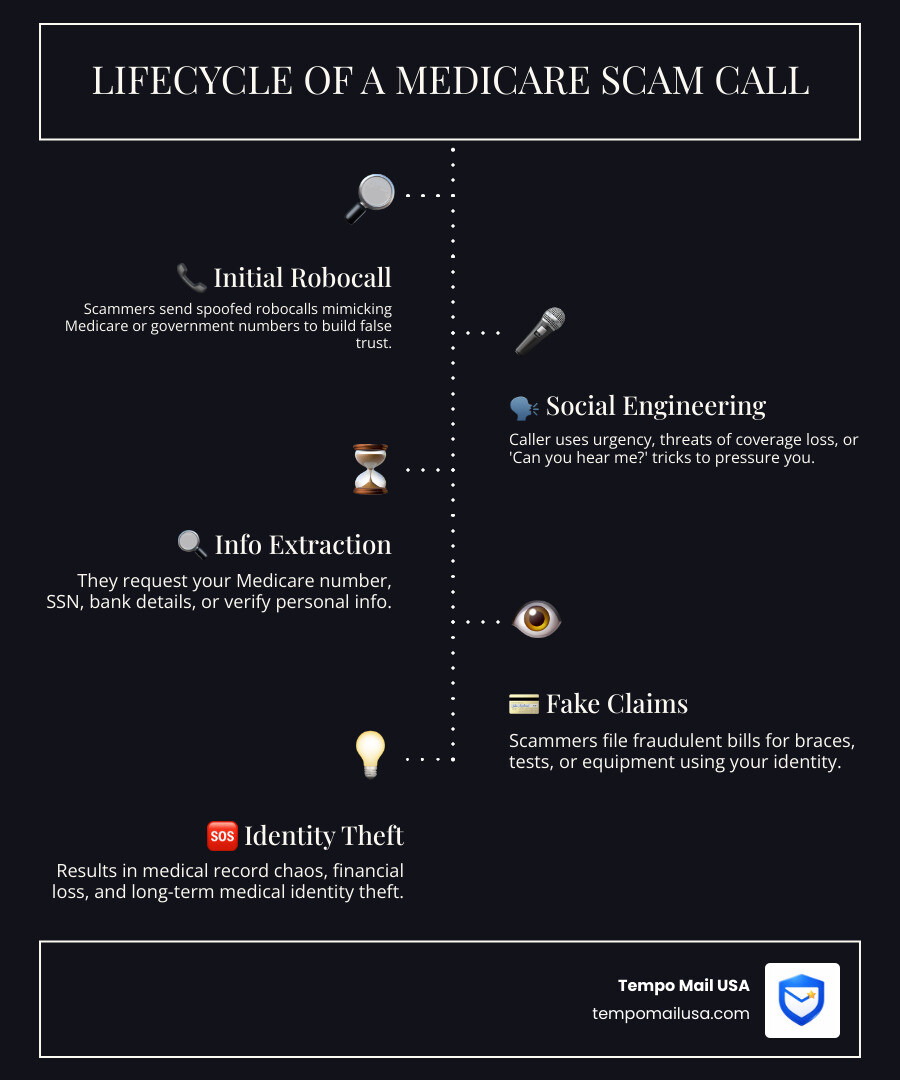
This isn't just about money. When scammers get your Medicare number, they can file fake claims in your name, redirect your prescriptions, and permanently tangle your medical records — a form of medical identity theft that can follow you for years.
The good news? Once you know what to look for, these scams are surprisingly easy to spot.
What Are Medicare Scam Calls and How Do They Work?
At their core, medicare scam calls are a form of social engineering. Scammers aren't usually hacking into high-security government databases; instead, they are "hacking" the human being on the other end of the line. They use a combination of technology and psychological pressure to get you to lower your guard.
One of the most effective tools in their arsenal is caller ID spoofing. This is technology that allows a caller to deliberately falsify the information transmitted to your caller ID display to disguise their identity. You might see "Social Security Administration," "Medicare," or even a local hospital's name on your screen. According to the Older Americans and Medicare Call Scams | Federal Communications Commission, scammers do this specifically to build immediate trust.
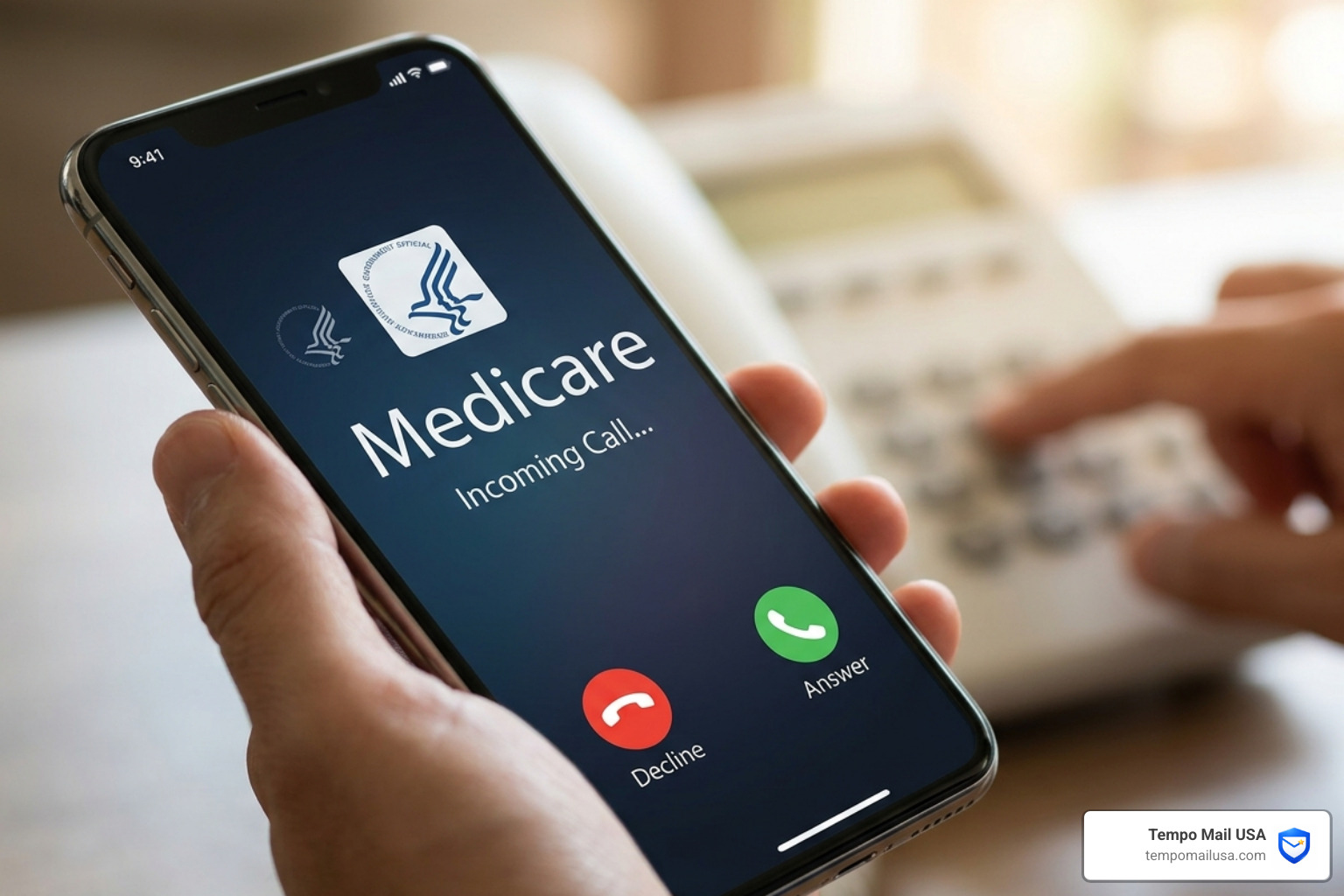
Furthermore, these aren't always individual people dialing numbers one by one. Many of these operations use robocall technology, which can blast out thousands of calls per minute. If you answer and stay on the line, the system flags your number as "active," which often leads to even more calls. The financial impact is massive: in Fiscal Year 2024, Medicare reported $31.70 billion in improper payments, a figure that includes fraud, waste, and abuse.
Common Tactics Used in Medicare Scam Calls
Scammers are experts at creating a sense of urgency. They might tell you that your benefits are about to be suspended or that you are owed a large refund that will expire if you don't "verify" your bank account immediately.
We often see scripts involving impersonation. Scammers may introduce themselves as "Casey" or "Shelly," claiming to be "Medicare advisors" on a recorded line. They might even use the "Can you hear me?" recording trick. In this scenario, the caller asks a simple question to get you to say "Yes." They record your voice and use that "Yes" as a fake digital signature to authorize fraudulent charges or plan changes later.
Why Scammers Target Older Americans
It is a sad reality that scammers specifically target seniors. There are several reasons for this:
- Technology Gaps: While many seniors are tech-savvy, scammers bet on those who might be less familiar with how easily caller ID or voices can be faked.
- High Volume of Communication: Because Medicare beneficiaries naturally receive a lot of mail and information about their healthcare, a phone call doesn't always seem out of place.
- Fixed Incomes: The promise of a "refund" or "lower premiums" is a powerful motivator for anyone living on a budget.
Timing is also a factor. Scams peak during Medicare Open Enrollment, which runs from October 15 to December 7 every year. During this window, people expect to be contacted about their plans, making it the perfect "camouflage" for a fraudster.
Most Common Types of Medicare Fraud Schemes
The "scripts" scammers use change, but the goals remain the same. One of the most persistent schemes involves free medical equipment. You might get a call offering a "no-cost" back brace, knee brace, or glucose monitor. The scammer gets your Medicare number, sends you a cheap, low-quality brace (or nothing at all), and then bills Medicare thousands of dollars for "custom" equipment.
Another growing threat is the genetic testing scam. Fraudsters offer "free" screenings for cancer or hereditary diseases, sometimes at health fairs or via phone calls. They claim Medicare covers it, but their real goal is to get your Medicare number for medical identity theft.
We also see a lot of Medicare Supplement Insurance Fraud. Scammers pretend to be from your current supplemental plan and claim they need to "update your file" with your Social Security number or bank details.
Recently, the "Flex Card" scam has become popular. Scammers claim you are eligible for a pre-paid card worth hundreds of dollars for groceries or utilities. As noted in Medicare Scam Calls: Warning Signs and What to Do, there is no legitimate "Medicare Flex Card" program that gives out cash for non-medical expenses.
Red Flags of a Medicare Scam Call
If you can spot these red flags, you can stop a scammer in their tracks:
- Unsolicited Contact: If you didn't ask for the call, be suspicious.
- Requests for PII: They ask for your Medicare number, SSN, or bank info.
- Pressure Tactics: They say you must act "right now" or lose coverage.
- Payment Requests: Medicare will never ask you to pay for a new card or "processing fees" over the phone.

The "New Card" and "Refund" Scams
One of the oldest tricks in the book is the "New Card" scam. The caller claims that Medicare is issuing new "plastic" or "metal" cards with "chips" for better security. They tell you there is a small fee for the card or that they need to "verify" your old number first.
Remember: Medicare cards are paper, they don't have chips, and they are always free.
| Feature | Legitimate Medicare Contact | Scammer Tactic |
|---|---|---|
| Initial Contact | Usually via official U.S. Mail | Unsolicited phone call or text |
| Information Requested | They already have your Medicare ID | Asks you to "verify" or "provide" ID |
| Payment Method | Monthly premiums via bill/SS check | Asks for credit card or bank info |
| Threats | Clear, written warnings of late payments | Immediate threats of coverage loss |
When Does Medicare Actually Call You?
It's important to know that Medicare does occasionally call, but only in very limited circumstances. According to How to identify Medicare scam calls, a legitimate representative will only call you if:
- You are already a member of a Medicare health or drug plan, and your specific plan provider is calling you.
- You left a message at 1-800-MEDICARE and they are returning your call.
- A Medicare health or drug plan calls you because you specifically requested information.
In almost all other cases, Medicare communicates through the U.S. Postal Service. If there is a problem with your account, you will get a letter first.
What to Do If You Receive a Suspicious Call
The most powerful thing you can do is hang up. You don't owe the caller a polite conversation, and you don't need to "opt-out" by pressing buttons. In fact, pressing buttons often tells the scammer's computer that a real person is on the line, which leads to more calls.
If you are worried that the call might have been real, don't use the number the caller gave you. Instead, look at your actual Medicare card and call the official number printed on the back. You can also log into your secure account at Medicare.gov to check for messages.
For reporting, you should reach out to the authorities. The Reporting Medicare fraud & abuse page recommends calling 1-800-MEDICARE immediately to report the encounter.
Steps to Take If Your Information Is Compromised
If you realize you've shared your Medicare number or SSN with a scammer, don't panic, but do act quickly:
- Call 1-800-MEDICARE: Tell them your number has been compromised. They can issue you a new card with a new number.
- Review your Medicare Summary Notice (MSN): This is the statement that arrives in the mail every three months. Check for services or equipment you never received.
- Contact the OIG: Report the fraud to the Office of the Inspector General at 1-800-HHS-TIPS.
- Protect your credit: If you gave out your Social Security number, place a fraud alert or security freeze on your credit reports with Equifax, Experian, and TransUnion.
As highlighted in Medicare fraud and scams: How to spot them and protect yourself, monitoring your accounts is the best way to catch medical identity theft before it ruins your records.
Frequently Asked Questions about Medicare Scams
Does Medicare call to offer new plastic or metal cards?
No. Official Medicare cards are made of paper. Medicare does not charge for cards, and they do not issue "upgraded" metal or plastic versions. Anyone claiming otherwise is a scammer.
Can someone use my Medicare number to steal my identity?
Yes. Medical identity theft is a serious crime. Someone can use your number to get medical care, surgery, or prescription drugs. This can result in incorrect information being added to your medical records, such as the wrong blood type or inaccurate diagnoses, which could be life-threatening in an emergency.
How do I report a scam call to the authorities?
You can report medicare scam calls to several agencies:
- Medicare: 1-800-MEDICARE (1-800-633-4227)
- FTC: ReportFraud.ftc.gov
- FCC: consumercomplaints.fcc.gov (specifically for robocalls and spoofing)
Conclusion
The world of medicare scam calls can feel overwhelming, especially with $60 billion being siphoned away from the system every year. However, the solution is simpler than the scams themselves: Guard your Medicare number like a credit card.
At Tempo Mail USA, we believe that your personal identifiable information (PII) is your most valuable asset. While we specialize in providing secure email alias generation to act as a firewall between your real identity and the services you use online, the principles of privacy remain the same across all platforms. Whether it's your email or your Medicare number, keeping your real data "cloaked" and only sharing it with trusted, verified parties is the best way to stay safe in 2026.
Stay vigilant, hang up on the "advisors," and always verify through official channels. Your health and your identity are worth the extra minute of caution. For more tips on protecting your digital footprint, visit us at tempomailusa.com.