

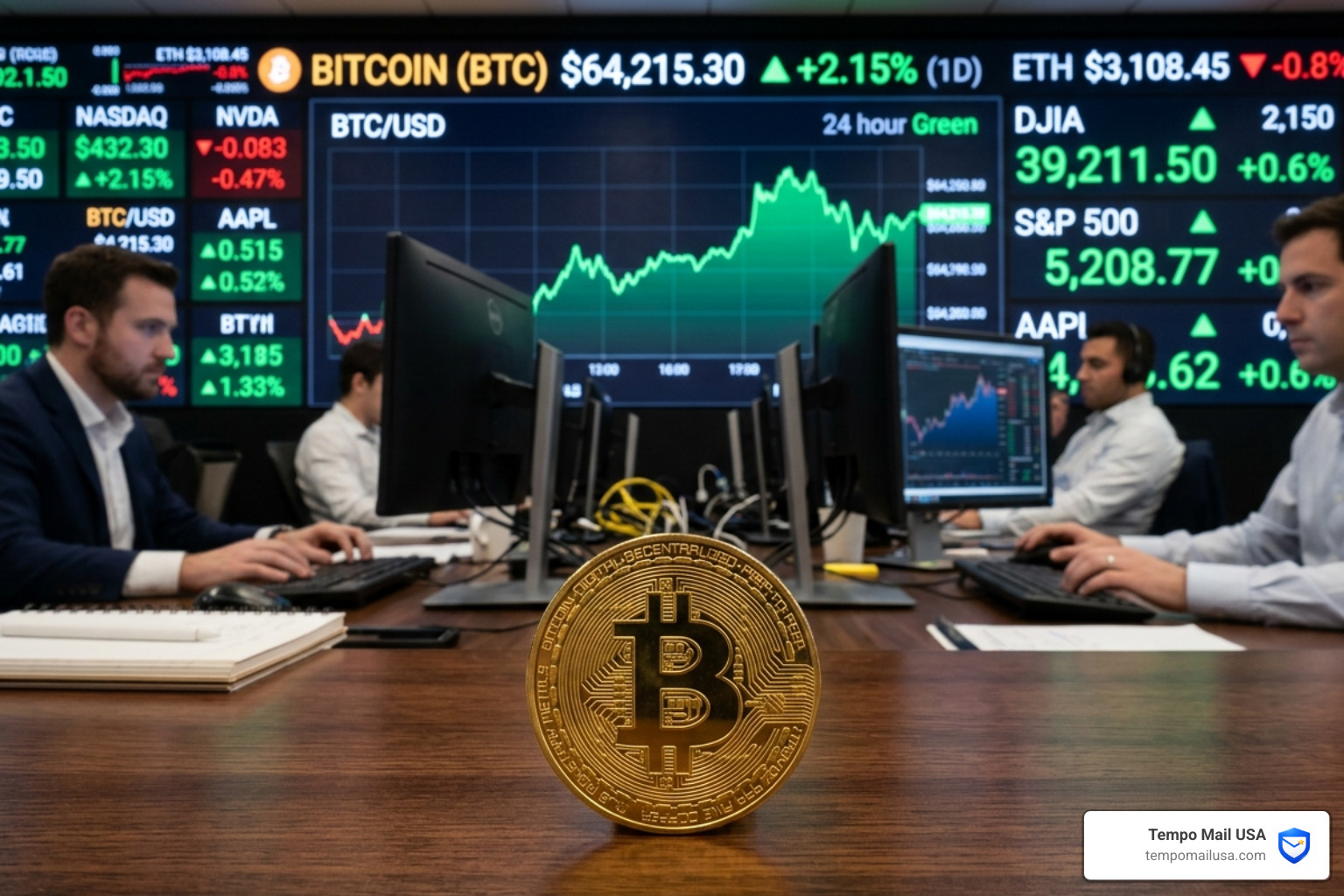

Is Bitcoin a Good Investment? Here's What You Need to Know
Is bitcoin a good investment — the answer is more nuanced than a simple yes or no.
Here's the short version, optimized for quick decision-making:
Quick Verdict: Bitcoin as an Investment
| Factor | Assessment |
|---|---|
| Long-term track record | Strongly positive — 17,000% return over 10 years |
| Short-term risk | High — down ~20% year-to-date in 2026 |
| Institutional backing | Strong — $128B in ETF AUM, BlackRock involved |
| Recommended allocation | 1–10% of a diversified portfolio |
| Best strategy for beginners | Dollar-cost averaging (DCA) |
| Biggest risks | Volatility, security, regulatory shifts |
| Verdict | Hold or accumulate for long-term investors with appropriate risk tolerance |
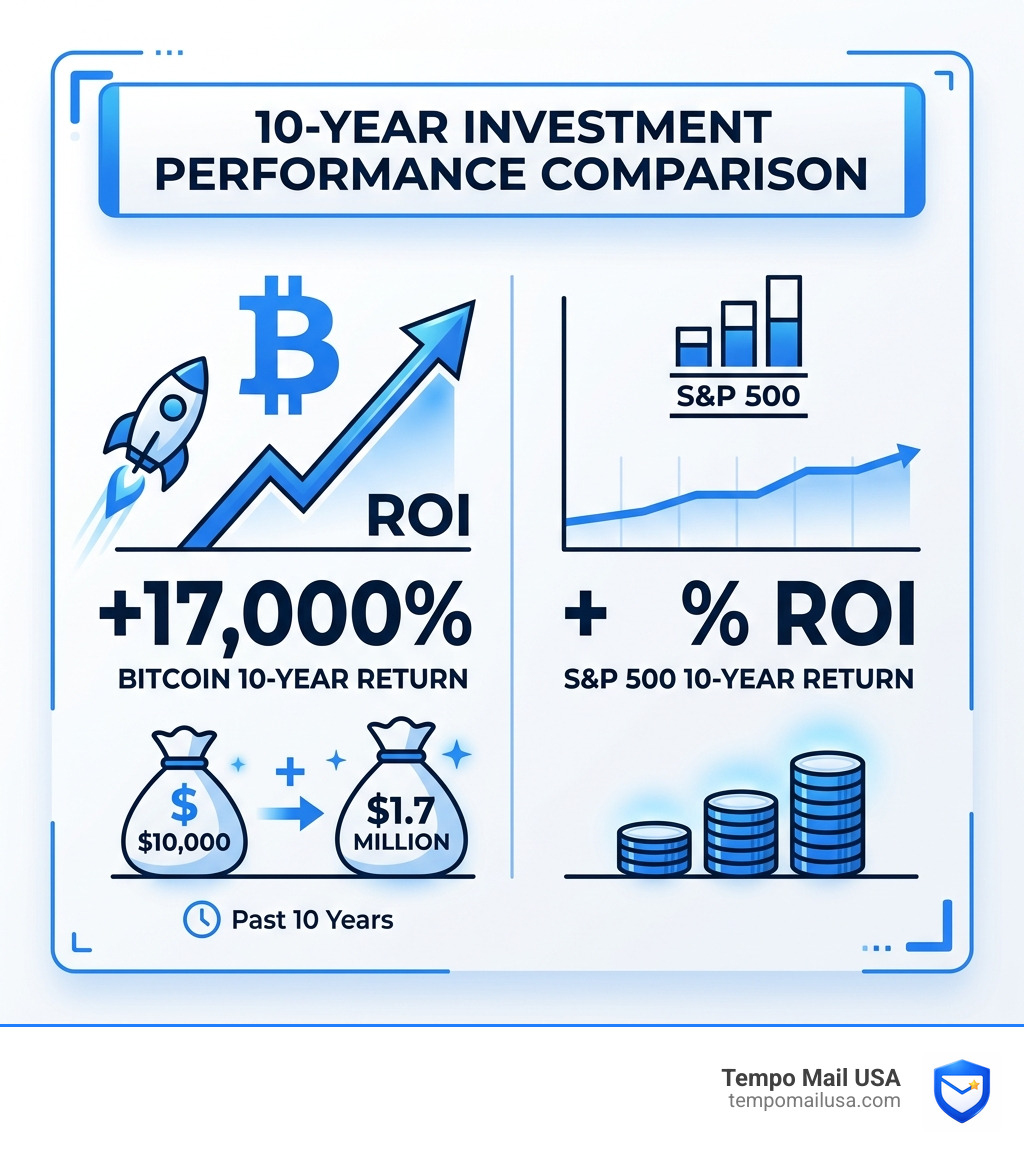
Bitcoin has done something no traditional asset has managed in the past decade: it turned a $10,000 investment into nearly $1.7 million — a 17,000% return. And yet, right now in April 2026, it's sitting roughly 20% below where it started the year.
That tension — extraordinary long-term performance meeting short-term turbulence — is exactly why millions of people search this question every month.
The current dip isn't driven by any fundamental collapse in Bitcoin's technology or adoption. Analysts point to spillover pessimism from AI stock valuations, geopolitical instability, and broader risk-off sentiment in global markets. Bitcoin's underlying supply mechanics, institutional ownership, and regulatory environment have arguably never been stronger.
But that doesn't mean it's right for everyone.
Whether you're a first-time buyer wondering if you've missed the boat, a cautious investor weighing Bitcoin against index funds, or someone who already holds BTC and is questioning whether to sell — this guide covers all of it.
One thing worth flagging early: entering the Bitcoin space means sharing financial data, email addresses, and personal details across multiple platforms. For privacy-conscious investors, using a tool like Tempo Mail USA to create temporary email aliases and securing your connection with NordVPN is a smart first line of defense against spam and data exposure.
Now, let's dig into what Bitcoin actually looks like as an investment in 2026.
The State of Bitcoin in 2026: Scarcity and Performance
As we navigate through April 2026, the fundamental "math" of Bitcoin remains its most compelling feature. We recently crossed a massive milestone: on March 9, 2026, the 20 millionth Bitcoin was officially mined. This means over 95% of the total 21 million supply is already in circulation.
Why does this matter for your wallet? It comes down to basic economics. While central banks can print more fiat currency, Bitcoin’s supply is hard-coded. Currently, the annual supply growth of Bitcoin has dropped below 0.8%. To put that in perspective, that is less than half the annual supply growth of gold, which typically sits around 1.5% to 2%.
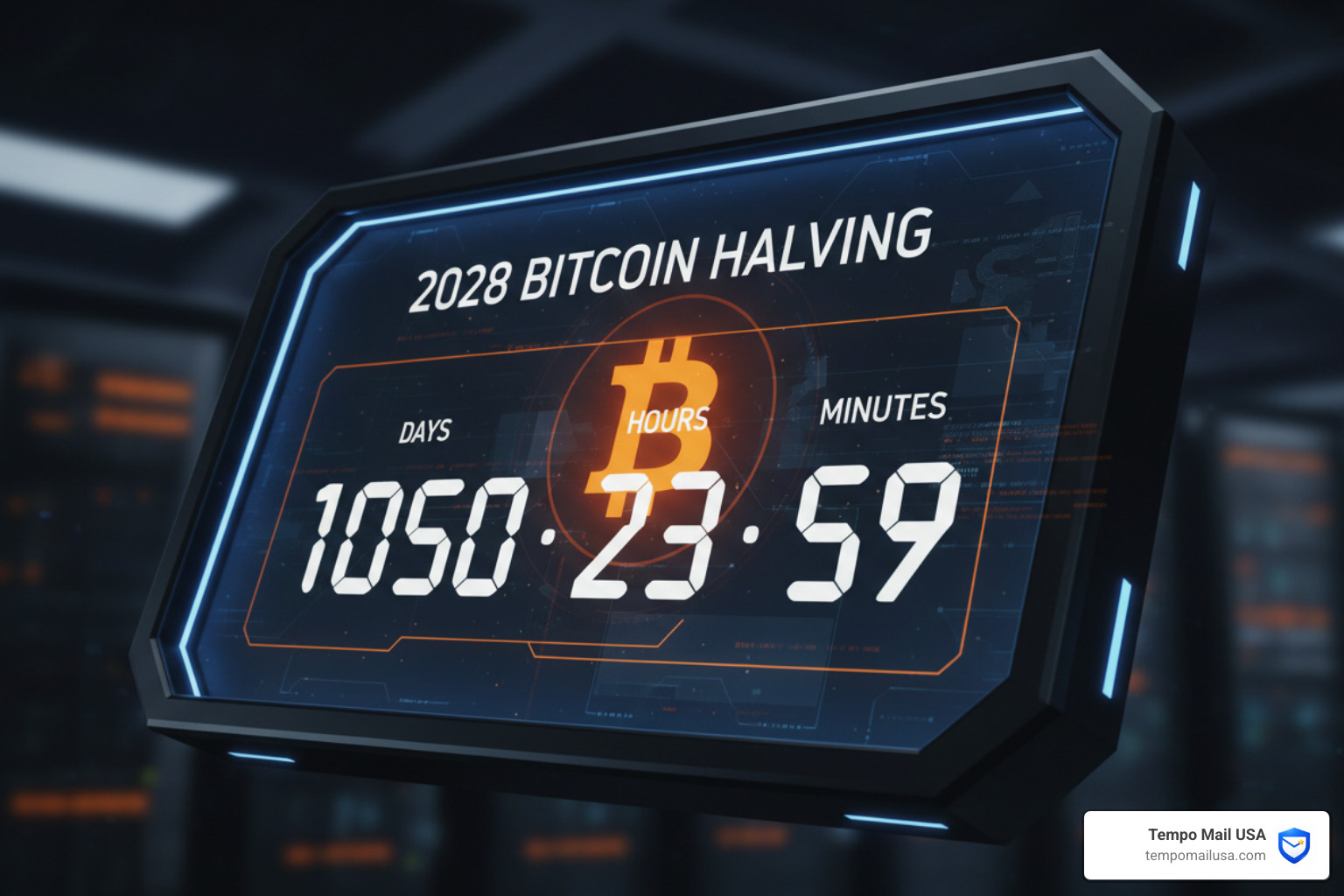
We are also approaching the next "halving" event scheduled for April 2028, which will further slash the daily issuance of new coins from 450 to 225. This programmed scarcity is a primary reason why many ask is bitcoin a good investment for the long haul.
Historical Resilience
If you are feeling nervous about the 20% year-to-date dip in 2026, history offers some comfort. Bitcoin has a habit of "crashing" upward. We saw it hit an all-time high of approximately $126,000 in October 2025 before this recent cooling period. Historically, Bitcoin has rewarded every single investor who purchased and held for any rolling four-year period since 2013.
According to analysis from The Motley Fool, even buying during significant drawdowns has historically set patient investors up for life. The asset has survived 80% drawdowns, government bans, and exchange collapses, emerging each time as a more mature financial instrument.
Why Institutional Giants Believe is bitcoin a good investment
The days of Bitcoin being a "basement hobby" are long gone. In 2026, the landscape is dominated by institutional giants. BlackRock CEO Larry Fink has shifted from skeptic to advocate, famously referring to Bitcoin as a legitimate asset class and a potential global reserve currency.
The introduction of Spot Bitcoin ETFs roughly two years ago fundamentally changed how the world buys crypto. These funds now hold over 5% of the total Bitcoin supply. In the first quarter of 2026 alone, we saw $18.7 billion in net capital inflows, pushing the total Assets Under Management (AUM) for Bitcoin ETFs past a staggering $128 billion.
Direct Ownership vs. Spot ETFs
For many, the question isn't just "should I buy," but "how should I buy?"
| Feature | Direct Ownership (Cold Storage) | Spot Bitcoin ETFs |
|---|---|---|
| Control | Full (You hold the private keys) | Third-party (Custodian holds keys) |
| Security Risk | Personal responsibility (Loss of keys) | Institutional/Brokerage risk |
| Ease of Use | Moderate to High difficulty | Very Easy (Buy like a stock) |
| Tax Reporting | Manual and complex | Automated via brokerage |
| Regulatory Protection | Minimal | Standard SEC/Exchange oversight |
Institutional adoption isn't just happening through ETFs. Corporations like MicroStrategy continue to lead the charge, now holding 762,000 BTC on their balance sheets. When public companies and trillion-dollar asset managers treat Bitcoin as a "pristine" reserve asset, it adds a layer of price support that didn't exist five years ago. This shift is a core reason why The Motley Fool argues Bitcoin remains the smartest long-term bet in the crypto sector.
Is Bitcoin a good investment for beginners facing regulatory uncertainty?
Regulation has always been the "boogeyman" for crypto, but 2026 feels different. The current U.S. administration has taken significant steps toward integrating Bitcoin into the national financial strategy.
The establishment of a U.S. Strategic Bitcoin Reserve via executive order in March 2025 was a watershed moment. By treating Bitcoin as a sovereign asset—similar to how countries hold gold or foreign currency reserves—the government has provided a "stamp of approval" that was once unthinkable. Following the U.S. lead, nations like El Salvador and Bhutan have continued to expand their sovereign holdings.
For beginners, this means the risk of a total government ban in major economies has plummeted. Instead, the focus has shifted toward deregulation and consumer protection. While this doesn't eliminate price volatility, it does reduce the "existential risk" that used to haunt the market. Experts at Crypto Dispensers suggest that this maturing regulatory environment makes Bitcoin a much more viable entry point for traditional investors than it was in previous cycles.
Navigating the Risks: Volatility, Scams, and Security
We wouldn't be doing our jobs if we didn't talk about the "dark side." Is bitcoin a good investment? Yes, potentially—but it is also a dangerous one if you aren't careful.
Bitcoin's volatility remains its most famous trait. It is not uncommon to see 5% daily fluctuations or 30–80% drawdowns from peak prices. The 2026 dip is a perfect example of how geopolitical instability and shifting market sentiment can cause sudden "risk-off" behavior.
The Security Threat
As Bitcoin's value grows, so does the sophistication of bad actors. Phishing scams, "finfluencer" pump-and-dumps, and exchange vulnerabilities are real threats. Because Bitcoin transactions are irreversible, if you lose your coins to a scammer, they are gone forever.
To protect yourself, we recommend a multi-layered security approach:
- Use a VPN: When accessing exchanges or checking your portfolio, use a high-quality service like NordVPN to encrypt your connection and hide your IP address from potential hackers.
- Self-Custody: For large amounts, don't leave your Bitcoin on an exchange. Move it to a "cold" hardware wallet where you control the private keys.
- Privacy First: Scammers often find their victims through leaked email databases. When signing up for new crypto services, use Tempo Mail USA to generate temporary aliases. This acts as a PII (Personally Identifiable Information) firewall, keeping your real identity off the "sucker lists" used by hackers on the dark web.
Is Bitcoin a good investment for building wealth compared to traditional assets?
When we compare Bitcoin to gold or the S&P 500, we are looking at an "asymmetric upside" play. This means the potential for gain is significantly higher than the potential for loss, even though the risk of loss is real.
Bitcoin currently represents only about 0.2% of total worldwide wealth. If it continues to eat into gold's market share as a "store of value," the growth potential is massive. Unlike stocks, Bitcoin doesn't have earnings or dividends. Its value is derived entirely from its scarcity and the network's security.
According to The Motley Fool, Bitcoin should be viewed as a "supporting player" in a portfolio. It isn't a replacement for a diversified stock portfolio, but rather a high-octane additive that can boost overall returns over a 5-to-10-year horizon.
Strategic Allocation: How to Build a 2026 Portfolio
So, how much should you actually buy? Most financial advisors we talk to suggest the 1-10% rule.
If you put 5% of your net worth into Bitcoin and it goes to zero, your life probably doesn't change much. But if that 5% experiences another 17,000% run, it could double or triple your total wealth. This is the "asymmetric" beauty of the asset.
The Power of Dollar-Cost Averaging (DCA)
The biggest mistake beginners make is trying to "time the bottom." Instead of dropping a lump sum during a period of FOMO (Fear Of Missing Out), use Dollar-Cost Averaging. By investing a set amount every week or month—regardless of the price—you buy more coins when prices are low and fewer when they are high. This smooths out your entry price over time.
For those looking to manage their broader financial picture while investing, tools like the Tempo Mail USA loan calculator can help you understand your debt-to-income ratio, ensuring you aren't over-leveraging yourself to buy crypto. Never invest money that you need for rent, mortgage payments, or emergency expenses.
Protecting Your Digital Identity and Financial Privacy
In the 2026 digital economy, your privacy is just as valuable as your Bitcoin. Every time you register an account with a crypto exchange, a tax software provider, or a news site, you leave a digital footprint. If that company suffers a data breach, your real name, email, and "crypto-owner" status are leaked to the dark web.
This is where Tempo Mail USA becomes an essential part of your investment toolkit. By acting as a PII firewall, our service allows you to:
- Generate Secure Aliases: Sign up for services without revealing your primary email address.
- Shield Your Identity: If a service you use is hacked, the hackers only get a temporary alias, not your real credentials.
- Reduce Targeted Attacks: By keeping your primary email private, you significantly reduce the risk of targeted phishing attacks aimed at stealing your Bitcoin.
Investing in Bitcoin is about financial sovereignty. But you can't be truly sovereign if your personal data is being sold to the highest bidder. Combine secure storage (like a hardware wallet) with secure identity practices (like Tempo Mail USA) to ensure your wealth stays yours.
Frequently Asked Questions about Bitcoin Investing
Is Bitcoin a buy, sell, or hold in April 2026?
Hold or Buy. Current market sentiment suggests a "hold" or "buy the dip" strategy for long-term investors. While the 20% YTD decline feels painful, experts view it as a healthy correction following the $126,000 all-time high. With institutional ETF inflows remaining strong and the 2028 halving approaching, the long-term fundamentals remain intact.
How much of my portfolio should be in Bitcoin?
1% to 10%. Most financial experts recommend an allocation between 1% and 10% of your total portfolio, depending on your risk tolerance and time horizon. This allows you to capture the potential "life-changing" upside without risking total financial ruin during the inevitable 80% drawdowns that characterize the crypto market.
What are the safest ways to buy Bitcoin in 2026?
Regulated ETFs or Cold Storage. The safest methods include using regulated Spot Bitcoin ETFs (like those from BlackRock or Fidelity) for brokerage-level protection and ease of tax reporting. If you prefer direct ownership, purchase via reputable, regulated exchanges and immediately transfer your assets to a "cold" hardware wallet for maximum security.
Conclusion
As we look toward the remainder of 2026 and beyond, the question of whether is bitcoin a good investment depends largely on your perspective. If you are looking for a stable, low-volatility asset to store your life savings for next month's down payment, Bitcoin is a poor choice.
However, if you are looking for "digital gold"—a scarce, decentralized, and increasingly institutionalized asset that has historically outperformed every other asset class over long periods—the case for Bitcoin has never been stronger.
The 2026 landscape of sovereign reserves, trillion-dollar ETFs, and shrinking supply suggests that we are still in the early stages of Bitcoin's journey toward becoming a global reserve asset. By managing your risks, using tools like NordVPN and Tempo Mail USA to protect your privacy, and maintaining a multi-year horizon, you can navigate the volatility and potentially reap the rewards of the world's first truly digital scarcity.
Stay safe, stay private, and happy investing.