


Unmasking the Esamastery Scam: Is it Legit?
When we look at esamastery.com, we see a classic example of a "lead magnet" that promises the world for zero dollars. The core offer is a "Free DFY (Done-For-You) Shopify Store." On the surface, it sounds like a dream for a beginner: someone else does the hard work of setting up the platform, and you just start selling. However, technical analysis and user feedback suggest a much more complicated reality.
While tools like ScamDoc give the site a high technical trust score based on its age (it was registered back in 2016), technical longevity does not always equal ethical business practices. In fact, many users have labeled the entire process a bait-and-switch. The "free" store is often an empty shell that requires a $97 "activation" or "completion" fee just to make it functional.
This is a common tactic in the high-ticket coaching world. You are lured in with a freebie, only to find that the freebie is useless without a paid upgrade. According to an Esamastery.com Review: Legit or Scam?, the site has a safety score of only 55/100, largely because it blocks bots and has very low popularity despite being an old domain.
Many users now rely on advanced security tools and VPN protection to prevent these attacks and to shield their browsing habits from aggressive tracking links used by these funnels.
The Anatomy of the Esamastery Scam Funnel
The journey into the esamastery scam usually begins with a tracking link from a Facebook or YouTube ad. Once you register with your email, you are entered into a high-pressure sales funnel.
- The Hook: A 30-minute "free" store build.
- The Reality: An empty Shopify template with no products, descriptions, or optimized settings.
- The Upsell: A prompt to pay $97 to "unlock" the AI-driven features or pre-loaded products.
- The Result: Lackluster stores that often fail to meet the professional standards required to actually make sales.
As highlighted in the eSamastery Shopify Scam EXPOSED video, these "AI stores" are often just cookie-cutter templates that hundreds of other people are using, making it nearly impossible to stand out in the competitive e-commerce landscape.
Protecting Your Data from the Esamastery Scam
One of the most alarming aspects of this service isn't just the financial cost, but the cost to your privacy. Multiple reviewers on Trustpilot have reported a disturbing trend: after signing up for the "free" store using a unique, dedicated email address, they immediately began receiving phishing scams and spam.
This suggests that your PII (Personally Identifiable Information) may be harvested or sold to third-party data brokers. When you give away your primary email and a password (which many people unfortunately reuse), you are opening the door to identity theft and account takeovers.
To stay safe, we always recommend using a "PII Firewall" strategy. This involves using temporary email aliases and ensuring you have NordVPN protection active to mask your IP address from these aggressive tracking scripts.
The Hidden Costs of "Free" Shopify Stores
The word "free" is used very loosely in esamastery scam allegations. Even if you manage to avoid the $97 completion fee, a Shopify store is never truly free to operate. You still have to pay for the Shopify subscription itself, which can cost anywhere from $39 to $399 per month.
Furthermore, the funnel is designed to push you toward "Morrison Education" high-ticket items. These include:
- $497 Upsells: Training modules on "secret" traffic sources.
- $1,495 Coaching: Personal mentorship that many users claim is mostly pre-recorded content.
- Ad Spend: The strategies taught rely heavily on Facebook Ads, which require a significant daily budget and carry a high risk of account bans.
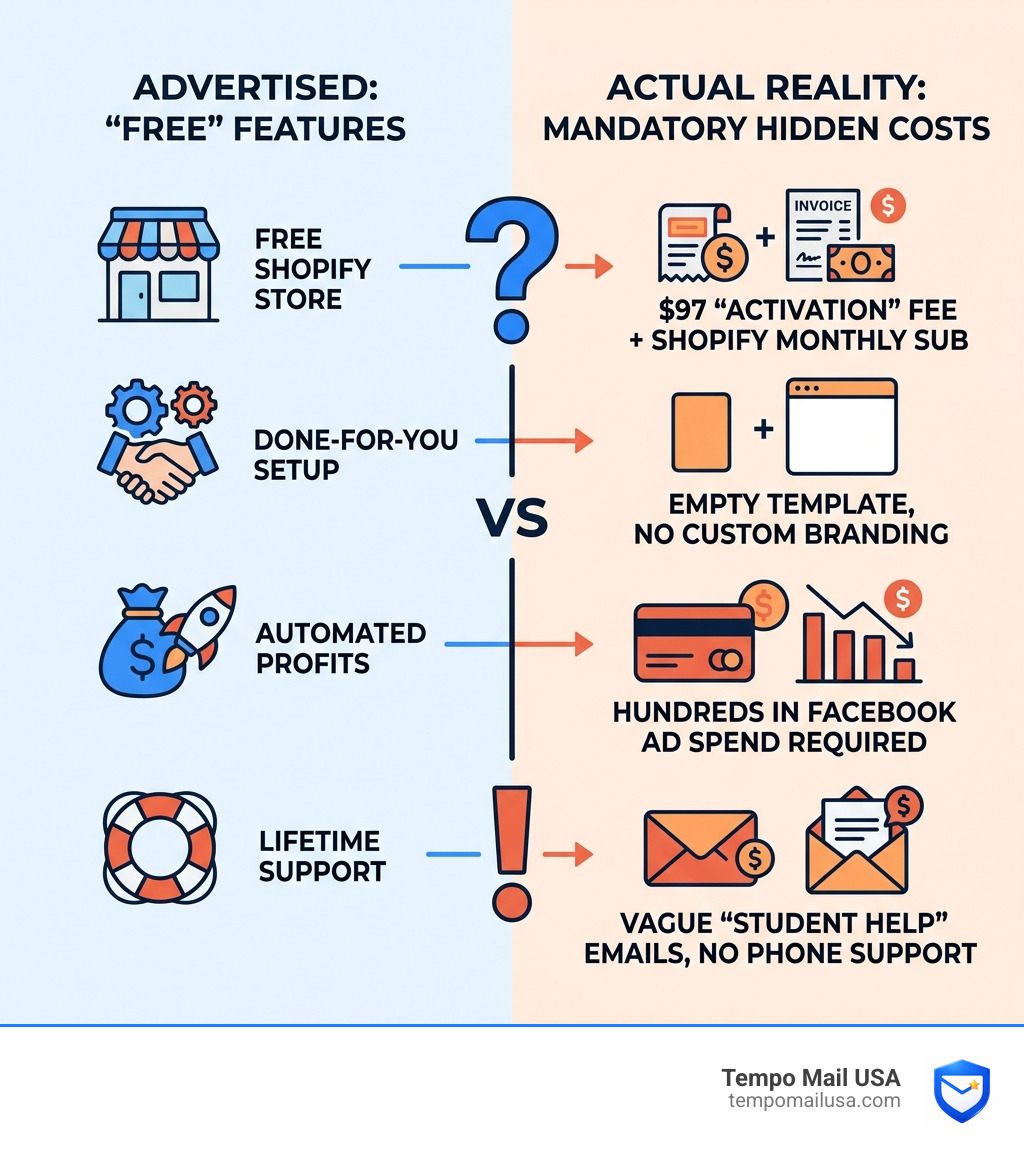
| Feature Advertised | Actual Reality/Cost |
|---|---|
| Free Shopify Store | $97 "Activation" Fee + Shopify Monthly Sub |
| Done-For-You Setup | Empty template with no custom branding |
| Automated Profits | Requires hundreds in Facebook Ad spend |
| Lifetime Support | Vague "Student Help" emails with no phone support |
Many users have reported unauthorized charges where a "trial" suddenly turns into a recurring subscription. Because the company lacks clear contact information or a "cancel" button in the user dashboard, stopping these payments often requires a full bank intervention.
Adrian Morrison and the Morrison Education Ecosystem
Adrian Morrison is the face behind EsaMastery and Morrison Education. He is a well-known figure in the e-commerce space, often seen in flashy ads promising "lifestyle freedom." While he is a legitimate educator in the sense that his courses exist, his reputation is highly polarized.
On Trustpilot, the Morrison Education profile sits at a dismal 2.3/5 stars. The complaints are consistent: "total scam," "endless upsells," and "impossible to get a refund." While some students have found success by following his Facebook Ads strategies to the letter, many others find the content dated and the costs prohibitive.
Allegations and Legal Scrutiny
There have been numerous mentions in community forums and review sections regarding potential legal scrutiny. While we cannot confirm an active FBI investigation, several users on Trustpilot have claimed they are reporting the business to federal authorities due to what they describe as fraudulent billing practices.
The primary issue lies in the "bait-and-switch" marketing. Promoting a service as "free" when it is fundamentally designed to extract hundreds or thousands of dollars from the user is a practice that often draws the attention of consumer protection agencies.
Security Risks: Data Privacy and Phishing
In 2026, your data is your most valuable asset. The esamastery scam reports highlight a significant risk to your digital hygiene. When you sign up for these "free" offers, you aren't just a customer; you are the product.
How to Choose the Right Protection
If you have already engaged with a suspicious e-commerce builder, we recommend taking the following steps immediately:
- Monitor Your Credit: Use a credit monitoring service to ensure no new accounts are opened in your name.
- Initiate Chargebacks: If you were charged $97 or more for a service that wasn't delivered as promised, contact your bank. Users with American Express (Amex) often report the best luck with disputes.
- Audit Your Emails: If you used your main email address, change your passwords and enable Two-Factor Authentication (2FA) on all sensitive accounts.
- Use a PII Firewall: In the future, never give your real email address to a "free" offer. Use a service like Tempo Mail USA to provide a temporary alias. This acts as a firewall, so if the company sells your data or gets hacked, your real identity remains protected.
For those looking for the "best internet security tools in 2026," combining a robust VPN with a secure email proxy is the gold standard for avoiding the fallout of the esamastery scam.
Frequently Asked Questions about Esamastery
Is the free Shopify store from Esamastery actually free?
No. While the initial signup might not require a credit card, the store you receive is typically non-functional or "empty." To get the store to a state where it can actually sell products, users are frequently pushed into a $97 payment. You are also responsible for the ongoing monthly Shopify subscription fees, which are not covered by EsaMastery.
Who is Adrian Morrison and is he legitimate?
Adrian Morrison is an e-commerce entrepreneur and the founder of Morrison Education. While he provides actual course materials, his business model is heavily focused on aggressive sales funnels and high-ticket upsells. His companies currently hold "Poor" ratings on major review platforms like Trustpilot (2.1 to 2.3 out of 5 stars), with many former students citing a lack of value for the high price tags.
How can I get a refund from Esamastery?
Getting a refund through their official channels can be difficult, as many users report receiving vague responses from a "student help" email address. The most effective way to get your money back is to contact your credit card provider or bank and request a chargeback based on "services not as described" or "unauthorized billing."
Conclusion
The "free" Shopify store offer is a classic example of why we must remain vigilant in the digital age. The esamastery scam allegations serve as a reminder that if an offer seems too good to be true, it almost certainly is. Between the hidden $97 fees, the aggressive $1,495 upsells, and the reports of data harvesting, the risks far outweigh the potential rewards.
Success in e-commerce comes from hard work, original branding, and genuine product research—not from a 30-minute automated template. If you want to explore these types of offers safely, always protect your PII. By using Tempo Mail USA as your identity proxy, you can investigate these services without ever putting your real personal data at risk. Stay safe, stay skeptical, and always protect your digital footprint.